
Neuro-Fintech: The "Stress-Based" Credit Score
The financial industry is entering an era where neuroscience, behavioral analytics, biometric technologies, artificial intelligence, and fintech infrastructure are beginning to converge. Traditional financial systems have historically evaluated creditworthiness through static indicators such as income, debt history, repayment records, and asset ownership. However, next-generation fintech ecosystems are increasingly exploring deeper behavioral and cognitive dimensions of financial risk.
In 2026, the rise of “Neuro-Fintech” is introducing experimental concepts such as stress-based credit scoring—systems that attempt to evaluate financial reliability using physiological, behavioral, and emotional data patterns. These systems aim to assess how individuals react to stress, uncertainty, financial pressure, and decision-making environments.
This emerging field could fundamentally reshape the future of credit, risk analysis, financial inclusion, and consumer privacy.
What Is Neuro-Fintech?
Neuro-Fintech refers to the integration of neuroscience, behavioral psychology, biometric analytics, and financial technology systems.
- Behavioral finance analytics
- Biometric financial intelligence
- Emotion-aware financial systems
- AI-driven cognitive risk analysis
Financial decision-making becomes increasingly behavior-centered.
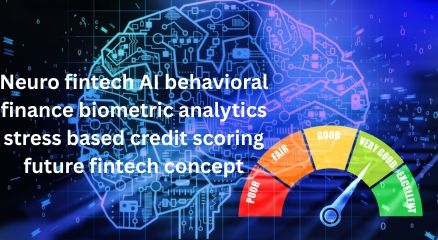
What Is a Stress-Based Credit Score?
A /credit score is a proposed financial assessment model that analyzes physiological and behavioral responses associated with stress and financial decision-making.
- Stress-response analysis
- Behavioral stability monitoring
- Cognitive risk profiling
- Adaptive financial trust modeling
The system attempts to predict financial reliability beyond traditional credit metrics.
Why Traditional Credit Scoring Is Being Challenged
Conventional credit systems face several structural limitations.
- Limited financial inclusion
- Dependence on historical borrowing records
- Lack of behavioral context
- Static risk evaluation methods
Fintech innovators seek more dynamic and predictive models.
How Stress-Based Credit Systems Work
These systems analyze biometric and behavioral signals linked to stress and decision-making patterns.
- Heart rate variability analysis
- Behavioral interaction monitoring
- Financial decision-response patterns
- AI-driven cognitive risk prediction
Behavioral signals become inputs for financial scoring systems.

Core Technologies Behind Neuro-Fintech
- Artificial intelligence and machine learning
- Wearable biometric devices
- Behavioral analytics platforms
- Neuroscience-informed algorithms
- Real-time emotional pattern recognition
These technologies enable adaptive behavioral finance systems.
Potential Applications
Stress-based financial systems could expand across multiple fintech sectors.
- Consumer lending
- Insurance underwriting
- Fraud detection systems
- Behavioral investment platforms
- Financial wellness ecosystems
Behavioral data becomes a financial asset class.
Financial Wellness and Preventive Finance
Neuro-fintech may increasingly focus on financial well-being rather than only risk assessment.
- Stress-aware budgeting systems
- Behavioral financial coaching
- AI-driven debt management support
- Mental-financial wellness integration
Finance evolves toward behavioral support ecosystems.
Benefits of Neuro-Fintech Systems
- More adaptive risk analysis
- Potential expansion of financial inclusion
- Real-time behavioral financial insights
- Improved fraud detection capabilities
- Enhanced personalization of financial services
Behavioral intelligence could improve financial system responsiveness.
Neuro-fintech transforms finance from a purely transactional system into a behavioral intelligence ecosystem shaped by cognition, emotion, and physiological response.
Traditional Credit Scores vs Stress-Based Scores
- Traditional → Historical financial records
- Stress-Based → Behavioral and physiological analysis
- Traditional → Static scoring models
- Stress-Based → Continuous adaptive profiling
This shift fundamentally changes how financial trust is evaluated.
AI and Behavioral Finance Intelligence
Artificial intelligence is central to neuro-fintech systems.
- Emotion-detection analytics
- Behavioral forecasting models
- Adaptive financial profiling
- Predictive risk intelligence systems
AI enables scalable cognitive-financial analysis.
Wearables and Biometric Financial Data
Wearable devices increasingly generate real-time behavioral information.
- Stress monitoring sensors
- Heart rate and sleep analysis
- Cognitive fatigue indicators
- Behavioral consistency tracking
Biometric data becomes increasingly integrated with digital ecosystems.
Ethical and Privacy Concerns
Stress-based financial systems raise major ethical questions.
- Biometric privacy risks
- Emotional surveillance concerns
- Potential discrimination and bias
- Consent and data ownership issues
- Psychological profiling risks
The ethics of behavioral finance systems remain highly controversial.
Regulatory Challenges
Governments and regulators are beginning to examine neuro-fintech systems.
- AI governance frameworks
- Biometric data protection laws
- Financial fairness regulations
- Consumer rights and transparency rules
Regulatory adaptation will shape future adoption.
Financial Inclusion Opportunities
Supporters argue that behavioral finance systems may expand access to underserved populations.
- Alternative creditworthiness models
- Reduced dependence on traditional banking history
- Broader participation in financial ecosystems
- Adaptive risk evaluation systems
Neuro-fintech may create new pathways into formal finance.
Future of Neuro-Fintech
The future financial ecosystem may become increasingly cognition-aware.
- Emotion-sensitive financial platforms
- AI-native behavioral banking systems
- Continuous financial wellness ecosystems
- Integrated biometric-financial infrastructure
Finance may evolve into a deeply personalized behavioral system.
Economic and Societal Implications
Neuro-fintech could reshape the relationship between technology, finance, and human behavior.
- Expansion of behavioral capitalism
- Transformation of consumer finance systems
- Growth of biometric economic ecosystems
- Increased personalization of financial services
This evolution raises profound questions about privacy, autonomy, and financial fairness.
Frequently Asked Questions
What is neuro-fintech?
The integration of neuroscience, behavioral analytics, biometrics, and fintech systems.
What is a stress-based credit score?
A proposed financial scoring model that analyzes behavioral and physiological stress responses to evaluate financial reliability.
Why is neuro-fintech controversial?
Because it raises concerns related to biometric privacy, emotional surveillance, bias, and ethical financial profiling.
Conclusion
Neuro-Fintech and stress-based credit scoring represent one of the most controversial and transformative frontiers in the future of finance. By combining AI, neuroscience, biometrics, and behavioral analytics, these systems seek to create more adaptive and predictive models of financial trust and risk assessment. While the technology could expand financial inclusion and improve personalized financial services, it also introduces profound ethical, regulatory, and societal challenges related to privacy, autonomy, emotional surveillance, and algorithmic fairness. As neuro-fintech evolves, it may fundamentally redefine the relationship between finance, technology, and human behavior in the digital economy.