Synthetic Identity Bank Runs
The digital financial system increasingly depends on identity as a foundational layer for trust, lending, payments, onboarding, and risk management. Historically, banking systems assumed that identities represented genuine individuals or legally verified entities. However, advances in artificial intelligence, large-scale data aggregation, deepfake technology, automated account creation systems, and synthetic identity generation are introducing entirely new categories of financial risk.
In 2026 and beyond, analysts increasingly discuss a potential future phenomenon called “Synthetic Identity Bank Runs,” where large-scale AI-generated or fabricated identities could simultaneously create liquidity pressure, fraud exposure, or operational stress across financial institutions.
This concept extends beyond traditional fraud and enters the realm of systemic financial risk.
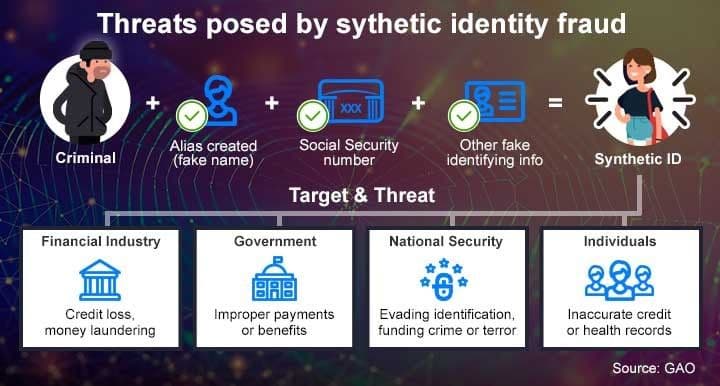
What Is a Synthetic Identity?
A synthetic identity is an artificially constructed identity created by combining real and fabricated information.
- Generated personal information
- Partially real identity elements
- AI-generated documentation
- Fabricated digital behavior patterns
- Artificial account histories
Synthetic identities may not correspond to real individuals.
What Is a Synthetic Identity Bank Run?
A synthetic identity bank run describes a scenario where large-scale fabricated identities create coordinated pressure on financial systems.
- Mass account creation
- Fraudulent credit extraction
- Artificial deposit flows
- Automated withdrawal activity
- Liquidity stress amplification
The threat emerges from scale and automation rather than isolated fraud events.
How Traditional Bank Runs Work
Traditional bank runs occur when customers lose confidence and rapidly withdraw funds.
- Fear-driven withdrawal behavior
- Liquidity shortages
- Loss of confidence
- Contagion effects
Psychology historically played the central role.
How Synthetic Identity Runs Could Differ
Future synthetic scenarios may emerge from algorithmic activity rather than human behavior.
- AI-driven account generation
- Machine-executed financial actions
- Coordinated digital activity
- High-speed systemic interactions
Algorithms could potentially create financial stress faster than humans.
Technologies Potentially Enabling Synthetic Identity Risks
- Artificial intelligence
- Deepfake generation systems
- Large language models
- Automated bot ecosystems
- Identity fabrication software
Technological progress increases both capability and complexity.
Potential Attack Pathways
Multiple pathways could theoretically create systemic pressure.
- Fraudulent loan applications
- Mass payment network manipulation
- Artificial credit expansion
- Deposit instability events
- Synthetic customer ecosystems
System interconnectedness increases potential impact.
Why Scale Matters
Individual fraud cases typically create limited financial damage. Systemic risk emerges when activities scale dramatically.
- Millions of automated identities
- High-frequency transaction activity
- Cross-platform coordination
- Rapid propagation effects
Automation compresses the timeline of potential disruption.

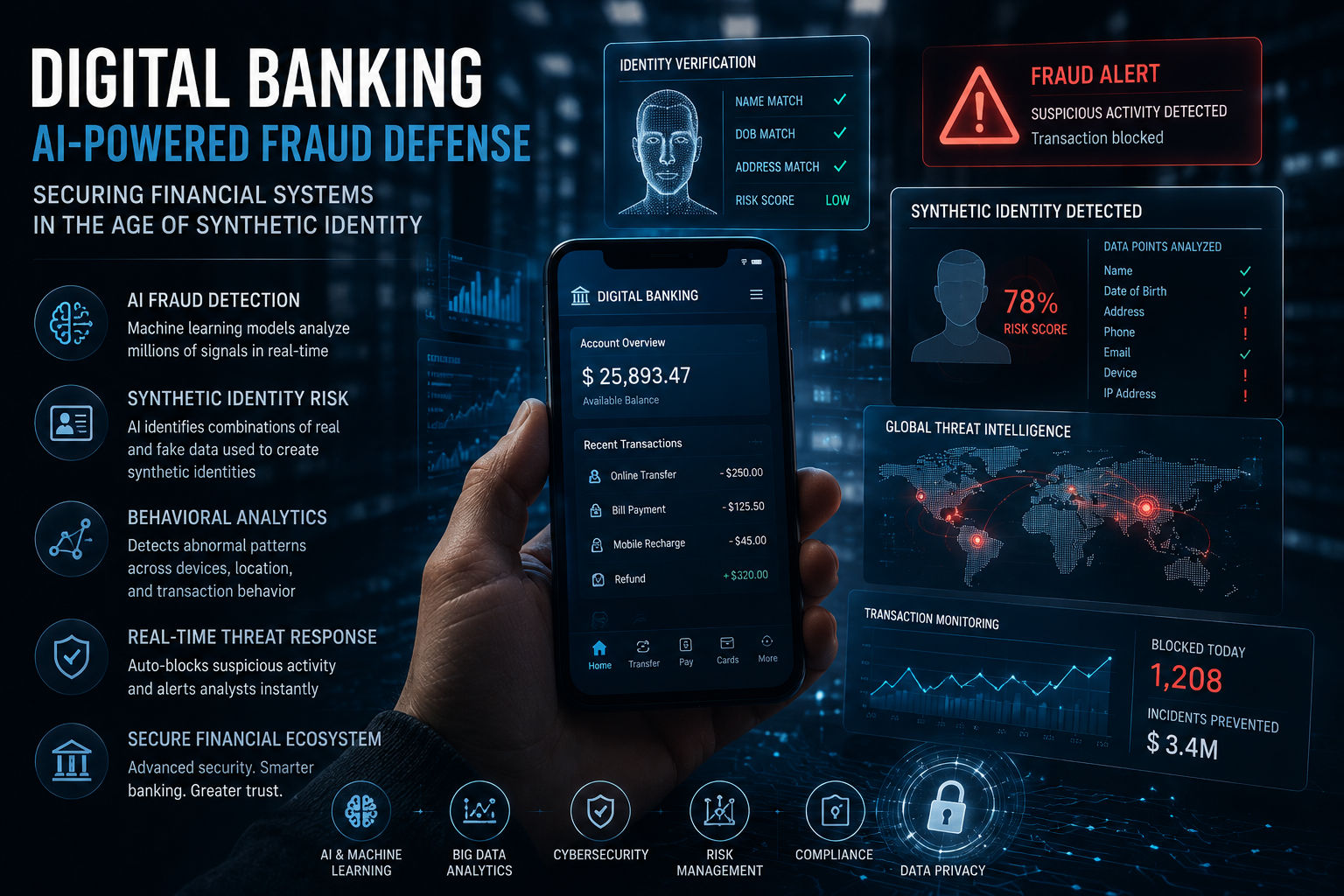
AI and Defensive Risk Intelligence
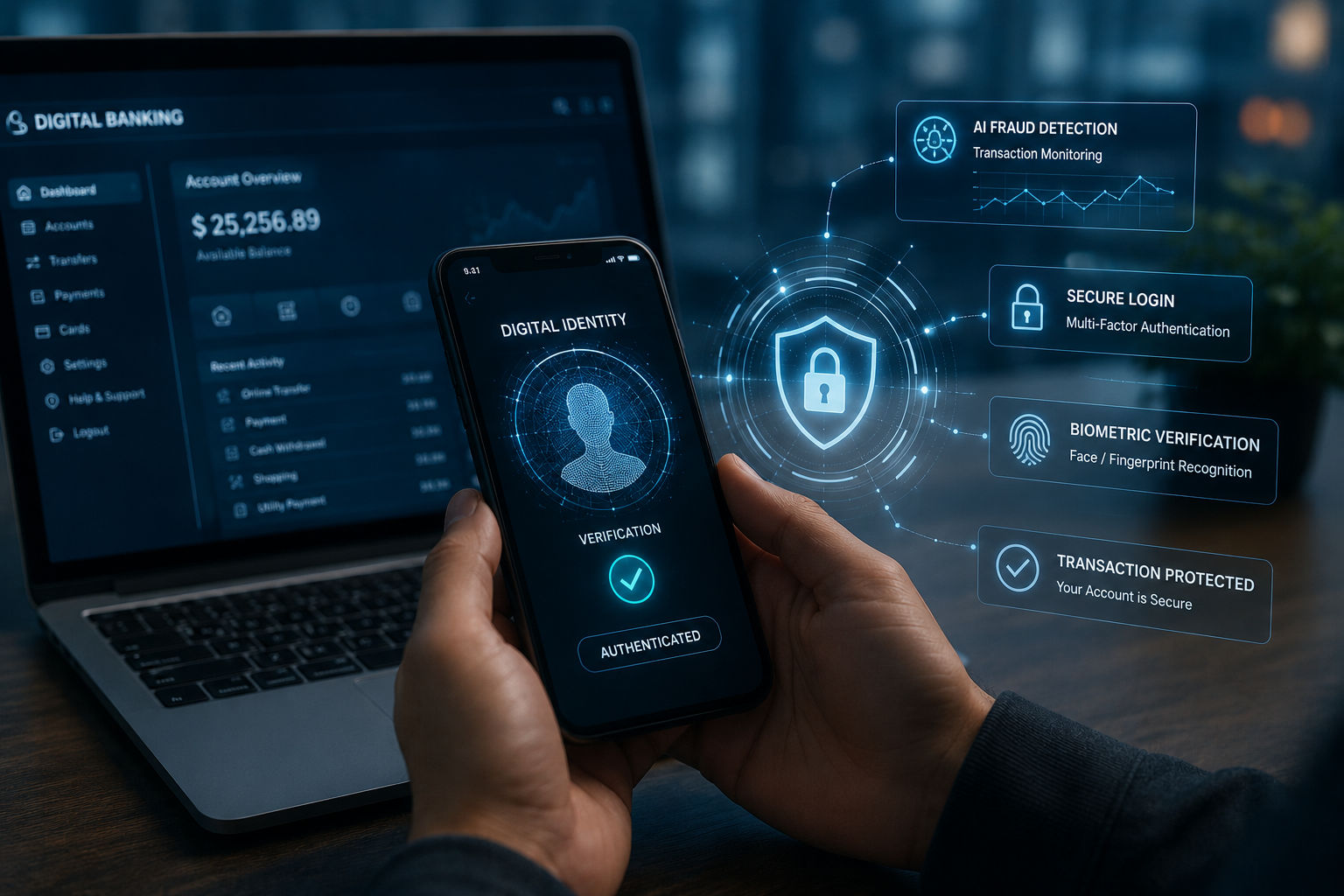
Artificial intelligence increasingly helps defend financial systems.
- Behavioral anomaly detection
- Identity verification intelligence
- Transaction network analysis
- Fraud prediction systems
AI increasingly becomes both the challenge and the defense.
Benefits of Advanced Identity Systems
- Reduced fraud exposure
- Stronger authentication systems
- Improved financial trust
- Greater cybersecurity resilience
- Enhanced customer protection
Identity innovation strengthens financial infrastructure.
Future financial stability may depend as much on identity integrity as on capital and liquidity management.
Traditional Fraud vs Synthetic Identity Risk
- Traditional → Human-operated fraud schemes
- Synthetic → AI-generated scalable ecosystems
- Traditional → Individual incidents
- Synthetic → Potential systemic effects
The scale and speed of risk dynamics may change significantly.
Digital Identity and Verification Systems
Future banking ecosystems increasingly require stronger identity infrastructure.
- Biometric authentication
- Cryptographic identity systems
- Behavioral verification models
- Zero-knowledge proof frameworks
Trust increasingly becomes technologically enforced.
Regulatory and Governance Challenges
Governments and financial institutions increasingly face new requirements.
- Identity standards
- AI accountability frameworks
- Cross-border verification systems
- Fraud monitoring regulations
Governance becomes increasingly important.
Future of Financial Identity Systems
Future ecosystems may evolve toward highly intelligent identity networks.
- Self-sovereign identities
- Continuous authentication systems
- AI-native trust infrastructure
- Adaptive financial identity ecosystems
Identity increasingly becomes core financial infrastructure.
Economic and Strategic Implications
Synthetic identity risks could reshape the future architecture of finance.
- Expansion of cybersecurity investments
- Transformation of onboarding systems
- Evolution of fraud intelligence
- Redesign of digital trust infrastructure
This evolution may fundamentally redefine how financial systems establish trust in the digital era.
Frequently Asked Questions
What is a synthetic identity?
An artificially created identity combining fabricated and real information.
What is a synthetic identity bank run?
A theoretical scenario where large-scale AI-generated identities create financial stress through coordinated activity.
Why is this important?
Because identity integrity increasingly underpins digital finance, payments, and banking systems.
Conclusion
Synthetic Identity Bank Runs represent a future-oriented concept highlighting how AI-generated identities and automated systems could create new categories of systemic financial risk. While this remains largely theoretical, the broader trend is real: financial systems increasingly depend on digital trust infrastructure. As artificial intelligence advances, future resilience may require stronger identity frameworks, continuous verification systems, and adaptive cybersecurity defenses.