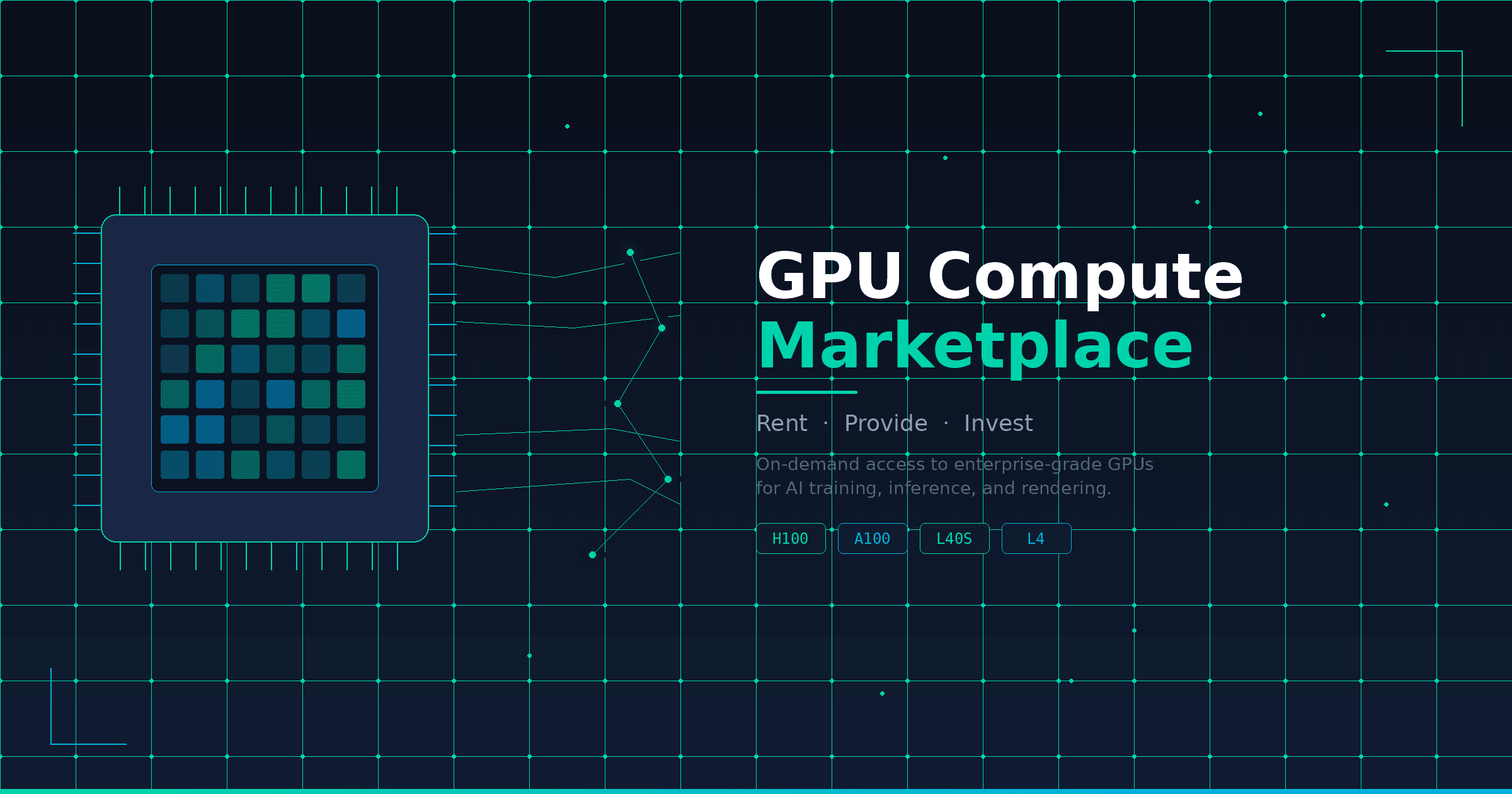
The GPU-Compute Commodity Market
The global economy is entering an era where computational power is becoming as strategically valuable as energy, oil, and telecommunications infrastructure. Artificial intelligence, machine learning, large language models, robotics, scientific simulations, and cloud-native applications increasingly depend on specialized computational hardware—particularly Graphics Processing Units (GPUs).
In 2026, a major emerging trend is the evolution of GPU resources from infrastructure components into a tradable economic asset class. This development is giving rise to what many analysts describe as the “GPU-Compute Commodity Market,” where computing capacity itself becomes a liquid market with pricing mechanisms, trading systems, futures contracts, and dynamic supply-demand economics.
This transformation may fundamentally reshape cloud economics, AI development, digital infrastructure, and global technology markets.
What Is a GPU-Compute Commodity Market?
A GPU-compute commodity market is an economic ecosystem where computational resources can be bought, sold, reserved, exchanged, or traded similarly to traditional commodities.
- GPU capacity trading
- Future compute reservations
- Dynamic market pricing
- Computational resource exchanges
Compute itself becomes a measurable and tradable economic unit.
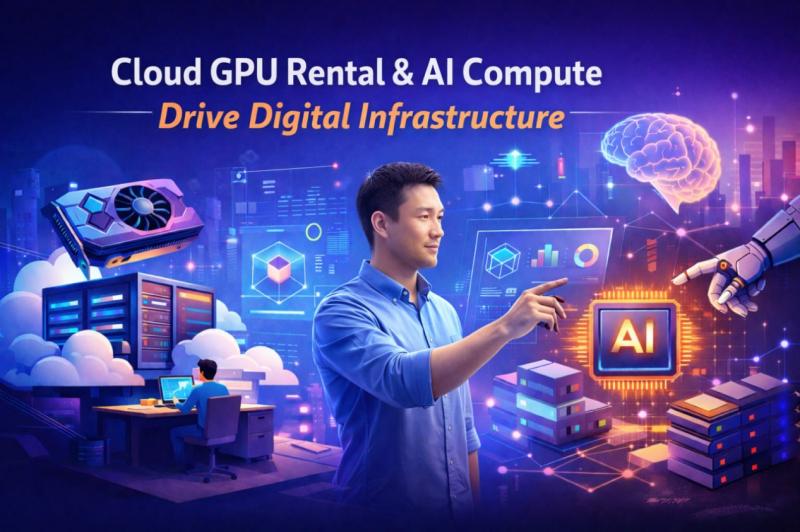
Why GPUs Are Becoming Strategic Assets
Several factors are dramatically increasing GPU demand.
- Large AI model training
- Growth of AI agents
- Expansion of inference workloads
- Scientific research computing
- Autonomous systems and robotics
Demand for specialized computation increasingly exceeds available supply.
Why Traditional Cloud Models Are Changing
Traditional cloud allocation methods face several limitations.
- Fixed pricing structures
- Resource shortages
- Long-term reservation inefficiencies
- Limited flexibility in allocation
- Supply-demand mismatches
Organizations increasingly require dynamic access to computational resources.
How GPU Commodity Markets Might Work
Future compute markets may operate similarly to traditional commodity exchanges.
- Providers supply compute inventory
- Buyers reserve future compute access
- Markets determine pricing dynamically
- Participants trade resource contracts
Computational capacity becomes continuously priced infrastructure.
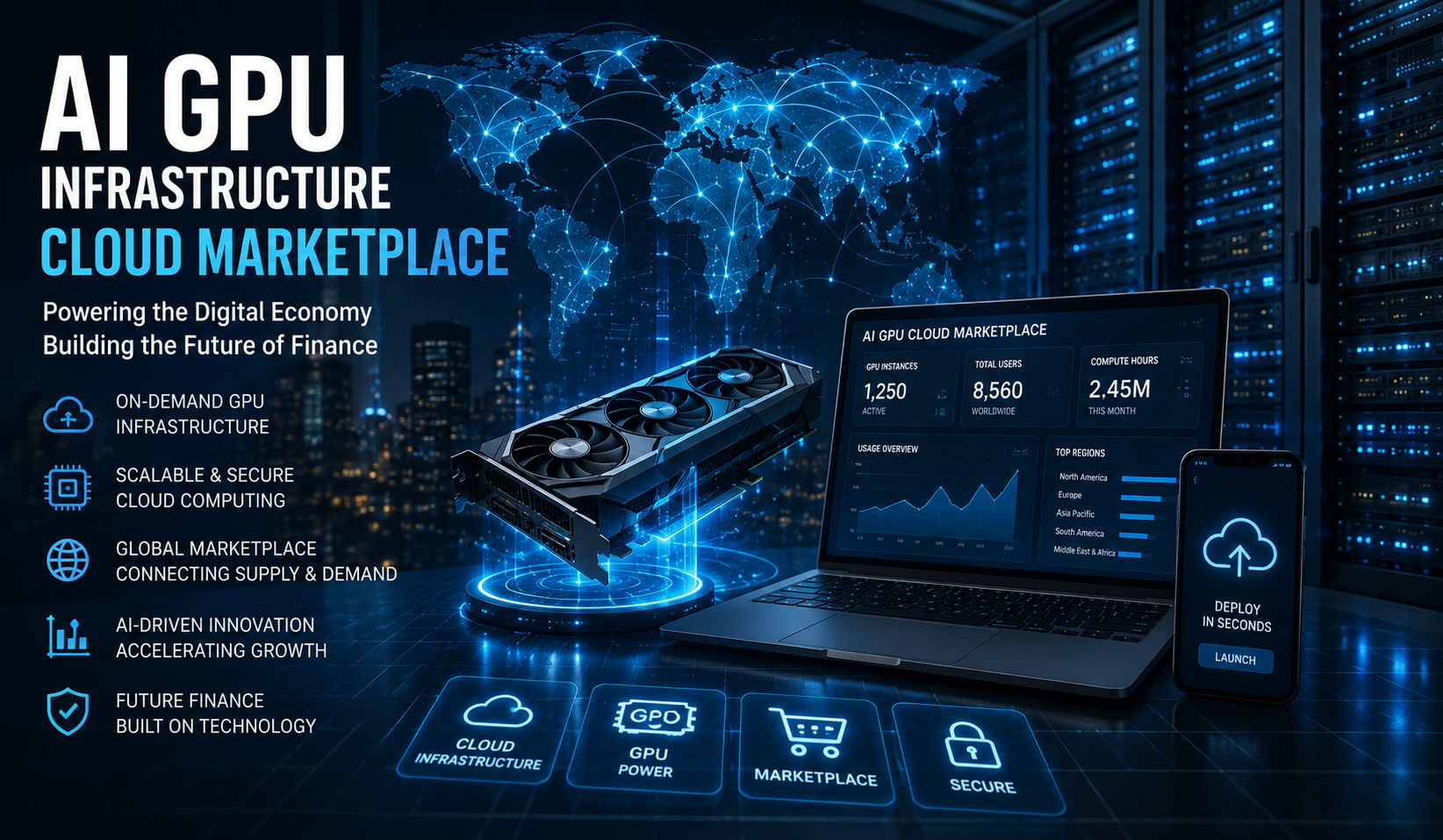
Potential Participants
Multiple industries could participate in GPU marketplaces.
- Cloud service providers
- AI development companies
- Financial institutions
- Semiconductor firms
- Enterprise technology organizations
Compute ecosystems could become highly interconnected.
Benefits of Compute Commodity Markets
- Improved allocation efficiency
- Better price discovery
- Reduced resource waste
- Greater liquidity and flexibility
- Enhanced infrastructure planning
Dynamic markets may improve compute accessibility.
Compute Futures and Derivatives
GPU markets may introduce sophisticated financial products.
- Compute futures contracts
- Capacity reservation agreements
- Options linked to GPU availability
- Risk management instruments
Compute may evolve into a full financial asset class.
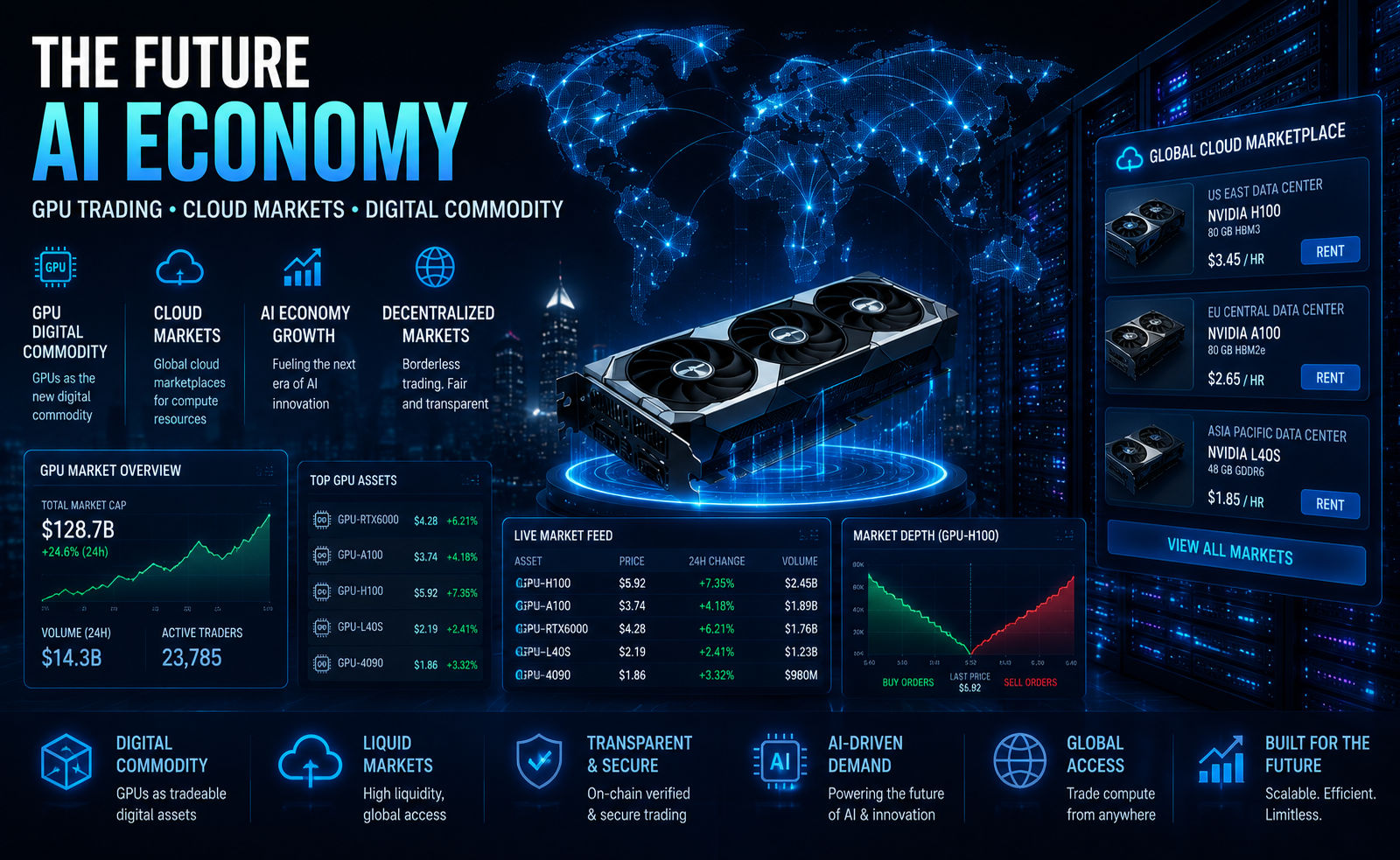
As AI becomes foundational infrastructure, computational power increasingly resembles a strategic commodity rather than a simple technical resource.
Traditional Cloud Infrastructure vs GPU Commodity Markets
- Traditional → Fixed resource allocation
- Commodity Market → Dynamic supply-demand pricing
- Traditional → Static pricing models
- Commodity Market → Real-time market valuation
This transition changes how computational resources are acquired and managed.
AI and Autonomous Resource Allocation
Artificial intelligence may increasingly manage compute ecosystems.
- Demand forecasting systems
- Automated pricing optimization
- Dynamic infrastructure balancing
- Predictive resource allocation
AI increasingly coordinates AI infrastructure itself.
Role of Tokenization
Blockchain systems may support tradable compute markets.
- Tokenized compute ownership
- Smart contract settlements
- Programmable resource exchanges
- Fractional compute participation
Digital infrastructure increasingly intersects with financial systems.
Challenges and Risks
GPU commodity markets introduce several important risks.
- Market speculation risks
- Resource concentration concerns
- Price volatility
- Infrastructure monopolization risks
- Regulatory uncertainty
Governance frameworks remain essential.
Geopolitical Implications
GPU access increasingly influences national competitiveness.
- Semiconductor supply chain competition
- National AI strategies
- Technology export controls
- Digital sovereignty initiatives
Computation increasingly becomes a strategic national asset.
Future of Compute Markets
Future computational economies may become increasingly sophisticated.
- Global compute exchanges
- AI-managed infrastructure markets
- Continuous resource auctions
- Machine-driven compute negotiations
Compute markets may become a foundational component of future digital economies.
Economic and Strategic Implications
The rise of GPU commodity markets could reshape digital infrastructure economics.
- New infrastructure financing models
- Expansion of digital asset classes
- Acceleration of AI innovation
- Transformation of cloud business models
This evolution may fundamentally change how computational resources are valued and distributed globally.
Frequently Asked Questions
What is a GPU-compute commodity market?
A market where computational resources are traded similarly to traditional commodities.
Why are GPUs becoming strategic?
Because AI systems increasingly require enormous computational resources for training and inference.
What risks exist in GPU markets?
Potential risks include speculation, resource concentration, and infrastructure volatility.
Conclusion
The GPU-Compute Commodity Market represents a major transformation in digital infrastructure economics by turning computational capacity into a strategic and potentially tradable asset. As AI demand continues expanding, compute resources may increasingly resemble energy or telecommunications infrastructure, supported by dynamic pricing systems, financial instruments, and global marketplaces. While such markets promise greater efficiency and flexibility, they also introduce important challenges related to fairness, concentration, regulation, and geopolitical competition.