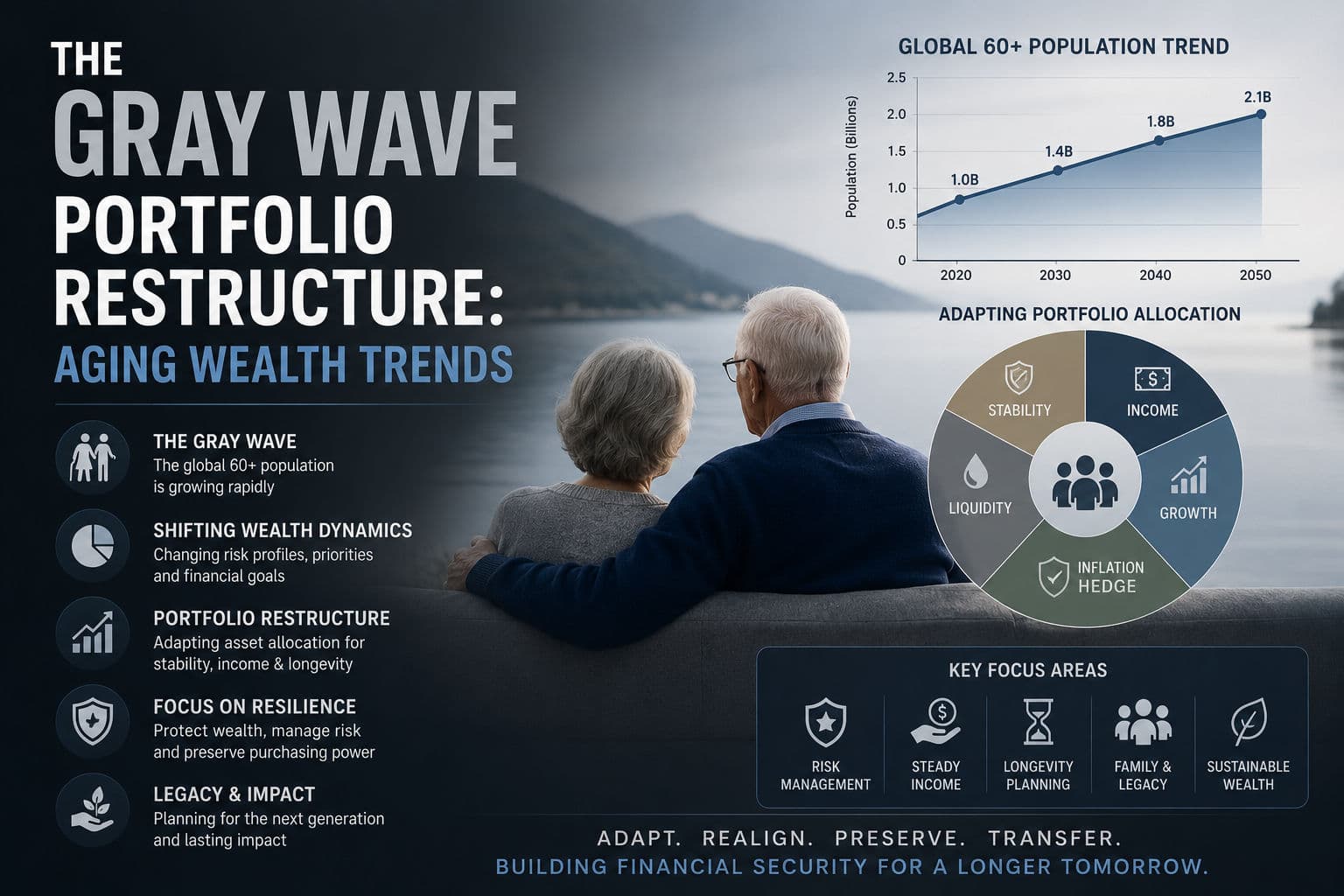
The "Gray Wave" Portfolio Restructure
The global economy is entering a demographic transformation unlike any seen in modern financial history. Populations across many countries are aging rapidly due to declining birth rates, longer life expectancy, and improvements in healthcare systems. This demographic transition—often referred to as the “Gray Wave”—is not simply a social trend; it is increasingly becoming a major force reshaping capital markets, investment strategies, labor economics, and institutional portfolio management.
In 2026 and beyond, investors, pension funds, insurance firms, sovereign wealth funds, and asset managers are increasingly adapting to what many analysts describe as the “Gray Wave Portfolio Restructure.” This involves adjusting investment allocations and financial strategies to account for aging populations and changing economic behaviors.
This evolution could fundamentally transform long-term capital allocation and the future structure of global financial markets.
What Is the Gray Wave?
The Gray Wave refers to large-scale demographic aging across populations.
- Longer life expectancy
- Lower birth rates
- Growing retiree populations
- Changing workforce structures
Demographic change increasingly becomes an economic force.
What Is a Gray Wave Portfolio Restructure?
Gray Wave Portfolio Restructure refers to changes in investment strategies driven by demographic aging patterns.
- Adjustments in asset allocation
- Income-focused investment models
- Longevity risk management
- Healthcare and retirement exposure strategies
Portfolios increasingly adapt to demographic realities.
Why Demographics Matter to Markets
Population structures influence economic behavior and capital flows.
- Consumption pattern shifts
- Retirement savings dynamics
- Healthcare spending growth
- Labor market changes
- Long-term investment behavior
Demographics increasingly shape economic outcomes.
How Portfolios May Change
Asset managers increasingly adjust exposure to sectors influenced by aging populations.
- Healthcare and biotechnology investments
- Retirement income assets
- Infrastructure supporting elderly populations
- Long-duration income strategies
Investment priorities shift toward demographic resilience.

Sectors Potentially Benefiting from the Gray Wave
Several industries may experience increased demand.
- Healthcare technology
- Biotechnology and longevity research
- Senior housing infrastructure
- Retirement financial products
- Medical devices and digital health
Demographic trends create long-term investment themes.
Impact on Pension Systems
Aging populations create challenges for retirement systems.
- Higher retirement obligations
- Longer payout periods
- Funding pressure
- Asset-liability matching complexity
Pension institutions increasingly require portfolio redesign.
AI and Demographic Intelligence
Artificial intelligence increasingly supports demographic investment analysis.
- Population trend forecasting
- Behavioral spending prediction
- Longevity modeling
- Dynamic asset allocation systems
AI strengthens long-term investment planning.

Benefits of Demographic-Aware Portfolio Strategies
- Better long-term risk management
- Improved income planning
- Enhanced sector allocation
- Greater resilience to structural economic shifts
- Long-term capital optimization
Demographic intelligence increasingly becomes an investment advantage.
The Gray Wave transforms demographics from population statistics into one of the most influential forces shaping future capital markets.
Traditional Portfolio Models vs Gray Wave Strategies
- Traditional → Economic-cycle focused allocations
- Gray Wave → Demographic-driven allocations
- Traditional → Broad market assumptions
- Gray Wave → Population trend intelligence
This changes how long-term investment strategies are built.
Risks and Challenges
Demographic restructuring introduces uncertainties.
- Economic growth slowdown risks
- Labor shortages
- Healthcare cost expansion
- Retirement funding pressure
- Government fiscal stress
Population trends can create broad economic consequences.
Geopolitical Implications
Different demographic patterns may reshape global competition.
- Regional workforce shifts
- Migration policy changes
- Healthcare infrastructure demand
- Changes in economic growth leadership
Demographics increasingly influence geopolitical dynamics.
Future of Gray Wave Investing
Future investment systems may become increasingly demographic-aware.
- AI-native demographic investing
- Longevity-linked financial products
- Personalized retirement ecosystems
- Adaptive long-term portfolio systems
Investment strategies increasingly incorporate population intelligence.
Economic and Strategic Implications
The Gray Wave Portfolio Restructure could reshape global capital allocation.
- Transformation of investment priorities
- Expansion of healthcare economies
- Evolution of retirement systems
- Long-term restructuring of financial markets
This demographic transition may become one of the defining economic forces of the coming decades.
Frequently Asked Questions
What is the Gray Wave?
A demographic trend involving aging populations and growing retiree segments.
What is Gray Wave Portfolio Restructure?
Investment strategy adjustments designed to account for demographic aging patterns.
Why does aging affect financial markets?
Because demographics influence spending patterns, labor markets, savings behavior, and long-term capital allocation.
Conclusion
The Gray Wave Portfolio Restructure represents a significant shift in how investors and institutions may approach long-term capital allocation. As aging populations reshape economic structures and consumption patterns, investment systems increasingly adapt to demographic realities. While this transformation introduces challenges related to pensions, healthcare costs, and growth dynamics, it also creates opportunities for innovation, sector evolution, and more sophisticated investment strategies.