
Confidential Computing
As organizations increasingly rely on cloud computing, artificial intelligence, edge infrastructure, and distributed digital ecosystems, protecting sensitive data has become one of the most important challenges in cybersecurity. Traditional security approaches primarily focus on encrypting data when it is stored or transmitted. However, data often becomes vulnerable while it is actively being processed.
Confidential Computing is an emerging cybersecurity and cloud-computing paradigm designed to protect data during computation. By creating hardware-based secure execution environments, confidential computing ensures that sensitive information remains protected even while applications are actively using it.
This technology is rapidly gaining importance across industries including healthcare, finance, government, defense, artificial intelligence, and cloud services.
Confidential Computing may become one of the foundational security architectures of the next-generation digital economy.
What Is Confidential Computing?
Confidential Computing is a security technology that protects data while it is being processed by applications.
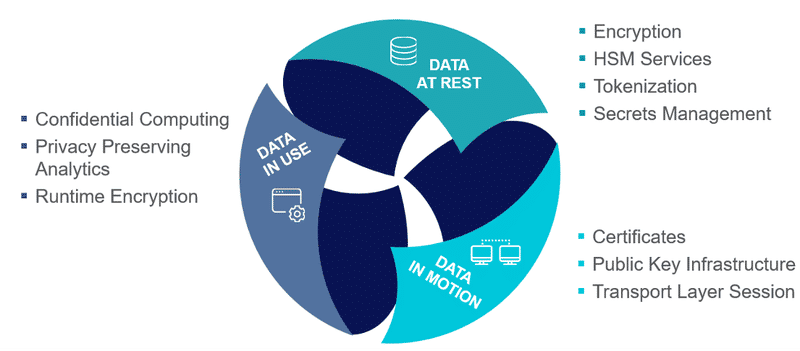
Traditionally, organizations secure:
- Data at rest (stored data)
- Data in transit (moving data)
Confidential Computing adds protection for:
- Data in use (active computation)
This is achieved through hardware-based trusted execution environments (TEEs) that isolate workloads from unauthorized access.
Why Traditional Security Has a Gap
Even encrypted data must usually be decrypted before processing.
During computation, sensitive information can potentially be exposed to:
- Malicious insiders
- Compromised administrators
- Advanced cyberattacks
- Cloud infrastructure threats
- Memory scraping attacks
- Privilege escalation exploits
Confidential Computing addresses this critical security gap.
How Confidential Computing Works
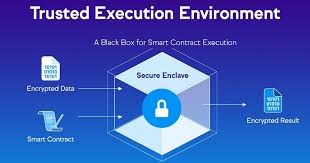
The technology relies on hardware-enforced secure environments known as Trusted Execution Environments (TEEs).
Typical workflow:
- Data enters a secure enclave.
- Information remains encrypted outside the enclave.
- Applications process data within the protected environment.
- Memory access is restricted.
- Unauthorized users cannot view computations.
- Results are securely transmitted.
This creates a protected computing zone isolated from the rest of the system.
What Are Trusted Execution Environments (TEEs)?
TEEs are hardware-protected regions within processors that isolate sensitive computations.
Key characteristics include:
- Memory isolation
- Secure code execution
- Encrypted processing environments
- Tamper resistance
- Hardware-enforced protection
Only authorized workloads can access information within the enclave.
Core Technologies Behind Confidential Computing
- Trusted Execution Environments (TEEs)
- Hardware Security Modules (HSMs)
- Secure Enclaves
- Memory Encryption
- Remote Attestation
- Trusted Platform Modules (TPMs)
- Hardware-Based Root of Trust
These technologies work together to create secure computing environments.
Role in Cloud Computing
Cloud environments are among the largest beneficiaries of confidential computing.
- Secure multi-tenant environments
- Sensitive enterprise workloads
- Cross-organizational collaboration
- Protected cloud analytics
- Regulatory compliance support
Organizations can process sensitive data in public clouds with greater confidence.
Confidential Computing extends encryption into the final frontier of data protection: active computation.
Applications Across Industries
- Healthcare data processing
- Financial analytics
- Government systems
- Defense intelligence
- Cloud-native applications
- Cross-border data collaboration
- Digital identity systems
- Artificial intelligence training
Any environment handling highly sensitive information can benefit from confidential computing.
Traditional Security vs Confidential Computing
| Traditional Security | Confidential Computing |
|---|---|
| Protects data at rest | Protects data during processing |
| Protects data in transit | Protects data in use |
| Software-based controls | Hardware-enforced security |
| Trusted administrators required | Minimized trust requirements |
Confidential AI and Machine Learning
Artificial intelligence systems increasingly require access to highly sensitive datasets.
- Healthcare AI models
- Financial AI systems
- Government intelligence analysis
- Private enterprise data processing
- Collaborative AI training
Confidential Computing enables privacy-preserving AI development and deployment.
Role of Remote Attestation
Remote attestation allows users to verify that workloads are running within trusted environments.
- Environment verification
- Integrity validation
- Security assurance
- Compliance verification
This increases trust in distributed computing environments.
Challenges and Limitations
- Performance overhead
- Hardware dependency
- Complex implementation
- Limited software compatibility
- Specialized expertise requirements
- Evolving threat landscape
Organizations must balance security benefits with operational complexity.
Future Outlook
The next decade may see confidential computing become a standard component of digital infrastructure.
- Confidential AI platforms
- Secure cloud-native architectures
- Privacy-preserving analytics
- Zero-trust computing environments
- Cross-organizational secure collaboration
Future systems may increasingly assume that all computation must remain protected by default.
Economic and Strategic Implications
Confidential Computing could fundamentally reshape cloud security, data governance, and digital trust models.
- Enhanced regulatory compliance
- Secure data monetization
- Expansion of privacy-preserving AI
- Improved cloud adoption
- Strengthened digital trust ecosystems
The organizations and nations that successfully deploy confidential computing infrastructure may gain significant advantages in the emerging data-driven economy.
Frequently Asked Questions
What is Confidential Computing?
Confidential Computing is a security technology that protects sensitive data while it is actively being processed using hardware-based secure execution environments.
Why is Confidential Computing important?
It protects data during computation, closing a major security gap that traditional encryption methods do not fully address.
What industries benefit most from Confidential Computing?
Healthcare, finance, government, defense, cloud computing, artificial intelligence, and any industry that processes highly sensitive information.
Conclusion
Confidential Computing represents a major advancement in cybersecurity and cloud infrastructure by protecting data while it is actively being processed. Through hardware-based secure execution environments, organizations can significantly reduce exposure to insider threats, cloud vulnerabilities, and advanced cyberattacks. As digital ecosystems become increasingly data-driven and AI-powered, confidential computing may become a cornerstone technology for secure, privacy-preserving, and trustworthy computing environments worldwide.