technology

 Technology
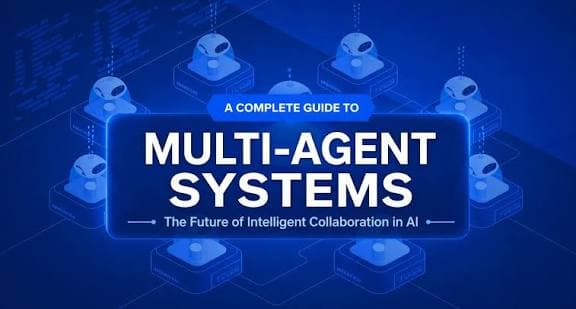
Multiagent Systems (MAS): Powering the Next Generation of AI
Multiagent Systems (MAS): The Future of Collaborative Artificial IntelligenceMultiagent Systems (MAS)Artificial Intelligence is rapidly evolving from standalone machine learning models into collaborative networks of intelligent agents capable of working together to solve complex problems. One of the most significant developments driving this transformation is Multiagent Systems (MAS).Instead of relying on a single AI model to perform every task, Multiagent Systems distribute responsibilities among multiple autonomous agents, each with specialized capabilities. These agents communicate, cooperate, negotiate, and coordinate with one another to achieve common objectives while adapting to changing environments.Inspired by biological systems such as ant colonies, bee swarms, and human organizations, MAS enables distributed intelligence that is scalable, resilient, and highly efficient. From enterprise automation and robotics to autonomous vehicles, financial markets, cybersecurity, healthcare, and smart cities, Multiagent Systems are becoming a foundational architecture for the next generation of AI-powered applications.What Are Multiagent Systems?A Multiagent System (MAS) is a distributed artificial intelligence system consisting of multiple autonomous software agents that interact with each other and their environment to accomplish individual or shared goals.Each agent can independently:Perceive its environmentMake decisionsCommunicate with other agentsLearn from experienceExecute tasks autonomouslyAdapt to changing conditionsUnlike centralized AI systems, MAS distributes intelligence across many specialized agents that collectively solve complex problems more efficiently.Why Multiagent Systems Are ImportantModern digital environments are becoming increasingly complex. Businesses, governments, and industries manage enormous volumes of data, workflows, and interconnected systems that exceed the capabilities of traditional centralized AI.Multiagent Systems address these challenges by:Breaking large problems into manageable tasksAllowing specialized agents to handle specific responsibilitiesOperating simultaneously across distributed environmentsImproving scalability and fault toleranceSupporting real-time decision-makingThis makes MAS particularly valuable in large-scale enterprise and industrial environments.How Multiagent Systems WorkIn a Multiagent System, different agents perform specialized tasks while continuously exchanging information with one another.A typical workflow includes:A complex task is received.The task is divided into multiple subtasks.Each subtask is assigned to a specialized AI agent.Agents communicate using predefined protocols.Agents coordinate their actions and share results.The system combines all outputs into a final solution.Because multiple agents operate simultaneously, MAS significantly improves efficiency compared to sequential processing.Core Components of a Multiagent SystemAutonomous intelligent agentsCommunication protocolsShared knowledge repositoriesDecision-making enginesTask allocation mechanismsPlanning algorithmsCoordination frameworksLearning modulesTogether, these components enable agents to collaborate effectively while maintaining independence.Types of Multiagent SystemsDepending on their objectives, Multiagent Systems can be categorized into several types.Cooperative Multiagent SystemsCompetitive Multiagent SystemsHierarchical Multiagent SystemsDistributed Multiagent SystemsSwarm Intelligence SystemsHybrid Multiagent SystemsEach architecture is designed to solve different classes of problems and optimize coordination among agents.Rather than building one super-intelligent AI, Multiagent Systems create networks of specialized AI agents that collaborate like expert teams to solve complex real-world problems.Role of Artificial Intelligence in MASEach agent within a Multiagent System leverages AI technologies such as:Machine LearningDeep LearningReinforcement LearningNatural Language ProcessingKnowledge RepresentationComputer VisionReasoning AlgorithmsThese capabilities allow agents to make intelligent decisions while continuously improving through experience.Applications Across IndustriesEnterprise workflow automationFinancial trading platformsHealthcare diagnosis and coordinationSupply chain optimizationAutonomous vehiclesCybersecurity threat detectionIndustrial roboticsSmart citiesTelecommunicationsCloud infrastructure managementMultiagent Systems are increasingly being deployed wherever intelligent coordination is required.Single-Agent AI vs Multiagent SystemsSingle-Agent AIMultiagent SystemsSingle intelligent modelMultiple specialized agentsCentralized decision-makingDistributed decision-makingLimited scalabilityHighly scalable architectureOne model performs all tasksEach agent specializes in specific tasksHigher single point of failureGreater resilience and redundancyBenefits of Multiagent SystemsImproved scalabilityDistributed intelligenceParallel task executionHigher system resilienceBetter resource utilizationGreater adaptabilityFaster decision-makingReduced operational bottlenecksThese advantages enable organizations to automate increasingly sophisticated business processes.ChallengesComplex agent coordinationCommunication overheadConflict resolutionSecurity vulnerabilitiesTrust managementGovernance complexityDebugging distributed systemsDesigning secure, efficient, and well-governed Multiagent Systems remains an active area of AI research.Future OutlookThe future of AI is expected to move toward collaborative networks of intelligent agents rather than isolated AI systems.Autonomous enterprise workforcesAI-powered software engineering teamsDistributed scientific research agentsCollaborative cybersecurity systemsSmart manufacturing ecosystemsIntelligent digital governmentsAutonomous logistics networksAs Large Language Models, Agentic AI, and autonomous reasoning continue to advance, Multiagent Systems will become increasingly capable of managing entire business operations with minimal human intervention.Economic and Strategic ImpactMultiagent Systems have the potential to fundamentally transform enterprise productivity and digital innovation.Lower operational costsGreater business automationFaster innovation cyclesImproved customer experiencesExpansion of AI-native enterprisesMore resilient digital ecosystemsOrganizations that successfully deploy Multiagent Systems will be well-positioned to lead the next era of intelligent automation and digital transformation.Frequently Asked Questions (FAQs)What is a Multiagent System?A Multiagent System is a distributed AI environment where multiple autonomous software agents collaborate to solve complex tasks through communication and coordination.How is MAS different from traditional AI?Traditional AI often relies on a single centralized model, whereas MAS distributes intelligence across multiple specialized agents working together.Where are Multiagent Systems used?They are widely used in enterprise automation, healthcare, robotics, finance, cybersecurity, autonomous vehicles, smart cities, logistics, and cloud computing.ConclusionMultiagent Systems (MAS) represent one of the most significant advancements in artificial intelligence by enabling multiple autonomous agents to collaborate, communicate, and solve problems collectively. By distributing intelligence across specialized agents, MAS delivers greater scalability, resilience, adaptability, and efficiency than traditional centralized AI systems. As organizations continue adopting Agentic AI and autonomous digital workflows, Multiagent Systems are expected to become the foundation of future enterprise software, intelligent automation, and next-generation digital ecosystems.
 Technology
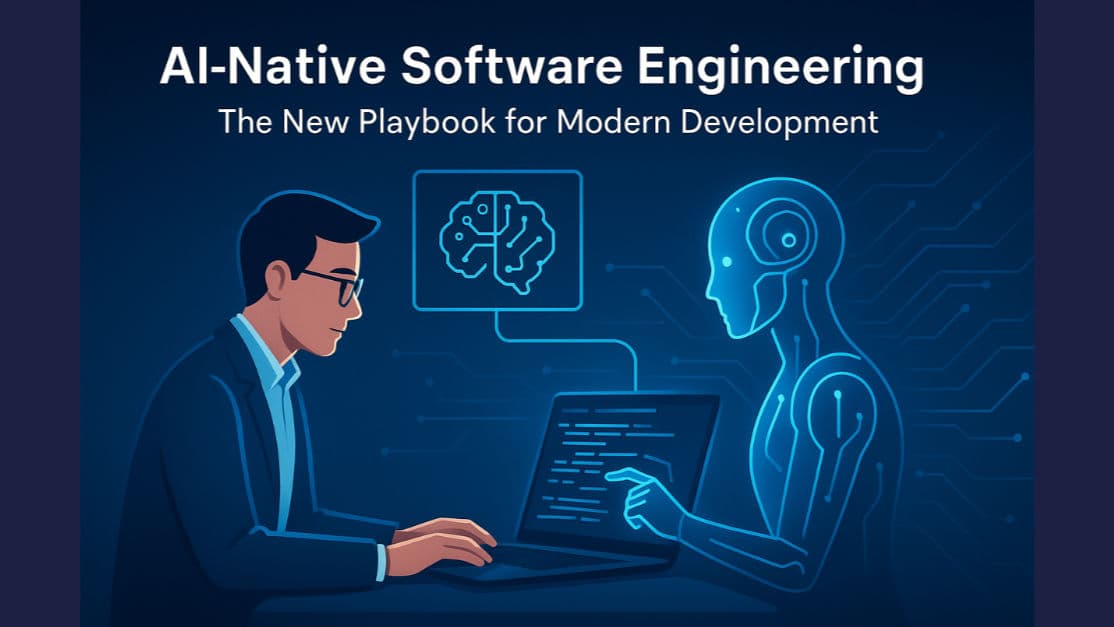
AI-Native Development Platforms: The Future of Software Engineering
AI-Native Development PlatformsSoftware development is undergoing one of its biggest transformations since the advent of cloud computing. Traditionally, developers manually wrote code, tested applications, deployed software, monitored systems, and maintained infrastructure using separate tools. Today, the rapid advancement of artificial intelligence is giving rise to AI-Native Development Platforms—integrated environments where AI becomes an active participant throughout the entire software development lifecycle.Unlike conventional development platforms that simply provide programming tools, AI-native platforms embed intelligent assistants, autonomous coding agents, automated testing, security analysis, documentation generation, infrastructure management, and deployment optimization directly into developer workflows.These platforms enable developers to focus more on solving business problems while AI handles repetitive engineering tasks, improves software quality, and accelerates delivery.AI-Native Development Platforms are expected to become the standard foundation for next-generation software engineering, enterprise application development, and digital transformation.What Are AI-Native Development Platforms?AI-Native Development Platforms are software engineering environments where artificial intelligence is deeply integrated into every stage of application development.Instead of functioning as an external assistant, AI becomes an intelligent collaborator capable of:Generating source codeDesigning software architectureWriting documentationCreating automated testsFinding bugsOptimizing performanceManaging deploymentsThe result is a highly automated software engineering workflow.Why Traditional Development Platforms Have LimitationsConventional software development often requires developers to manage multiple disconnected tools.Manual codingSeparate testing toolsIndependent security scannersManual documentationComplex deployment pipelinesRepetitive maintenance tasksThese fragmented workflows increase development time and operational complexity.How AI-Native Development Platforms WorkAI-native platforms integrate intelligent automation throughout the software lifecycle.Typical workflow:Developers describe application requirements.AI generates initial architecture.Source code is automatically created.Tests are generated and executed.Security vulnerabilities are identified.Applications are deployed through automated pipelines.AI continuously monitors production systems.Developers remain responsible for oversight while AI accelerates engineering processes.Core Technologies Behind AI-Native PlatformsLarge Language Models (LLMs)Agentic AI SystemsMultiagent Development WorkflowsRetrieval-Augmented Generation (RAG)Cloud-Native InfrastructureMachine Learning Operations (MLOps)DevSecOps AutomationThese technologies create intelligent development ecosystems capable of continuous learning and automation.Key FeaturesAI code generationNatural language programmingIntelligent debuggingAutomated testingCode optimizationArchitecture recommendationsContinuous deployment automationReal-time documentationDevelopers can complete projects significantly faster while maintaining higher software quality.Role of Multiagent AIModern AI-native platforms increasingly rely on multiple specialized AI agents.Architecture agentsCoding agentsTesting agentsSecurity agentsDocumentation agentsDeployment agentsMonitoring agentsEach agent performs specialized tasks while coordinating with the others to complete complex development workflows.AI-Native Development Platforms transform software engineering from manually writing code into intelligently orchestrating autonomous software creation.Applications Across IndustriesEnterprise software developmentCloud-native applicationsFinancial technologyHealthcare softwareGovernment digital servicesE-commerce platformsIndustrial automationMobile application developmentNearly every industry developing software can benefit from AI-native engineering platforms.Traditional Development Platforms vs AI-Native PlatformsTraditional PlatformsAI-Native PlatformsManual codingAI-assisted code generationDeveloper-driven testingAutomated intelligent testingSeparate DevOps toolsIntegrated AI-driven DevOpsReactive maintenancePredictive optimizationBenefitsFaster software deliveryImproved code qualityLower development costsReduced human errorEnhanced developer productivityContinuous optimizationAccelerated innovationOrganizations can build and deploy applications more efficiently while maintaining strong engineering standards.Challenges and RisksAI-generated code verificationSecurity vulnerabilitiesModel hallucinationsCompliance requirementsDeveloper overreliance on AIIntellectual property concernsHuman oversight remains essential to ensure reliability, security, and maintainability.Future OutlookOver the next decade, AI-native development environments are expected to become increasingly autonomous.Fully autonomous coding agentsSelf-healing applicationsAI-driven software architectureContinuous autonomous deploymentCollaborative multiagent engineering teamsDevelopers may transition from writing every line of code to supervising intelligent software engineering systems.Economic and Strategic ImplicationsAI-Native Development Platforms have the potential to significantly reshape software engineering, enterprise productivity, and digital innovation.Expansion of AI-powered software industriesReduced software development costsFaster digital transformationGrowth of autonomous engineering ecosystemsAcceleration of enterprise AI adoptionThe organizations that successfully adopt AI-native software engineering platforms may gain substantial competitive advantages through faster innovation, higher productivity, and more resilient digital infrastructure.Frequently Asked QuestionsWhat is an AI-Native Development Platform?An AI-Native Development Platform is a software engineering environment where artificial intelligence is integrated throughout the entire development lifecycle, including coding, testing, deployment, security, and monitoring.How does it differ from a traditional development platform?Traditional platforms rely heavily on manual development processes, while AI-native platforms embed intelligent automation and AI agents that assist developers throughout every stage of software creation.Will AI-Native Development Platforms replace software developers?They are more likely to augment developers by automating repetitive tasks and accelerating workflows, while human engineers continue to provide creativity, architectural decisions, oversight, and business understanding.ConclusionAI-Native Development Platforms represent the next evolution of software engineering by embedding artificial intelligence into every phase of application development. Through autonomous coding, intelligent testing, integrated security, automated deployment, and continuous optimization, these platforms enable organizations to build software faster, more securely, and with greater efficiency. As Agentic AI and Multiagent Systems continue to advance, AI-native development platforms are expected to become the standard operating environment for the future of software engineering and digital innovation.

Small Modular Reactors: The Future of Scalable Nuclear Energy
Small Modular Reactors (SMRs)The global transition toward clean energy is driving the search for reliable, low-carbon power sources that can complement renewable energy such as solar and wind. While conventional nuclear power plants provide large amounts of electricity with minimal greenhouse gas emissions, they often require enormous upfront investments, long construction periods, and complex infrastructure.Small Modular Reactors (SMRs) represent a new generation of nuclear technology designed to overcome many of these challenges. SMRs are compact nuclear reactors that can be factory-manufactured, transported to deployment sites, and assembled more quickly than traditional nuclear plants.By offering scalable, flexible, and safer nuclear energy, SMRs are attracting growing interest from governments, utilities, technology companies, and industries seeking dependable carbon-free electricity.Small Modular Reactors may become one of the key technologies supporting global decarbonization, energy security, hydrogen production, and AI-powered industrial infrastructure.What Are Small Modular Reactors?Small Modular Reactors (SMRs) are advanced nuclear reactors that generate electricity using nuclear fission while being significantly smaller than conventional nuclear power plants.Unlike large reactors that produce over 1,000 megawatts (MW) of electricity, most SMRs are designed to generate between 50 MW and 300 MW per unit.The term "modular" refers to their ability to be manufactured in factories and transported as standardized modules for installation.Compact reactor designsFactory-built componentsScalable deploymentLower construction complexityFlexible installation optionsMultiple SMRs can also be combined to meet growing electricity demand.Why SMRs Are Gaining AttentionGrowing electricity demand, climate goals, and energy security concerns are driving interest in advanced nuclear technologies.Carbon-neutral electricity generationReliable 24/7 power supplyGrowing AI data center energy demandIndustrial decarbonizationGrid stability supportEnergy independenceSMRs offer continuous electricity generation regardless of weather conditions.How Small Modular Reactors WorkSMRs operate using the same fundamental principle as conventional nuclear reactors—controlled nuclear fission.Typical workflow:Nuclear fuel undergoes controlled fission.Heat is generated inside the reactor core.Heat converts water into steam.Steam drives turbines.Turbines generate electricity.Cooling systems safely remove excess heat.Many modern SMRs incorporate passive safety systems that function without external power or operator intervention.Key Features of SMRsFactory-based manufacturingPassive safety systemsSmaller physical footprintModular expansion capabilityLower construction riskEnhanced operational flexibilityImproved safety designThese characteristics make SMRs attractive for regions where large nuclear plants may not be practical.Types of Small Modular ReactorsPressurized Water Reactors (PWR)Boiling Water Reactors (BWR)High-Temperature Gas ReactorsMolten Salt ReactorsFast Neutron ReactorsLead-Cooled Fast ReactorsDifferent designs aim to optimize efficiency, safety, fuel usage, and operational flexibility.Applications Across IndustriesElectricity generationAI data centersHydrogen productionMining operationsRemote communitiesIndustrial manufacturingMilitary installationsDesalination plantsSMRs can provide reliable power where traditional infrastructure is limited.Small Modular Reactors combine the reliability of nuclear energy with the flexibility and scalability required for the modern clean-energy economy.Traditional Nuclear Plants vs Small Modular ReactorsTraditional Nuclear PlantsSmall Modular ReactorsVery large generating capacitySmaller, scalable capacityLong construction timelinesPotentially faster deploymentPrimarily site-builtFactory-manufactured modulesLarge capital investmentLower initial investment per unitRole in Artificial Intelligence InfrastructureAI computing facilities require massive amounts of reliable electricity.Powering hyperscale data centersSupporting AI model trainingReducing carbon emissionsProviding stable baseload powerSupporting future digital infrastructureSMRs are increasingly being explored as potential power sources for energy-intensive AI infrastructure.Advantages of SMRsLow greenhouse gas emissionsReliable continuous electricityImproved passive safetyFlexible deploymentReduced land requirementsSupport for renewable energy integrationThese advantages make SMRs attractive for achieving long-term energy transition goals.Challenges and RisksHigh development costsNuclear waste managementRegulatory approval complexityPublic acceptance concernsFuel supply considerationsLong-term economic competitivenessCommercial deployment depends on continued technological progress, regulatory support, and public confidence.Future OutlookMany countries are actively evaluating SMRs as part of their long-term energy strategies.Carbon-neutral electricity systemsHydrogen economy developmentIndustrial electrificationAI infrastructure expansionRemote energy deploymentSMRs may complement renewable energy by providing reliable baseload power while reducing carbon emissions.Economic and Strategic ImplicationsSmall Modular Reactors could reshape global energy markets by providing scalable nuclear solutions for countries seeking secure and low-carbon electricity.Expansion of advanced nuclear industriesGrowth of clean-energy infrastructureImproved energy securitySupport for AI-driven economiesAcceleration of industrial decarbonizationThe countries and companies leading in SMR technology may gain significant advantages in clean energy, industrial competitiveness, and technological innovation.Frequently Asked QuestionsWhat is a Small Modular Reactor (SMR)?An SMR is a compact nuclear reactor designed to generate electricity safely and efficiently while being factory-built, modular, and easier to deploy than conventional nuclear power plants.Why are SMRs important?They provide reliable, low-carbon electricity with improved safety features and flexible deployment options, making them valuable for clean energy transitions and growing electricity demand.Can Small Modular Reactors replace renewable energy?SMRs are generally viewed as complementary to renewable energy rather than replacements. They can provide stable baseload power when solar and wind generation fluctuate, helping create a more reliable low-carbon electricity system.ConclusionSmall Modular Reactors (SMRs) represent one of the most promising innovations in advanced nuclear energy. By combining modular manufacturing, enhanced safety systems, flexible deployment, and reliable low-carbon electricity generation, SMRs have the potential to support global dec
Multiagent Systems (MAS): Collaborative AI at Scale
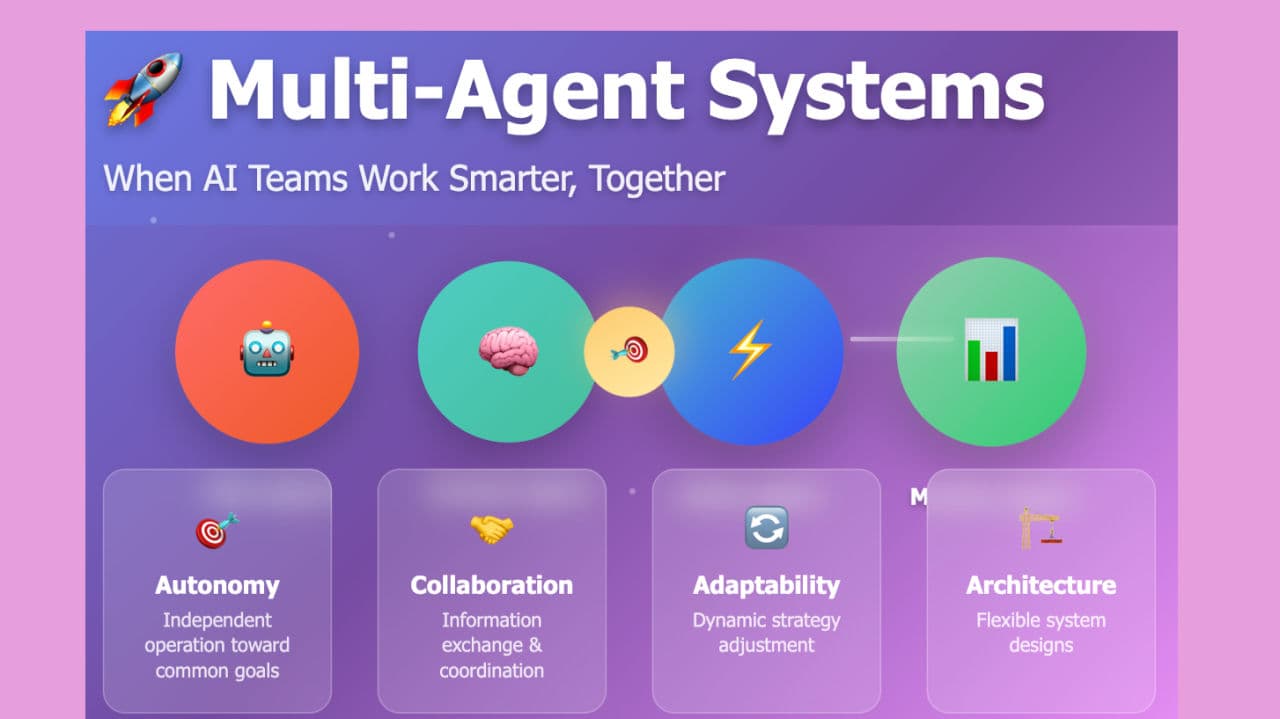
Multiagent Systems (MAS)As artificial intelligence evolves beyond single-model applications, researchers and enterprises are increasingly adopting Multiagent Systems (MAS)—distributed networks of intelligent software agents that collaborate, communicate, negotiate, and coordinate to solve complex problems. Rather than relying on one centralized AI model, Multiagent Systems divide responsibilities among multiple specialized agents, enabling greater scalability, resilience, adaptability, and efficiency.Inspired by human organizations, ant colonies, and distributed computing, MAS allows autonomous agents to work together while making independent decisions based on shared goals or local objectives. This collaborative intelligence is becoming a cornerstone of next-generation AI, autonomous robotics, smart cities, financial systems, supply chains, healthcare, and enterprise automation.As Agentic AI continues to mature, Multiagent Systems are expected to become the operational backbone of autonomous digital ecosystems.What Are Multiagent Systems?Multiagent Systems (MAS) are computing environments where multiple autonomous software agents interact with one another to achieve individual or shared objectives.Each agent possesses specific capabilities such as:Decision-makingProblem solvingPlanningLearningCommunicationTask executionTogether, these agents form an intelligent distributed system capable of handling problems that are too large or complex for a single AI model.Why Multiagent Systems Are EmergingModern enterprises and digital ecosystems generate increasingly complex workflows requiring multiple areas of expertise.Large-scale enterprise operationsCloud-native applicationsScientific simulationsFinancial marketsSupply chain coordinationCybersecurity operationsAutonomous roboticsA single AI model often struggles to efficiently manage these interconnected environments, making distributed intelligence more practical.How Multiagent Systems WorkEach agent operates independently while communicating with other agents through defined protocols.Typical workflow:A complex objective is assigned.The task is divided into smaller subtasks.Specialized agents receive responsibilities.Agents exchange information continuously.Decisions are coordinated.Final results are integrated into a complete solution.This distributed approach improves efficiency and fault tolerance.Core Components of Multiagent SystemsAutonomous agentsCommunication protocolsShared knowledge basesCoordination mechanismsDecision enginesPlanning systemsLearning algorithmsTogether, these components enable intelligent collaboration across distributed environments.Types of Multiagent SystemsCooperative Multiagent SystemsCompetitive Multiagent SystemsHybrid Multiagent SystemsHierarchical Multiagent SystemsSwarm Intelligence SystemsEach architecture is designed for different coordination and decision-making scenarios.Role of Artificial IntelligenceArtificial Intelligence enables each agent to operate autonomously while adapting to changing environments.Machine learningNatural language processingReinforcement learningKnowledge reasoningComputer visionPredictive analyticsAI allows agents to continuously improve performance through experience.Multiagent Systems transform artificial intelligence from isolated decision-making into coordinated collective intelligence.Applications Across IndustriesEnterprise workflow automationAutonomous manufacturingFinancial trading systemsSupply chain optimizationHealthcare coordinationSmart citiesAutonomous transportationCybersecurity operationsMAS enables organizations to automate highly complex operations while maintaining flexibility.Single-Agent AI vs Multiagent SystemsSingle-Agent AIMultiagent SystemsOne centralized modelMultiple autonomous agentsLimited specializationHighly specialized agentsCentralized decision-makingDistributed decision-makingLower scalabilityHighly scalable architectureBenefits of Multiagent SystemsScalable intelligenceFault toleranceParallel task executionGreater flexibilitySpecialized expertiseImproved resource utilizationAdaptive decision-makingThese benefits make MAS particularly valuable for large-scale enterprise operations.Challenges and RisksAgent coordination complexityCommunication overheadConflict resolutionSecurity vulnerabilitiesScalability managementGovernance challengesDesigning efficient coordination strategies remains one of the biggest research challenges.Role in Agentic AIMultiagent Systems are considered a foundational architecture for Agentic AI.Planning agentsResearch agentsCoding agentsTesting agentsMonitoring agentsDecision-making agentsTogether, these specialized agents can autonomously complete complex workflows with minimal human intervention.Future OutlookFuture AI ecosystems are expected to rely heavily on networks of collaborating autonomous agents.AI-powered enterprisesAutonomous digital workforcesSelf-managing supply chainsCollaborative scientific researchSmart industrial ecosystemsRather than one super-intelligent AI, the future may consist of millions of specialized agents working together.Economic and Strategic ImplicationsMultiagent Systems could significantly reshape enterprise software, automation, and digital infrastructure.Increased organizational productivityExpansion of autonomous business operationsAcceleration of AI-driven innovationReduced operational costsCreation of intelligent digital ecosystemsThe organizations that successfully deploy Multiagent Systems may gain substantial competitive advantages through greater operational efficiency, adaptability, and intelligent automation.Frequently Asked QuestionsWhat is a Multiagent System (MAS)?A Multiagent System is a network of autonomous AI agents that collaborate, communicate, and coordinate to solve complex problems more efficiently than a single AI model.Why are Multiagent Systems important?They enable distributed intelligence, specialization, scalability, resilience, and collaborative decision-making across complex enterprise and industrial environments.What industries benefit from Multiagent Systems?Healthcare, finance, manufacturing, logistics, cybersecurity, transportation, smart cities, scientific research, and enterprise automation are among the major beneficiaries.ConclusionMultiagent Systems (MAS) represent one of the most significant advances in artificial intelligence, moving beyond isolated AI models toward collaborative networks of autonomous agents. By distributing intelligence across specialized agents capable of communication, planning, and coordinated execution, MAS enables organizations to solve increasingly complex problems with greater scalability and resilience. As Agentic AI continues to evolve, Multiagent Systems are poised to become the operational foundation of next-generation enterprises, autonomous industries, and intelligent digital ecosystems.
Geopatriation: The Shift Toward Data and Digital Sovereignty
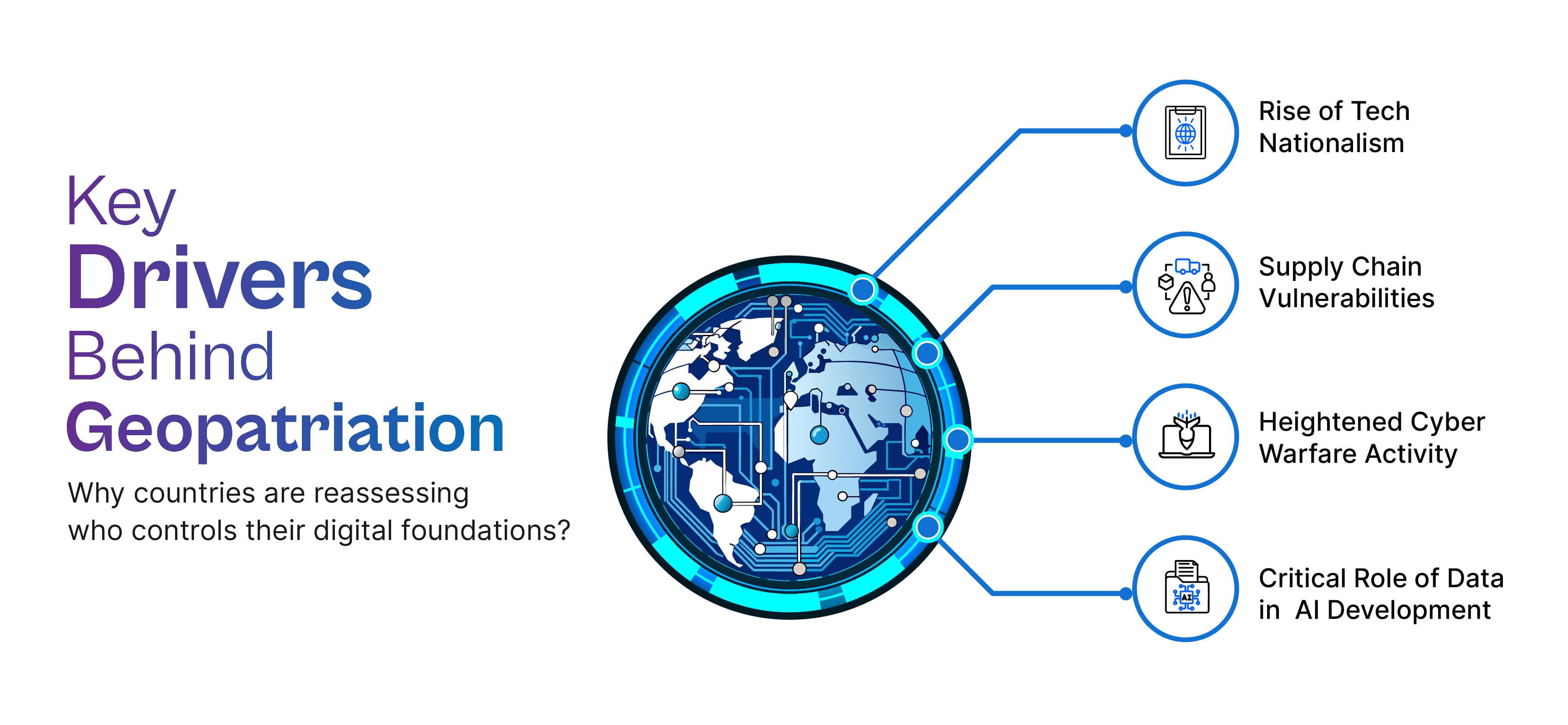
GeopatriationAs data becomes one of the world's most valuable strategic assets, governments and organizations are rethinking where digital information should be stored, processed, and governed. While globalization once encouraged companies to distribute their digital infrastructure across multiple countries, rising geopolitical tensions, stricter privacy regulations, cyber warfare, and national security concerns are driving a new trend known as Geopatriation.Geopatriation refers to the movement of digital assets, cloud infrastructure, applications, artificial intelligence systems, and sensitive data back into a country's own jurisdiction or trusted geopolitical regions. Instead of relying on globally distributed cloud services, organizations increasingly seek to maintain greater control over critical digital infrastructure.This shift is reshaping cloud computing, cybersecurity, artificial intelligence, digital sovereignty, and international technology policy.Geopatriation is becoming one of the defining trends of the modern digital economy as nations seek greater resilience, security, and technological independence.What Is Geopatriation?Geopatriation is the process of relocating digital infrastructure, sensitive data, cloud workloads, and critical computing resources back to domestic or geopolitically trusted environments.It extends beyond simple data localization by emphasizing strategic national control over digital ecosystems.Key assets involved include:Cloud infrastructureArtificial intelligence platformsGovernment databasesFinancial systemsHealthcare recordsCritical infrastructure networksThe objective is to improve national resilience, security, and regulatory compliance.Why Geopatriation Is EmergingSeveral global developments are accelerating this trend.Geopolitical tensionsCybersecurity threatsData privacy regulationsNational security concernsCross-border legal conflictsSupply chain disruptionsDigital sovereignty initiativesGovernments increasingly view digital infrastructure as a strategic national asset.How Geopatriation WorksOrganizations gradually migrate critical digital resources into trusted domestic environments.Typical process:Identify sensitive digital assets.Assess geopolitical risks.Migrate workloads to domestic or sovereign cloud platforms.Implement local cybersecurity controls.Ensure compliance with national regulations.Continuously monitor digital sovereignty requirements.This creates greater operational control over strategic digital resources.Difference Between Data Localization and GeopatriationData LocalizationGeopatriationStores data within national bordersRelocates entire digital ecosystemsFocuses primarily on complianceFocuses on strategic digital sovereigntyApplies mainly to dataIncludes cloud, AI, applications, and infrastructureRegulatory requirementNational strategic initiativeCore Technologies Supporting GeopatriationSovereign cloud platformsConfidential computingZero-trust securityAI governance systemsNational data centersPrivate cloud infrastructureDigital identity platformsThese technologies help organizations operate secure and compliant domestic digital environments.Role in Artificial IntelligenceAI systems require access to enormous amounts of sensitive data.National AI training datasetsGovernment AI platformsHealthcare AI systemsDefense AI applicationsFinancial AI infrastructureGeopatriation enables organizations to develop AI while maintaining greater control over sensitive information.As data becomes a strategic national resource, controlling where it resides and how it is governed is becoming as important as protecting the data itself.Industries Most AffectedGovernment servicesBanking and financial servicesHealthcareTelecommunicationsDefense and aerospaceEnergy infrastructureCloud service providersArtificial intelligence companiesThese sectors often manage highly sensitive information that requires strong jurisdictional control.Benefits of GeopatriationImproved national cybersecurityGreater regulatory complianceEnhanced data sovereigntyReduced geopolitical riskHigher operational resilienceBetter control over critical infrastructureOrganizations gain increased confidence in protecting mission-critical digital assets.Challenges and RisksHigh migration costsInfrastructure investment requirementsPotential interoperability issuesReduced global cloud flexibilityTalent shortagesComplex cross-border operationsBalancing sovereignty with global digital collaboration remains a significant challenge.Future OutlookOver the next decade, Geopatriation is expected to accelerate as digital sovereignty becomes a national priority.Expansion of sovereign cloud infrastructureDomestic AI ecosystemsRegional digital alliancesNational cybersecurity frameworksSecure cross-border data exchange agreementsFuture digital infrastructure may increasingly be organized around trusted geopolitical partnerships rather than purely global cloud architectures.Economic and Strategic ImplicationsGeopatriation could fundamentally reshape global technology markets, cloud computing, and international digital trade.Growth of sovereign cloud providersExpansion of national data centersAcceleration of cybersecurity investmentsStrengthening of domestic AI industriesTransformation of global digital supply chainsThe nations and organizations that successfully develop resilient sovereign digital infrastructure may gain significant advantages in cybersecurity, artificial intelligence, economic resilience, and technological independence.Frequently Asked QuestionsWhat is Geopatriation?Geopatriation is the relocation of digital infrastructure, cloud services, applications, and sensitive data back to domestic or trusted geopolitical environments to improve security, sovereignty, and compliance.How is Geopatriation different from data localization?Data localization primarily focuses on storing data within national borders, while Geopatriation encompasses the broader migration of cloud infrastructure, AI systems, applications, and digital operations to sovereign or trusted environments.Why is Geopatriation becoming important?It helps organizations address geopolitical risks, strengthen cybersecurity, comply with national regulations, protect critical infrastructure, and maintain greater control over strategic digital assets.ConclusionGeopatriation represents a major shift in the evolution of the digital economy, where control over data and computing infrastructure is increasingly viewed as a matter of national security and economic resilience. By relocating critical digital assets to sovereign or trusted environments, governments and organizations can strengthen cybersecurity, enhance regulatory compliance, and reduce geopolitical risk. As digital sovereignty becomes a global priority, Geopatriation is likely to play a central role in shaping the future of cloud computing, artificial intelligence, and international technology strategy.

Digital Provenance: Verifying Trust in the AI Era
Digital ProvenanceIn today's digital world, billions of images, videos, documents, software files, and AI-generated content are created and shared every day. As artificial intelligence becomes capable of producing highly realistic text, images, audio, and video, verifying the authenticity and origin of digital content has become one of the biggest challenges facing businesses, governments, media organizations, and consumers.Digital Provenance is an emerging framework that records and verifies the complete history, origin, ownership, and modification of digital assets throughout their lifecycle. Rather than simply protecting files, digital provenance enables organizations to answer critical questions such as: Who created this content? Has it been modified? When was it edited? Can it be trusted?By combining cryptography, metadata, digital signatures, blockchain technologies, secure hardware, and artificial intelligence, digital provenance creates transparent and verifiable records that improve trust in digital information.As misinformation, deepfakes, and AI-generated media continue to grow, Digital Provenance may become one of the most important pillars of the future digital trust ecosystem.What Is Digital Provenance?Digital Provenance is the ability to verify the origin, history, ownership, and modification record of digital content throughout its lifecycle.It creates an auditable chain of information showing:Who created the contentWhen it was createdWhere it originatedWhat modifications were madeWho performed those modificationsWhether the content remains authenticThis establishes transparency and accountability for digital assets.Why Digital Provenance Is Becoming ImportantThe rapid growth of AI-generated content has made distinguishing authentic material from manipulated content increasingly difficult.Organizations face challenges such as:Deepfake videosSynthetic imagesAI-generated documentsOnline misinformationDigital copyright disputesContent manipulationDigital Provenance helps establish confidence in the authenticity of digital information.How Digital Provenance WorksA digital provenance system records every important event in the lifecycle of digital content.Typical workflow:Content is created.Creator identity is securely recorded.Cryptographic signatures are attached.Metadata is embedded.Each modification is logged.Verification tools confirm authenticity whenever needed.This creates a secure and traceable record from creation to distribution.Core Technologies Behind Digital ProvenanceCryptographic hashingDigital signaturesPublic Key Infrastructure (PKI)Blockchain technologiesSecure metadata standardsTrusted hardware modulesArtificial intelligence verification toolsTogether, these technologies create trusted digital records that are difficult to alter without detection.Digital Provenance vs Digital WatermarkingAlthough related, Digital Provenance and Digital Watermarking serve different purposes.Digital WatermarkingDigital ProvenanceEmbeds ownership informationTracks complete lifecycle historyProtects copyrightVerifies authenticity and integrityLimited historical informationComprehensive audit trailOften invisibleSupports transparent verificationApplications Across IndustriesNews media verificationGovernment digital recordsHealthcare documentationFinancial transactionsLegal evidence managementSupply chain documentationSoftware developmentCreative content protectionDigital provenance supports trust wherever digital information is created, exchanged, or stored.In the age of AI-generated content, proving where information comes from may become just as important as the information itself.Role in Artificial IntelligenceAs generative AI becomes more widespread, provenance systems help distinguish authentic content from synthetic media.AI-generated image labelingDeepfake detection supportContent authenticity verificationResponsible AI deploymentModel output trackingThese capabilities improve transparency and accountability in AI ecosystems.Benefits of Digital ProvenanceImproved digital trustEnhanced cybersecurityContent authenticity verificationReduced misinformationBetter regulatory complianceIntellectual property protectionImproved digital forensicsOrganizations can better manage digital assets while increasing user confidence.Challenges and LimitationsStandardization across platformsPrivacy concernsMetadata interoperabilityStorage and scalability challengesImplementation costsGlobal regulatory differencesSuccessful adoption will require collaboration between technology companies, governments, and standards organizations.Future OutlookDigital Provenance is expected to become a standard feature of digital ecosystems over the coming decade.AI content authenticationTrusted news ecosystemsVerified digital identitiesSecure document verificationGlobal digital trust frameworksFuture internet platforms may automatically verify content authenticity before users consume or share information.Economic and Strategic ImplicationsDigital Provenance could fundamentally reshape how digital information is trusted, managed, and exchanged.Expansion of digital trust servicesGrowth of cybersecurity marketsImproved intellectual property protectionEnhanced regulatory complianceReduction of digital fraud and misinformationThe organizations and nations that establish trusted digital provenance ecosystems may gain significant advantages in cybersecurity, digital commerce, artificial intelligence, and information integrity.Frequently Asked QuestionsWhat is Digital Provenance?Digital Provenance is the process of recording and verifying the origin, ownership, history, and authenticity of digital content throughout its lifecycle.Why is Digital Provenance important?It helps verify content authenticity, combat misinformation, protect intellectual property, and establish trust in digital information.How does Digital Provenance support AI-generated content?It provides verifiable records showing when and how AI-generated content was created, modified, and distributed, making it easier to identify authentic and manipulated media.ConclusionDigital Provenance represents a critical evolution in digital trust and cybersecurity. By combining cryptographic verification, secure metadata, digital signatures, and lifecycle tracking, it enables organizations to establish confidence in the authenticity and integrity of digital assets. As AI-generated content, deepfakes, and online misinformation continue to expand, digital provenance is likely to become an essential foundation for trustworthy communication, secure collaboration, regulatory compliance, and the future of the digital economy.

Confidential Computing: Securing Data in Use and Beyond
Confidential ComputingAs organizations increasingly rely on cloud computing, artificial intelligence, edge infrastructure, and distributed digital ecosystems, protecting sensitive data has become one of the most important challenges in cybersecurity. Traditional security approaches primarily focus on encrypting data when it is stored or transmitted. However, data often becomes vulnerable while it is actively being processed.Confidential Computing is an emerging cybersecurity and cloud-computing paradigm designed to protect data during computation. By creating hardware-based secure execution environments, confidential computing ensures that sensitive information remains protected even while applications are actively using it.This technology is rapidly gaining importance across industries including healthcare, finance, government, defense, artificial intelligence, and cloud services.Confidential Computing may become one of the foundational security architectures of the next-generation digital economy.What Is Confidential Computing?Confidential Computing is a security technology that protects data while it is being processed by applications.Traditionally, organizations secure:Data at rest (stored data)Data in transit (moving data)Confidential Computing adds protection for:Data in use (active computation)This is achieved through hardware-based trusted execution environments (TEEs) that isolate workloads from unauthorized access.Why Traditional Security Has a GapEven encrypted data must usually be decrypted before processing.During computation, sensitive information can potentially be exposed to:Malicious insidersCompromised administratorsAdvanced cyberattacksCloud infrastructure threatsMemory scraping attacksPrivilege escalation exploitsConfidential Computing addresses this critical security gap.How Confidential Computing WorksThe technology relies on hardware-enforced secure environments known as Trusted Execution Environments (TEEs).Typical workflow:Data enters a secure enclave.Information remains encrypted outside the enclave.Applications process data within the protected environment.Memory access is restricted.Unauthorized users cannot view computations.Results are securely transmitted.This creates a protected computing zone isolated from the rest of the system.What Are Trusted Execution Environments (TEEs)?TEEs are hardware-protected regions within processors that isolate sensitive computations.Key characteristics include:Memory isolationSecure code executionEncrypted processing environmentsTamper resistanceHardware-enforced protectionOnly authorized workloads can access information within the enclave.Core Technologies Behind Confidential ComputingTrusted Execution Environments (TEEs)Hardware Security Modules (HSMs)Secure EnclavesMemory EncryptionRemote AttestationTrusted Platform Modules (TPMs)Hardware-Based Root of TrustThese technologies work together to create secure computing environments.Role in Cloud ComputingCloud environments are among the largest beneficiaries of confidential computing.Secure multi-tenant environmentsSensitive enterprise workloadsCross-organizational collaborationProtected cloud analyticsRegulatory compliance supportOrganizations can process sensitive data in public clouds with greater confidence.Confidential Computing extends encryption into the final frontier of data protection: active computation.Applications Across IndustriesHealthcare data processingFinancial analyticsGovernment systemsDefense intelligenceCloud-native applicationsCross-border data collaborationDigital identity systemsArtificial intelligence trainingAny environment handling highly sensitive information can benefit from confidential computing.Traditional Security vs Confidential ComputingTraditional SecurityConfidential ComputingProtects data at restProtects data during processingProtects data in transitProtects data in useSoftware-based controlsHardware-enforced securityTrusted administrators requiredMinimized trust requirementsConfidential AI and Machine LearningArtificial intelligence systems increasingly require access to highly sensitive datasets.Healthcare AI modelsFinancial AI systemsGovernment intelligence analysisPrivate enterprise data processingCollaborative AI trainingConfidential Computing enables privacy-preserving AI development and deployment.Role of Remote AttestationRemote attestation allows users to verify that workloads are running within trusted environments.Environment verificationIntegrity validationSecurity assuranceCompliance verificationThis increases trust in distributed computing environments.Challenges and LimitationsPerformance overheadHardware dependencyComplex implementationLimited software compatibilitySpecialized expertise requirementsEvolving threat landscapeOrganizations must balance security benefits with operational complexity.Future OutlookThe next decade may see confidential computing become a standard component of digital infrastructure.Confidential AI platformsSecure cloud-native architecturesPrivacy-preserving analyticsZero-trust computing environmentsCross-organizational secure collaborationFuture systems may increasingly assume that all computation must remain protected by default.Economic and Strategic ImplicationsConfidential Computing could fundamentally reshape cloud security, data governance, and digital trust models.Enhanced regulatory complianceSecure data monetizationExpansion of privacy-preserving AIImproved cloud adoptionStrengthened digital trust ecosystemsThe organizations and nations that successfully deploy confidential computing infrastructure may gain significant advantages in the emerging data-driven economy.Frequently Asked QuestionsWhat is Confidential Computing?Confidential Computing is a security technology that protects sensitive data while it is actively being processed using hardware-based secure execution environments.Why is Confidential Computing important?It protects data during computation, closing a major security gap that traditional encryption methods do not fully address.What industries benefit most from Confidential Computing?Healthcare, finance, government, defense, cloud computing, artificial intelligence, and any industry that processes highly sensitive information.ConclusionConfidential Computing represents a major advancement in cybersecurity and cloud infrastructure by protecting data while it is actively being processed. Through hardware-based secure execution environments, organizations can significantly reduce exposure to insider threats, cloud vulnerabilities, and advanced cyberattacks. As digital ecosystems become increasingly data-driven and AI-powered, confidential computing may become a cornerstone technology for secure, privacy-preserving, and trustworthy computing environments worldwide.

Preemptive Cybersecurity: Stopping Threats Before They Strike
Preemptive CybersecurityFor decades, cybersecurity strategies have primarily focused on detecting, responding to, and recovering from cyberattacks after they occur. However, the rapid evolution of artificial intelligence, ransomware, nation-state cyber warfare, autonomous malware, cloud-native infrastructure, and hyperconnected digital ecosystems is exposing the limitations of purely reactive security models.As cyber threats become faster, more adaptive, and increasingly automated, organizations are shifting toward a new paradigm known as Preemptive Cybersecurity.Rather than waiting for attacks to happen, preemptive cybersecurity aims to predict, anticipate, disrupt, and neutralize threats before they can successfully compromise systems, networks, applications, or data.This emerging approach combines artificial intelligence, predictive analytics, threat intelligence, behavioral monitoring, automation, and continuous risk assessment to proactively defend digital infrastructure.Preemptive Cybersecurity may become the dominant security model for the AI-driven digital economy.What Is Preemptive Cybersecurity?Preemptive Cybersecurity is a proactive security approach focused on identifying and mitigating cyber threats before they can cause damage.Instead of reacting to attacks after detection, security systems continuously analyze risk indicators and potential attack pathways.Core objectives include:Threat predictionAttack preventionRisk reductionBehavioral analysisContinuous monitoringAutomated defense actionsThe goal is to stop attacks before they become incidents.Why Traditional Cybersecurity Is No Longer EnoughConventional cybersecurity models are largely reactive.Threat detection after compromiseIncident response after attack executionManual remediation workflowsLimited predictive capabilitiesDelayed threat visibilityModern attackers often operate faster than traditional security teams can respond.How Preemptive Cybersecurity WorksPreemptive security platforms continuously gather and analyze security data from multiple sources.Typical workflow:Threat intelligence is collected.User and system behaviors are monitored.AI models identify risk patterns.Potential attack paths are mapped.Automated mitigation actions are triggered.Continuous adaptation improves defenses.This creates a proactive security posture rather than a reactive one.Key Technologies Enabling Preemptive CybersecurityArtificial Intelligence (AI)Machine LearningThreat Intelligence PlatformsBehavioral AnalyticsSecurity AutomationExtended Detection and Response (XDR)Attack Surface ManagementDigital Twin Security ModelingThese technologies provide the visibility and predictive capabilities required for proactive defense.Role of Artificial IntelligenceAI is becoming a cornerstone of modern cybersecurity operations.Anomaly detectionThreat predictionMalware classificationUser behavior analysisAutomated response orchestrationThreat hunting assistanceAI enables cybersecurity systems to identify subtle indicators of compromise before attacks fully materialize.Threat Intelligence and Predictive DefenseThreat intelligence feeds provide critical information about emerging attack techniques and adversary behavior.Dark web monitoringNation-state threat trackingMalware intelligenceVulnerability analysisExploit monitoringAdversary infrastructure trackingPredictive analysis helps organizations prepare defenses before attacks occur.The future of cybersecurity is not merely detecting attacks—it is preventing them before adversaries can act.Applications Across IndustriesFinancial servicesHealthcare systemsGovernment infrastructureCritical utilitiesManufacturing networksCloud environmentsTelecommunicationsDefense organizationsPreemptive cybersecurity is becoming increasingly important wherever digital infrastructure is mission-critical.Traditional Cybersecurity vs Preemptive CybersecurityTraditional CybersecurityPreemptive CybersecurityReactive defensePredictive defenseIncident response focusedThreat prevention focusedManual investigationAI-assisted automationPost-attack remediationPre-attack mitigationRole of Zero-Trust SecurityPreemptive cybersecurity often works alongside zero-trust architectures.Continuous verificationLeast-privilege accessIdentity validationMicro-segmentationRisk-based authenticationTogether, these approaches significantly reduce attack opportunities.Challenges and RisksFalse positivesData privacy concernsComplex implementationAI bias and inaccuraciesAdversarial AI threatsOperational integration challengesOrganizations must balance proactive defense with operational efficiency and user privacy.Future OutlookThe future of cybersecurity will likely become increasingly predictive, autonomous, and AI-driven.Self-healing networksAutonomous threat mitigationAI security agentsPredictive attack forecastingReal-time cyber risk scoringSecurity systems may eventually operate as continuously learning autonomous defense platforms.Economic and Strategic ImplicationsPreemptive Cybersecurity could fundamentally reshape digital risk management and cyber resilience strategies.Reduced breach costsImproved business continuityEnhanced regulatory complianceProtection of critical infrastructureStrengthened national cyber resilienceThe organizations and nations that successfully implement predictive cybersecurity architectures may gain significant advantages in the increasingly contested digital landscape.Frequently Asked QuestionsWhat is Preemptive Cybersecurity?It is a proactive security approach that seeks to identify and neutralize cyber threats before they can successfully compromise systems or data.How is it different from traditional cybersecurity?Traditional cybersecurity often reacts after attacks are detected, while preemptive cybersecurity focuses on predicting and preventing attacks before they occur.Why is AI important for Preemptive Cybersecurity?AI enables large-scale threat analysis, behavioral monitoring, anomaly detection, and predictive modeling that help identify potential attacks before they become active threats.ConclusionPreemptive Cybersecurity represents a major evolution from reactive security operations toward predictive, intelligence-driven defense. By combining artificial intelligence, behavioral analytics, threat intelligence, automation, and continuous risk assessment, organizations can move from merely responding to attacks toward actively preventing them. As cyber threats become increasingly sophisticated and autonomous, preemptive cybersecurity may become the foundation of next-generation digital resilience and enterprise security strategies.
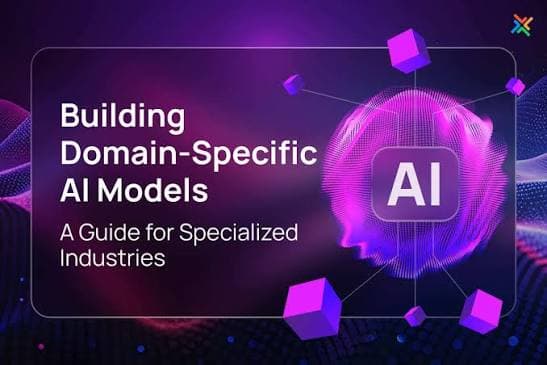
Domain-Specific Language Models: AI Built for Specialized Tasks
Domain-Specific Language Models (DSLMs)The rapid advancement of artificial intelligence has been largely driven by the emergence of large language models (LLMs) capable of understanding and generating human language across a wide range of topics. While general-purpose AI models have demonstrated remarkable versatility, many industries require far deeper expertise, higher accuracy, stronger compliance controls, and specialized knowledge than general models can consistently provide.This need is fueling the rise of Domain-Specific Language Models (DSLMs)—AI models specifically trained, fine-tuned, or architected for particular industries, professions, scientific disciplines, or operational environments.Rather than attempting to know everything, DSLMs focus on mastering highly specialized domains such as healthcare, finance, law, engineering, cybersecurity, biotechnology, scientific research, manufacturing, and government operations.As AI adoption expands across enterprise environments, Domain-Specific Language Models may become the dominant architecture for mission-critical business and industry applications.What Are Domain-Specific Language Models?Domain-Specific Language Models are AI systems optimized for a particular field of knowledge, industry, or operational domain.Unlike general-purpose models that attempt broad knowledge coverage, DSLMs are designed to achieve deep expertise within a specialized area.Examples include:Medical AI modelsLegal AI assistantsFinancial analysis modelsScientific research modelsCybersecurity AI systemsEngineering knowledge modelsThe primary goal is greater accuracy, reliability, and contextual understanding within a specific domain.Why General-Purpose AI Has LimitationsGeneral language models possess broad capabilities but often face challenges in highly specialized environments.Domain knowledge gapsRegulatory compliance issuesIndustry-specific terminologyTechnical reasoning requirementsHigher hallucination risksLimited expert-level depthOrganizations increasingly require AI systems tailored to their operational realities.How DSLMs Are DevelopedDomain-specific models are typically created through specialized training processes.Common approaches include:Starting with a foundation model.Training on domain-specific datasets.Applying expert supervision.Fine-tuning on industry documents.Integrating compliance frameworks.Continuously updating specialized knowledge.This process creates models optimized for domain expertise rather than broad generalization.Key Characteristics of DSLMsDeep domain expertiseIndustry-specific terminology understandingRegulatory awarenessHigher precision outputsContextual reasoning capabilitiesSpecialized workflow integrationThese characteristics make DSLMs highly valuable for professional environments.Major Industry ApplicationsDomain-specific models are emerging across nearly every major sector.Healthcare and diagnosticsFinancial servicesInsurance underwritingLegal analysisScientific researchEngineering designPharmaceutical developmentCybersecurity operationsEach industry requires specialized knowledge structures and reasoning frameworks.Healthcare DSLMsMedical language models represent one of the most promising DSLM categories.Clinical decision supportMedical documentationRadiology interpretation assistanceDrug discovery supportPatient communication systemsHealthcare applications require exceptionally high levels of accuracy and regulatory compliance.The future of enterprise AI may depend less on building larger models and more on building smarter models specialized for specific domains.Financial and Legal DSLMsFinancial and legal sectors are increasingly adopting specialized AI systems.Contract analysisRegulatory monitoringRisk assessmentCompliance automationInvestment researchFraud detection supportDomain specialization can improve reliability in highly regulated industries.General LLMs vs Domain-Specific Language ModelsGeneral LLMsDomain-Specific Language ModelsBroad knowledge coverageDeep specialized expertiseGeneral-purpose reasoningDomain-focused reasoningWide applicabilityIndustry-specific optimizationHigher flexibilityHigher precision in target domainsRole in Agentic AI SystemsFuture agentic AI architectures may combine multiple specialized DSLMs.Medical agentsFinancial agentsLegal agentsEngineering agentsCybersecurity agentsMultiagent ecosystems may coordinate specialized models to solve complex problems.Challenges and RisksLimited knowledge outside the domainTraining data quality concernsRegulatory compliance complexityDomain bias risksModel maintenance requirementsSpecialized infrastructure costsEnsuring ongoing accuracy and relevance remains critical.Role in Enterprise AI StrategyMany organizations are increasingly moving toward customized AI ecosystems.Private AI deploymentsIndustry-specific knowledge systemsEnterprise AI copilotsInternal knowledge managementWorkflow automation platformsDSLMs are becoming a core component of enterprise AI transformation strategies.Future OutlookThe next decade may witness the proliferation of thousands of highly specialized AI models.Medical foundation modelsFinancial reasoning enginesScientific discovery modelsIndustrial manufacturing copilotsGovernment-specific AI systemsThe AI landscape may evolve toward networks of interoperable specialized intelligence systems.Economic and Strategic ImplicationsDomain-Specific Language Models could significantly reshape enterprise software and digital infrastructure.Increased business productivityIndustry-specific AI ecosystemsCompetitive knowledge advantagesAcceleration of digital transformationExpansion of AI-driven professional servicesThe organizations that successfully build and deploy specialized AI expertise may gain significant strategic advantages in the emerging AI economy.Frequently Asked QuestionsWhat is a Domain-Specific Language Model?A DSLM is an AI model specifically optimized for a particular industry, discipline, or operational domain rather than general-purpose usage.Why are DSLMs important?They provide deeper expertise, improved accuracy, stronger contextual understanding, and better compliance capabilities within specialized industries.Will DSLMs replace general AI models?More likely, they will complement general models by providing specialized intelligence for high-value professional and enterprise applications.ConclusionDomain-Specific Language Models (DSLMs) represent the next major evolution of artificial intelligence beyond general-purpose systems. By combining deep industry expertise, specialized reasoning, regulatory awareness, and enterprise integration, DSLMs may become the preferred AI architecture for mission-critical applications across healthcare, finance, law, engineering, science, and government. As organizations seek greater accuracy and operational value from AI, specialized intelligence systems could play a central role in shaping the future of enterprise technology.

Layer Zero Experiences: Invisible Technology, Seamless Living
Layer Zero ExperiencesThe digital economy is evolving beyond traditional interfaces toward highly immersive, invisible, and context-aware interaction systems. As artificial intelligence, spatial computing, biometric sensing, ambient intelligence, and real-time personalization converge, a new paradigm is emerging known as Layer Zero Experiences.Layer Zero Experiences refer to ultra-seamless digital interactions that operate beneath conscious user friction. Instead of users actively navigating apps, menus, and workflows, intelligent systems anticipate needs, adapt environments, and deliver services proactively across physical and digital spaces.In this model, the interface itself begins to disappear. The experience becomes ambient, predictive, personalized, and deeply integrated into human behavior and surrounding environments.Layer Zero Experiences may become the foundational interaction model for the future of AI-native computing, spatial internet ecosystems, wearable technology, autonomous commerce, and intelligent environments.What Are Layer Zero Experiences?Layer Zero Experiences are deeply integrated digital interactions that minimize conscious interface engagement and reduce operational friction between humans and technology.These experiences function through:Ambient intelligenceContext-aware computingPredictive AI systemsBiometric sensingSpatial computingInvisible interfacesThe goal is to create technology interactions that feel natural, intuitive, and nearly invisible.Why Traditional Interfaces Are EvolvingConventional digital interfaces require constant human attention and active navigation.Manual app switchingComplex workflowsAttention fragmentationHigh cognitive loadInterface fatigueReactive user experiencesAs digital systems become more intelligent, users increasingly expect frictionless and proactive interactions.Core Idea Behind Layer ZeroThe concept of "Layer Zero" refers to the deepest interaction layer between humans and intelligent systems.Rather than interacting with visible applications, users interact with:AI-driven environmentsContextual intelligenceBehavior-aware systemsPredictive automationSpatial interfacesEmbedded digital ecosystemsThe interface becomes embedded into reality itself.How Layer Zero Experiences WorkLayer Zero systems combine continuous sensing, AI reasoning, and real-time orchestration.Typical workflow:Sensors collect environmental and behavioral data.AI systems analyze contextual signals.Predictive models anticipate user intent.Services are delivered proactively.Interfaces adapt dynamically.Feedback continuously improves personalization.The result is a highly adaptive and seamless interaction ecosystem.Key Technologies Behind Layer Zero ExperiencesArtificial IntelligenceSpatial ComputingWearable SensorsComputer VisionAmbient IoT SystemsBiometric AuthenticationLarge Language ModelsEdge ComputingThese technologies enable intelligent environments capable of contextual interaction.Role of Artificial IntelligenceAI serves as the orchestration layer behind Layer Zero Experiences.Intent predictionBehavioral analysisAdaptive personalizationNatural language interactionEmotional context interpretationAutonomous workflow executionAI transforms static interfaces into living adaptive systems.Layer Zero Experiences aim to eliminate the boundary between humans and digital systems by making technology feel invisible, predictive, and ambient.Applications Across IndustriesSmart homesAutonomous retailSpatial computing platformsHealthcare monitoring systemsAI-driven workplacesConnected vehiclesHospitality environmentsWearable ecosystemsLayer Zero systems could become deeply integrated into daily human activity.Traditional UX vs Layer Zero ExperiencesTraditional User ExperienceLayer Zero ExperienceManual interactionPredictive interactionVisible interfacesInvisible ambient systemsReactive workflowsProactive orchestrationApp-centric computingEnvironment-centric computingRole in Spatial ComputingLayer Zero Experiences are closely connected to the rise of spatial computing ecosystems.AR interfacesMixed reality environmentsGesture-based interactionContextual overlaysPersistent digital environmentsFuture interfaces may increasingly exist within physical space rather than traditional screens.Challenges and RisksPrivacy concernsBehavioral surveillance risksAlgorithmic manipulationData security vulnerabilitiesPsychological dependency concernsEthical governance complexityInvisible computing systems require strong transparency and user-control frameworks.Role of Biometrics and Context AwarenessLayer Zero systems increasingly rely on biometric and contextual signals.Eye trackingVoice analysisMovement recognitionEmotional state detectionEnvironmental awarenessThese systems continuously adapt based on human behavior and surrounding conditions.Future OutlookThe next decade may witness the emergence of fully ambient intelligent ecosystems.Invisible AI assistantsAI-native environmentsContext-driven digital servicesPersistent spatial interfacesAutonomous interaction ecosystemsHuman-computer interaction may increasingly evolve toward seamless environmental intelligence.Economic and Strategic ImplicationsLayer Zero Experiences could significantly reshape digital commerce, computing, and consumer interaction models.Transformation of interface industriesExpansion of ambient computing marketsGrowth of AI-native ecosystemsAcceleration of spatial computing economiesNew behavioral-data business modelsThe companies that successfully build trusted ambient-intelligence ecosystems may dominate the next generation of digital infrastructure.Frequently Asked QuestionsWhat are Layer Zero Experiences?They are highly seamless, AI-driven digital interactions that minimize conscious interface friction through ambient, predictive, and context-aware systems.Why are Layer Zero Experiences important?Because future digital systems increasingly aim to become proactive, personalized, and invisible rather than dependent on traditional app-based interaction models.What technologies enable Layer Zero Experiences?Artificial intelligence, spatial computing, biometric sensing, ambient IoT systems, computer vision, and predictive analytics.ConclusionLayer Zero Experiences represent the evolution of computing from visible interfaces toward ambient intelligent environments. By combining AI, spatial computing, biometric sensing, and predictive orchestration, future systems may deliver seamless interactions that feel increasingly natural and invisible. As technology moves closer to human behavior, context, and environment, Layer Zero Experiences could fundamentally reshape the future of digital interaction, commerce, communication, and intelligent living systems.
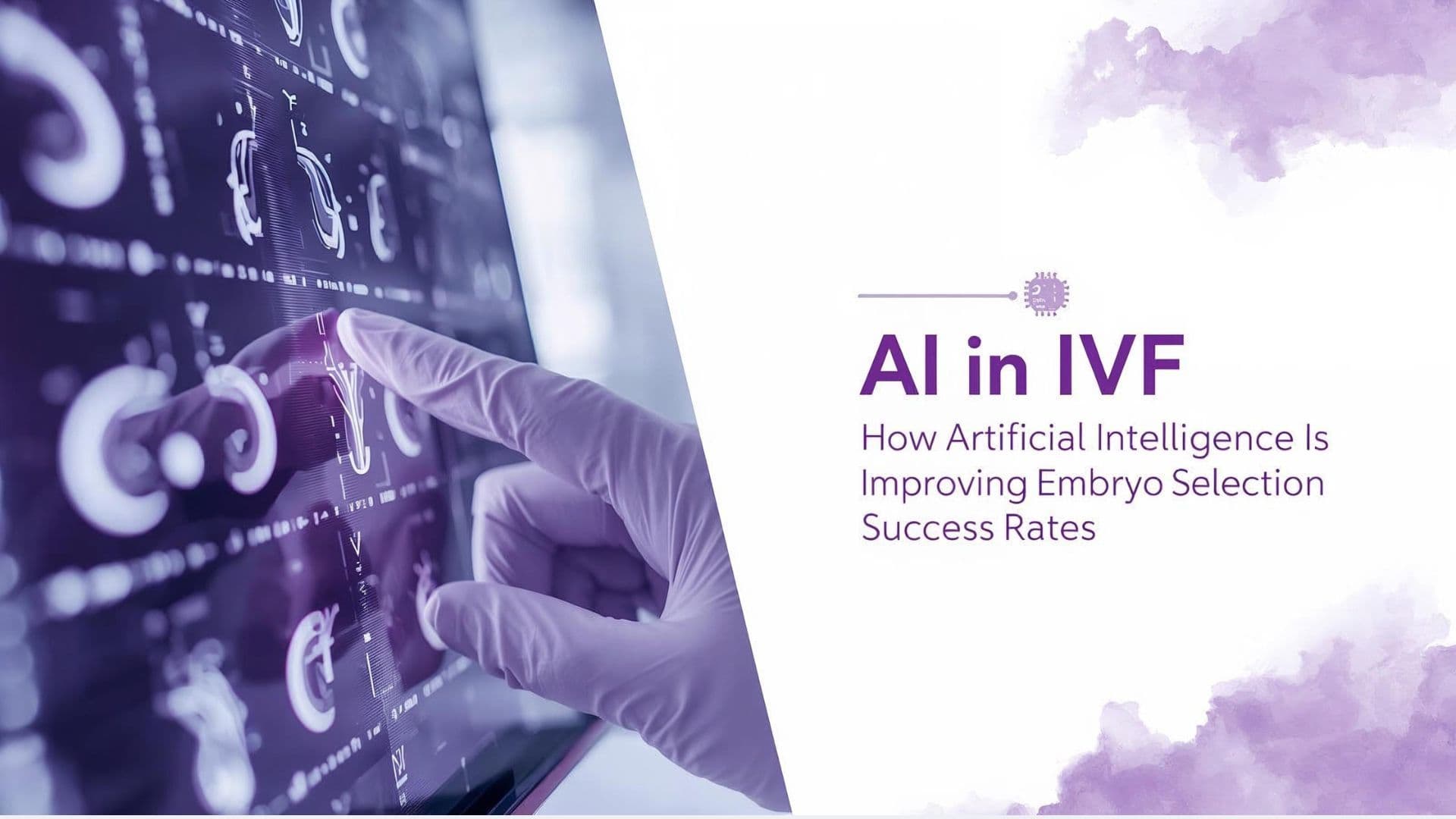
Embryo Genetic Scoring: AI and Genomics in Fertility Care
Embryo Genetic ScoringThe convergence of artificial intelligence, genomics, reproductive medicine, and biotechnology is transforming the future of fertility science. One of the most controversial and technologically advanced developments in this space is Embryo Genetic Scoring—a process that uses genetic analysis, computational modeling, and predictive algorithms to assess embryos created through in vitro fertilization (IVF).Traditionally, embryologists selected embryos primarily through visual inspection and limited chromosomal testing. Today, advances in genome sequencing, machine learning, and predictive analytics are enabling far more detailed evaluations of embryo viability, inherited disease risks, and developmental potential.Embryo Genetic Scoring aims to improve reproductive outcomes by combining biological data with advanced computational analysis. However, it also raises major ethical, societal, medical, and philosophical questions regarding genetics, human selection, privacy, and the future of reproductive medicine.As precision medicine evolves, embryo genetic scoring could become one of the most transformative—and debated—applications of AI-driven biotechnology.What Is Embryo Genetic Scoring?Embryo Genetic Scoring refers to the process of evaluating embryos based on genetic, chromosomal, and developmental data to estimate health-related characteristics or implantation potential.The process often combines:Genome sequencingPreimplantation genetic testing (PGT)AI-based predictive analyticsEmbryo imaging systemsDevelopmental modelingStatistical risk scoringThe objective is to support fertility specialists and prospective parents with additional biological insights during IVF procedures.Why Embryo Selection Is EvolvingTraditional embryo assessment methods rely heavily on morphology and basic chromosomal screening.Embryo shape and appearanceCell division timingBlastocyst quality gradingLimited genetic abnormality detectionWhile clinically useful, these methods provide only partial biological information.Modern genomics and AI systems now allow deeper analysis of embryo characteristics.How Embryo Genetic Scoring WorksEmbryo scoring systems integrate genetic testing with computational analysis.Typical workflow:Embryos are created through IVF.Cells are biopsied from embryos.DNA is sequenced or analyzed.AI systems process genomic information.Developmental indicators are evaluated.Predictive scoring models generate assessments.The resulting analysis may assist clinicians during embryo selection.Key Technologies Behind Embryo Genetic ScoringWhole Genome SequencingArtificial IntelligenceMachine Learning ModelsEmbryo Imaging SystemsBioinformatics PlatformsPredictive GenomicsCloud-Based Genetic AnalysisThese technologies enable increasingly sophisticated embryo assessment capabilities.Potential Medical ApplicationsInherited disease risk reductionImproved IVF success ratesChromosomal abnormality screeningRare disease detectionPersonalized fertility treatmentAdvanced reproductive diagnosticsSupporters believe these technologies may improve reproductive healthcare outcomes.Role of Artificial IntelligenceAI systems are increasingly central to modern reproductive analytics.Embryo image analysisPattern recognitionPredictive developmental modelingRisk assessment scoringData-driven embryo rankingMachine learning systems can identify subtle biological patterns difficult for humans to detect.Embryo Genetic Scoring represents the convergence of genomics, artificial intelligence, and reproductive medicine at the molecular level.Embryo Genetic Scoring vs Traditional Embryo SelectionTraditional Embryo SelectionEmbryo Genetic ScoringVisual morphology analysisGenomic and AI-driven analysisLimited biological insightExpanded genetic evaluationManual assessmentAI-assisted predictive scoringBasic chromosomal testingMulti-dimensional genomic analysisEthical and Societal ConcernsEmbryo Genetic Scoring raises significant ethical debates.Genetic privacy concernsPotential discrimination risksHuman enhancement debatesEquity and access issuesAlgorithmic bias concernsQuestions surrounding embryo selectionMany experts emphasize the importance of strong ethical governance and regulatory oversight.Scientific LimitationsHuman genetics remains extraordinarily complex.Most traits involve many genesEnvironmental influences remain importantPredictive uncertainty still existsLong-term developmental outcomes are difficult to forecastGenomic interpretation remains incompleteMany human characteristics cannot currently be predicted with high certainty.Future OutlookThe next decade may see increasing integration of AI and genomics within fertility medicine.AI-assisted fertility clinicsExpanded genetic diagnosticsPersonalized reproductive medicineAdvanced embryo modelingPredictive genomic healthcare systemsFuture reproductive medicine may become increasingly data-driven and individualized.Economic and Strategic ImplicationsEmbryo Genetic Scoring could significantly influence reproductive healthcare and biotechnology markets.Expansion of fertility technology industriesGrowth of genomic healthcare servicesAcceleration of precision medicineIncreased AI-biotech integrationDevelopment of predictive healthcare platformsThe organizations leading in reproductive genomics and AI-driven healthcare may shape the future of precision biotechnology.Frequently Asked QuestionsWhat is Embryo Genetic Scoring?It is the use of genetic analysis and AI-driven evaluation systems to assess embryos created during IVF procedures.Why is Embryo Genetic Scoring important?It may help improve IVF outcomes, identify certain genetic abnormalities, and support more personalized reproductive medicine.Can Embryo Genetic Scoring predict all future traits?No. Most human traits are influenced by highly complex interactions between genetics, environment, development, and life experiences.ConclusionEmbryo Genetic Scoring represents one of the most advanced intersections of genomics, artificial intelligence, and reproductive medicine. By combining predictive analytics with genetic data, this technology may improve fertility outcomes and expand precision healthcare capabilities. However, its development also raises profound ethical, scientific, and societal questions that will likely shape the future governance of reproductive biotechnology in the decades ahead.
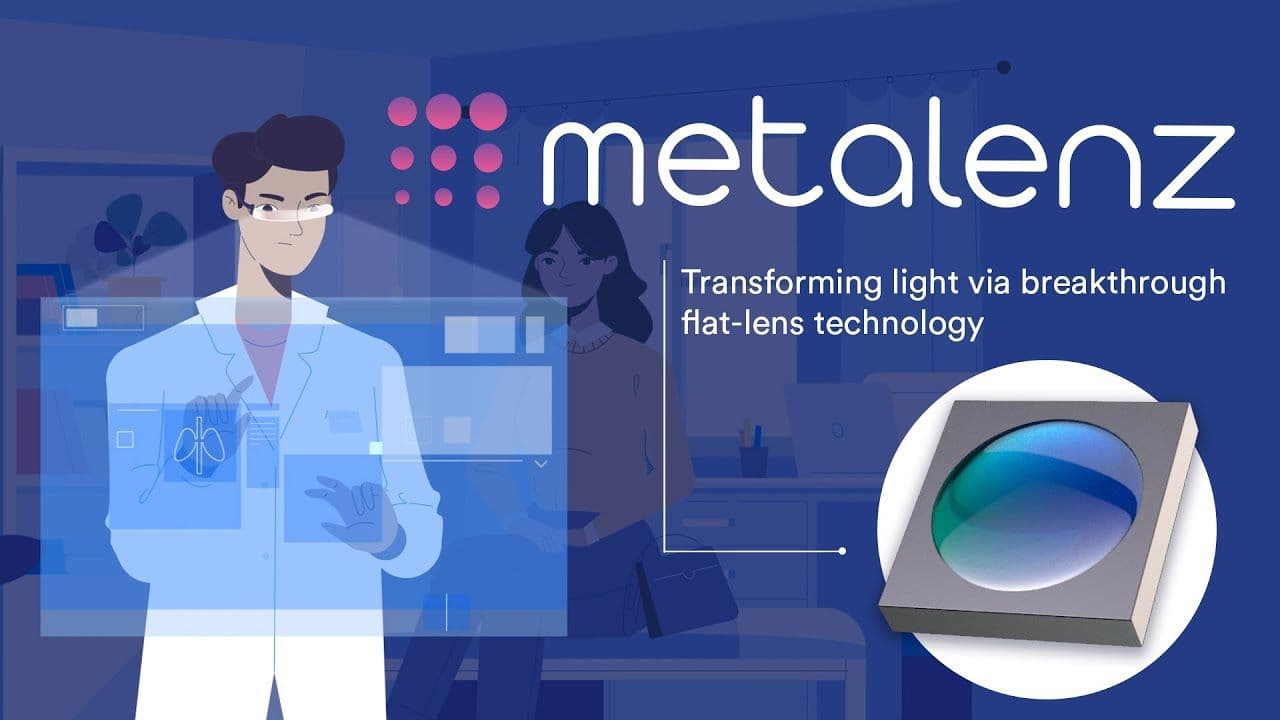
Metalenses: Flat Optics Revolutionizing Imaging Technology
Metalenses (Flat Optics)The field of optics is entering a revolutionary phase powered by nanotechnology, photonics, semiconductor fabrication, and advanced materials engineering. For centuries, traditional optical systems depended on curved glass or plastic lenses to bend, focus, and manipulate light. Cameras, microscopes, telescopes, smartphones, and medical imaging systems all rely on these bulky optical components.Now, scientists are developing a radically different approach called Metalenses, also known as Flat Optics. Instead of relying on curved surfaces, metalenses manipulate light using nanoscale structures patterned onto ultra-thin flat surfaces known as metasurfaces.By engineering light interactions at the nanometer scale, metalenses may dramatically reduce the size, weight, and complexity of optical systems while enabling entirely new capabilities in imaging, sensing, augmented reality, artificial intelligence vision systems, and photonic computing.Metalenses could become one of the foundational technologies of next-generation optics and intelligent photonic infrastructure.What Are Metalenses?Metalenses are ultra-thin optical devices that control and focus light using engineered nanostructures rather than traditional curved optical materials.These devices use specially designed metasurfaces composed of microscopic structures smaller than the wavelength of light.The nanostructures manipulate:Light directionPhase shiftingPolarizationWavefront shapingOptical focusingSpectral filteringThis enables highly compact and programmable optical functionality.Why Traditional Lenses Have LimitationsConventional optical systems depend on carefully shaped curved surfaces to bend light.This creates multiple engineering challenges:Bulky physical designsHeavy optical assembliesComplex multi-lens stackingChromatic aberrationAlignment sensitivityMiniaturization limitationsAs devices become thinner, smarter, and more mobile, traditional optics increasingly constrain hardware innovation.How Metalenses WorkMetalenses manipulate light through nanoscale engineering rather than macroscopic curvature.Typical process:Incoming light reaches the metasurface.Nanoscale structures interact with electromagnetic waves.Phase delays are precisely controlled.Wavefronts are reshaped at the surface level.Light is focused or redirected.Desired optical behavior is achieved.The optical functionality is encoded directly into the nanostructure geometry.What Are Metasurfaces?Metasurfaces are ultra-thin engineered layers containing nanoscale elements designed to manipulate electromagnetic waves.Each nanostructure acts like a microscopic optical controller.Metasurfaces can perform:Beam steeringOptical focusingHolographyPolarization controlColor filteringLight scattering controlThey form the technological foundation of flat optics.Major Advantages of MetalensesUltra-thin optical designsReduced system weightSmaller imaging hardwarePotential lower manufacturing complexityIntegration with semiconductor fabricationEnhanced optical precisionProgrammable optical behaviorThese capabilities may fundamentally reshape optical engineering.Role in Consumer ElectronicsConsumer electronics increasingly depend on advanced optical systems.Smartphone camerasAR/VR headsetsWearable devicesBiometric authentication systemsCompact imaging sensorsMetalenses may enable thinner, lighter, and more powerful devices.Metalenses shift optics from mechanically shaping glass to engineering light directly at the nanoscale.Applications Across IndustriesAugmented Reality (AR)Virtual Reality (VR)Autonomous vehicle sensorsMedical imaging systemsSatellite opticsQuantum photonicsDefense imaging systemsMicroscopyFlat optics could become deeply integrated into future digital and industrial systems.Traditional Optics vs MetalensesTraditional OpticsMetalensesCurved glass or plastic lensesFlat engineered metasurfacesBulky multi-lens systemsUltra-thin optical layersMechanical light controlNanostructure light manipulationComplex optical alignmentIntegrated optical functionalityRole in Artificial Intelligence Vision SystemsAI-powered computer vision systems require increasingly compact and efficient optical hardware.Machine vision systemsAutonomous roboticsEdge AI sensorsIntelligent surveillanceReal-time object recognitionMetalenses may improve efficiency and miniaturization for AI vision infrastructure.Role in AR and Spatial ComputingSpatial computing devices require lightweight and compact optical systems.Ultra-thin AR glassesWaveguide opticsMixed reality displaysImmersive visual systemsLightweight wearable displaysFlat optics could become essential for mainstream wearable computing.Challenges and LimitationsMass manufacturing complexityEfficiency optimization challengesLimited large-scale commercializationBroad-spectrum light control difficultiesDurability concernsNanofabrication costsAlthough promising, many metalens systems are still in active research and early industrial deployment stages.Role in Photonic ComputingMetalenses may also contribute to future optical computing systems.Photonic neural networksOptical data transmissionIntegrated photonic chipsQuantum optical systemsLight-based information processingFuture computing infrastructure may increasingly rely on advanced photonics.Future OutlookThe coming decade may witness widespread adoption of flat-optics technologies.Invisible camera modulesAI-native imaging hardwareAdvanced holographic displaysMiniaturized medical diagnosticsHigh-efficiency satellite opticsOptical systems may increasingly evolve from mechanical engineering into programmable nanophotonic engineering.Economic and Strategic ImplicationsMetalenses could significantly reshape the future of imaging, photonics, and semiconductor-enabled optical infrastructure.Expansion of nanophotonics industriesTransformation of consumer electronicsAcceleration of AR/VR ecosystemsGrowth of AI vision marketsConvergence of semiconductors and opticsThe organizations and nations that lead in flat-optics manufacturing and metasurface engineering may gain major technological advantages in future computing and sensing ecosystems.Frequently Asked QuestionsWhat are Metalenses?Metalenses are ultra-thin optical devices that manipulate light using engineered nanoscale structures instead of traditional curved lenses.Why are Metalenses important?Because they may enable smaller, lighter, more efficient optical systems for cameras, AR devices, AI sensors, and advanced photonic technologies.What makes Metalenses different from traditional lenses?Traditional lenses use curved surfaces to bend light, while metalenses use nanoscale metasurfaces to engineer light behavior directly at the microscopic level.ConclusionMetalenses (Flat Optics) represent one of the most important breakthroughs in modern optical engineering and nanophotonics. By replacing bulky curved optical systems with ultra-thin programmable metasurfaces, metalenses may fundamentally transform imaging systems, augmented reality, artificial intelligence vision hardware, and photonic computing infrastructure. As manufacturing capabilities and materials science continue advancing, flat optics could become a foundational technology powering the next generation of intelligent digital and photonic ecosystems.
Space-Based AI Data Centers: The Future of Orbital Computing
Space-Based AI Data CentersThe explosive growth of artificial intelligence is creating unprecedented demand for computing infrastructure, electricity, cooling systems, and high-speed data processing. Hyperscale AI models, autonomous systems, scientific simulations, and global digital services are rapidly pushing terrestrial data centers toward power, cooling, and land-use constraints.To address these challenges, researchers, aerospace companies, and technology firms are beginning to explore a radical concept: Space-Based AI Data Centers.These orbital computing platforms would place advanced AI infrastructure directly in space, leveraging abundant solar energy, extreme environmental cooling conditions, and off-world operational scalability.Space-Based AI Data Centers could eventually transform how humanity powers artificial intelligence, cloud computing, scientific research, and interplanetary digital infrastructure.What Are Space-Based AI Data Centers?Space-Based AI Data Centers are orbital computing facilities designed to host AI processors, cloud infrastructure, storage systems, and autonomous computing platforms beyond Earth.These systems could operate in:Low Earth Orbit (LEO)Geostationary Orbit (GEO)Lunar infrastructure zonesDeep-space communication hubsOrbital industrial platformsThe goal is to create scalable off-world computing ecosystems capable of supporting future AI demand.Why Earth-Based AI Infrastructure Faces ChallengesModern AI infrastructure consumes enormous amounts of energy and resources.Massive electricity requirementsCooling limitationsLand and water consumptionGrid strainCarbon emissionsThermal management complexityAs AI systems scale further, terrestrial infrastructure may encounter increasing physical and environmental constraints.Why Space Could Become Attractive for AI InfrastructureSpace environments offer unique operational advantages for computing systems.Continuous solar energy availabilityNatural radiative coolingReduced land limitationsPotential energy scalabilityOrbital network positioningLower atmospheric constraintsThese characteristics may support future high-density AI operations.How Space-Based AI Data Centers Could WorkFuture orbital AI infrastructure would combine advanced computing systems with aerospace engineering.Typical architecture may include:Solar arrays generate electricity.AI processors operate within orbital modules.Thermal systems radiate heat into space.Satellite communication links transmit data.Autonomous robotics manage maintenance.Ground stations coordinate operations.The infrastructure could function as a distributed orbital cloud platform.Core Technologies Enabling Orbital Data CentersSpace-grade AI processorsAdvanced solar power systemsRadiative cooling technologiesSatellite communication networksAutonomous robotic maintenanceMicrogravity manufacturingRadiation-hardened electronicsThese technologies form the foundation for off-world digital infrastructure.Role of Solar EnergySpace provides direct access to highly efficient solar energy generation.Continuous sunlight exposureNo atmospheric energy lossLarge orbital solar arraysReduced terrestrial energy dependencePotential energy-beaming systemsEnergy abundance could become a major advantage for future AI computation.As artificial intelligence scales toward planetary-level computation, space may become the next frontier for digital infrastructure expansion.Potential Advantages of Space-Based AI InfrastructureReduced terrestrial energy pressureEnhanced cooling efficiencyScalable energy accessLower carbon footprint potentialGlobal low-latency network positioningSupport for interplanetary communicationsOrbital computing may complement terrestrial cloud infrastructure rather than fully replacing it.Traditional Data Centers vs Space-Based AI Data CentersTraditional Data CentersSpace-Based AI Data CentersEarth-based infrastructureOrbital infrastructureGrid-dependent energyDirect solar energy accessComplex cooling systemsRadiative thermal coolingLand and resource constraintsPotential orbital scalabilityApplications Across IndustriesAI model trainingGlobal cloud computingClimate simulationsScientific research processingDefense and aerospace systemsInterplanetary communicationsAutonomous satellite networksOrbital computing could support both terrestrial and space-based economies.Challenges and RisksExtremely high launch costsRadiation exposure risksMaintenance complexityOrbital debris threatsCommunication latency limitationsSpace cybersecurity concernsInfrastructure reliability challengesBuilding resilient orbital computing infrastructure remains a major engineering challenge.Role of Autonomous RoboticsAutonomous robotic systems may become essential for maintaining orbital infrastructure.Self-repair systemsRobotic maintenance dronesAutonomous hardware replacementAI-driven diagnosticsOrbital assembly systemsHuman-only maintenance would be impractical for large-scale orbital data centers.Future OutlookThe next several decades may witness the emergence of increasingly sophisticated off-world digital ecosystems.Orbital AI cloud platformsLunar computing infrastructureSpace-based supercomputersAI-managed orbital networksInterplanetary internet architectureFuture AI systems may increasingly rely on distributed infrastructure spanning Earth and space.Economic and Strategic ImplicationsSpace-Based AI Data Centers could become strategically important infrastructure in the future digital economy.Expansion of the space economyAcceleration of AI infrastructure growthEnergy diversification for computingStrategic technological leadershipCreation of orbital cloud industriesThe nations and organizations that establish scalable orbital computing ecosystems may shape the next era of digital infrastructure and AI development.Frequently Asked QuestionsWhat are Space-Based AI Data Centers?They are orbital computing facilities designed to host AI infrastructure, cloud systems, and advanced processors beyond Earth.Why would AI infrastructure move into space?Because space may offer advantages such as abundant solar energy, improved cooling potential, scalability, and reduced terrestrial infrastructure constraints.What are the biggest challenges?Launch costs, radiation exposure, orbital maintenance complexity, cybersecurity risks, and long-term infrastructure reliability.ConclusionSpace-Based AI Data Centers represent one of the most ambitious visions for the future of computing infrastructure. As artificial intelligence continues driving unprecedented demand for power, cooling, and scalable computation, orbital infrastructure may emerge as a complementary extension of terrestrial cloud ecosystems. By combining advanced aerospace engineering, autonomous robotics, renewable energy systems, and AI-driven operations, future orbital data centers could redefine how humanity powers the next generation of digital intelligence.

Space-Based AI Data Centers: Computing Beyond Earth
Space-Based AI Data CentersThe explosive growth of artificial intelligence is creating unprecedented demand for computing infrastructure, electricity, cooling systems, and high-speed data processing. Hyperscale AI models, autonomous systems, scientific simulations, and global digital services are rapidly pushing terrestrial data centers toward power, cooling, and land-use constraints.To address these challenges, researchers, aerospace companies, and technology firms are beginning to explore a radical concept: Space-Based AI Data Centers.These orbital computing platforms would place advanced AI infrastructure directly in space, leveraging abundant solar energy, extreme environmental cooling conditions, and off-world operational scalability.Space-Based AI Data Centers could eventually transform how humanity powers artificial intelligence, cloud computing, scientific research, and interplanetary digital infrastructure.What Are Space-Based AI Data Centers?Space-Based AI Data Centers are orbital computing facilities designed to host AI processors, cloud infrastructure, storage systems, and autonomous computing platforms beyond Earth.These systems could operate in:Low Earth Orbit (LEO)Geostationary Orbit (GEO)Lunar infrastructure zonesDeep-space communication hubsOrbital industrial platformsThe goal is to create scalable off-world computing ecosystems capable of supporting future AI demand.Why Earth-Based AI Infrastructure Faces ChallengesModern AI infrastructure consumes enormous amounts of energy and resources.Massive electricity requirementsCooling limitationsLand and water consumptionGrid strainCarbon emissionsThermal management complexityAs AI systems scale further, terrestrial infrastructure may encounter increasing physical and environmental constraints.Why Space Could Become Attractive for AI InfrastructureSpace environments offer unique operational advantages for computing systems.Continuous solar energy availabilityNatural radiative coolingReduced land limitationsPotential energy scalabilityOrbital network positioningLower atmospheric constraintsThese characteristics may support future high-density AI operations.How Space-Based AI Data Centers Could WorkFuture orbital AI infrastructure would combine advanced computing systems with aerospace engineering.Typical architecture may include:Solar arrays generate electricity.AI processors operate within orbital modules.Thermal systems radiate heat into space.Satellite communication links transmit data.Autonomous robotics manage maintenance.Ground stations coordinate operations.The infrastructure could function as a distributed orbital cloud platform.Core Technologies Enabling Orbital Data CentersSpace-grade AI processorsAdvanced solar power systemsRadiative cooling technologiesSatellite communication networksAutonomous robotic maintenanceMicrogravity manufacturingRadiation-hardened electronicsThese technologies form the foundation for off-world digital infrastructure.Role of Solar EnergySpace provides direct access to highly efficient solar energy generation.Continuous sunlight exposureNo atmospheric energy lossLarge orbital solar arraysReduced terrestrial energy dependencePotential energy-beaming systemsEnergy abundance could become a major advantage for future AI computation.As artificial intelligence scales toward planetary-level computation, space may become the next frontier for digital infrastructure expansion.Potential Advantages of Space-Based AI InfrastructureReduced terrestrial energy pressureEnhanced cooling efficiencyScalable energy accessLower carbon footprint potentialGlobal low-latency network positioningSupport for interplanetary communicationsOrbital computing may complement terrestrial cloud infrastructure rather than fully replacing it.Traditional Data Centers vs Space-Based AI Data CentersTraditional Data CentersSpace-Based AI Data CentersEarth-based infrastructureOrbital infrastructureGrid-dependent energyDirect solar energy accessComplex cooling systemsRadiative thermal coolingLand and resource constraintsPotential orbital scalabilityApplications Across IndustriesAI model trainingGlobal cloud computingClimate simulationsScientific research processingDefense and aerospace systemsInterplanetary communicationsAutonomous satellite networksOrbital computing could support both terrestrial and space-based economies.Challenges and RisksExtremely high launch costsRadiation exposure risksMaintenance complexityOrbital debris threatsCommunication latency limitationsSpace cybersecurity concernsInfrastructure reliability challengesBuilding resilient orbital computing infrastructure remains a major engineering challenge.Role of Autonomous RoboticsAutonomous robotic systems may become essential for maintaining orbital infrastructure.Self-repair systemsRobotic maintenance dronesAutonomous hardware replacementAI-driven diagnosticsOrbital assembly systemsHuman-only maintenance would be impractical for large-scale orbital data centers.Future OutlookThe next several decades may witness the emergence of increasingly sophisticated off-world digital ecosystems.Orbital AI cloud platformsLunar computing infrastructureSpace-based supercomputersAI-managed orbital networksInterplanetary internet architectureFuture AI systems may increasingly rely on distributed infrastructure spanning Earth and space.Economic and Strategic ImplicationsSpace-Based AI Data Centers could become strategically important infrastructure in the future digital economy.Expansion of the space economyAcceleration of AI infrastructure growthEnergy diversification for computingStrategic technological leadershipCreation of orbital cloud industriesThe nations and organizations that establish scalable orbital computing ecosystems may shape the next era of digital infrastructure and AI development.Frequently Asked QuestionsWhat are Space-Based AI Data Centers?They are orbital computing facilities designed to host AI infrastructure, cloud systems, and advanced processors beyond Earth.Why would AI infrastructure move into space?Because space may offer advantages such as abundant solar energy, improved cooling potential, scalability, and reduced terrestrial infrastructure constraints.What are the biggest challenges?Launch costs, radiation exposure, orbital maintenance complexity, cybersecurity risks, and long-term infrastructure reliability.ConclusionSpace-Based AI Data Centers represent one of the most ambitious visions for the future of computing infrastructure. As artificial intelligence continues driving unprecedented demand for power, cooling, and scalable computation, orbital infrastructure may emerge as a complementary extension of terrestrial cloud ecosystems. By combining advanced aerospace engineering, autonomous robotics, renewable energy systems, and AI-driven operations, future orbital data centers could redefine how humanity powers the next generation of digital intelligence.

Base-Editing Gene Therapy: The Ultra-Precise CRISPR Revolution
Base-Editing Gene Therapy (The Ultra-Precise CRISPR)The field of genetic medicine is entering a new era of precision engineering. While traditional CRISPR technologies revolutionized genome editing by enabling scientists to cut DNA at targeted locations, newer approaches are emerging that offer far greater accuracy and potentially lower biological risk. One of the most promising innovations is Base-Editing Gene Therapy.Often described as an ultra-precise evolution of CRISPR, base editing enables scientists to directly convert one DNA base into another without cutting the double-stranded DNA helix. This allows highly targeted genetic corrections at the molecular level.Because many inherited diseases are caused by single-letter DNA mutations, base editing has the potential to correct genetic disorders with unprecedented precision.Base-Editing Gene Therapy could become one of the most transformative breakthroughs in modern medicine, biotechnology, and precision healthcare.What Is Base Editing?Base editing is an advanced genome-editing technique that changes specific DNA letters—called bases—without cutting both strands of DNA.DNA is composed of four bases:Adenine (A)Cytosine (C)Guanine (G)Thymine (T)Base editors can chemically convert one base into another in a highly targeted manner.Examples include:C → T conversionA → G conversionThis allows precise correction of certain disease-causing mutations.Why Traditional CRISPR Has LimitationsConventional CRISPR-Cas9 editing typically works by cutting DNA at specific locations.After cutting, the cell repairs the DNA.However, this process can introduce challenges:Unintended mutationsInsertion or deletion errorsOff-target effectsDNA damage responsesChromosomal rearrangementsBase editing seeks to reduce these risks by avoiding double-strand DNA breaks.How Base Editing WorksBase-editing systems combine multiple molecular components.Typical workflow:A guide RNA identifies the target DNA sequence.A modified CRISPR protein binds to the location.A chemical editing enzyme modifies a specific base.The targeted DNA letter is converted.Cellular repair processes stabilize the edit.The process occurs without fully cutting the DNA double helix.Types of Base EditorsSeveral major categories of base editors have been developed.Cytosine Base Editors (CBEs)Adenine Base Editors (ABEs)Dual Base EditorsRNA Base EditorsEach system targets specific categories of molecular changes.Why Base Editing Is Considered "Ultra-Precise"Base editing enables targeted single-letter modifications at extremely small biological scales.Reduced DNA damageFewer unintended editsLower chromosomal disruption riskMore predictable outcomesHigh molecular specificityThis precision may improve safety and therapeutic reliability.Potential Medical ApplicationsMany inherited diseases are linked to single-base mutations.Potential therapeutic targets include:Sickle Cell DiseaseCystic FibrosisBeta-ThalassemiaInherited blindness disordersCertain liver diseasesRare genetic syndromesResearchers are also investigating applications in cancer and neurological diseases.Base editing shifts gene therapy from broad genetic modification toward molecular-level precision repair.Base Editing vs Traditional CRISPRTraditional CRISPRBase EditingCuts double-stranded DNANo double-strand break requiredBroader editing changesSingle-base precision editingHigher DNA repair dependencyDirect molecular conversionGreater structural disruption riskReduced genomic disruptionChallenges and RisksOff-target editing risksDelivery system limitationsLong-term safety uncertaintyImmune response concernsEthical governance issuesRegulatory complexityExtensive clinical validation remains essential before widespread adoption.Role of Delivery TechnologiesEfficient delivery systems are critical for successful gene therapy.Lipid nanoparticlesViral vectorsEngineered delivery proteinsTargeted cellular transport systemsDelivery innovation is becoming as important as the editing technology itself.Future OutlookThe future of base-editing therapy may involve increasingly personalized and highly targeted treatments.Personalized genetic medicineOne-time curative therapiesAI-assisted genomic targetingIn vivo precision editingPreventive genetic interventionsGene editing may evolve toward highly individualized therapeutic engineering.Ethical and Societal ConsiderationsAs precision editing capabilities advance, ethical discussions are intensifying.Germline editing concernsGenetic equity issuesAccess and affordabilityLong-term societal impactsHuman enhancement debatesGlobal governance frameworks may become increasingly important.Economic and Strategic ImplicationsBase-Editing Gene Therapy could significantly reshape biotechnology and healthcare markets.Expansion of precision medicine industriesGrowth of genomic therapeuticsTransformation of rare-disease treatmentAcceleration of biotech innovationCreation of new therapeutic platformsThe organizations and nations that lead in precision genome engineering may shape the future of advanced medicine.Frequently Asked QuestionsWhat is Base Editing?Base editing is a genome-editing technique that changes individual DNA letters with high precision without cutting both strands of DNA.Why is Base Editing considered more precise than traditional CRISPR?Because it directly converts specific DNA bases without creating double-strand DNA breaks, potentially reducing unintended genetic damage.What diseases could Base Editing potentially treat?Researchers are studying applications for genetic diseases such as sickle cell disease, cystic fibrosis, beta-thalassemia, and certain inherited disorders.ConclusionBase-Editing Gene Therapy represents one of the most advanced forms of precision genetic engineering developed to date. By enabling highly targeted molecular corrections without cutting DNA strands, this technology could dramatically improve the safety and effectiveness of future gene therapies. As scientific understanding, delivery systems, and clinical validation continue advancing, base editing may become a cornerstone of next-generation precision medicine and genomic healthcare.
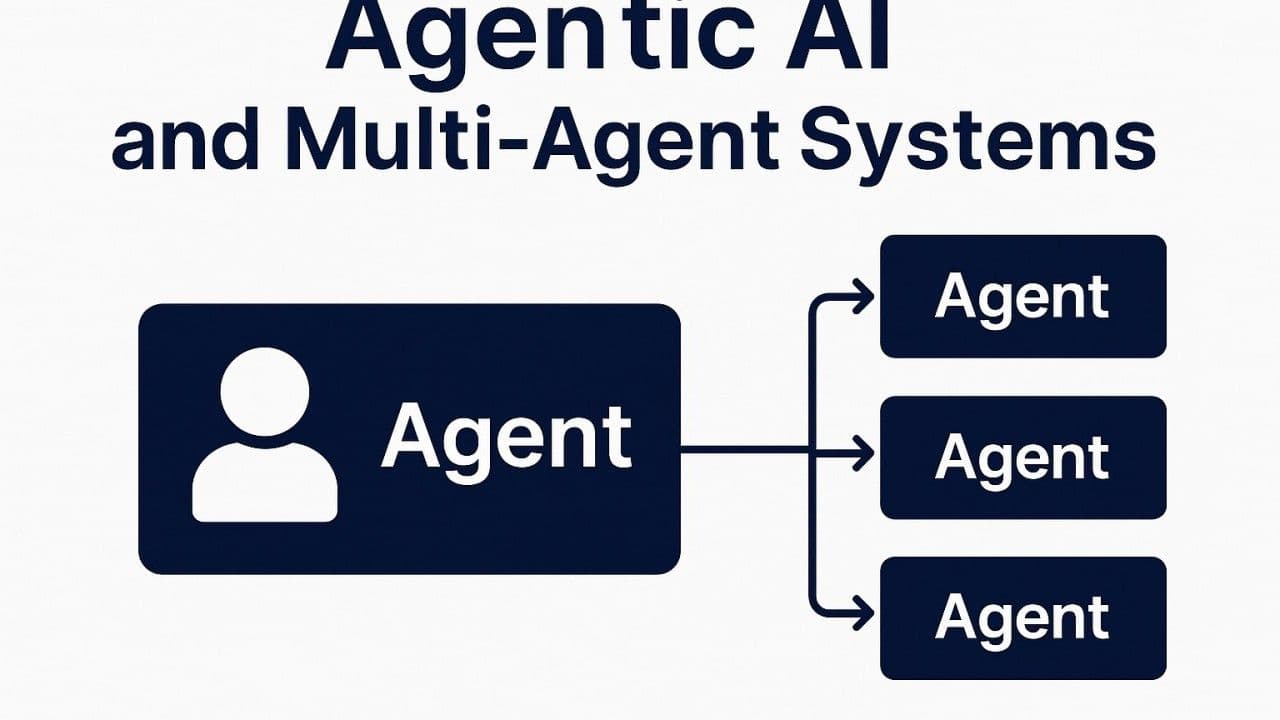
Agentic & Multiagent AI Systems: The Future of Autonomous AI
Agentic & Multiagent AI SystemsThe evolution of artificial intelligence is rapidly progressing from passive tools toward autonomous systems capable of planning, coordinating, reasoning, and independently executing complex objectives. Traditional AI systems typically respond to individual prompts or narrowly defined tasks. However, the next generation of AI is increasingly becoming agentic—capable of acting autonomously across dynamic environments.Simultaneously, researchers and technology companies are developing Multiagent AI Systems, where multiple AI agents collaborate, negotiate, specialize, and coordinate together to accomplish larger goals.This shift represents a major transition from isolated AI models toward distributed ecosystems of intelligent software entities capable of interacting with humans, digital systems, robots, enterprises, and even other AI agents.Agentic & Multiagent AI Systems may become foundational infrastructure for the future digital economy, autonomous enterprises, robotics ecosystems, financial systems, cybersecurity operations, and scientific discovery platforms.What Is Agentic AI?Agentic AI refers to artificial intelligence systems capable of autonomously pursuing goals, making decisions, planning actions, and adapting strategies with limited human intervention.Unlike traditional AI systems that simply generate outputs, agentic systems can:Reason across multiple stepsMaintain objectives over timeUse external toolsInteract with digital environmentsMonitor outcomesAdapt strategies dynamicallyAgentic AI introduces operational autonomy into artificial intelligence.What Are Multiagent AI Systems?Multiagent AI Systems consist of multiple intelligent agents that collaborate or compete within shared environments.Each agent may possess specialized capabilities such as:PlanningReasoningData analysisNegotiationMonitoringExecutionCoordinationTogether, these agents form distributed AI ecosystems capable of solving highly complex tasks.Why Agentic Systems Are EmergingModern digital systems are becoming increasingly complex and dynamic.Large-scale enterprise workflowsCloud-native infrastructureCybersecurity operationsScientific research automationAutonomous roboticsFinancial market systemsTraditional single-step AI interactions are often insufficient for managing continuously evolving environments.How Agentic AI Systems WorkAgentic systems operate through iterative reasoning and action loops.Typical workflow:A goal or task is assigned.The AI decomposes objectives into subtasks.Plans and strategies are generated.Tools and APIs are utilized.Outcomes are monitored continuously.The system adapts based on feedback.This creates persistent autonomous operational behavior.How Multiagent Coordination WorksIn multiagent systems, different AI agents collaborate to solve larger objectives.Common coordination models include:Hierarchical orchestrationSwarm intelligenceSpecialized task delegationConsensus-based decision-makingDistributed reasoningAutonomous negotiationEach agent contributes specialized intelligence within the broader system.Core Technologies Behind Agentic AILarge Language Models (LLMs)Reinforcement LearningMemory ArchitecturesPlanning AlgorithmsTool-Use FrameworksAutonomous Reasoning EnginesMultiagent Orchestration PlatformsThese technologies enable AI systems to transition from passive response engines into active operational agents.Agentic AI transforms artificial intelligence from systems that answer questions into systems that pursue objectives.Applications Across IndustriesAutonomous enterprise operationsAI software engineeringCybersecurity defense systemsFinancial trading infrastructureScientific research automationSupply-chain optimizationHealthcare coordination systemsRobotics and autonomous manufacturingAgentic systems could become deeply integrated into operational infrastructure.Traditional AI vs Agentic AITraditional AIAgentic AISingle-response systemsPersistent autonomous systemsReactive behaviorGoal-driven behaviorLimited planningMulti-step strategic planningIsolated executionCollaborative orchestrationBenefits of Multiagent SystemsScalable intelligenceTask specializationImproved adaptabilityDistributed problem-solvingOperational resilienceContinuous optimizationReduced human workloadMultiagent coordination enables more flexible and scalable AI ecosystems.Challenges and RisksAutonomous decision risksCoordination failuresAI alignment challengesSecurity vulnerabilitiesRunaway optimization behaviorsGovernance complexityEmergent unpredictable behaviorEnsuring safe and controllable autonomy remains a major research challenge.Role of Memory and Context PersistenceLong-term memory systems are becoming increasingly important for agentic AI.Persistent contextual understandingHistorical reasoningLong-term planningAdaptive personalizationOperational continuityMemory architectures help AI systems maintain coherent long-term behavior.Future OutlookThe next decade may witness the emergence of autonomous AI ecosystems operating across digital and physical environments.AI-native enterprisesAutonomous digital workforcesCollaborative AI swarmsSelf-optimizing operational systemsHuman-AI hybrid organizationsFuture economic systems may increasingly involve coordination between humans and autonomous AI agents.Economic and Strategic ImplicationsAgentic & Multiagent AI Systems could fundamentally reshape productivity, labor, and enterprise operations.Automation of knowledge workAcceleration of scientific discoveryTransformation of enterprise operationsExpansion of AI infrastructure marketsCreation of autonomous economic systemsThe organizations and nations that successfully develop scalable agentic AI ecosystems may gain major strategic advantages in the AI-driven economy.Frequently Asked QuestionsWhat is Agentic AI?Agentic AI refers to artificial intelligence systems capable of autonomously planning, reasoning, acting, and adapting to pursue goals over time.What are Multiagent AI Systems?They are ecosystems of multiple AI agents that collaborate, coordinate, or negotiate to solve complex tasks and manage distributed operations.Why are Agentic AI systems important?Because modern digital and operational environments increasingly require adaptive, autonomous, and continuously operating intelligence systems capable of handling complex workflows.ConclusionAgentic & Multiagent AI Systems represent a major evolution in artificial intelligence from passive software tools toward autonomous operational ecosystems. By combining reasoning, memory, planning, collaboration, and adaptive execution, these systems may fundamentally reshape industries, enterprises, digital infrastructure, and human-machine interaction. As AI systems become increasingly autonomous and interconnected, agentic intelligence could become one of the defining technological paradigms of the coming decades.

Physical AI and Humanoid Intuition: The Next AI Frontier
Physical AI & Humanoid "Intuition"The evolution of artificial intelligence is rapidly moving beyond purely digital systems into the physical world. While traditional AI primarily focused on software tasks such as language processing, recommendation systems, and data analysis, a new generation of systems is emerging that can perceive, reason, move, manipulate objects, and interact dynamically with real-world environments.This transition is giving rise to what many researchers and technology companies describe as Physical AI—AI systems embedded in robots, autonomous machines, industrial systems, and humanoid platforms capable of operating within physical environments.At the center of this transformation is the pursuit of Humanoid "Intuition": the ability for robots and embodied AI systems to make adaptive, context-aware, and human-like decisions in unpredictable real-world situations.Physical AI could become one of the defining technological revolutions of the 21st century, potentially reshaping labor markets, manufacturing, logistics, healthcare, defense, and human-machine interaction.What Is Physical AI?Physical AI refers to artificial intelligence systems that interact directly with the physical world through sensors, movement, robotics, and autonomous decision-making.Unlike purely digital AI systems, Physical AI must continuously manage:Spatial awarenessObject manipulationEnvironmental uncertaintyMovement coordinationReal-time adaptationHuman interactionPhysical AI merges intelligence with embodiment.What Is Humanoid "Intuition"?Humanoid intuition refers to the ability of robotic systems to make flexible, context-sensitive decisions similar to human instinctive reasoning.This includes:Understanding physical environmentsPredicting human behaviorAdapting to unexpected situationsLearning through interactionBalancing objects dynamicallyMaking rapid situational judgmentsThe goal is to move beyond rigid programming toward adaptive embodied intelligence.Why Traditional Robotics Is LimitedConventional robots perform well in structured and repetitive environments but struggle in dynamic real-world settings.Rigid task programmingLimited adaptabilityDifficulty handling ambiguityPoor generalizationDependence on controlled environmentsHuman environments are unpredictable, requiring much more flexible intelligence.How Physical AI Systems WorkPhysical AI combines multiple layers of sensing, reasoning, and motion control.Typical workflow:Sensors collect environmental data.AI systems analyze spatial context.Machine learning models predict outcomes.Motor systems execute movements.Feedback loops continuously adjust behavior.The system learns from interaction outcomes.This creates adaptive real-world operational intelligence.Key Technologies Behind Physical AIComputer VisionReinforcement LearningLarge Action Models (LAMs)Sensor Fusion SystemsSpatial AIEdge AI ComputingRobotics Control SystemsTactile IntelligenceThese technologies enable embodied intelligence and real-time adaptation.Role of Large AI ModelsModern AI foundation models are increasingly being integrated into robotics systems.Language understandingTask planningReasoning capabilitiesEnvironmental interpretationHuman interactionThese models provide higher-level cognitive capabilities for physical systems.Physical AI transforms artificial intelligence from systems that understand information into systems that understand and act within the physical world.Applications Across IndustriesHumanoid roboticsIndustrial automationHealthcare assistanceWarehouse logisticsAutonomous construction systemsMilitary roboticsElder-care supportRetail automationPhysical AI could become deeply integrated into economic infrastructure.Traditional Robotics vs Physical AITraditional RoboticsPhysical AIRule-based behaviorAdaptive intelligenceStructured environmentsDynamic real-world environmentsLimited flexibilityContinuous learning and adaptationTask-specific systemsGeneralized embodied intelligenceWhy Humanoid Form Factors MatterMany researchers believe humanoid robots may become highly valuable because human environments are already designed for human bodies.Stairs and laddersTools and equipmentVehiclesDoorways and infrastructureHuman collaboration spacesHumanoid systems may integrate more naturally into existing environments.Challenges and RisksEnergy efficiency limitationsReal-world safety concernsMechanical complexityEthical governance issuesLabor displacement risksAI alignment concernsHigh hardware costsBuilding truly adaptive embodied intelligence remains an extremely difficult engineering challenge.Role of Simulation and Digital TwinsSimulation environments are becoming essential for training Physical AI systems.Virtual world trainingPhysics-based simulationsDigital twin environmentsSynthetic scenario generationReinforcement learning optimizationSimulated training significantly accelerates robotic learning.Future OutlookThe next decade may witness the rise of large-scale embodied AI ecosystems.General-purpose humanoid workersAI-powered domestic assistantsAutonomous industrial fleetsEmbodied AI marketplacesHuman-AI collaborative workplacesFuture AI systems may increasingly exist as physical agents rather than purely digital services.Economic and Strategic ImplicationsPhysical AI could become one of the largest industrial shifts since the automation revolution.Transformation of labor marketsExpansion of robotics industriesProductivity accelerationReshaping of supply chainsStrategic manufacturing advantagesNew human-machine economiesThe organizations and nations that successfully develop scalable Physical AI ecosystems may gain major economic and geopolitical advantages.Frequently Asked QuestionsWhat is Physical AI?Physical AI refers to artificial intelligence systems embedded in robots and machines that interact directly with real-world physical environments.What does humanoid "intuition" mean?It refers to a robot's ability to make adaptive, context-aware decisions in unpredictable real-world situations similar to human instinctive reasoning.Why is Physical AI important?Because many real-world tasks require embodied intelligence capable of movement, perception, adaptation, and interaction within physical environments.ConclusionPhysical AI & Humanoid "Intuition" represents the next major frontier in artificial intelligence and robotics. By combining advanced AI models, embodied intelligence, real-time perception, and adaptive reasoning, future robotic systems may operate with increasing autonomy in complex physical environments. As these technologies continue evolving, Physical AI could fundamentally reshape industries, infrastructure, labor systems, and human interaction with intelligent machines in the decades ahead.

Sodium-Ion Batteries: The Promising Alternative to Lithium
Sodium-Ion Batteries (The Lithium Alternative)The global energy transition is driving unprecedented demand for rechargeable battery technologies. Electric vehicles, renewable energy storage systems, smart grids, portable electronics, and industrial electrification are rapidly increasing pressure on the global lithium supply chain. As concerns over cost, resource concentration, sustainability, and supply security grow, researchers and manufacturers are accelerating development of alternative battery chemistries.One of the most promising alternatives is the Sodium-Ion Battery. By replacing lithium with sodium—an abundant and widely available element—this technology could provide a lower-cost, more sustainable, and geopolitically diversified energy storage solution.Although sodium-ion batteries currently face certain performance limitations compared to lithium-ion systems, ongoing advances in materials science, manufacturing, and energy density are rapidly improving their commercial viability.Sodium-Ion Batteries may become a major pillar of the future global energy storage ecosystem.What Are Sodium-Ion Batteries?Sodium-Ion Batteries are rechargeable batteries that use sodium ions instead of lithium ions to store and transfer electrical energy.Their operational principles are similar to lithium-ion batteries:Charging moves ions between electrodesDischarging releases stored energyElectrochemical reactions generate electricityEnergy storage occurs within electrode materialsThe primary difference is the replacement of lithium with sodium.Why Sodium MattersSodium is one of the most abundant elements on Earth.Widely available globallyLower raw material costsReduced geopolitical concentrationPotentially more sustainable extractionAccessible from seawater and mineralsUnlike lithium, sodium resources are geographically diversified and relatively inexpensive.Why the World Is Seeking Lithium AlternativesThe rapid growth of electrification is increasing pressure on lithium supply chains.Electric vehicle expansionGrid-scale energy storage growthRising battery demandSupply-chain vulnerabilitiesCritical mineral competitionCost volatilityAlternative battery chemistries may improve long-term energy security and affordability.How Sodium-Ion Batteries WorkSodium-ion batteries use electrochemical reactions similar to lithium-ion systems.Typical operating process:Charging moves sodium ions from cathode to anode.Energy is stored chemically.Discharging releases sodium ions back.Electron flow generates electricity.The cycle repeats during recharge.The battery architecture resembles existing lithium-ion manufacturing systems.Key Advantages of Sodium-Ion BatteriesLower material costsReduced dependence on lithiumImproved supply-chain resilienceEnhanced cold-weather performancePotentially safer thermal characteristicsCompatibility with existing manufacturing infrastructureThese advantages make sodium-ion technology attractive for large-scale deployment.Potential ApplicationsSodium-ion batteries are particularly promising for applications where ultra-high energy density is less critical.Grid-scale energy storageRenewable energy bufferingElectric scooters and two-wheelersLow-cost electric vehiclesBackup power systemsIndustrial energy storageRural electrificationThe technology may become especially important in stationary storage markets.Sodium-Ion Batteries represent a strategic shift from scarce critical minerals toward more abundant and globally accessible energy storage materials.Sodium-Ion vs Lithium-Ion BatteriesLithium-Ion BatteriesSodium-Ion BatteriesHigher energy densityLower material costsLithium-dependent supply chainAbundant sodium resourcesMature commercial ecosystemEmerging commercial adoptionHigher premium EV suitabilityStrong stationary storage potentialChallenges and LimitationsLower energy density than lithium-ionShorter commercial maturity timelineLimited manufacturing scaleMaterials optimization challengesPerformance improvement requirementsCompetitive pressure from lithium technologiesResearchers continue working to improve efficiency, durability, and performance.Role in Renewable Energy SystemsSodium-ion batteries may become increasingly important for renewable energy integration.Solar energy storageWind energy balancingGrid stabilizationPeak-load managementDistributed energy systemsLow-cost storage is critical for large-scale renewable energy deployment.Global Industry DevelopmentsMajor battery manufacturers, startups, and governments are investing heavily in sodium-ion research and commercialization.Next-generation cathode materialsIndustrial pilot projectsGigafactory planningHybrid battery architecturesGrid-scale deployment programsThe commercial ecosystem is expanding rapidly.Future OutlookThe next decade may witness the emergence of diversified battery ecosystems where multiple chemistries coexist.Sodium-ion grid batteriesHybrid energy storage systemsLocalized battery manufacturingAI-optimized battery managementNext-generation low-cost EV platformsSodium-ion technology may complement rather than fully replace lithium-ion systems.Economic and Strategic ImplicationsSodium-Ion Batteries could significantly reshape global energy storage economics.Reduced dependence on critical mineralsLower energy storage costsExpanded renewable energy deploymentImproved supply-chain resilienceGreater energy securityThe countries and companies that successfully commercialize sodium-ion technologies may gain major strategic advantages in the future clean-energy economy.Frequently Asked QuestionsWhat are Sodium-Ion Batteries?They are rechargeable batteries that use sodium ions instead of lithium ions to store and release electrical energy.Why are Sodium-Ion Batteries important?Because sodium is abundant, lower-cost, and more geographically distributed than lithium, potentially improving energy security and affordability.Will Sodium-Ion Batteries replace Lithium-Ion Batteries?They may complement lithium-ion technologies in many applications, especially grid storage and lower-cost energy systems, rather than fully replacing them.ConclusionSodium-Ion Batteries represent one of the most promising alternatives to lithium-based energy storage systems. By leveraging abundant raw materials, lower costs, and improved supply-chain resilience, sodium-ion technology could play a major role in supporting global electrification and renewable energy expansion. Although technical challenges remain, rapid innovation in materials science and battery engineering may enable sodium-ion systems to become an essential component of the future energy economy.
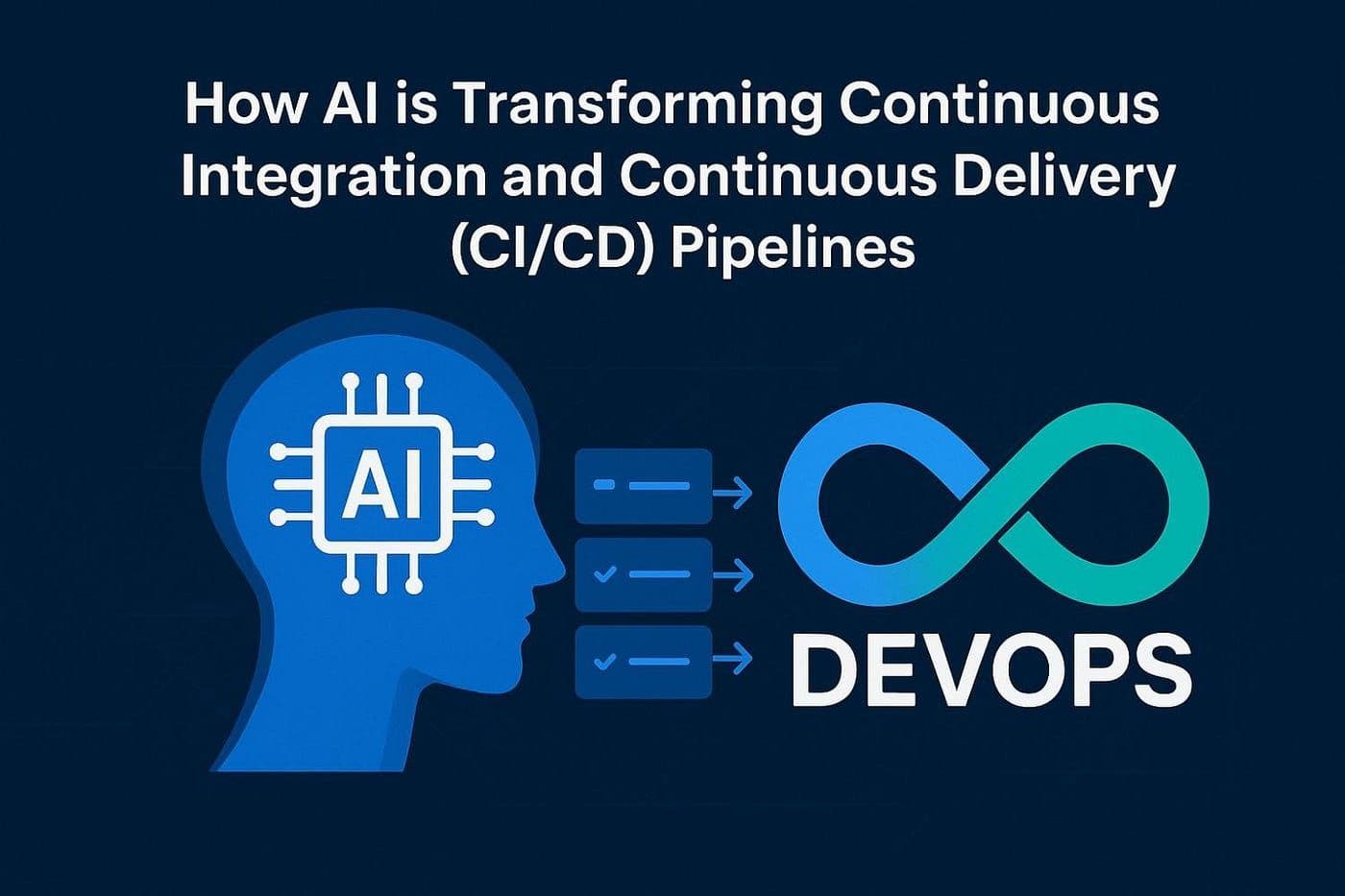
Autonomous CI/CD Pipeline Agents: The Future of DevOps
Autonomous CI/CD Pipeline AgentsThe software development lifecycle is undergoing a major transformation driven by artificial intelligence, autonomous systems, cloud-native engineering, and platform automation. Traditional Continuous Integration and Continuous Deployment (CI/CD) pipelines already automate large portions of software delivery, but modern development environments are becoming increasingly complex due to microservices, multi-cloud infrastructure, AI applications, edge computing, and hyperscale deployments.To manage this growing complexity, organizations are beginning to adopt Autonomous CI/CD Pipeline Agents—AI-powered software agents capable of independently managing, optimizing, monitoring, securing, and orchestrating software delivery pipelines.Rather than acting merely as scripted automation tools, these agents function as intelligent operational systems that can make context-aware decisions across the software delivery lifecycle.Autonomous CI/CD Pipeline Agents may become foundational infrastructure for the future of AI-native software engineering and DevOps operations.What Are Autonomous CI/CD Pipeline Agents?Autonomous CI/CD Pipeline Agents are AI-driven systems designed to manage and optimize software integration, testing, deployment, monitoring, and operational workflows with minimal human intervention.These agents combine:Artificial intelligenceDevOps automationInfrastructure orchestrationObservability systemsSecurity automationPredictive analyticsThe goal is to create self-managing software delivery ecosystems.What Is CI/CD?CI/CD stands for Continuous Integration and Continuous Deployment.These practices automate software delivery pipelines.Continuous Integration (CI)Automated code testingContinuous Deployment (CD)Infrastructure automationVersion managementRelease orchestrationCI/CD helps organizations release software faster and more reliably.Why Traditional Pipelines Are Becoming InsufficientModern software environments are becoming increasingly distributed and dynamic.Microservices architecturesMulti-cloud deploymentsContainerized workloadsAI application complexityRapid release cyclesSecurity compliance demandsStatic automation rules are often unable to adapt quickly enough to changing operational conditions.How Autonomous CI/CD Agents WorkAutonomous agents continuously monitor software pipelines and operational environments.Typical workflow:Code changes are detected.AI agents analyze dependencies and risks.Testing environments are provisioned automatically.Security and compliance checks are performed.Deployment strategies are optimized dynamically.Production systems are monitored continuously.The agents adapt decisions in real time based on operational conditions.Core Capabilities of Autonomous Pipeline AgentsSelf-healing deploymentsAutomated rollback decisionsPredictive failure detectionDynamic resource allocationAI-assisted testingIntelligent release orchestrationSecurity policy enforcementThese capabilities significantly reduce operational overhead.Role of Artificial IntelligenceAI enables CI/CD systems to evolve from scripted automation into adaptive operational intelligence.Anomaly detectionRoot-cause analysisDeployment risk predictionInfrastructure optimizationPerformance forecastingAutonomous remediationMachine learning systems continuously improve operational decision-making.Autonomous CI/CD transforms software delivery from scripted automation into intelligent operational orchestration.Applications Across Modern Software EngineeringCloud-native applicationsAI platform deploymentMicroservices ecosystemsEdge computing infrastructureEnterprise DevOps platformsCybersecurity operationsHigh-frequency release environmentsAutonomous delivery systems are especially valuable in highly dynamic environments.Traditional CI/CD vs Autonomous CI/CD AgentsTraditional CI/CDAutonomous CI/CD AgentsRule-based automationAI-driven adaptive automationManual intervention requiredSelf-managing operationsStatic deployment logicDynamic deployment optimizationReactive monitoringPredictive operational intelligenceBenefits of Autonomous Pipeline SystemsFaster software releasesReduced operational costsImproved deployment reliabilityEnhanced security complianceLower downtime risksImproved scalabilityReduced human errorOrganizations can significantly accelerate software delivery velocity.Challenges and RisksAI decision transparencyOperational trust concernsSecurity vulnerabilitiesComplex governance requirementsIntegration challengesAutonomous failure propagation risksStrong governance and observability remain essential for safe deployment.Role in Platform EngineeringAutonomous CI/CD agents are increasingly aligned with platform engineering initiatives.Internal developer platformsInfrastructure-as-Code orchestrationSelf-service deployment systemsDeveloper productivity optimizationUnified operational governancePlatform engineering and autonomous DevOps may increasingly converge.Future OutlookThe next generation of software infrastructure may become increasingly self-operating.Fully autonomous software deliveryAI-native DevOps ecosystemsSelf-healing infrastructureAutonomous compliance systemsPredictive deployment intelligenceFuture engineering teams may focus more on governance, architecture, and strategic oversight than manual operations.Economic and Strategic ImplicationsAutonomous CI/CD Pipeline Agents could fundamentally reshape software engineering economics.Lower operational overheadAccelerated product innovationImproved infrastructure resilienceEnhanced engineering productivityFaster enterprise digital transformationThe organizations that successfully deploy autonomous software delivery ecosystems may gain significant competitive advantages in the AI-native economy.Frequently Asked QuestionsWhat are Autonomous CI/CD Pipeline Agents?They are AI-powered systems that independently manage, optimize, monitor, and orchestrate software delivery pipelines.How are they different from traditional CI/CD pipelines?Traditional pipelines rely on predefined automation rules, while autonomous agents use AI to make adaptive operational decisions in real time.Why are autonomous pipeline systems important?Because modern software environments are becoming too complex for static automation alone, requiring intelligent systems capable of adaptive orchestration and predictive management.ConclusionAutonomous CI/CD Pipeline Agents represent a major evolution in software engineering and DevOps operations. By combining artificial intelligence, predictive analytics, autonomous remediation, and intelligent orchestration, these systems can transform software delivery into a highly adaptive operational ecosystem. As infrastructure complexity and deployment velocity continue increasing, autonomous pipeline agents may become foundational components of future AI-native engineering platforms.
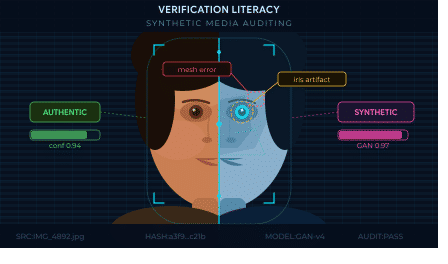
Verification Literacy & Synthetic Media Auditing Explained
Verification Literacy & Synthetic Media AuditingThe digital information ecosystem is entering an era where artificial intelligence can generate highly realistic text, images, videos, voices, virtual identities, and even entire synthetic environments. Deepfake technology, generative AI systems, and autonomous content engines are rapidly transforming how digital media is created, distributed, and consumed.As synthetic content becomes increasingly sophisticated, societies face a critical challenge: determining what is authentic. In response, a new discipline is emerging known as Verification Literacy & Synthetic Media Auditing.This field combines digital literacy, AI detection systems, media forensics, cryptographic verification, provenance tracking, and behavioral analysis to help individuals and organizations evaluate the authenticity of digital information.Verification Literacy may become one of the most essential skills of the AI era, while Synthetic Media Auditing could evolve into a foundational trust infrastructure for digital societies.What Is Verification Literacy?Verification Literacy refers to the ability to critically evaluate digital information and determine its authenticity, credibility, source integrity, and reliability.Core capabilities include:Source validationMetadata inspectionCross-reference analysisDeepfake identificationContext verificationDigital provenance assessmentAI-generated content recognitionVerification literacy extends beyond traditional media literacy by focusing specifically on AI-generated and synthetic content.What Is Synthetic Media?Synthetic media refers to digitally generated or AI-modified content designed to simulate reality.Examples include:Deepfake videosAI-generated voicesSynthetic imagesVirtual influencersAI-generated articlesFabricated identitiesDigitally cloned personalitiesModern synthetic media can often appear highly convincing to human observers.Why Verification Literacy Is Becoming EssentialThe rapid improvement of generative AI is increasing the difficulty of distinguishing authentic content from synthetic content.AI-powered misinformation campaignsIdentity impersonationElection manipulation risksFinancial fraudSynthetic social engineering attacksFalse media amplificationTrust increasingly requires evidence-based verification rather than visual appearance alone.What Is Synthetic Media Auditing?Synthetic Media Auditing is the process of systematically analyzing digital content to determine whether it is authentic, manipulated, AI-generated, or partially synthetic.The audit process may include:Metadata analysisContent provenance verificationAI artifact detectionSource authenticationBehavioral consistency analysisCross-platform validationThe objective is to establish confidence in digital authenticity.How Synthetic Media Auditing WorksModern auditing systems combine human expertise with automated AI-driven analysis.Typical workflow:Digital content is collected.Metadata and signatures are examined.AI detection models analyze artifacts.Source history is verified.Behavioral patterns are evaluated.Authenticity confidence scores are generated.Verification becomes a continuous trust-validation process.Key Technologies Enabling Verification SystemsArtificial Intelligence Detection ModelsBlockchain Provenance SystemsDigital WatermarkingCryptographic SignaturesComputer Vision AnalysisBehavioral AnalyticsContent Credential FrameworksThese technologies help establish verifiable digital trust.In the AI era, authenticity may become one of the most valuable forms of digital infrastructure.Applications Across IndustriesJournalism and Media VerificationElection SecurityFinancial Fraud DetectionCybersecurity OperationsCorporate CommunicationsNational Security IntelligenceSocial Media ModerationVerification systems may become embedded across digital ecosystems.Traditional Media Trust vs Verification-Era TrustTraditional Media TrustVerification-Era TrustTrust by appearanceTrust by verificationSource reputation focusCryptographic provenance focusManual fact-checkingAI-assisted auditingReactive validationContinuous authenticity scoringChallenges and RisksRapidly evolving deepfakesFalse positives in AI detectionPrivacy concernsVerification fatigueGlobal standardization issuesAI-versus-AI escalation dynamicsVerification systems must continuously evolve alongside synthetic media technologies.Role of Artificial IntelligenceAI itself is becoming both the source of synthetic media and the primary tool used to detect it.Deepfake detection systemsBehavioral anomaly analysisSynthetic artifact recognitionVoice authenticationReal-time verification enginesThe future may involve continuous AI-versus-AI authenticity battles.Future OutlookThe next decade may witness the emergence of global digital authenticity infrastructure.Universal content credentialsReal-time authenticity scoringAI-native trust systemsDecentralized provenance networksEmbedded authenticity verificationVerification mechanisms may become integrated into every major digital platform.Economic and Strategic ImplicationsVerification Literacy & Synthetic Media Auditing could become critical pillars of future digital economies.Expansion of trust technology marketsGrowth of authenticity infrastructure providersImproved cybersecurity resilienceProtection of institutional credibilityReduction in synthetic fraud risksThe organizations that establish trusted verification ecosystems may gain significant strategic advantages in the AI era.Frequently Asked QuestionsWhat is Verification Literacy?Verification Literacy is the ability to assess the authenticity, reliability, provenance, and credibility of digital content, especially AI-generated media.What is Synthetic Media Auditing?It is the process of analyzing digital content to determine whether it is authentic, manipulated, partially synthetic, or fully AI-generated.Why is this becoming important?Because modern generative AI systems can create highly realistic fake media that may influence public trust, cybersecurity, finance, and social systems.ConclusionVerification Literacy & Synthetic Media Auditing represents a critical evolution in digital trust and information security. As synthetic media technologies continue advancing, societies may increasingly depend on verification frameworks capable of distinguishing authentic information from AI-generated manipulation. By combining human critical thinking, AI-driven analysis, and cryptographic authenticity systems, future digital ecosystems may establish new foundations for trust, credibility, and secure communication in the age of artificial intelligence.

Advanced Packaging and Chip Stacking: The Future of Semiconductors
Advanced Packaging & Chip StackingThe semiconductor industry is entering a new era where performance gains are increasingly driven not only by transistor miniaturization but also by how chips are physically integrated together. As artificial intelligence, hyperscale computing, autonomous systems, and advanced data centers demand exponentially higher processing power, traditional chip-scaling approaches are approaching physical, thermal, and economic limits.To overcome these barriers, manufacturers are rapidly adopting Advanced Packaging & Chip Stacking technologies. These methods enable multiple semiconductor dies, chiplets, memory modules, and processing units to be vertically or horizontally integrated into highly optimized computing systems.Rather than building larger monolithic chips, the future of semiconductor innovation increasingly depends on integrating specialized components into unified architectures.Advanced Packaging & Chip Stacking may become one of the most important enabling technologies for next-generation AI infrastructure, quantum computing, edge devices, and exascale systems.What Is Advanced Packaging?Advanced packaging refers to technologies that connect multiple semiconductor components into a single integrated system.These approaches improve:PerformancePower efficiencyBandwidthThermal managementScalabilitySystem integrationAdvanced packaging shifts semiconductor innovation beyond transistor scaling alone.What Is Chip Stacking?Chip stacking involves vertically integrating multiple semiconductor dies on top of one another.Examples include:3D Integrated Circuits (3D ICs)High Bandwidth Memory (HBM)3D NAND FlashLogic-on-memory architecturesChiplet-based systemsThis approach reduces communication distance between components and increases overall system density.Why Traditional Scaling Is SlowingFor decades, semiconductor progress followed Moore's Law, where transistor density roughly doubled over time. However, modern chip manufacturing faces increasing challenges.Rising fabrication costsThermal constraintsQuantum-scale physics limitationsPower density challengesManufacturing complexityAdvanced packaging offers an alternative path for improving performance without relying solely on smaller transistors.How Advanced Packaging WorksAdvanced semiconductor systems integrate multiple dies using specialized interconnect technologies.Typical workflow:Individual semiconductor dies are fabricated.Specialized chiplets are designed for different tasks.Interconnect structures are created.Components are stacked or integrated.Thermal and power systems are optimized.The complete package operates as a unified system.The result is a modular and highly optimized computing architecture.Major Advanced Packaging Technologies2.5D Packaging3D Chip StackingChiplet ArchitecturesSystem-in-Package (SiP)Fan-Out Wafer-Level PackagingThrough-Silicon Vias (TSVs)Hybrid BondingThese technologies enable highly integrated semiconductor ecosystems.Role in Artificial IntelligenceAI workloads require massive memory bandwidth and parallel processing capability.AI acceleratorsLarge language modelsGPU clustersNeural network trainingInference optimizationAdvanced packaging allows processors and memory to operate much more efficiently together.The future of semiconductor performance may depend less on shrinking transistors and more on how intelligently chips are interconnected and stacked.Benefits of Advanced Packaging & Chip StackingHigher computing performanceImproved energy efficiencyReduced latencyGreater bandwidthSmaller physical footprintModular chip design flexibilityEnhanced scalabilityThese advantages are increasingly important for next-generation computing systems.Traditional Semiconductor Design vs Advanced PackagingTraditional Monolithic ChipsAdvanced Packaging & Chip StackingSingle large dieMultiple integrated chipletsHorizontal scaling focusVertical + modular integrationLonger interconnect distancesShort high-speed interconnectsLimited flexibilityCustomizable architecturesApplications Across IndustriesArtificial IntelligenceData CentersAutonomous VehiclesEdge ComputingQuantum Computing5G and 6G InfrastructureDefense ElectronicsAdvanced packaging is becoming central to modern computing ecosystems.Challenges and RisksThermal management complexityManufacturing challengesYield optimization issuesHigher packaging costsDesign interoperability requirementsSupply-chain dependenciesSuccessfully scaling advanced packaging requires major engineering and manufacturing innovation.Role of AI in Packaging DesignArtificial intelligence is increasingly being used to optimize semiconductor packaging systems.Thermal simulationInterconnect optimizationManufacturing process controlDefect detectionYield predictionAI-assisted engineering may accelerate the next generation of chip integration technologies.Future OutlookThe semiconductor industry is expected to increasingly embrace modular and vertically integrated architectures.AI-native processorsMassive chiplet ecosystemsIntegrated photonicsEmbedded cooling systemsHeterogeneous computing platformsFuture computing systems may consist of highly specialized stacked architectures optimized for specific workloads.Economic and Strategic ImplicationsAdvanced Packaging & Chip Stacking could redefine semiconductor competitiveness in the AI era.Expansion of advanced semiconductor marketsAcceleration of AI infrastructure growthEnhanced national semiconductor capabilitiesImproved computing efficiencyCreation of new chip ecosystem business modelsThe organizations and nations that master advanced integration technologies may shape the future of global computing infrastructure.Frequently Asked QuestionsWhat is Advanced Packaging?Advanced packaging refers to semiconductor technologies that integrate multiple chips and components into highly optimized computing systems.What is Chip Stacking?Chip stacking is the vertical integration of multiple semiconductor dies to improve performance, density, and energy efficiency.Why is advanced packaging important for AI?AI systems require extremely high memory bandwidth, processing power, and energy efficiency, which advanced packaging technologies help provide.ConclusionAdvanced Packaging & Chip Stacking represents one of the most important transitions in the evolution of semiconductor engineering. As traditional transistor scaling approaches become increasingly difficult, modular integration and vertical chip architectures are emerging as critical pathways for sustaining computing progress. By enabling more powerful, efficient, and scalable systems, advanced packaging technologies may define the next era of artificial intelligence, hyperscale infrastructure, and high-performance computing innovation.

Non-Terrestrial Zero-Trust Cybersecurity for Space Networks
Non-Terrestrial Zero-Trust CybersecurityThe expansion of space-based digital infrastructure is creating a new frontier for cybersecurity. Satellite constellations, orbital cloud platforms, lunar communication systems, autonomous spacecraft, space stations, and interplanetary data networks are rapidly transforming space into a critical operational domain for communications, defense, navigation, commerce, and artificial intelligence.cThis approach applies the principles of Zero Trust to orbital, lunar, and deep-space infrastructure by continuously verifying every user, device, communication pathway, and computational workload regardless of physical location.Non-Terrestrial Zero-Trust Cybersecurity may become a foundational security architecture for the future space economy and interplanetary digital infrastructure.What Is Non-Terrestrial Zero-Trust Cybersecurity?Non-Terrestrial Zero-Trust Cybersecurity is a security framework designed for digital systems operating beyond traditional Earth-based infrastructure.It combines:Zero-Trust Architecture (ZTA)Space cybersecurity systemsAI-driven threat detectionQuantum-resistant encryptionAutonomous network defenseDistributed identity managementThe objective is to secure communications and operations across highly distributed non-terrestrial environments.Why Traditional Security Models Are InsufficientTraditional cybersecurity architectures often assume that systems inside a trusted perimeter are relatively safe.However, non-terrestrial networks introduce unique challenges:Distributed orbital infrastructureLong communication delaysLimited physical accessAutonomous operationsCross-domain communicationsGlobal attack surfacesSpace-based infrastructure requires continuous trust verification rather than perimeter-based assumptions.Core Principle: Never Trust, Always VerifyZero-Trust cybersecurity operates on a fundamental principle:No user, device, application, or communication channel should be trusted automatically.Every interaction requires:Identity verificationBehavioral analysisRisk assessmentContinuous monitoringDynamic authorizationTrust becomes contextual and continuously evaluated.How Non-Terrestrial Zero-Trust Systems WorkFuture space cybersecurity systems may operate autonomously across distributed networks.Typical workflow:Identity authentication occurs continuously.Devices validate cryptographic credentials.AI systems monitor behavioral anomalies.Access permissions adapt dynamically.Threats are isolated automatically.Security policies update in real time.Security becomes an active and adaptive operational layer.Key Technologies Powering Non-Terrestrial Zero TrustArtificial Intelligence Security EnginesQuantum-Resistant CryptographyBehavioral Analytics SystemsDecentralized Identity PlatformsSoftware-Defined NetworkingAutonomous Cyber Defense SystemsZero-Knowledge AuthenticationThese technologies enable secure operations across highly dynamic environments.Potential Threats Facing Space InfrastructureAs space becomes increasingly commercialized and digitized, cyber risks continue to expand.Satellite hijackingSignal spoofing attacksCommunication interceptionOrbital malware deploymentGround station intrusionsSupply-chain compromisesAI-powered cyberattacksFuture space infrastructure may become a critical cyber battleground.In non-terrestrial cybersecurity, trust is not determined by location—it is continuously earned through verification.Applications Across the Space EconomySatellite constellationsOrbital cloud computingLunar communication systemsSpace stationsAutonomous spacecraftMilitary space infrastructureDeep-space exploration missionsCybersecurity may become as essential as propulsion and communications for future space systems.Traditional Cybersecurity vs Non-Terrestrial Zero TrustTraditional CybersecurityNon-Terrestrial Zero TrustPerimeter-based trustContinuous verificationStatic access controlDynamic adaptive accessEarth-centric infrastructureDistributed orbital infrastructureReactive threat responseAutonomous threat mitigationChallenges and LimitationsCommunication latencyLimited onboard computing resourcesComplex identity managementInternational regulatory coordinationSpace infrastructure interoperabilityAutonomous governance complexitySecuring distributed non-terrestrial systems requires entirely new operational models.Role of Artificial IntelligenceAI is expected to become central to future space cybersecurity systems.Real-time anomaly detectionAutonomous threat responseBehavioral risk scoringPredictive cyber defenseSelf-healing security architecturesHuman-only security operations may become impractical at interplanetary scale.Future OutlookThe next generation of space infrastructure may be built with embedded Zero-Trust security by default.AI-native orbital defense systemsQuantum-secure satellite communicationsAutonomous cyber-defense constellationsInterplanetary identity frameworksSelf-regulating trust architecturesCybersecurity may become a foundational design principle for future space civilization infrastructure.Economic and Strategic ImplicationsNon-Terrestrial Zero-Trust Cybersecurity could become one of the most strategically important sectors of the future digital economy.Protection of commercial space assetsEnhanced national securityExpansion of orbital cloud servicesIncreased investor confidenceSupport for autonomous space economiesThe organizations and nations that establish secure non-terrestrial infrastructure may shape the future architecture of global digital systems.Frequently Asked QuestionsWhat is Non-Terrestrial Zero-Trust Cybersecurity?It is a cybersecurity framework designed for space-based digital infrastructure that continuously verifies users, devices, and communications rather than assuming trust.Why is Zero Trust important for space systems?Because orbital and deep-space systems are highly distributed, autonomous, physically inaccessible, and exposed to expanding cyber threats.How does AI contribute to non-terrestrial cybersecurity?AI enables real-time anomaly detection, autonomous threat mitigation, behavioral analytics, and adaptive security operations across distributed networks.ConclusionNon-Terrestrial Zero-Trust Cybersecurity represents the evolution of digital defense for the emerging space economy. As humanity expands communications, computing, commerce, and autonomous operations beyond Earth, traditional perimeter-based security models may become obsolete. By embracing continuous verification, AI-assisted defense systems, and adaptive trust architectures, future non-terrestrial networks can become more resilient, secure, and capable of supporting the next generation of orbital and interplanetary infrastructure.
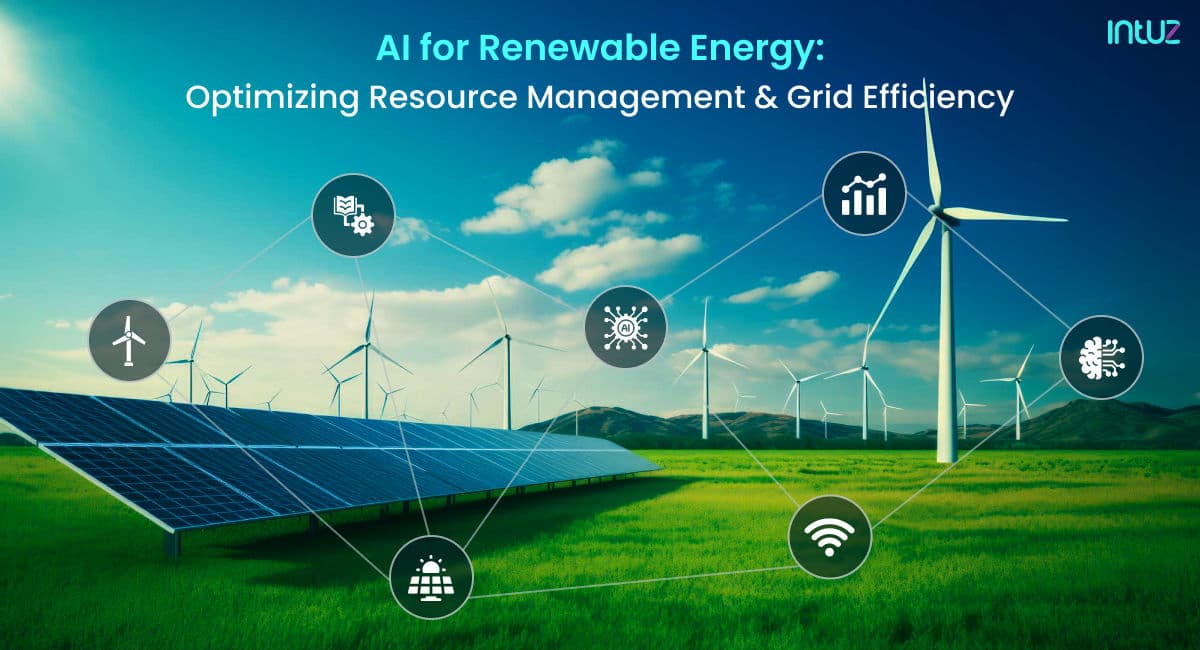
Hyperscale AI Energy Cross-Management: GreenOps 2.0
Hyperscale AI Energy Cross-Management (GreenOps 2.0)The rapid expansion of artificial intelligence is reshaping the global energy landscape. Training frontier AI models, operating hyperscale data centers, supporting AI inference workloads, and powering next-generation cloud infrastructure require unprecedented amounts of electricity. As AI adoption accelerates, energy efficiency is becoming a strategic priority rather than merely an operational concern.To address this challenge, organizations are developing a new operational paradigm known as Hyperscale AI Energy Cross-Management, often referred to as GreenOps 2.0. This approach combines artificial intelligence, energy analytics, carbon optimization, cloud orchestration, and real-time infrastructure management to dynamically balance performance, cost, sustainability, and grid stability.GreenOps 2.0 represents the evolution of sustainability operations from simple reporting and efficiency tracking to autonomous energy optimization across entire AI ecosystems.As AI infrastructure continues to scale, GreenOps 2.0 may become one of the most critical operational disciplines of the digital economy.What Is Hyperscale AI Energy Cross-Management?Hyperscale AI Energy Cross-Management is a framework that continuously optimizes energy consumption across AI infrastructure, cloud platforms, data centers, and distributed compute resources.The objective is to coordinate:AI workloadsPower availabilityRenewable energy sourcesGrid conditionsCarbon intensity levelsInfrastructure utilizationRather than managing energy and computing separately, GreenOps 2.0 treats them as interconnected systems.Why AI Is Creating an Energy ChallengeModern AI systems require enormous computational resources.Large language model trainingAI inference workloadsGenerative AI servicesAI-powered search systemsDigital twinsAutonomous agent platformsAs model complexity grows, electricity demand can increase significantly across hyperscale infrastructure.What Is GreenOps 2.0?GreenOps 2.0 extends traditional sustainability operations by introducing real-time optimization and autonomous decision-making.Key principles include:Carbon-aware computingEnergy-aware workload schedulingDynamic infrastructure allocationRenewable energy integrationAI-driven efficiency optimizationContinuous sustainability monitoringEnergy management becomes a core operational capability.How Energy Cross-Management WorksGreenOps platforms continuously monitor infrastructure and energy ecosystems.Typical workflow:AI workloads are analyzed.Energy prices are monitored.Grid carbon intensity is measured.Renewable energy availability is assessed.Workloads are dynamically shifted.Performance and sustainability goals are balanced.The system continuously optimizes energy consumption in real time.Core Technologies Behind GreenOps 2.0Artificial Intelligence Operations (AIOps)Digital Twin PlatformsSmart Grid IntegrationCarbon Analytics SystemsCloud Orchestration EnginesPredictive Energy ForecastingAutonomous Infrastructure ManagementThese technologies enable coordinated optimization across computing and energy systems.Role of Renewable EnergyRenewable energy is becoming increasingly important for AI infrastructure.Solar power integrationWind energy utilizationBattery storage systemsMicrogrid deploymentsVirtual power plantsGrid-balancing servicesGreenOps 2.0 seeks to align computing demand with renewable energy availability.The future of AI infrastructure will be measured not only by computational performance, but also by how intelligently it consumes energy.Benefits of Hyperscale AI Energy Cross-ManagementLower operational costsReduced carbon emissionsImproved energy efficiencyEnhanced grid resilienceBetter infrastructure utilizationSupport for sustainability goalsIncreased AI scalabilityOrganizations can improve both economic and environmental performance simultaneously.Traditional Energy Management vs GreenOps 2.0Traditional Energy ManagementGreenOps 2.0Static monitoringReal-time optimizationReactive managementPredictive managementEnergy-focusedEnergy + AI workload focusedManual decision-makingAI-assisted orchestrationChallenges and RisksInfrastructure complexityData integration challengesGrid dependency risksRenewable energy variabilityCybersecurity concernsOperational governance requirementsSuccessful implementation requires coordination across energy, cloud, and AI operations teams.Future OutlookThe next decade may see the emergence of fully autonomous energy-aware computing ecosystems.Carbon-aware AI schedulingAutonomous energy tradingSelf-optimizing hyperscale campusesAI-native smart gridsGlobal renewable-compute marketplacesFuture AI systems may automatically determine where and when computation should occur based on sustainability and performance objectives.Economic and Strategic ImplicationsHyperscale AI Energy Cross-Management could become a defining competitive advantage in the AI economy.Reduced infrastructure costsImproved sustainability performanceEnhanced regulatory complianceGreater energy resilienceSupport for large-scale AI growthOrganizations that successfully integrate AI operations with intelligent energy management may gain significant advantages as global compute demand continues to accelerate.Frequently Asked QuestionsWhat is GreenOps 2.0?GreenOps 2.0 is an advanced operational framework that uses AI, automation, and energy analytics to optimize sustainability and energy consumption across digital infrastructure.Why is AI creating energy challenges?Training and operating advanced AI systems require enormous computational resources, which significantly increase electricity consumption.How does Energy Cross-Management help?It dynamically aligns computing workloads, energy availability, carbon intensity, and infrastructure utilization to improve efficiency and sustainability.ConclusionHyperscale AI Energy Cross-Management (GreenOps 2.0) represents the next evolution of sustainable digital operations. By integrating artificial intelligence, renewable energy systems, cloud orchestration, and real-time optimization, organizations can create infrastructure that is both highly performant and environmentally responsible. As AI becomes one of the largest drivers of global compute demand, GreenOps 2.0 may emerge as a critical framework for balancing innovation, economics, and sustainability in the digital age.

Mechanized Embryo Genetic Scoring: AI in Reproductive Genomics
Mechanized Embryo Genetic ScoringThe convergence of artificial intelligence, genomics, reproductive medicine, and biotechnology is creating new possibilities in human embryo assessment. One of the most discussed developments is Mechanized Embryo Genetic Scoring, a technology-driven approach that uses genetic analysis, machine learning, and automated evaluation systems to assess embryos during in vitro fertilization (IVF) procedures.Traditionally, embryologists evaluated embryos primarily through visual observation and limited genetic screening. Today, advances in whole-genome sequencing, AI-based pattern recognition, and predictive analytics are enabling more comprehensive assessments of embryo viability, genetic health, and developmental potential.Supporters believe these technologies may improve IVF success rates and reduce inherited disease risks, while critics raise important ethical questions about genetics, selection, privacy, and reproductive decision-making.Mechanized Embryo Genetic Scoring could become one of the most transformative—and controversial—applications of precision medicine in the coming decades.What Is Mechanized Embryo Genetic Scoring?Mechanized Embryo Genetic Scoring refers to the use of automated computational systems to evaluate embryos based on genetic and developmental characteristics.The process typically combines:Genomic sequencingAI-powered analyticsEmbryo imaging systemsPredictive health modelsAutomated decision-support toolsThe objective is to assist fertility specialists by providing additional data regarding embryo characteristics and potential outcomes.Why Traditional Embryo Selection Is EvolvingConventional IVF embryo selection often relies on visual assessment and limited genetic testing.Embryo morphology evaluationCell division monitoringChromosomal screeningClinical experienceWhile effective, these methods provide only partial insight into embryo development and genetic factors.How Mechanized Genetic Scoring WorksModern systems integrate biological data with computational analysis.Typical workflow:Embryos are created through IVF.Genetic samples are collected.DNA sequencing is performed.Embryo images are analyzed.AI models evaluate genetic indicators.Decision-support reports are generated.The resulting assessments may help clinicians make more informed implantation decisions.Key Technologies Behind Genetic ScoringWhole Genome SequencingArtificial IntelligenceMachine Learning AlgorithmsTime-Lapse Embryo ImagingBioinformatics PlatformsPredictive Health AnalyticsCloud-Based Genomic ProcessingThese technologies enable large-scale analysis of genetic and developmental data.Potential Clinical BenefitsAdvocates suggest that mechanized scoring could offer several advantages.Improved IVF success ratesReduced implantation failuresEarlier detection of genetic disordersPersonalized fertility treatmentsEnhanced clinical decision supportPotential reduction in inherited disease riskThe technology seeks to improve outcomes through more comprehensive biological analysis.Role of Artificial IntelligenceAI plays an increasingly important role in reproductive medicine.Embryo image classificationPattern recognitionGenetic risk predictionDevelopmental forecastingClinical decision supportMachine learning systems can identify subtle patterns that may be difficult for humans to detect.Mechanized Embryo Genetic Scoring represents the intersection of reproductive medicine, genomics, and artificial intelligence.Potential ApplicationsIVF ClinicsReproductive GeneticsRare Disease PreventionPersonalized Fertility CareGenomic ResearchPrecision Medicine ProgramsApplications may extend beyond fertility treatment into broader healthcare research.Traditional Embryo Assessment vs Mechanized Genetic ScoringTraditional AssessmentMechanized Genetic ScoringVisual observationMulti-dimensional genomic analysisManual evaluationAI-assisted evaluationLimited predictive capabilityData-driven prediction modelsMorphology-focusedGenetics + development analysisEthical and Social ConcernsGenetic privacy issuesPotential discrimination concernsEquity of accessReproductive autonomy debatesAlgorithmic bias risksQuestions surrounding genetic selectionEthical governance will likely play a central role in future adoption.Challenges and LimitationsIncomplete understanding of complex geneticsPredictive uncertaintyRegulatory requirementsHigh implementation costsData quality limitationsLong-term validation needsMany traits and outcomes remain influenced by environmental and developmental factors beyond genetics.Future OutlookThe next decade may see increasing integration of genomics and AI within reproductive medicine.AI-assisted fertility clinicsPersonalized reproductive medicineExpanded genomic screening capabilitiesAdvanced predictive health modelsAutomated embryo assessment systemsFuture systems may provide deeper biological insights while remaining subject to regulatory and ethical oversight.Economic and Strategic ImplicationsMechanized Embryo Genetic Scoring could significantly influence reproductive healthcare and biotechnology markets.Expansion of fertility technology industriesGrowth of genomic healthcare servicesIncreased demand for precision medicineAdvances in reproductive biotechnologyDevelopment of AI-driven clinical platformsThe organizations that successfully combine genomics, AI, and reproductive medicine may shape the future of personalized healthcare.Frequently Asked QuestionsWhat is Mechanized Embryo Genetic Scoring?An AI-assisted approach that evaluates embryos using genetic data, imaging systems, and predictive analytics to support IVF decision-making.Does it determine a child's future traits?No. Many human traits are influenced by complex interactions among genetics, environment, development, and life experiences, making precise prediction difficult.What is its primary goal?The primary goal is to assist clinicians in identifying embryos with favorable developmental characteristics and reduced risk of certain genetic disorders.ConclusionMechanized Embryo Genetic Scoring represents a significant advancement in the integration of artificial intelligence, genomics, and reproductive medicine. By combining sophisticated genetic analysis with automated evaluation systems, this technology may improve IVF outcomes and enhance personalized fertility care. However, its future development will require careful scientific validation, ethical oversight, and societal discussion to ensure that innovation proceeds responsibly and equitably.

Direct-to-Cell Satellite Networks: Connectivity from Space
Direct-to-Cell Satellite NetworksThe telecommunications industry is undergoing one of its most significant transformations since the advent of mobile networks. For decades, cellular connectivity has relied heavily on terrestrial infrastructure such as towers, fiber-optic networks, and ground-based communication systems. While these networks have enabled global communication, large portions of the planet still suffer from coverage gaps, particularly in remote, rural, maritime, and disaster-prone regions.To address these limitations, a new generation of space-based communication technology is emerging: Direct-to-Cell Satellite Networks. These systems allow ordinary smartphones to connect directly to satellites in orbit without requiring specialized satellite phones or external equipment.By transforming satellites into space-based cell towers, Direct-to-Cell networks could provide near-global connectivity and redefine how mobile communication infrastructure operates.This technology may become a foundational component of future telecommunications, emergency response systems, IoT ecosystems, and digital inclusion initiatives.What Are Direct-to-Cell Satellite Networks?Direct-to-Cell Satellite Networks are communication systems that enable standard mobile phones to connect directly with satellites orbiting Earth.Unlike traditional satellite communication systems:No dedicated satellite phone is requiredNo external antenna is necessaryExisting smartphones can often be supportedCommunication occurs through standard cellular frequenciesThe objective is to extend cellular coverage beyond the limits of terrestrial infrastructure.Why Traditional Mobile Networks Have Coverage GapsBuilding and maintaining terrestrial infrastructure is expensive and geographically challenging.Remote rural regionsMountainous terrainDeserts and forestsOceanic areasDisaster zonesDeveloping regionsMany locations remain underserved due to infrastructure limitations.How Direct-to-Cell Networks WorkSatellites function as orbiting cellular base stations capable of communicating directly with mobile devices.Typical communication process:A smartphone sends a cellular signal.A satellite receives the transmission.The satellite routes the signal through a space network.Ground stations connect to terrestrial networks.Data reaches the intended destination.Responses return through the same pathway.The user experiences connectivity even in locations without traditional cellular coverage.Core Technologies Enabling Direct-to-Cell ConnectivityLow Earth Orbit (LEO) SatellitesAdvanced Phased-Array Antennas5G and Future 6G ProtocolsBeamforming TechnologiesSoftware-Defined NetworksAI-Based Signal OptimizationSatellite Mesh NetworkingThese technologies enable reliable communication between satellites and standard mobile devices.Potential ApplicationsDirect-to-Cell networks could support numerous use cases.Emergency messagingRemote-area connectivityMaritime communicationsAviation connectivityMilitary communicationsInternet of Things (IoT)Disaster recovery operationsConnectivity may become available virtually anywhere on Earth.Emergency Response and Disaster RecoveryOne of the most important applications is maintaining communication during emergencies.EarthquakesFloodsWildfiresHurricanesSearch-and-rescue missionsWhen terrestrial infrastructure fails, satellite connectivity can remain operational.Direct-to-Cell technology transforms satellites from specialized communication assets into extensions of everyday mobile networks.Benefits of Direct-to-Cell Satellite NetworksNear-global coverageImproved emergency communicationsReduced digital divideEnhanced network resilienceSupport for remote industriesExpanded IoT deployment opportunitiesReduced infrastructure dependencyThese benefits could significantly expand access to communication services worldwide.Traditional Cellular Networks vs Direct-to-Cell NetworksTraditional Cellular NetworksDirect-to-Cell Satellite NetworksGround tower dependentSatellite-based coverageRegional coverage limitationsNear-global reachInfrastructure-intensiveSpace infrastructure drivenVulnerable to local outagesHigher geographic resilienceChallenges and RisksLimited satellite bandwidthOrbital congestionSpectrum coordination challengesHigh deployment costsSignal latency considerationsSpace debris risksLarge-scale deployment requires substantial technological and regulatory coordination.Major Industry ParticipantsSeveral organizations are actively developing Direct-to-Cell capabilities.SpaceX Starlink Direct-to-CellAST SpaceMobileLynk GlobalGlobal telecommunications operatorsSatellite infrastructure providersCompetition is accelerating innovation across the satellite communications sector.Future OutlookThe coming decade may witness the integration of terrestrial and non-terrestrial communication systems.6G satellite integrationContinuous global connectivityAutonomous network routingAI-managed communicationsSpace-native mobile infrastructureFuture users may transition seamlessly between ground and satellite networks without noticing the difference.Economic and Strategic ImplicationsDirect-to-Cell Satellite Networks could become a major driver of the global digital economy.Expansion of connectivity marketsGrowth of the space economyImproved disaster resilienceGreater digital inclusionNew telecommunications business modelsOrganizations that successfully deploy large-scale Direct-to-Cell systems may play a defining role in the future of global communications.Frequently Asked QuestionsWhat are Direct-to-Cell Satellite Networks?They are satellite communication systems that allow ordinary smartphones to connect directly to satellites without requiring specialized devices.Do users need special phones?Many Direct-to-Cell systems are designed to work with existing smartphones using standard cellular technologies.Why is this technology important?It can provide connectivity in remote areas, support emergency communications, and help close global coverage gaps.ConclusionDirect-to-Cell Satellite Networks represent a major evolution in global telecommunications. By connecting ordinary mobile devices directly to orbiting satellites, these systems have the potential to eliminate coverage gaps, strengthen emergency response capabilities, and bring connectivity to previously unreachable regions. As satellite constellations continue to expand and mobile technologies evolve, Direct-to-Cell networks may become a fundamental component of the world's future communication infrastructure.

Patient-Specific Base Editing: Personalized Gene Correction
Patient-Specific Base EditingThe field of genetic medicine is undergoing a profound transformation. Traditional therapies often focus on managing symptoms rather than addressing the underlying genetic causes of disease. Recent advances in gene editing technologies have opened the possibility of correcting disease-causing mutations directly within human DNA. Among the most promising developments is Patient-Specific Base Editing, an emerging approach that enables highly targeted genetic corrections tailored to an individual's unique genetic profile.Unlike conventional gene therapies that may insert or replace entire genes, base editing allows scientists to precisely modify single DNA letters without cutting both strands of the DNA molecule. This precision could dramatically improve safety, efficiency, and therapeutic outcomes.Patient-Specific Base Editing has the potential to transform personalized medicine, rare disease treatment, oncology, and preventive healthcare.What Is Patient-Specific Base Editing?Patient-Specific Base Editing is a form of precision gene editing that modifies individual DNA bases to correct mutations responsible for disease.Rather than applying a one-size-fits-all treatment, the therapy is customized to the genetic makeup of a specific patient.This approach combines:Genomic sequencingPrecision medicineBase editing technologiesBioinformatics analysisPersonalized therapeutic designThe goal is to correct genetic errors with unprecedented accuracy.What Is Base Editing?Base editing is an advanced gene-editing technique derived from CRISPR technologies.It allows scientists to directly convert one DNA base into another without creating double-strand breaks.Common base conversions include:Cytosine (C) to Thymine (T)Adenine (A) to Guanine (G)These targeted changes can correct many disease-causing genetic mutations.Why Personalization MattersMany genetic disorders arise from unique mutations that vary between individuals.Rare genetic diseasesInherited disordersCancer-associated mutationsPersonalized risk factorsUnique genomic variationsPatient-specific therapies aim to address the exact mutation present in an individual rather than treating broad disease categories.How Patient-Specific Base Editing WorksThe treatment process begins with comprehensive genomic analysis.Typical workflow:The patient's genome is sequenced.Disease-causing mutations are identified.A customized base editor is designed.Editing components are delivered into target cells.Specific DNA bases are corrected.Treated cells are monitored for safety and effectiveness.This creates a highly individualized therapeutic pathway.Key Technologies Enabling Base EditingCRISPR-Based SystemsBase EditorsGenomic Sequencing PlatformsBioinformatics SoftwareAI-Assisted Drug DesignGene Delivery TechnologiesPrecision DiagnosticsThese technologies collectively support next-generation genetic medicine.Potential Medical ApplicationsPatient-Specific Base Editing could address a wide range of diseases.Sickle Cell DiseaseCystic FibrosisDuchenne Muscular DystrophyInherited Retinal DisordersRare Genetic SyndromesCancer TherapiesBlood DisordersMany conditions caused by single-base mutations may become treatable.Patient-Specific Base Editing moves medicine from treating diseases broadly to correcting the precise genetic changes responsible for illness in each individual.Advantages Over Traditional Gene TherapyGreater precisionReduced off-target effectsNo double-strand DNA breaksPersonalized treatment designPotentially improved safety profileLong-term therapeutic benefitsPrecision editing may significantly improve treatment outcomes.Traditional Genetic Therapy vs Patient-Specific Base EditingTraditional Gene TherapyPatient-Specific Base EditingBroad therapeutic approachIndividualized treatmentGene insertion or replacementSingle-base correctionStandardized therapy designCustomized editing strategyPopulation-focused treatmentPatient-focused treatmentChallenges and RisksHigh development costsComplex regulatory pathwaysDelivery system limitationsPotential off-target editsManufacturing scalability challengesEthical considerationsResearchers continue working to improve safety, accessibility, and effectiveness.Role of Artificial IntelligenceAI is becoming increasingly important in personalized genetic medicine.Mutation identificationEditing target predictionTherapy design optimizationGenomic data analysisRisk assessmentAI may significantly accelerate the development of individualized therapies.Future OutlookThe next decade may witness the expansion of personalized gene-editing platforms.Rapid therapy design systemsAI-assisted editing platformsPersonalized genomic clinicsRoutine genetic correction therapiesUltra-rare disease treatment programsPatient-specific interventions may become a central pillar of precision medicine.Economic and Strategic ImplicationsPatient-Specific Base Editing could reshape the biotechnology and healthcare industries.Expansion of precision medicine marketsGrowth of genomic healthcare servicesReduction in long-term treatment costsAcceleration of rare disease researchCreation of personalized therapeutic ecosystemsThe organizations that successfully scale personalized gene-editing technologies may lead the next era of biotechnology innovation.Frequently Asked QuestionsWhat is Patient-Specific Base Editing?A personalized gene-editing approach that corrects disease-causing DNA mutations unique to an individual patient.How is it different from traditional gene therapy?Instead of inserting or replacing entire genes, it precisely changes specific DNA bases responsible for disease.Which diseases could benefit most?Rare genetic disorders, inherited diseases, blood disorders, certain cancers, and conditions caused by single-base mutations.ConclusionPatient-Specific Base Editing represents one of the most promising advances in precision medicine. By tailoring genetic corrections to an individual's unique DNA sequence, this technology has the potential to move healthcare beyond symptom management and toward direct correction of disease-causing mutations. As genomic sequencing, AI-driven design, and gene-editing platforms continue to advance, patient-specific therapies may redefine how medicine is practiced in the decades ahead.
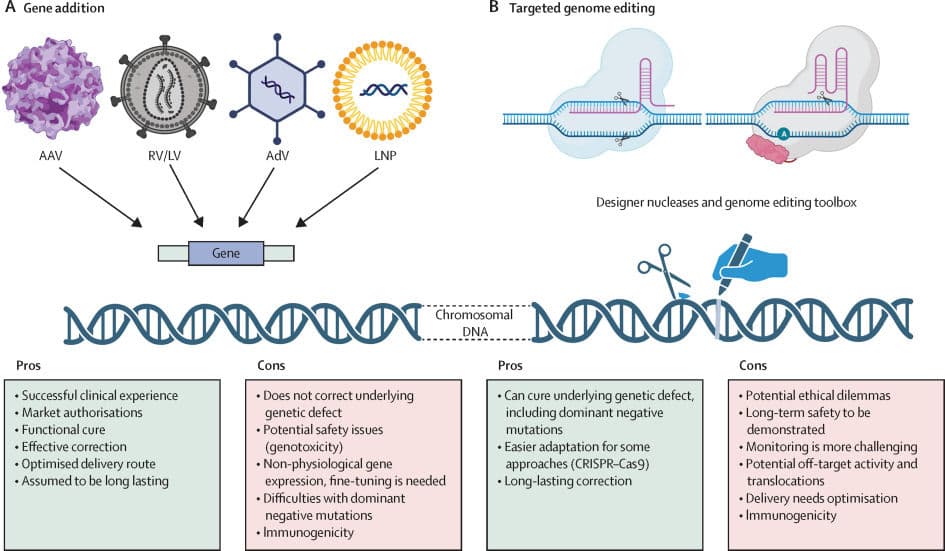
Patient-Specific Base Editing: The Future of Precision Medicine
Patient-Specific Base EditingThe field of genetic medicine is undergoing a profound transformation. Traditional therapies often focus on managing symptoms rather than addressing the underlying genetic causes of disease. Recent advances in gene editing technologies have opened the possibility of correcting disease-causing mutations directly within human DNA. Among the most promising developments is Patient-Specific Base Editing, an emerging approach that enables highly targeted genetic corrections tailored to an individual's unique genetic profile.Unlike conventional gene therapies that may insert or replace entire genes, base editing allows scientists to precisely modify single DNA letters without cutting both strands of the DNA molecule. This precision could dramatically improve safety, efficiency, and therapeutic outcomes.Patient-Specific Base Editing has the potential to transform personalized medicine, rare disease treatment, oncology, and preventive healthcare.What Is Patient-Specific Base Editing?Patient-Specific Base Editing is a form of precision gene editing that modifies individual DNA bases to correct mutations responsible for disease.Rather than applying a one-size-fits-all treatment, the therapy is customized to the genetic makeup of a specific patient.This approach combines:Genomic sequencingPrecision medicineBase editing technologiesBioinformatics analysisPersonalized therapeutic designThe goal is to correct genetic errors with unprecedented accuracy.What Is Base Editing?Base editing is an advanced gene-editing technique derived from CRISPR technologies.It allows scientists to directly convert one DNA base into another without creating double-strand breaks.Common base conversions include:Cytosine (C) to Thymine (T)Adenine (A) to Guanine (G)These targeted changes can correct many disease-causing genetic mutations.Why Personalization MattersMany genetic disorders arise from unique mutations that vary between individuals.Rare genetic diseasesInherited disordersCancer-associated mutationsPersonalized risk factorsUnique genomic variationsPatient-specific therapies aim to address the exact mutation present in an individual rather than treating broad disease categories.How Patient-Specific Base Editing WorksThe treatment process begins with comprehensive genomic analysis.Typical workflow:The patient's genome is sequenced.Disease-causing mutations are identified.A customized base editor is designed.Editing components are delivered into target cells.Specific DNA bases are corrected.Treated cells are monitored for safety and effectiveness.This creates a highly individualized therapeutic pathway.Key Technologies Enabling Base EditingCRISPR-Based SystemsBase EditorsGenomic Sequencing PlatformsBioinformatics SoftwareAI-Assisted Drug DesignGene Delivery TechnologiesPrecision DiagnosticsThese technologies collectively support next-generation genetic medicine.Potential Medical ApplicationsPatient-Specific Base Editing could address a wide range of diseases.Sickle Cell DiseaseCystic FibrosisDuchenne Muscular DystrophyInherited Retinal DisordersRare Genetic SyndromesCancer TherapiesBlood DisordersMany conditions caused by single-base mutations may become treatable.Patient-Specific Base Editing moves medicine from treating diseases broadly to correcting the precise genetic changes responsible for illness in each individual.Advantages Over Traditional Gene TherapyGreater precisionReduced off-target effectsNo double-strand DNA breaksPersonalized treatment designPotentially improved safety profileLong-term therapeutic benefitsPrecision editing may significantly improve treatment outcomes.Traditional Genetic Therapy vs Patient-Specific Base EditingTraditional Gene TherapyPatient-Specific Base EditingBroad therapeutic approachIndividualized treatmentGene insertion or replacementSingle-base correctionStandardized therapy designCustomized editing strategyPopulation-focused treatmentPatient-focused treatmentChallenges and RisksHigh development costsComplex regulatory pathwaysDelivery system limitationsPotential off-target editsManufacturing scalability challengesEthical considerationsResearchers continue working to improve safety, accessibility, and effectiveness.Role of Artificial IntelligenceAI is becoming increasingly important in personalized genetic medicine.Mutation identificationEditing target predictionTherapy design optimizationGenomic data analysisRisk assessmentAI may significantly accelerate the development of individualized therapies.Future OutlookThe next decade may witness the expansion of personalized gene-editing platforms.Rapid therapy design systemsAI-assisted editing platformsPersonalized genomic clinicsRoutine genetic correction therapiesUltra-rare disease treatment programsPatient-specific interventions may become a central pillar of precision medicine.Economic and Strategic ImplicationsPatient-Specific Base Editing could reshape the biotechnology and healthcare industries.Expansion of precision medicine marketsGrowth of genomic healthcare servicesReduction in long-term treatment costsAcceleration of rare disease researchCreation of personalized therapeutic ecosystemsThe organizations that successfully scale personalized gene-editing technologies may lead the next era of biotechnology innovation.Frequently Asked QuestionsWhat is Patient-Specific Base Editing?A personalized gene-editing approach that corrects disease-causing DNA mutations unique to an individual patient.How is it different from traditional gene therapy?Instead of inserting or replacing entire genes, it precisely changes specific DNA bases responsible for disease.Which diseases could benefit most?Rare genetic disorders, inherited diseases, blood disorders, certain cancers, and conditions caused by single-base mutations.ConclusionPatient-Specific Base Editing represents one of the most promising advances in precision medicine. By tailoring genetic corrections to an individual's unique DNA sequence, this technology has the potential to move healthcare beyond symptom management and toward direct correction of disease-causing mutations. As genomic sequencing, AI-driven design, and gene-editing platforms continue to advance, patient-specific therapies may redefine how medicine is practiced in the decades ahead.
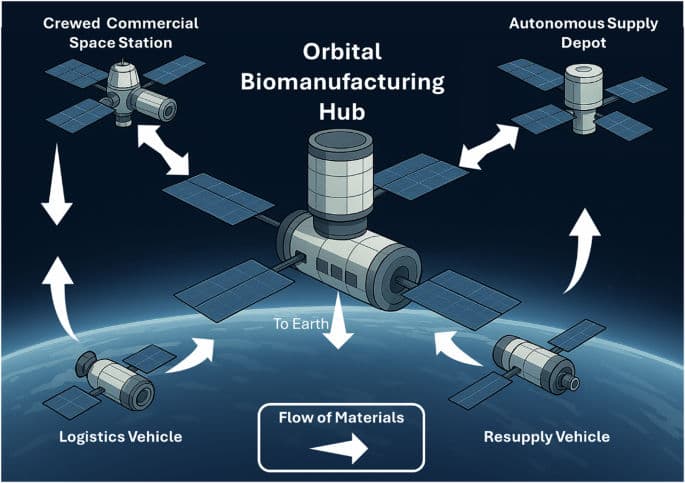
Microgravity Bio-Manufacturing: Revolutionizing Space Biotechnology
Microgravity Bio-ManufacturingThe convergence of biotechnology, space infrastructure, advanced materials science, and commercial space stations is creating a new industrial frontier known as Microgravity Bio-Manufacturing. For decades, scientific experiments conducted aboard space stations demonstrated that biological processes behave differently in microgravity environments. Today, researchers and private companies are exploring how these unique conditions can be used to manufacture high-value biological products that are difficult—or impossible—to produce on Earth.As commercial space stations, orbital laboratories, and reusable launch systems become more accessible, microgravity is increasingly being viewed not just as a research environment but as a manufacturing platform. This shift could transform pharmaceuticals, regenerative medicine, tissue engineering, biomaterials, and next-generation healthcare technologies.Microgravity Bio-Manufacturing may become one of the most valuable sectors of the emerging space economy.What Is Microgravity Bio-Manufacturing?Microgravity Bio-Manufacturing refers to the production of biological materials, pharmaceuticals, tissues, and advanced biomedical products in low-gravity environments such as orbital laboratories and commercial space stations.These environments offer unique physical conditions that influence biological processes.Potential products include:Advanced pharmaceuticalsProtein crystalsArtificial tissuesStem-cell therapiesRegenerative medicine productsBiomaterialsOrganoid culturesMicrogravity creates manufacturing opportunities unavailable under Earth's gravity.Why Microgravity MattersGravity influences fluid dynamics, sedimentation, cell growth, and molecular assembly.In microgravity:Convection is reducedParticles remain suspended longerCells grow differentlyCrystal formation improvesBiological structures self-assemble more efficientlyThese effects can improve the quality and performance of certain biological products.How Microgravity Bio-Manufacturing WorksProduction occurs within specialized orbital laboratories equipped with biotechnology systems.Typical workflow:Biological materials are launched into orbit.Experiments are initiated in microgravity facilities.Cells, proteins, or biomaterials are cultured.Growth and production processes are monitored.Finished products are prepared for return.Materials are transported back to Earth.Orbital facilities effectively become biological manufacturing plants in space.Key Technologies Enabling Microgravity Bio-ManufacturingCommercial Space StationsBioreactor SystemsAutomated Laboratory PlatformsRobotic Manufacturing SystemsAdvanced Life Sciences EquipmentReusable Launch VehiclesRemote Monitoring TechnologiesThese technologies enable continuous production and experimentation beyond Earth.Protein Crystal ManufacturingOne of the earliest and most promising applications involves protein crystallization.In microgravity:Crystals often grow largerStructural defects may decreaseMolecular organization improvesDrug development research benefitsHigher-quality protein crystals can support pharmaceutical discovery and molecular analysis.Tissue Engineering and Regenerative MedicineMicrogravity may help create more complex biological structures.3D tissue growthOrganoid developmentStem-cell researchRegenerative therapiesBioprinting applicationsResearchers are investigating how space-based manufacturing can support future healthcare innovations.Microgravity transforms space from a research destination into a biological manufacturing environment.Applications Across IndustriesPharmaceutical DevelopmentRegenerative MedicineBiomedical ResearchAdvanced Materials EngineeringBiotechnology ManufacturingPrecision HealthcareSpace MedicineMicrogravity manufacturing could create entirely new product categories.Traditional Bio-Manufacturing vs Microgravity Bio-ManufacturingTraditional ManufacturingMicrogravity ManufacturingEarth gravity constraintsMicrogravity environmentConvection-driven processesReduced convection effectsLimited structural formationEnhanced biological assemblyGround-based productionOrbital production facilitiesChallenges and RisksLaunch and transportation costsLimited orbital manufacturing capacityProduct return logisticsRegulatory approvalsBiological contamination risksSpace infrastructure dependenceCommercial viability depends on reducing operational costs and increasing production scale.Future OutlookThe next decade could witness the emergence of dedicated orbital biotechnology ecosystems.Commercial microgravity laboratoriesAutonomous orbital bioreactorsSpace pharmaceutical factoriesRegenerative medicine production hubsAI-assisted biological manufacturingMicrogravity may become a valuable industrial resource rather than merely a scientific curiosity.Economic and Strategic ImplicationsMicrogravity Bio-Manufacturing could become a major pillar of the future space economy.Expansion of commercial space marketsCreation of high-value biomedical productsAcceleration of pharmaceutical innovationGrowth of orbital manufacturing industriesStrengthening of biotechnology competitivenessThe organizations that successfully commercialize microgravity manufacturing may establish leadership in an entirely new industrial sector.Frequently Asked QuestionsWhat is Microgravity Bio-Manufacturing?It is the production of biological materials, pharmaceuticals, tissues, and biomedical products in low-gravity space environments.Why manufacture biological products in space?Microgravity can improve crystal growth, cellular organization, and biological assembly processes that are difficult to achieve on Earth.Which industries could benefit most?Pharmaceuticals, regenerative medicine, biotechnology, biomedical research, and advanced healthcare industries.ConclusionMicrogravity Bio-Manufacturing represents a groundbreaking shift in how biological products may be developed and produced in the future. By leveraging the unique conditions of space, researchers and companies can explore manufacturing pathways unavailable on Earth. As commercial space infrastructure expands and costs continue to decline, microgravity could become a strategic production environment for next-generation pharmaceuticals, regenerative medicine, and advanced biotechnology innovations.
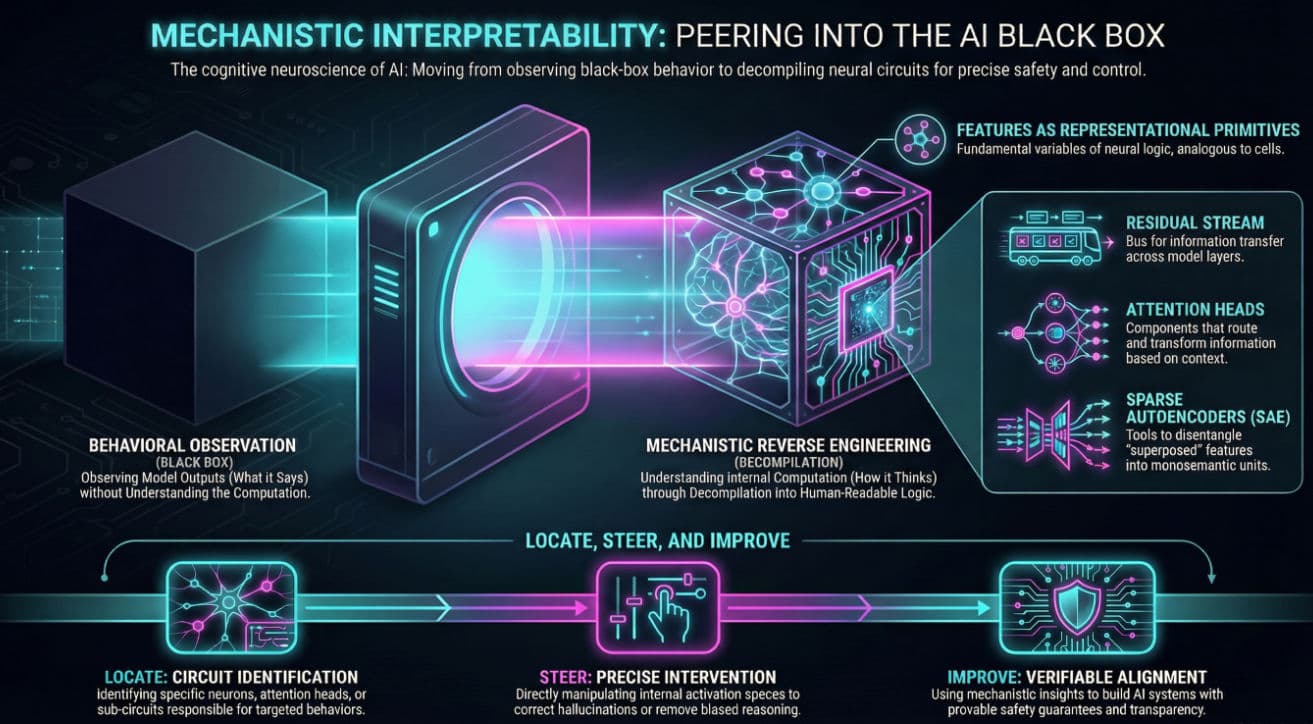
Mechanistic Interpretability: Opening the AI Black Box
Mechanistic Interpretability (Opening the AI "Black Box")Artificial intelligence systems are becoming increasingly powerful, influencing everything from healthcare and finance to scientific research, cybersecurity, education, and national security. Modern large language models, multimodal AI systems, and advanced neural networks can perform complex tasks with remarkable accuracy. However, a significant challenge remains: understanding how these systems arrive at their decisions.Many advanced AI models operate as so-called "black boxes", meaning their internal decision-making processes are difficult to interpret, even for the engineers who build them. As AI systems gain greater autonomy and influence, the need for transparency becomes increasingly important.This challenge has given rise to a rapidly growing field known as Mechanistic Interpretability, which seeks to reverse-engineer neural networks and uncover the internal mechanisms that drive AI behavior.Mechanistic Interpretability could become one of the most important disciplines in the future of safe, trustworthy, and explainable artificial intelligence.What Is Mechanistic Interpretability?Mechanistic Interpretability is the scientific study of how neural networks internally process information and generate outputs.Rather than simply observing inputs and outputs, researchers attempt to understand:How information flows through a modelWhich neurons perform specific functionsHow concepts are represented internallyHow decisions emerge from network interactionsWhy particular outputs are generatedThe goal is to transform AI systems from opaque black boxes into understandable systems.Why AI Is Often Called a "Black Box"Modern AI models contain billions or even trillions of parameters.Complex neural architecturesMassive parameter countsNonlinear computationsDistributed knowledge representationsEmergent behaviorsAlthough engineers know how models are trained, understanding every internal decision pathway remains extremely difficult.Why Interpretability MattersAs AI systems become more powerful, understanding their behavior becomes increasingly critical.AI safety and alignmentRegulatory complianceTrustworthy decision-makingBias detectionFailure analysisSecurity validationInterpretability helps ensure AI systems behave as intended.How Mechanistic Interpretability WorksResearchers analyze neural networks at a detailed level to identify computational structures and behaviors.Common approaches include:Mapping neuron activationsTracking information flowIdentifying functional circuitsAnalyzing attention mechanismsStudying concept representationsTesting model responses to interventionsThis process is similar to reverse-engineering a complex machine.Key Concepts in Mechanistic InterpretabilityNeuron AnalysisFeature VisualizationCircuit DiscoveryActivation MappingAttention Mechanism AnalysisRepresentation LearningCausal Intervention StudiesThese methods help researchers understand how AI systems internally represent knowledge.What Researchers Hope to DiscoverMechanistic Interpretability aims to answer several fundamental questions.How does AI reason?How are concepts encoded?How do emergent abilities arise?How can harmful behaviors be detected?How can AI alignment be improved?Understanding internal mechanisms may improve both performance and safety.Mechanistic Interpretability seeks to answer one of the most important questions in AI: not merely what a model does, but why it does it.Applications Across IndustriesHealthcare AI validationFinancial decision transparencyAutonomous vehicle safetyCybersecurity systemsScientific research modelsGovernment AI oversightMilitary AI assuranceInterpretability may become essential wherever AI decisions have significant consequences.Traditional AI Analysis vs Mechanistic InterpretabilityTraditional AI EvaluationMechanistic InterpretabilityFocus on outputsFocus on internal mechanismsPerformance measurementBehavior explanationBlack-box testingWhite-box investigationStatistical understandingMechanistic understandingChallenges and LimitationsMassive model complexityTrillions of parametersEmergent behaviorsIncomplete theoretical understandingComputational limitationsDifficulty mapping concepts to neuronsFully understanding advanced AI systems remains a significant scientific challenge.Mechanistic Interpretability and AI SafetyMany researchers view interpretability as a critical component of AI safety.Detecting unsafe behaviorsPreventing model deceptionImproving alignmentEnhancing transparencySupporting regulatory oversightInterpretability may help build more trustworthy AI systems.Future OutlookThe field is expected to grow significantly as AI systems become more capable.AI debugging platformsNeural circuit mapsAutomated interpretability toolsAI safety monitoring systemsRegulatory transparency standardsFuture AI systems may be designed with interpretability as a core feature rather than an afterthought.Economic and Strategic ImplicationsMechanistic Interpretability could become a foundational capability for advanced AI development.Safer AI deploymentImproved public trustEnhanced regulatory complianceReduced operational risksGreater competitive advantageThe organizations that best understand their AI systems may gain significant strategic benefits.Frequently Asked QuestionsWhat is Mechanistic Interpretability?A field of AI research focused on understanding the internal mechanisms and decision-making processes of neural networks.Why is AI called a black box?Because advanced neural networks often produce outputs without providing clear explanations of how decisions were made internally.Why is interpretability important?It helps improve AI safety, transparency, trustworthiness, compliance, and understanding of model behavior.ConclusionMechanistic Interpretability (Opening the AI "Black Box") represents one of the most important frontiers in artificial intelligence research. As AI systems become increasingly powerful and influential, understanding how they think may become just as important as improving what they can do. By revealing the internal mechanisms behind neural networks, researchers hope to create AI systems that are safer, more transparent, more reliable, and ultimately more trustworthy for society.
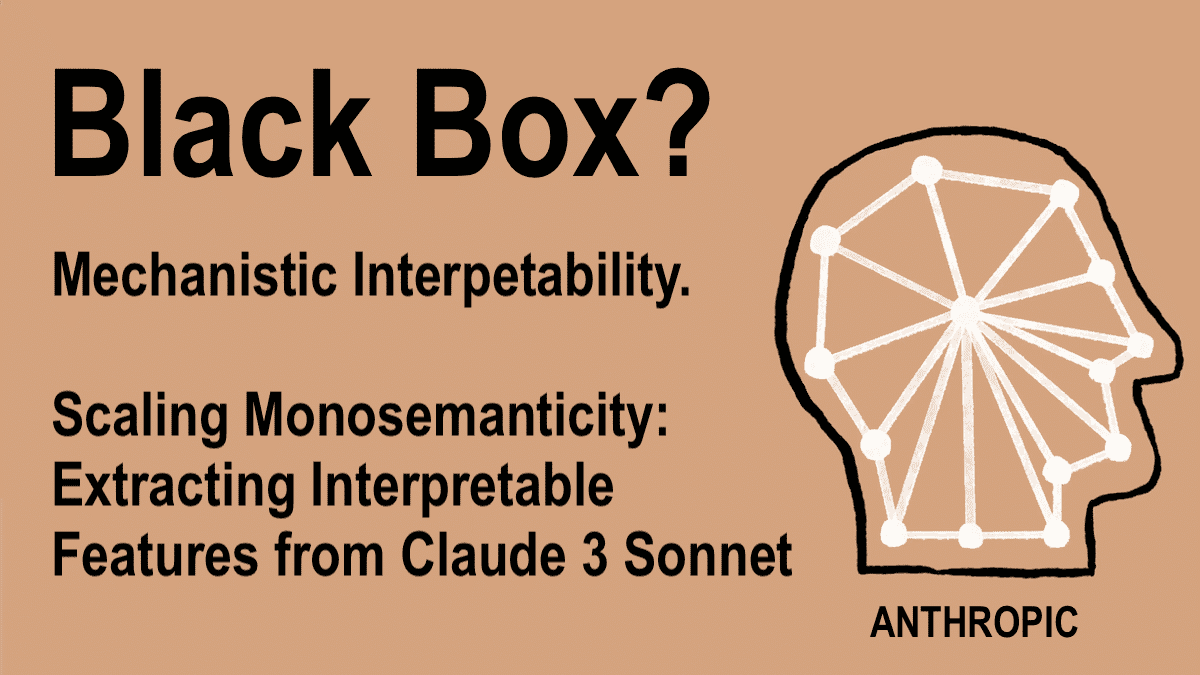
Mechanistic Interpretability: Opening the AI Black Box
Mechanistic Interpretability (Opening the AI "Black Box")Artificial intelligence systems are becoming increasingly powerful, influencing everything from healthcare and finance to scientific research, cybersecurity, education, and national security. Modern large language models, multimodal AI systems, and advanced neural networks can perform complex tasks with remarkable accuracy. However, a significant challenge remains: understanding how these systems arrive at their decisions.Many advanced AI models operate as so-called "black boxes", meaning their internal decision-making processes are difficult to interpret, even for the engineers who build them. As AI systems gain greater autonomy and influence, the need for transparency becomes increasingly important.This challenge has given rise to a rapidly growing field known as Mechanistic Interpretability, which seeks to reverse-engineer neural networks and uncover the internal mechanisms that drive AI behavior.Mechanistic Interpretability could become one of the most important disciplines in the future of safe, trustworthy, and explainable artificial intelligence.What Is Mechanistic Interpretability?Mechanistic Interpretability is the scientific study of how neural networks internally process information and generate outputs.Rather than simply observing inputs and outputs, researchers attempt to understand:How information flows through a modelWhich neurons perform specific functionsHow concepts are represented internallyHow decisions emerge from network interactionsWhy particular outputs are generatedThe goal is to transform AI systems from opaque black boxes into understandable systems.Why AI Is Often Called a "Black Box"Modern AI models contain billions or even trillions of parameters.Complex neural architecturesMassive parameter countsNonlinear computationsDistributed knowledge representationsEmergent behaviorsAlthough engineers know how models are trained, understanding every internal decision pathway remains extremely difficult.Why Interpretability MattersAs AI systems become more powerful, understanding their behavior becomes increasingly critical.AI safety and alignmentRegulatory complianceTrustworthy decision-makingBias detectionFailure analysisSecurity validationInterpretability helps ensure AI systems behave as intended.How Mechanistic Interpretability WorksResearchers analyze neural networks at a detailed level to identify computational structures and behaviors.Common approaches include:Mapping neuron activationsTracking information flowIdentifying functional circuitsAnalyzing attention mechanismsStudying concept representationsTesting model responses to interventionsThis process is similar to reverse-engineering a complex machine.Key Concepts in Mechanistic InterpretabilityNeuron AnalysisFeature VisualizationCircuit DiscoveryActivation MappingAttention Mechanism AnalysisRepresentation LearningCausal Intervention StudiesThese methods help researchers understand how AI systems internally represent knowledge.What Researchers Hope to DiscoverMechanistic Interpretability aims to answer several fundamental questions.How does AI reason?How are concepts encoded?How do emergent abilities arise?How can harmful behaviors be detected?How can AI alignment be improved?Understanding internal mechanisms may improve both performance and safety.Mechanistic Interpretability seeks to answer one of the most important questions in AI: not merely what a model does, but why it does it.Applications Across IndustriesHealthcare AI validationFinancial decision transparencyAutonomous vehicle safetyCybersecurity systemsScientific research modelsGovernment AI oversightMilitary AI assuranceInterpretability may become essential wherever AI decisions have significant consequences.Traditional AI Analysis vs Mechanistic InterpretabilityTraditional AI EvaluationMechanistic InterpretabilityFocus on outputsFocus on internal mechanismsPerformance measurementBehavior explanationBlack-box testingWhite-box investigationStatistical understandingMechanistic understandingChallenges and LimitationsMassive model complexityTrillions of parametersEmergent behaviorsIncomplete theoretical understandingComputational limitationsDifficulty mapping concepts to neuronsFully understanding advanced AI systems remains a significant scientific challenge.Mechanistic Interpretability and AI SafetyMany researchers view interpretability as a critical component of AI safety.Detecting unsafe behaviorsPreventing model deceptionImproving alignmentEnhancing transparencySupporting regulatory oversightInterpretability may help build more trustworthy AI systems.Future OutlookThe field is expected to grow significantly as AI systems become more capable.AI debugging platformsNeural circuit mapsAutomated interpretability toolsAI safety monitoring systemsRegulatory transparency standardsFuture AI systems may be designed with interpretability as a core feature rather than an afterthought.Economic and Strategic ImplicationsMechanistic Interpretability could become a foundational capability for advanced AI development.Safer AI deploymentImproved public trustEnhanced regulatory complianceReduced operational risksGreater competitive advantageThe organizations that best understand their AI systems may gain significant strategic benefits.Frequently Asked QuestionsWhat is Mechanistic Interpretability?A field of AI research focused on understanding the internal mechanisms and decision-making processes of neural networks.Why is AI called a black box?Because advanced neural networks often produce outputs without providing clear explanations of how decisions were made internally.Why is interpretability important?It helps improve AI safety, transparency, trustworthiness, compliance, and understanding of model behavior.ConclusionMechanistic Interpretability (Opening the AI "Black Box") represents one of the most important frontiers in artificial intelligence research. As AI systems become increasingly powerful and influential, understanding how they think may become just as important as improving what they can do. By revealing the internal mechanisms behind neural networks, researchers hope to create AI systems that are safer, more transparent, more reliable, and ultimately more trustworthy for society.

Multi-Cloud and Sovereign AI Infrastructure in Cloud 3.0
Multi-Cloud and Sovereign AI Infrastructure (Cloud 3.0)c. Later, hybrid cloud strategies emerged, combining private and public infrastructure. Today, a new paradigm is taking shape—one driven by artificial intelligence, data sovereignty, geopolitical considerations, digital resilience, and distributed computing.This next generation of cloud architecture is increasingly being described as Cloud 3.0, where Multi-Cloud and Sovereign AI Infrastructure become foundational components of digital ecosystems. Rather than depending on a single cloud provider or jurisdiction, organizations are building intelligent infrastructures that operate across multiple clouds while maintaining control over sensitive data, AI models, and national digital assets.Cloud 3.0 could fundamentally reshape the future of artificial intelligence, cybersecurity, digital sovereignty, and enterprise computing.What Is Cloud 3.0?Cloud 3.0 represents the evolution of cloud computing beyond traditional public and hybrid cloud models.Key characteristics include:Multi-cloud deployment strategiesSovereign data infrastructureAI-native cloud servicesDistributed computing architecturesAutonomous cloud managementPolicy-driven governance systemsThe objective is to create resilient, intelligent, and jurisdiction-aware digital infrastructure.What Is Multi-Cloud Infrastructure?Multi-cloud infrastructure refers to the use of multiple cloud providers simultaneously.Organizations may distribute workloads across:Public cloud platformsPrivate cloud environmentsRegional cloud providersEdge computing networksIndustry-specific cloud ecosystemsThis approach reduces dependence on a single provider while improving flexibility and resilience.What Is Sovereign AI Infrastructure?Sovereign AI Infrastructure refers to AI systems that are controlled, governed, and operated according to local legal, regulatory, and national requirements.Core elements include:Domestic data residencyNational AI model governanceLocal compute infrastructureRegulatory compliance controlsIndependent AI capabilitiesThe goal is to ensure strategic control over critical digital assets and artificial intelligence systems.Why Cloud 3.0 Is EmergingSeveral global trends are accelerating the transition toward Cloud 3.0.Rapid AI adoptionGeopolitical uncertaintyCybersecurity concernsData sovereignty regulationsCloud concentration risksGrowing compute demandOrganizations increasingly require greater control, resilience, and flexibility.How Multi-Cloud and Sovereign AI Work TogetherCloud 3.0 combines distributed infrastructure with intelligent governance.Typical workflow:Data is classified according to sensitivity.AI workloads are assigned appropriate environments.Sensitive data remains within sovereign infrastructure.Less sensitive workloads utilize global cloud resources.Policies automatically govern workload placement.AI continuously optimizes infrastructure decisions.The result is a balance between innovation and control.Key Technologies Driving Cloud 3.0Artificial Intelligence Operations (AIOps)Kubernetes and Container PlatformsConfidential ComputingZero-Trust Security FrameworksDistributed Cloud SystemsFederated Learning PlatformsEdge Computing NetworksThese technologies enable intelligent and secure workload orchestration.Cloud 3.0 transforms cloud computing from a location-based service into a sovereign, intelligent, and globally distributed digital ecosystem.Benefits of Multi-Cloud and Sovereign AI InfrastructureImproved digital sovereigntyReduced vendor lock-inEnhanced cybersecurity resilienceRegulatory compliance flexibilityGreater workload portabilityImproved AI governanceHigher operational resilienceOrganizations gain greater strategic control over their digital operations.Traditional Cloud vs Cloud 3.0Traditional CloudCloud 3.0Single-cloud focusMulti-cloud ecosystemsCentralized infrastructureDistributed infrastructureCloud-centric governancePolicy-driven governanceApplication hostingAI-native operationsChallenges and RisksInfrastructure complexityHigher operational overheadInteroperability challengesData governance requirementsAI model portability issuesCybersecurity management complexitySuccessful implementation requires advanced orchestration and governance capabilities.Future OutlookThe next decade may witness the rise of globally distributed sovereign AI ecosystems.National AI cloudsAutonomous infrastructure managementCross-border cloud federationsAI-native operating environmentsPolicy-aware computing platformsCloud infrastructure may increasingly become an instrument of both innovation and strategic sovereignty.Economic and Strategic ImplicationsMulti-Cloud and Sovereign AI Infrastructure could redefine the economics of cloud computing and artificial intelligence.Expansion of regional cloud marketsGrowth of sovereign AI ecosystemsEnhanced digital resilienceGreater national technological independenceNew opportunities for cloud innovationThe organizations and nations that successfully build Cloud 3.0 capabilities may gain significant competitive advantages in the AI-driven digital economy.Frequently Asked QuestionsWhat is Cloud 3.0?Cloud 3.0 is the next evolution of cloud computing focused on multi-cloud ecosystems, sovereign infrastructure, AI-native services, and distributed digital operations.What is Sovereign AI Infrastructure?It refers to AI systems and digital infrastructure that remain under local control and comply with national regulations, data residency requirements, and governance frameworks.Why are organizations adopting multi-cloud strategies?To reduce vendor lock-in, improve resilience, enhance flexibility, and meet evolving regulatory and operational requirements.ConclusionMulti-Cloud and Sovereign AI Infrastructure (Cloud 3.0) represents a significant shift in the evolution of digital ecosystems. By combining distributed cloud architectures, sovereign governance frameworks, and AI-native operations, organizations can create more resilient, secure, and strategically independent infrastructures. As artificial intelligence becomes increasingly central to economic and national competitiveness, Cloud 3.0 may emerge as the foundation of the next generation of global digital transformation.

Embedded Microfluidic Silicon Cooling for Next-Gen Chips
Embedded Microfluidic Silicon CoolingThe semiconductor industry is facing an unprecedented thermal management challenge. Artificial intelligence accelerators, hyperscale data centers, advanced GPUs, high-performance computing systems, and next-generation processors are generating more heat than conventional cooling technologies can efficiently dissipate.As transistor densities continue to increase and computing power reaches new levels, traditional air cooling and even advanced liquid cooling systems are approaching their practical limits. To address this issue, researchers and semiconductor manufacturers are exploring a revolutionary approach known as Embedded Microfluidic Silicon Cooling.This technology integrates microscopic cooling channels directly inside semiconductor substrates, allowing coolant to flow through the silicon itself and remove heat at its source.Embedded Microfluidic Silicon Cooling could become one of the most important enabling technologies for future AI infrastructure, quantum computing, advanced packaging, and exascale computing systems.What Is Embedded Microfluidic Silicon Cooling?Embedded Microfluidic Silicon Cooling is a thermal management technology that incorporates microscopic fluid channels directly within semiconductor materials or chip packages.These channels allow cooling fluids to circulate extremely close to heat-generating transistors.The concept combines:Microfluidics engineeringSemiconductor manufacturingAdvanced packaging technologiesThermal management systemsPrecision fluid controlRather than cooling chips from the outside, heat is removed from within the silicon structure itself.Why Traditional Cooling Is Reaching Its LimitsModern AI processors can consume enormous amounts of power.Higher transistor densitiesIncreasing power consumptionAdvanced GPU clustersAI training infrastructure3D chip stacking architecturesExascale computing systemsConventional cooling systems often struggle to dissipate heat quickly enough from densely packed semiconductor components.How Embedded Microfluidic Cooling WorksMicroscopic channels are fabricated within silicon layers or advanced packaging structures.Typical process:Microchannels are etched into silicon.Coolant is circulated through the channels.Heat transfers directly into the fluid.The warmed coolant exits the system.Heat is dissipated externally.Cooled fluid recirculates through the chip.This creates highly efficient localized cooling.Core Technologies Enabling the SystemMicroelectromechanical Systems (MEMS)Advanced Semiconductor PackagingSilicon MicromachiningFluid Dynamics Engineering3D Chip IntegrationThermal Interface MaterialsPrecision Manufacturing SystemsThese technologies allow cooling systems to operate at microscopic scales.Benefits of Embedded Microfluidic CoolingThe technology offers several potential advantages.Superior heat removal efficiencyHigher chip performanceReduced thermal hotspotsImproved energy efficiencySupport for denser chip architecturesLonger component lifespanReduced cooling infrastructure requirementsCooling performance may improve dramatically compared to conventional approaches.Applications Across the Computing IndustryEmbedded microfluidic cooling could support a wide range of technologies.Artificial Intelligence AcceleratorsHigh-Performance Computing SystemsQuantum Computing InfrastructureData Center ProcessorsAdvanced GPUsDefense ElectronicsScientific Computing PlatformsThe technology is particularly attractive for power-dense computing environments.Future processors may not simply sit beneath cooling systems—they may contain cooling systems within themselves.Role in AI InfrastructureArtificial intelligence is driving unprecedented demand for computing power.Large language model trainingAI inference clustersNeural network accelerationGenerative AI infrastructureMachine learning supercomputersEmbedded cooling may help sustain future AI performance growth while reducing energy consumption.Traditional Cooling vs Embedded Microfluidic CoolingTraditional CoolingEmbedded Microfluidic CoolingExternal heat removalInternal heat removalCooling from package surfaceCooling near transistor levelThermal resistance challengesReduced thermal resistanceLimited scalabilitySupports higher power densitiesChallenges and RisksManufacturing complexityFluid leakage risksHigher production costsReliability requirementsMaterial compatibility issuesScaling challengesSignificant engineering advancements are still required before widespread deployment.Future OutlookThe semiconductor industry is expected to continue investing heavily in advanced cooling technologies.AI-native processor architectures3D stacked computing systemsIntegrated cooling substratesSelf-regulating thermal platformsExascale computing infrastructureEmbedded cooling may become a standard feature of next-generation processors.Economic and Strategic ImplicationsEmbedded Microfluidic Silicon Cooling could significantly influence the future economics of computing.Reduced data center energy costsHigher AI infrastructure efficiencyImproved semiconductor competitivenessSupport for advanced computing workloadsExpansion of next-generation packaging marketsOrganizations that master advanced thermal management may gain significant competitive advantages in future computing markets.Frequently Asked QuestionsWhat is Embedded Microfluidic Silicon Cooling?A cooling technology that integrates microscopic fluid channels directly into semiconductor structures to remove heat more efficiently.Why is it important?Because future AI processors and advanced computing systems generate more heat than conventional cooling methods can efficiently handle.Which industries could benefit most?AI infrastructure, data centers, high-performance computing, quantum computing, defense electronics, and advanced semiconductor manufacturing.ConclusionEmbedded Microfluidic Silicon Cooling represents a major breakthrough in thermal management technology. By bringing cooling systems directly into semiconductor structures, engineers may overcome some of the most significant barriers facing future computing systems. As AI workloads continue to expand and chip architectures become increasingly complex, embedded cooling could play a critical role in enabling the next generation of high-performance, energy-efficient computing infrastructure.

Verification Literacy and the Synthetic Media Audit Era
Verification Literacy & The Synthetic Media AuditThe digital information ecosystem is entering an era where seeing is no longer believing. Artificial intelligence can now generate highly realistic images, videos, voices, documents, and even entire online identities that are nearly indistinguishable from authentic content. As generative AI becomes more powerful and accessible, societies face an unprecedented challenge: determining what is real.In response, a new discipline is emerging—Verification Literacy. Combined with increasingly sophisticated Synthetic Media Audits, this capability may become as essential in the AI age as reading, writing, and digital literacy were in previous generations.Rather than simply consuming information, individuals and organizations will increasingly need the ability to verify authenticity, assess provenance, and identify manipulation.This evolution could fundamentally reshape journalism, education, cybersecurity, governance, finance, and public trust.What Is Verification Literacy?Verification Literacy refers to the ability to critically evaluate digital information and determine its authenticity, origin, reliability, and credibility.Core skills include:Source validationContent authenticationMetadata analysisCross-reference verificationDeepfake identificationContext evaluationDigital provenance assessmentVerification literacy goes beyond media consumption and focuses on evidence-based trust.What Is Synthetic Media?Synthetic media refers to digitally generated or AI-modified content that simulates real-world media.AI-generated imagesDeepfake videosSynthetic voicesVirtual influencersAI-generated articlesDigital avatarsFabricated identitiesThe quality of synthetic content continues to improve rapidly.Why Verification Literacy Is Becoming CriticalHistorically, digital content was often assumed to be genuine unless evidence suggested otherwise. In the AI era, this assumption is increasingly challenged.Growing deepfake sophisticationMass content generationAI-powered misinformation campaignsIdentity impersonation risksSynthetic social media ecosystemsTrust increasingly requires verification.What Is a Synthetic Media Audit?A Synthetic Media Audit is a systematic process used to evaluate whether digital content is authentic, altered, or artificially generated.The audit process may include:Metadata inspectionSource tracingAI artifact detectionProvenance verificationBehavioral consistency analysisCross-platform validationThe objective is to establish confidence in content authenticity.How Synthetic Media Audits WorkFuture audit systems may combine human expertise with artificial intelligence.Content is collected.Digital fingerprints are analyzed.Metadata is examined.Source history is verified.AI detection models evaluate authenticity.Confidence scores are generated.Verification becomes an ongoing process rather than a one-time check.Technologies Driving Verification SystemsArtificial IntelligenceBlockchain provenance systemsContent credentials frameworksDigital watermarkingCryptographic signaturesBehavioral analyticsMachine learning detection modelsFuture trust systems increasingly depend on technological verification.In a world where content can be manufactured instantly, trust may increasingly depend on verification rather than appearance.Potential ApplicationsJournalism and news verificationElection integrity monitoringCorporate communications auditingFinancial fraud preventionEducational content validationNational security intelligenceSocial media moderationVerification systems may become foundational digital infrastructure.Traditional Media Trust vs Verification-Era TrustTraditional Trust ModelVerification-Era ModelSource reputationSource + cryptographic verificationVisual evidenceProvenance evidenceTrust by appearanceTrust by validationManual fact-checkingAI-assisted auditingChallenges and RisksRapidly improving deepfakesFalse positives in detection systemsPrivacy concernsVerification fatigueGlobal standardization challengesEscalating AI-versus-AI competitionVerification systems must evolve as quickly as synthetic media technologies.Future OutlookThe next decade may witness the creation of a global authenticity infrastructure.Content authenticity certificatesUniversal provenance standardsAI-powered trust networksDigital identity verification layersReal-time authenticity scoring systemsVerification may become embedded into every major digital platform.Economic and Strategic ImplicationsVerification Literacy and Synthetic Media Audits could become critical components of future digital economies.Expansion of trust technology marketsGrowth of authenticity infrastructure providersReduced misinformation risksEnhanced cybersecurity resilienceProtection of institutional credibilityIn the AI era, authenticity may become one of the most valuable digital assets.Frequently Asked QuestionsWhat is Verification Literacy?The ability to assess the authenticity, credibility, and origin of digital content.What is a Synthetic Media Audit?A process used to determine whether content is authentic, manipulated, or AI-generated.Why is this important?Because AI-generated content is becoming increasingly realistic, making verification essential for maintaining trust.ConclusionVerification Literacy & The Synthetic Media Audit represents the next evolution of digital trust. As synthetic media becomes increasingly sophisticated, societies may need new skills, technologies, and governance frameworks to verify authenticity. In the future, the ability to distinguish real from artificial may become as important as the ability to access information itself.

Rack-Scale On-Off Grid Cross-Management for Data Centers
Rack-Scale "On-Off" Grid Cross-ManagementThe rapid expansion of artificial intelligence, hyperscale cloud computing, and high-performance computing is placing unprecedented pressure on global energy systems. Data centers now consume massive amounts of electricity, and future AI workloads are expected to drive energy demand even higher.To address these challenges, a new concept is emerging: Rack-Scale "On-Off" Grid Cross-Management. This approach enables server racks, AI clusters, and computing workloads to dynamically adjust their power consumption based on real-time grid conditions, renewable energy availability, electricity pricing, and infrastructure constraints.Instead of operating as passive electricity consumers, future data centers may become active participants in grid optimization.This evolution could reshape cloud infrastructure, energy markets, AI operations, and sustainable computing.What Is Rack-Scale "On-Off" Grid Cross-Management?Rack-Scale "On-Off" Grid Cross-Management refers to the ability of individual server racks and computing clusters to intelligently scale activity levels based on energy conditions.The concept combines:AI workload orchestrationSmart-grid communication systemsRenewable energy optimizationReal-time electricity pricingPower-aware scheduling systemsData-center energy intelligenceThe objective is to synchronize computing demand with available energy supply.Why Traditional Data Centers Are ChangingTraditional data centers typically operate with relatively fixed power requirements regardless of grid conditions.Growing AI energy demandRising electricity costsGrid congestion risksCarbon reduction targetsRenewable energy variabilityPower infrastructure limitationsAs AI workloads increase, static consumption models become less sustainable.How Rack-Scale Cross-Management WorksFuture intelligent infrastructure may continuously monitor both computing demand and energy supply.Typical workflow:Grid conditions are analyzed in real time.Electricity prices are monitored continuously.Renewable generation forecasts are evaluated.AI workloads are prioritized.Selected server racks reduce or increase activity.Workloads may migrate to alternative locations.This creates a dynamic relationship between energy systems and digital infrastructure.Core Technologies Behind the SystemArtificial IntelligenceSmart Grid InfrastructureDigital Twin TechnologySoftware-Defined Data CentersEnergy Forecasting SystemsCloud Workload OrchestrationEdge Computing ControllersThese technologies enable continuous optimization between energy consumption and computational demand.Why AI Workloads Are Ideal CandidatesMany AI tasks do not require immediate execution.Examples include:Large Language Model TrainingScientific SimulationsBig Data AnalyticsVideo RenderingBatch Processing TasksMachine Learning ExperimentsThese workloads can often be shifted in time or location without affecting users.Relationship with Renewable EnergyRenewable energy generation is inherently variable.Solar generation fluctuationsWind production variabilityWeather-dependent outputSeasonal generation changesRack-scale management systems may increase computing activity when renewable energy is abundant and reduce activity during shortages.Future AI infrastructure may consume energy not when workloads arrive, but when electricity is most available and affordable.Benefits of Rack-Scale Cross-ManagementLower energy costsHigher infrastructure efficiencyImproved renewable utilizationReduced carbon emissionsEnhanced grid stabilityBetter return on AI investmentsEnergy increasingly becomes a strategic resource rather than a fixed operational cost.Traditional Data Centers vs Rack-Scale Cross-ManagementTraditional Data CenterRack-Scale Cross-ManagementFixed power consumptionDynamic power optimizationPassive grid participationActive grid coordinationStatic schedulingAdaptive workload orchestrationEnergy as costEnergy as optimization variableChallenges and RisksApplication compatibility constraintsLatency-sensitive workloadsCybersecurity concernsGrid communication failuresRegulatory complexityInfrastructure deployment costsBalancing performance and energy efficiency remains a key challenge.Future OutlookThe next generation of AI facilities may become deeply integrated with smart-grid systems.Autonomous AI Data CentersCarbon-Aware ComputingEnergy-Responsive Cloud PlatformsGlobal Workload Migration NetworksSelf-Optimizing InfrastructureComputing and electricity systems may increasingly function as a unified ecosystem.Economic and Strategic Implicationshttps://www.epoverse.com/Rack-Scale "On-Off" Grid Cross-Management could fundamentally reshape digital infrastructure economics.Expansion of AI infrastructureImproved grid resilienceLower operational costsHigher renewable adoptionNew energy-computing business modelsAs AI demand accelerates, intelligent energy coordination may become a defining feature of future computing systems.Frequently Asked QuestionsWhat is Rack-Scale "On-Off" Grid Cross-Management?A system that dynamically adjusts server rack activity based on energy availability, grid conditions, and electricity pricing.Why is it important?Because AI data centers are consuming increasing amounts of electricity, requiring smarter coordination with power grids.How does it help renewable energy?It enables computing workloads to operate when renewable generation is abundant, improving energy utilization and reducing waste.ConclusionRack-Scale "On-Off" Grid Cross-Management represents a convergence of artificial intelligence, cloud computing, and smart-grid technology. By allowing server infrastructure to dynamically respond to energy conditions, future data centers may evolve into intelligent participants within the power ecosystem. This shift could improve sustainability, reduce operational costs, enhance grid stability, and support the continued growth of AI-driven economies.

Commercial Microgravity Labs: The Vast Haven-1 Era Begins
Commercial Microgravity Labs (The Vast Haven-1 Era)The commercialization of space is entering a new phase where orbit is no longer viewed solely as a destination for astronauts and government missions. Instead, space is increasingly becoming an industrial, scientific, and economic platform. The emergence of commercial space stations and privately operated orbital laboratories is creating opportunities for research and manufacturing that are impossible on Earth.One of the most significant developments in this transition is the rise of commercial microgravity laboratories, exemplified by projects such as Vast Haven-1. These facilities aim to provide researchers, pharmaceutical companies, biotechnology firms, advanced materials manufacturers, and governments with access to persistent microgravity environments.This shift could mark the beginning of what many analysts describe as the "Commercial Microgravity Economy."What Is a Commercial Microgravity Lab?A commercial microgravity laboratory is a privately operated facility in orbit that provides scientific and industrial access to a low-gravity environment.Unlike Earth-based laboratories, these facilities allow researchers to conduct experiments under conditions where gravity has minimal influence.Potential activities include:Pharmaceutical researchBiotechnology developmentAdvanced materials engineeringSemiconductor experimentsFluid dynamics studiesSpace manufacturingMicrogravity creates physical conditions that cannot be replicated easily on Earth.Why Microgravity MattersGravity affects nearly every physical and biological process.Removing or reducing gravity can reveal entirely different behaviors.More uniform crystal growthImproved protein structuresNovel material formationUnique biological responsesEnhanced manufacturing precisionThese effects can create scientific and commercial opportunities unavailable on Earth.What Is Haven-1?Haven-1 is a proposed commercial space station developed by the company Vast to support human spaceflight, orbital research, and commercial activities.The station represents a broader industry movement toward privately operated orbital infrastructure.Key objectives include:Commercial research operationsPrivate astronaut missionsScientific experimentationTechnology demonstrationsFuture space economy developmentIt serves as a bridge between government-led stations and fully commercial orbital ecosystems.The End of the International Space Station EraFor decades, the International Space Station served as the primary orbital research platform.However, future space infrastructure is expected to include multiple commercial stations operated by private organizations.This transition introduces:Competitive innovationExpanded research capacityLower access costsSpecialized orbital facilitiesNew business modelsSpace research increasingly shifts toward market-driven ecosystems.Industries Likely to BenefitSeveral industries may experience major advantages from commercial microgravity labs.PharmaceuticalsBiotechnologyAdvanced manufacturingMaterials scienceSemiconductorsEnergy systemsMedical researchSpace increasingly becomes an extension of industrial infrastructure.Microgravity ManufacturingOne of the most promising opportunities involves manufacturing products in orbit.Examples include:High-purity crystalsAdvanced fiber opticsBiological tissuesNovel alloysNext-generation semiconductorsSome products may achieve qualities impossible to manufacture on Earth.The Haven-1 era represents a transition where orbit evolves from a destination for exploration into a platform for production, research, and economic activity.Traditional Research Labs vs Microgravity LabsEarth-Based LaboratoryMicrogravity LaboratoryGravity influences experimentsMinimal gravity influenceConventional manufacturingNovel production methodsAccessible infrastructureUnique orbital environmentRole of AI and AutomationCommercial space laboratories will likely depend heavily on intelligent automation.Autonomous experiment managementPredictive maintenance systemsRobotic laboratory operationsReal-time data analysisRemote scientific collaborationAI may become the primary operator of orbital research facilities.Challenges and RisksCommercial microgravity ecosystems face significant obstacles.Launch costsSpace debris risksRadiation exposureOperational complexityRegulatory uncertaintyLimited transportation capacityLong-term commercial success depends on overcoming these challenges.Future OutlookThe coming decades may see the emergence of an extensive orbital industrial network.Commercial research stationsSpace manufacturing facilitiesOrbital pharmaceutical plantsAutonomous production systemsSpace-based economic zonesOrbit may become a new layer of industrial infrastructure.Economic and Strategic ImplicationsThe rise of commercial microgravity laboratories could reshape multiple industries.Expansion of the space economyAcceleration of scientific discoveryCreation of new manufacturing sectorsDevelopment of orbital supply chainsTransformation of global research ecosystemsThe commercialization of microgravity may become one of the most significant economic developments of the emerging space age.Frequently Asked QuestionsWhat is a commercial microgravity lab?A privately operated orbital facility that provides access to low-gravity conditions for research and manufacturing.Why is microgravity valuable?Because certain physical, biological, and manufacturing processes behave differently without Earth's gravity.What is Haven-1?Haven-1 is a commercial space station project designed to support research, human spaceflight, and orbital economic activity.ConclusionCommercial Microgravity Labs and the Haven-1 era represent the beginning of a profound shift in humanity's relationship with space. Rather than serving solely as destinations for exploration, orbital environments are increasingly becoming productive economic platforms. As commercial stations, AI-driven laboratories, and space manufacturing facilities mature, microgravity may emerge as one of the most valuable industrial resources of the 21st century.
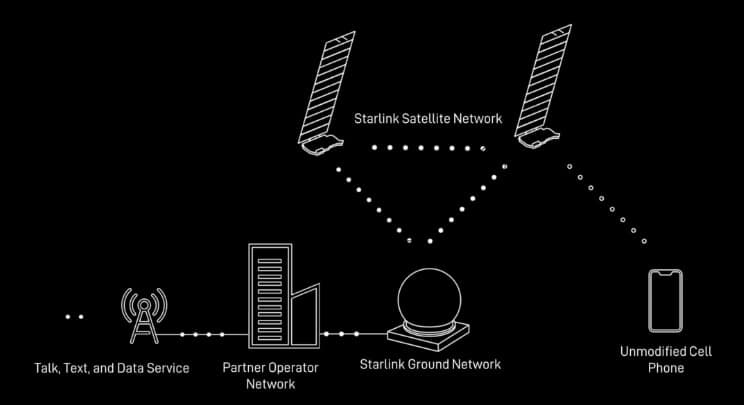
Satellite Direct-to-Cell Space Networks Explained
Satellite Direct-to-Cell Space NetworksThe telecommunications industry is entering a major transformation where connectivity increasingly extends beyond terrestrial infrastructure. Traditionally, mobile communication has depended on cellular towers, fiber networks, and ground-based systems. Although these networks enabled global communication growth, coverage gaps still exist across oceans, mountains, remote regions, disaster zones, and underserved areas.In 2026 and beyond, one of the most significant emerging technologies is the rise of Satellite Direct-to-Cell Space Networks. These systems allow satellites in orbit to communicate directly with ordinary mobile phones without requiring specialized satellite devices.Instead of relying entirely on cell towers, future smartphones may increasingly connect directly to space-based communication infrastructure.This evolution could reshape telecommunications, emergency services, global internet access, and digital inclusion.What Are Satellite Direct-to-Cell Networks?Satellite Direct-to-Cell (D2C) networks are communication systems where satellites connect directly with standard mobile devices.Unlike traditional satellite phones:No specialized device requiredNo external satellite antenna neededUses existing smartphone technologiesExtends cellular coverage through space infrastructureThe mobile phone communicates directly with orbiting satellites.Why Traditional Cellular Networks Have LimitationsGround-based cellular infrastructure faces physical constraints.Remote geographic areasOcean coverage gapsDisaster-related tower failuresRural infrastructure costsMountain and forest obstaclesExtending terrestrial infrastructure everywhere can be expensive and difficult.How Direct-to-Cell Systems WorkSatellite communication systems create an extension of terrestrial mobile networks.Typical process:Smartphone sends a signalSatellite receives transmissionSignal routes through space network infrastructureGround stations connect to telecommunications systemsInformation reaches intended destinationSatellites increasingly function as space-based cell towers.Core Technologies Enabling Direct-to-Cell NetworksLow Earth Orbit (LEO) satellite systemsAdvanced antenna technologies5G and future 6G protocolsSoftware-defined communication systemsAI-powered signal optimizationBeamforming technologiesMultiple technologies converge to create seamless connectivity.Potential ApplicationsDirect satellite communication may enable numerous use cases.Emergency messaging servicesRemote-area internet accessMaritime communicationAviation connectivityDisaster recovery infrastructureGlobal IoT networksRural digital inclusionConnectivity increasingly becomes geographically independent.Emergency and Disaster ResponseOne of the strongest early applications involves emergency communication.Earthquake responseFlood disastersWildfire emergenciesSearch-and-rescue operationsInfrastructure failuresSpace-based communication may remain operational even when terrestrial systems fail.Direct-to-cell systems transform satellites from specialized communication tools into extensions of everyday mobile networks.Traditional Cellular Networks vs Direct-to-Cell NetworksTraditional CellularDirect-to-Cell Space NetworksGround towers requiredSatellite infrastructureCoverage limitationsNear-global reachLocal infrastructure dependenceSpace-based redundancyChallenges and RisksDirect-to-cell systems face significant technical hurdles.Limited bandwidth capacitySignal interference challengesOrbital congestion risksRegulatory coordination issuesSatellite deployment costsSpace debris concernsGlobal deployment requires large-scale coordination.Future OutlookFuture communication systems may increasingly integrate terrestrial and orbital infrastructure.6G-integrated satellite networksContinuous global mobile coverageAutonomous communication routingSpace-based digital ecosystemsConnectivity increasingly becomes borderless and persistent.Economic and Strategic ImplicationsThe rise of direct-to-cell systems could reshape global telecommunications.Expansion of digital inclusionReduction of connectivity gapsNew space economy opportunitiesTransformation of telecom business modelsAccess to communication may increasingly shift from local infrastructure toward planetary-scale networks.Frequently Asked QuestionsWhat is Direct-to-Cell satellite technology?A system allowing ordinary smartphones to communicate directly with satellites.Will users need special phones?Many future systems aim to work with standard smartphones rather than dedicated satellite phones.Why is this important?Because it could provide broader global coverage and improve connectivity in remote and emergency situations.ConclusionSatellite Direct-to-Cell Space Networks represent a major evolution in communication infrastructure where space increasingly becomes an extension of terrestrial networks. By combining satellite constellations, advanced mobile protocols, and intelligent communication systems, future networks may provide nearly continuous connectivity across the planet. While technical and regulatory challenges remain, this technology could redefine how humanity stays connected.
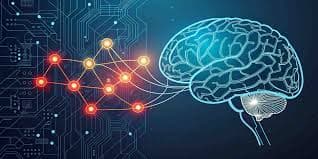
Neuromorphic Edge Brains: Smarter Low-Power AI Systems
Neuromorphic Edge "Brains"The future of computing is moving beyond traditional architectures toward systems inspired by the human brain. One of the most exciting developments in this field is neuromorphic computing—hardware and software designed to mimic the structure and functionality of biological neural systems. When combined with edge computing, these systems create what many researchers call “neuromorphic edge brains.”In 2026, neuromorphic edge technologies are emerging as powerful solutions for real-time AI processing, ultra-low energy consumption, and intelligent autonomous systems. Unlike conventional processors, neuromorphic chips can process information more like the human brain, enabling adaptive, efficient, and context-aware computing directly at the edge.This innovation is reshaping the future of artificial intelligence and embedded systems.What Is Neuromorphic Computing?Neuromorphic computing is a computing approach inspired by the architecture of the human brain.Brain-inspired chip designArtificial neural structuresEvent-driven processingUltra-low power consumptionIt mimics biological intelligence.What Are Neuromorphic Edge Brains?Neuromorphic edge brains are AI systems that perform brain-like computation directly on edge devices.On-device AI processingLow-latency decision makingEnergy-efficient intelligenceAutonomous adaptive systemsThey bring intelligence closer to devices.Why Neuromorphic Edge Computing MattersReduces cloud dependencyEnables real-time processingImproves energy efficiencySupports autonomous systemsIt addresses modern AI limitations.How Neuromorphic Chips WorkNeuromorphic chips process information differently from traditional CPUs and GPUs.Use spiking neural networks (SNNs)Event-based computationParallel information processingAdaptive learning mechanismsThis enables brain-like efficiency.Key Technologies Behind Neuromorphic SystemsSpiking neural networksMemristors and advanced semiconductorsEdge AI architecturesLow-power computing frameworksThese technologies enable intelligent systems.Applications of Neuromorphic Edge BrainsNeuromorphic systems are transforming industries.Autonomous vehiclesSmart roboticsIoT and edge devicesHealthcare monitoring systemsDefense and aerospace systemsTheir applications are expanding rapidly.Benefits of Neuromorphic ComputingUltra-low power consumptionFaster real-time processingAdaptive learning capabilitiesImproved scalabilityThese benefits drive innovation.Challenges and LimitationsComplex hardware designLimited software ecosystemsDifficulty in training spiking networksHigh research and development costsThese challenges require continued advancement.Neuromorphic edge brains are bringing machine intelligence closer to human cognition—enabling systems that learn, adapt, and respond in real time with remarkable efficiency.Neuromorphic vs Traditional ComputingTraditional → Sequential processingNeuromorphic → Parallel brain-inspired processingTraditional → Higher energy consumptionNeuromorphic → Ultra-low power efficiencyThis shift represents a new computing paradigm.Future of Neuromorphic Edge SystemsThe future of neuromorphic computing is highly promising.Self-learning autonomous systemsAI-powered smart citiesAdvanced robotics and dronesIntegration with quantum and edge AI systemsThese technologies will redefine computing.Role in Artificial IntelligenceNeuromorphic edge brains are shaping next-generation AI.Enable efficient AI inferenceSupport adaptive machine intelligenceImprove autonomous decision-makingThey are essential for the future of intelligent systems.Frequently Asked QuestionsWhat is neuromorphic computing?A brain-inspired computing architecture.Why are neuromorphic edge brains important?They enable efficient real-time AI processing.Where are they used?Robotics, autonomous systems, IoT, and healthcare.ConclusionNeuromorphic edge brains represent a transformative advancement in artificial intelligence and computing. By combining brain-inspired architectures with edge processing capabilities, these systems enable faster, smarter, and more energy-efficient AI applications. As research and development continue, neuromorphic computing is expected to play a central role in shaping the future of intelligent machines, autonomous systems, and real-time AI technologies.
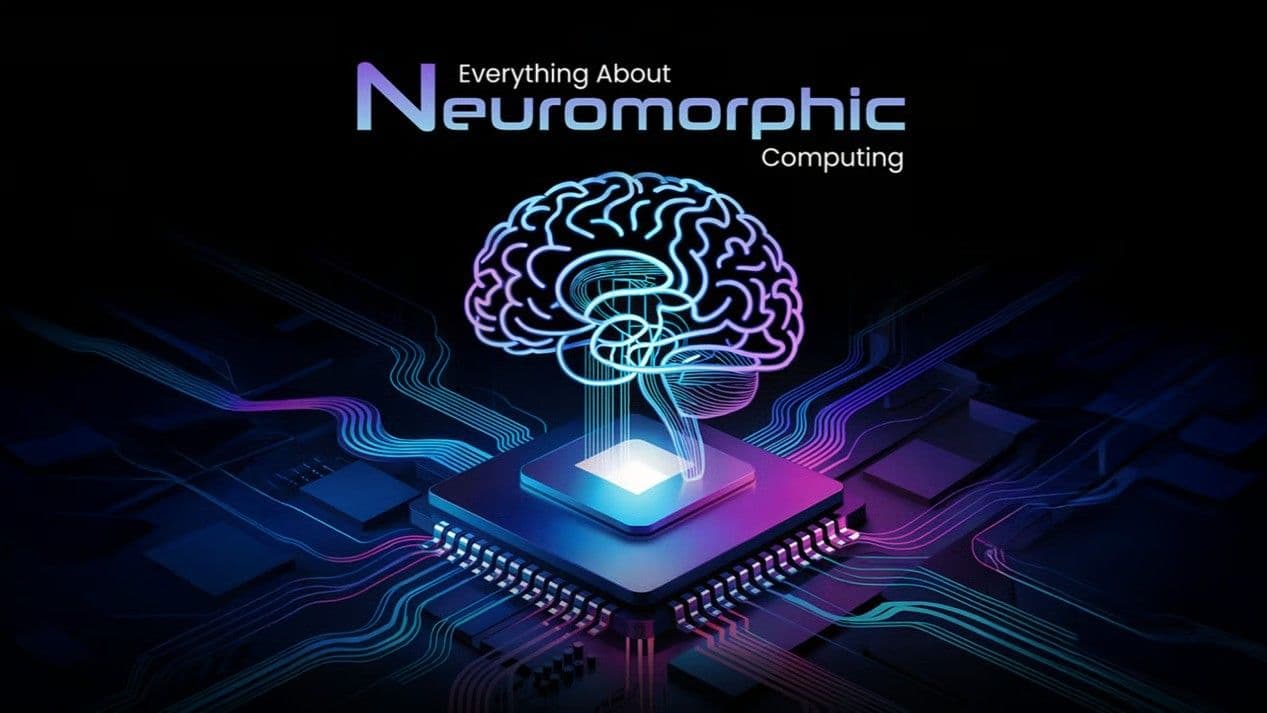
Neuromorphic Edge Brains: Smarter Low-Power AI Systems
Neuromorphic Edge "Brains"The future of computing is moving beyond traditional architectures toward systems inspired by the human brain. One of the most exciting developments in this field is neuromorphic computing—hardware and software designed to mimic the structure and functionality of biological neural systems. When combined with edge computing, these systems create what many researchers call “neuromorphic edge brains.”In 2026, neuromorphic edge technologies are emerging as powerful solutions for real-time AI processing, ultra-low energy consumption, and intelligent autonomous systems. Unlike conventional processors, neuromorphic chips can process information more like the human brain, enabling adaptive, efficient, and context-aware computing directly at the edge.This innovation is reshaping the future of artificial intelligence and embedded systems.What Is Neuromorphic Computing?Neuromorphic computing is a computing approach inspired by the architecture of the human brain.Brain-inspired chip designArtificial neural structuresEvent-driven processingUltra-low power consumptionIt mimics biological intelligence.What Are Neuromorphic Edge Brains?Neuromorphic edge brains are AI systems that perform brain-like computation directly on edge devices.On-device AI processingLow-latency decision makingEnergy-efficient intelligenceAutonomous adaptive systemsThey bring intelligence closer to devices.Why Neuromorphic Edge Computing MattersReduces cloud dependencyEnables real-time processingImproves energy efficiencySupports autonomous systemsIt addresses modern AI limitations.How Neuromorphic Chips WorkNeuromorphic chips process information differently from traditional CPUs and GPUs.Use spiking neural networks (SNNs)Event-based computationParallel information processingAdaptive learning mechanismsThis enables brain-like efficiency.Key Technologies Behind Neuromorphic SystemsSpiking neural networksMemristors and advanced semiconductorsEdge AI architecturesLow-power computing frameworksThese technologies enable intelligent systems.Applications of Neuromorphic Edge BrainsNeuromorphic systems are transforming industries.Autonomous vehiclesSmart roboticsIoT and edge devicesHealthcare monitoring systemsDefense and aerospace systemsTheir applications are expanding rapidly.Benefits of Neuromorphic ComputingUltra-low power consumptionFaster real-time processingAdaptive learning capabilitiesImproved scalabilityThese benefits drive innovation.Challenges and LimitationsComplex hardware designLimited software ecosystemsDifficulty in training spiking networksHigh research and development costsThese challenges require continued advancement.Neuromorphic edge brains are bringing machine intelligence closer to human cognition—enabling systems that learn, adapt, and respond in real time with remarkable efficiency.Neuromorphic vs Traditional ComputingTraditional → Sequential processingNeuromorphic → Parallel brain-inspired processingTraditional → Higher energy consumptionNeuromorphic → Ultra-low power efficiencyThis shift represents a new computing paradigm.Future of Neuromorphic Edge SystemsThe future of neuromorphic computing is highly promising.Self-learning autonomous systemsAI-powered smart citiesAdvanced robotics and dronesIntegration with quantum and edge AI systemsThese technologies will redefine computing.Role in Artificial IntelligenceNeuromorphic edge brains are shaping next-generation AI.Enable efficient AI inferenceSupport adaptive machine intelligenceImprove autonomous decision-makingThey are essential for the future of intelligent systems.Frequently Asked QuestionsWhat is neuromorphic computing?A brain-inspired computing architecture.Why are neuromorphic edge brains important?They enable efficient real-time AI processing.Where are they used?Robotics, autonomous systems, IoT, and healthcare.ConclusionNeuromorphic edge brains represent a transformative advancement in artificial intelligence and computing. By combining brain-inspired architectures with edge processing capabilities, these systems enable faster, smarter, and more energy-efficient AI applications. As research and development continue, neuromorphic computing is expected to play a central role in shaping the future of intelligent machines, autonomous systems, and real-time AI technologies.
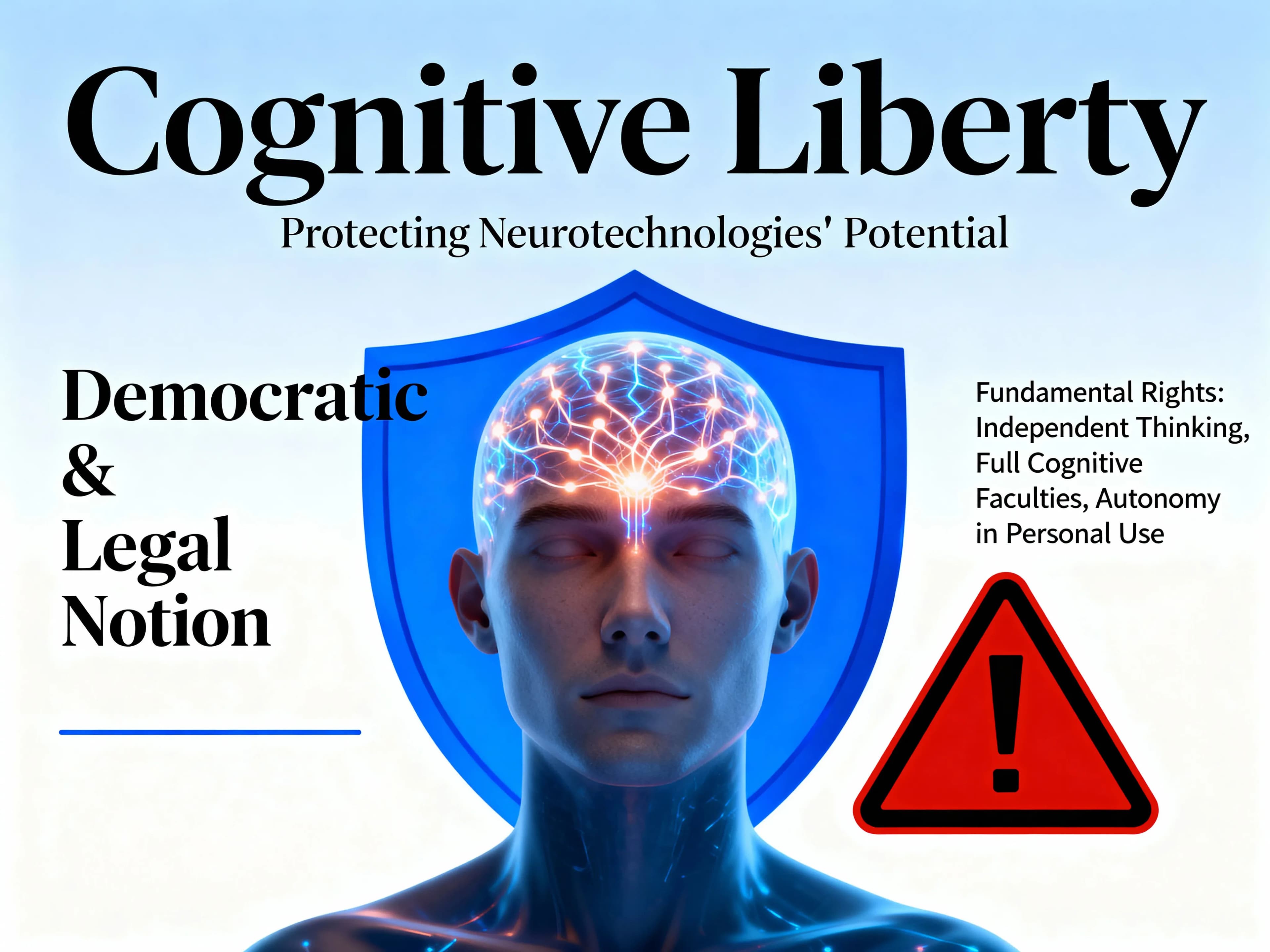
Cognitive Liberty & Neuro-Rights in the Digital Age
Cognitive Liberty & Neuro-RightsAdvancements in neuroscience, brain-computer interfaces (BCIs), artificial intelligence, and neurotechnology are rapidly transforming how humans interact with machines and digital systems. While these innovations offer extraordinary possibilities for healthcare, communication, and human augmentation, they also raise profound ethical and legal questions.In 2026, the concepts of cognitive liberty and neuro-rights are gaining global attention as societies grapple with protecting mental privacy, autonomy, and freedom of thought in an increasingly connected world. These emerging rights aim to ensure that individuals maintain control over their own minds and neural data.This field represents one of the most important ethical frontiers of the digital age.What Is Cognitive Liberty?Cognitive liberty refers to the fundamental right of individuals to control their own mental processes, thoughts, and consciousness.Freedom of thoughtMental autonomyControl over brain activityProtection against unauthorized manipulationIt extends human rights into the realm of the mind.What Are Neuro-Rights?Neuro-rights are legal and ethical protections designed to safeguard individuals from misuse of neurotechnology.Mental privacy rightsProtection from cognitive manipulationRights over neural dataEqual access to neurotechnologyThey aim to protect the human mind.Why Neuro-Rights MatterRise of brain-computer interfacesCollection of neural dataPotential manipulation of thoughts and emotionsNeed for ethical safeguardsThese challenges require legal protection.Key Neuro-Rights PrinciplesSeveral core principles are emerging globally.Mental privacyPersonal identity protectionFree will and autonomyProtection against algorithmic biasThese principles guide ethical neurotechnology.Technologies Driving the DebateBrain-computer interfaces (BCIs)Neural implantsAI-driven neuroanalysisNeurostimulation systemsThese technologies are rapidly advancing.Applications of NeurotechnologyNeurotechnology has transformative applications.Treatment of neurological disordersRestoration of mobility and communicationEnhanced human-computer interactionCognitive augmentationIts impact is significant.Benefits of NeurotechnologyImproved healthcare outcomesEnhanced accessibilityAdvanced communication methodsPotential cognitive enhancementThese benefits drive innovation.Risks and Ethical ConcernsLoss of mental privacyPotential cognitive manipulationUnauthorized data collectionSocial inequality and access issuesThese concerns fuel global debate.As technology gains access to the human mind, cognitive liberty and neuro-rights may become as essential as freedom of speech and privacy rights.Neuro-Rights vs Traditional Human RightsTraditional → Protect physical and digital rightsNeuro-rights → Protect mental autonomyTraditional → Focus on external privacyNeuro-rights → Focus on internal cognitionThis shift reflects technological evolution.Global Regulation and PolicyGovernments and organizations are beginning to act.Emerging neuro-rights legislationEthical AI frameworksInternational neuroscience guidelinesPrivacy-focused regulationsPolicy development is accelerating.Future of Cognitive LibertyThe future of neuro-rights will shape human society.AI-integrated neural systemsExpansion of human augmentationAdvanced mental privacy protectionsEthical frameworks for neurotechnologyThis field will define the future of human-tech interaction.Role in Digital EthicsCognitive liberty is central to digital ethics.Protects individual autonomyEnsures responsible innovationBuilds trust in neurotechnologyIt is essential for ethical technological progress.Frequently Asked QuestionsWhat is cognitive liberty?The right to control one’s own thoughts and mental processes.What are neuro-rights?Legal protections related to neurotechnology and mental privacy.Why are neuro-rights important?They protect people from misuse of brain-related technologies.ConclusionCognitive liberty and neuro-rights represent a critical frontier in the age of neurotechnology and artificial intelligence. As brain-computer interfaces and neural systems become more advanced, protecting mental autonomy, privacy, and freedom of thought will become increasingly important. By establishing ethical frameworks and legal protections, societies can ensure that neurotechnology enhances human potential without compromising fundamental rights.

Metalenses: The Future of Flat Optics Technology
Metalenses (Flat Optics)The field of optics is undergoing a revolutionary transformation with the emergence of metalenses, also known as flat optics. Traditional lenses rely on curved glass or plastic surfaces to bend and focus light, often making optical systems bulky and complex. Metalenses challenge this paradigm by using ultra-thin nanostructured surfaces to manipulate light with extraordinary precision.In 2026, metalenses are gaining momentum as a breakthrough technology with the potential to redefine cameras, smartphones, medical imaging, augmented reality, and advanced scientific instruments. Their compact design, lightweight structure, and high-performance capabilities make them one of the most exciting innovations in photonics.This advancement represents a major leap toward the future of ultra-compact optical systems.What Are Metalenses?Metalenses are ultra-thin optical devices that use nanoscale structures to control and focus light.Flat optical surfacesNanostructured materialsPrecise light manipulationReplacement for traditional curved lensesThey redefine how optics work.How Traditional Lenses WorkConventional lenses rely on curved surfaces to refract light.Light bends through glass or plasticCurvature determines focal lengthMultiple lenses are often requiredSystems become bulky and heavyThis limits miniaturization.How Metalenses WorkMetalenses manipulate light using nanoscale structures called metasurfaces.Tiny nanostructures interact with light wavesPhase, amplitude, and polarization are controlledLight is focused without curved surfacesExtremely thin optical layers are usedThis enables flat optical systems.Key Advantages of MetalensesUltra-thin and lightweightHigh optical precisionReduced size of optical devicesPotentially lower manufacturing complexityThese advantages drive innovation.Applications of Flat OpticsMetalenses are transforming multiple industries.Smartphone camerasAugmented and virtual realityMedical imaging systemsMicroscopes and scientific instrumentsAutonomous vehicle sensorsTheir applications are rapidly expanding.Metalenses in Consumer ElectronicsConsumer electronics are a major target for flat optics.Thinner smartphone camerasCompact wearable devicesImproved optical performanceEnhanced AR/VR experiencesThey enable next-generation devices.Challenges and LimitationsManufacturing complexityScalability issuesChromatic aberration challengesCost of advanced nanofabricationThese challenges require innovation.Metalenses are transforming optics from bulky curved systems into ultra-thin intelligent surfaces capable of manipulating light with nanoscale precision.Metalenses vs Traditional LensesTraditional → Curved glass opticsMetalenses → Flat nanostructured surfacesTraditional → Bulky systemsMetalenses → Ultra-compact designsThis shift is revolutionary.Future of Flat OpticsThe future of metalenses is highly promising.AI-enhanced optical systemsMass-market consumer adoptionIntegration into quantum technologiesAdvanced medical diagnosticsFlat optics will redefine photonics.Role in Scientific InnovationMetalenses are driving innovation across industries.Miniaturize advanced devicesImprove optical efficiencyEnable futuristic wearable technologiesThey are shaping the future of optical engineering.Frequently Asked QuestionsWhat are metalenses?Ultra-thin lenses that use nanostructures to control light.Why are flat optics important?They reduce size and improve optical performance.Where are metalenses used?Smartphones, AR/VR, medical imaging, and scientific devices.ConclusionMetalenses and flat optics represent a transformative advancement in photonics and optical engineering. By replacing bulky curved lenses with ultra-thin nanostructured surfaces, they enable smaller, lighter, and more efficient optical systems. As manufacturing technologies improve and adoption increases, metalenses are expected to play a central role in the future of consumer electronics, healthcare, augmented reality, and scientific innovation.

Gene Resurrection & De-Extinction Technology Explained
Gene Resurrection & De-extinction TechThe idea of bringing extinct species back to life has long existed in science fiction, but advances in genetics, biotechnology, and synthetic biology are turning this concept into scientific reality. Gene resurrection and de-extinction technologies aim to revive extinct organisms or restore lost genetic traits using advanced DNA engineering techniques.In 2026, scientists are exploring ways to revive species such as the woolly mammoth, thylacine, and passenger pigeon using genome editing, cloning, and synthetic biology. While the field remains experimental, it has sparked global interest due to its potential impact on biodiversity, conservation, and ecological restoration.This emerging field represents one of the most fascinating intersections of biology and technology.What Is Gene Resurrection?Gene resurrection refers to the process of restoring extinct genes or genetic traits using biotechnology.Recovery of ancient DNAGenetic reconstructionSynthetic biology techniquesGenome editing and engineeringIt focuses on rebuilding lost genetics.What Is De-extinction Technology?De-extinction technology involves attempts to revive extinct species or recreate organisms with similar characteristics.Cloning extinct animalsGenome editing with CRISPRSelective breedingSynthetic embryo developmentIt aims to restore biodiversity.Why Scientists Are Exploring De-extinctionRestore ecological balancePreserve biodiversityAdvance genetic scienceSupport conservation effortsThese goals drive research forward.How De-extinction WorksThe process combines multiple technologies.Ancient DNA is extractedGenomes are reconstructedGenes are edited into living relativesEmbryos are developed and testedThis enables genetic revival attempts.Key Technologies Behind De-extinctionCRISPR gene editingCloning technologiesArtificial womb researchGenomic sequencingThese technologies make de-extinction possible.Potential ApplicationsDe-extinction has implications beyond revival.Conservation biologyClimate change mitigationMedical and genetic researchEcosystem restorationIts impact could be significant.Benefits of Gene ResurrectionAdvances genetic scienceProtects endangered speciesEnhances biodiversity researchImproves ecosystem understandingThese benefits drive innovation.Ethical and Ecological ConcernsAnimal welfare issuesEcological imbalance risksHigh research costsQuestions about human intervention in natureThese concerns fuel debate.De-extinction technology challenges humanity to rethink the boundaries between science, ethics, and nature itself.De-extinction vs Traditional ConservationTraditional → Protect existing speciesDe-extinction → Revive extinct speciesTraditional → Habitat conservationDe-extinction → Genetic reconstructionThis shift expands conservation science.Future of De-extinction TechnologyThe future of this field is rapidly evolving.Advanced synthetic biologyAI-assisted genome analysisImproved cloning techniquesExpansion into ecosystem engineeringIt could redefine conservation biology.Role in Scientific InnovationGene resurrection is driving innovation across biology.Enhances genomic researchImproves biotechnology toolsSupports medical breakthroughsIt is shaping the future of biological science.Frequently Asked QuestionsWhat is de-extinction?The process of attempting to revive extinct species.Which species are scientists trying to revive?Examples include the woolly mammoth and thylacine.Why is de-extinction important?It supports biodiversity and advances genetic science.ConclusionGene resurrection and de-extinction technologies represent one of the most ambitious scientific frontiers of the modern era. By combining genetics, synthetic biology, and advanced biotechnology, scientists are exploring ways to revive extinct species and restore lost ecosystems. While ethical and ecological concerns remain significant, the field has the potential to transform conservation, biodiversity research, and our understanding of life itself.

AEO: Answer Engine Optimization for AI Search Visibility
AEO: Answer Engine OptimizationThe digital search landscape is rapidly evolving. Traditional search engines are no longer the only gateway to information. AI-powered systems, voice assistants, chatbots, and generative search experiences are transforming how users discover answers online. This shift has given rise to a new optimization strategy known as Answer Engine Optimization (AEO).In 2026, AEO is becoming essential for businesses, creators, and publishers who want their content to be surfaced directly by AI systems and answer engines. Unlike traditional SEO, which focuses on ranking web pages, AEO focuses on providing precise, structured, and authoritative answers that AI systems can easily understand and deliver.This evolution is redefining the future of digital visibility.What Is Answer Engine Optimization (AEO)?AEO is the process of optimizing content so that AI-powered answer engines can understand, extract, and present it directly to users.Focus on direct answersOptimize for AI systemsStructure content clearlyEnhance semantic relevanceIt goes beyond traditional SEO.Why AEO Is ImportantRise of AI-powered searchGrowth of voice assistantsUsers expect instant answersTraditional search behavior is changingAEO addresses modern search trends.How AEO Differs from SEOSEO → Optimizes for rankingsAEO → Optimizes for direct answersSEO → Keyword-focusedAEO → Intent and context-focusedThis shift changes content strategy.Key Principles of AEOEffective AEO relies on several core principles.Clear and concise answersStructured data and schema markupAuthoritative and trustworthy contentConversational language optimizationThese principles improve discoverability.How AI Answer Engines WorkAI systems process and synthesize information differently from traditional search engines.Analyze user intentUnderstand semantic meaningGenerate summarized responsesPrioritize authoritative sourcesThis requires a new optimization approach.Best Practices for AEOUse question-and-answer formatsCreate high-quality authoritative contentImplement structured data markupOptimize for voice searchFocus on topical authorityThese practices improve AI visibility.Applications of AEOAEO is transforming digital marketing and content strategy.Business websitesE-commerce platformsEducational contentNews and media organizationsIts applications are expanding rapidly.Benefits of AEOIncreased visibility in AI searchHigher engagement ratesImproved user experienceEnhanced brand authorityThese benefits drive adoption.Answer Engine Optimization is transforming content from something users search for into something AI systems instantly deliver.Challenges and LimitationsRapidly evolving AI systemsReduced direct website trafficDifficulty measuring AI visibilityNeed for constant content updatesThese challenges require adaptation.Future of Search and AEOThe future of search is AI-driven and conversational.AI-native search experiencesVoice-first interactionsPersonalized answer deliveryIntegration with multimodal AI systemsAEO will become increasingly important.Role in Digital TransformationAEO is a key part of modern digital transformation strategies.Enhances discoverabilityImproves user engagementSupports AI-driven ecosystemsIt is shaping the future of online content.Frequently Asked QuestionsWhat is AEO?Optimization for AI-powered answer engines.How is AEO different from SEO?AEO focuses on direct answers instead of rankings.Why is AEO important?It improves visibility in AI-driven search systems.ConclusionAnswer Engine Optimization represents the next evolution of digital visibility in an AI-driven world. By focusing on structured, authoritative, and answer-focused content, AEO enables businesses and creators to remain visible in modern search ecosystems. As AI-powered assistants and conversational search experiences continue to grow, AEO will become an essential strategy for the future of digital marketing and content creation.

Personhood Credentials & Digital Provenance: Trust in the AI Era
Personhood Credentials & Digital ProvenanceAs the digital world becomes increasingly complex, the need to verify identity and authenticity is more critical than ever. The rise of artificial intelligence, deepfakes, and automated systems has made it difficult to distinguish between real and synthetic entities. In response, new frameworks such as personhood credentials and digital provenance are emerging to establish trust in digital environments.In 2026, these technologies are playing a vital role in ensuring that individuals, content, and systems can be verified and trusted. They are becoming foundational elements of secure digital ecosystems, enabling transparency, accountability, and authenticity.This evolution is shaping the future of identity and trust in the digital age.What Are Personhood Credentials?Personhood credentials are digital proofs that verify an individual is a real human being.Proof of human identityPrivacy-preserving verificationDecentralized identity systemsProtection against bots and fake accountsThey ensure authenticity of users.What Is Digital Provenance?Digital provenance refers to the ability to trace the origin, history, and authenticity of digital content.Content origin trackingMetadata and timestampsVerification of authenticityProtection against misinformationIt ensures trust in digital content.Why These Technologies Are ImportantCombat misinformation and deepfakesEnhance cybersecurityBuild trust in digital interactionsSupport regulatory complianceThey address modern digital challenges.How Personhood Credentials WorkThese systems use advanced verification methods.Biometric authenticationCryptographic proofsDecentralized identity frameworksPrivacy-preserving protocolsThis ensures secure identity verification.How Digital Provenance WorksDigital provenance tracks content lifecycle.Content is tagged with metadataBlockchain or secure systems store recordsUsers verify authenticityHistory of changes is trackedThis ensures transparency.ApplicationsThese technologies are used across industries.Social media platformsDigital identity systemsContent creation and mediaFinancial and legal systemsTheir applications are expanding.BenefitsEnhanced trust and transparencyImproved securityReduced fraud and misinformationBetter user verificationThese benefits drive adoption.Challenges and LimitationsPrivacy concernsImplementation complexityRegulatory challengesAdoption barriersThese challenges must be addressed.In a world of AI-generated content, personhood credentials and digital provenance are essential for preserving trust, authenticity, and accountability.Personhood vs Traditional Identity SystemsTraditional → Centralized identityPersonhood → Decentralized verificationTraditional → Vulnerable to fraudPersonhood → Secure and privateThis shift is transformative.Future of Digital TrustThe future of digital ecosystems depends on trust.Global adoption of identity standardsIntegration with AI systemsAdvanced verification technologiesExpansion into metaverse and Web3These technologies will define the future.Role in CybersecurityThey play a key role in cybersecurity.Prevent identity fraudSecure digital interactionsProtect sensitive dataThey are essential for digital safety.Frequently Asked QuestionsWhat are personhood credentials?Proofs that verify a real human identity.What is digital provenance?Tracking the origin and authenticity of content.Why are they important?They build trust and prevent misinformation.ConclusionPersonhood credentials and digital provenance are critical technologies for establishing trust in the digital age. By verifying identities and ensuring content authenticity, they address the challenges posed by AI-generated content and digital fraud. As these technologies continue to evolve, they will play a central role in shaping secure, transparent, and trustworthy digital ecosystems.

Vibe Coding: The Shift to Intent-Driven Creation
Vibe Coding: The Shift to Intent-Driven CreationThe world of software development is undergoing a creative and technological revolution. Traditional coding—once focused on syntax, structure, and rigid logic—is evolving into a more intuitive and expressive process known as “vibe coding.” This emerging paradigm emphasizes intent, creativity, and collaboration with AI systems, allowing developers to focus on ideas rather than implementation details.In 2026, vibe coding is gaining traction as AI-powered tools and generative models enable developers to build applications by describing what they want, rather than manually writing every line of code. This shift is democratizing software development and transforming it into a more accessible and creative discipline.Vibe coding represents a new era where technology aligns more closely with human intuition.What Is Vibe Coding?Vibe coding is an approach to software development where developers express intent and ideas, and AI systems generate the corresponding code.Focus on creativity and intentAI-assisted code generationNatural language interactionIterative refinementIt transforms coding into a creative process.Why Vibe Coding Is EmergingAdvancements in AI and LLMsNeed for faster development cyclesGrowing complexity of software systemsDemand for accessibility in techIt reflects modern development needs.How Vibe Coding WorksVibe coding integrates AI into the development workflow.Developers describe desired outcomesAI interprets and generates codeContinuous feedback and refinementAutomation of repetitive tasksThis enables rapid creation.Key Technologies Behind Vibe CodingLarge Language Models (LLMs)AI coding assistantsNatural Language Processing (NLP)Low-code and no-code platformsThese technologies enable the paradigm.Applications of Vibe CodingVibe coding is transforming software creation.Rapid prototypingStartup product developmentAutomation workflowsCreative coding and designIts applications are expanding.Benefits of Vibe CodingFaster developmentEnhanced creativityReduced technical barriersImproved productivityThese benefits drive adoption.Challenges and LimitationsDependence on AI accuracySecurity and reliability concernsLimited control over generated codeNeed for validation and testingThese challenges must be addressed.Vibe coding is not about replacing developers—it is about empowering them to create faster, think bigger, and focus on what truly matters: innovation.Vibe Coding vs Traditional CodingTraditional → Syntax-drivenVibe → Intent-drivenTraditional → Manual codingVibe → AI-assisted creationThis shift is transformative.Future of Vibe CodingThe future of vibe coding is promising.AI-native development environmentsAutonomous coding agentsIntegration with creative toolsExpansion into non-technical domainsIt will redefine development.Role in Digital TransformationVibe coding is a key driver of digital transformation.Accelerates innovationImproves efficiencyEnables broader participationIt is shaping the future of software creation.Frequently Asked QuestionsWhat is vibe coding?An intent-driven approach to coding using AI.Why is it important?It makes development faster and more accessible.Who can use it?Developers, designers, and non-technical users.ConclusionVibe coding represents a transformative shift in software development, moving from syntax-driven programming to intent-driven creation. By leveraging AI and focusing on creativity, it empowers developers to build faster, innovate more, and reduce complexity. As technology continues to evolve, vibe coding will play a central role in shaping the future of software and digital innovation.
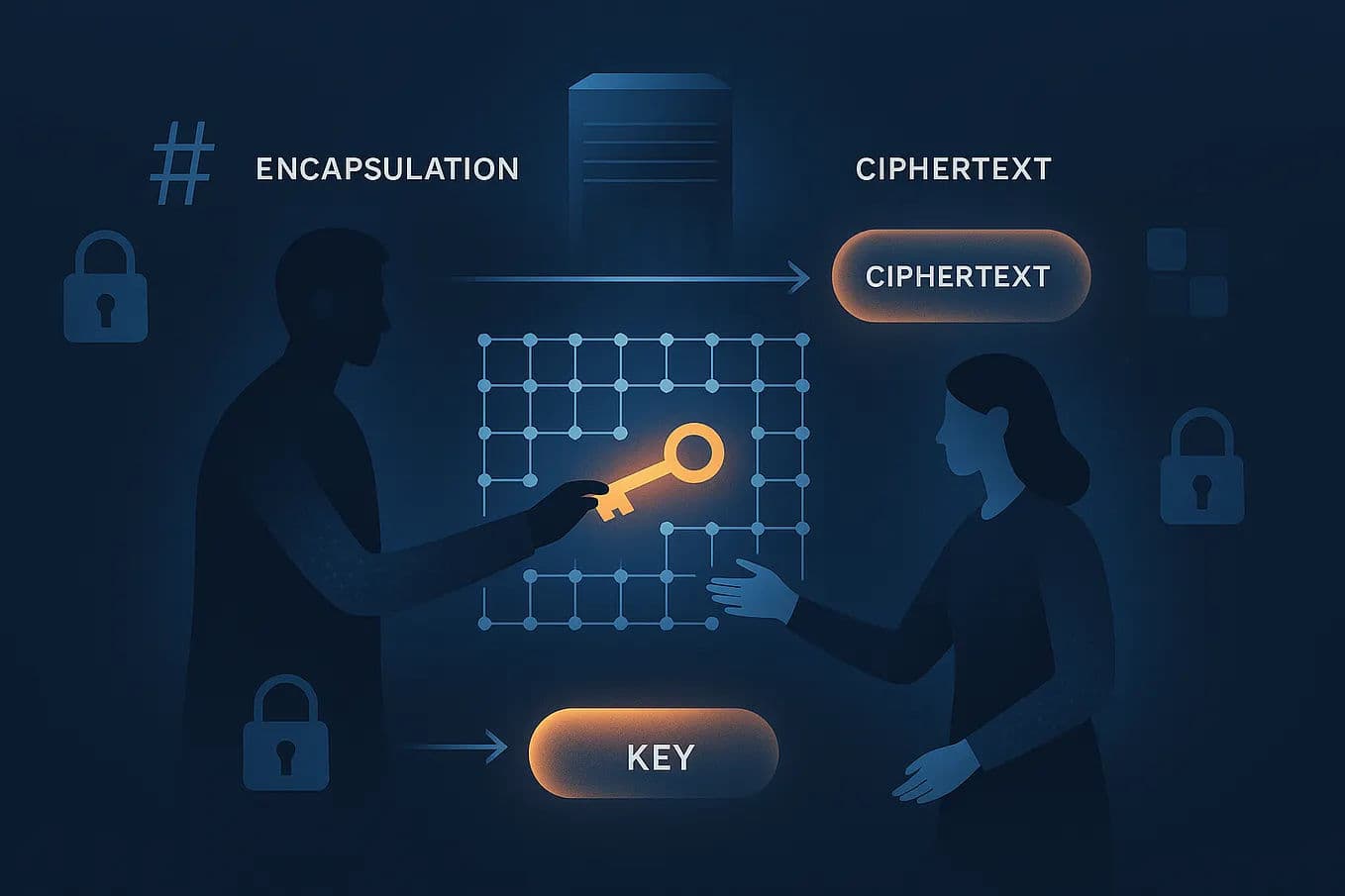
Lattice-Based Cryptography: Future-Proof Security Methods
Lattice-Based CryptographyAs quantum computing advances, traditional cryptographic systems such as RSA and ECC face potential vulnerabilities. This has led to the emergence of post-quantum cryptography—new cryptographic approaches designed to withstand attacks from quantum computers. Among these, lattice-based cryptography is one of the most promising and widely researched solutions.In 2026, lattice-based cryptography is gaining significant attention due to its strong security guarantees and versatility. It is considered a leading candidate for securing data in a quantum-powered future.This technology is shaping the next generation of secure communication systems.What Is Lattice-Based Cryptography?Lattice-based cryptography is a type of cryptography that relies on mathematical structures called lattices.Uses high-dimensional lattice problemsBased on hard mathematical challengesResistant to quantum attacksSupports encryption and digital signaturesIt provides strong security foundations.Why It Is Important in the Quantum EraQuantum computers can break traditional encryptionLattice problems are hard for quantum algorithmsEnsures long-term data securitySupports future-proof cryptographic systemsIt is essential for post-quantum security.How Lattice-Based Cryptography WorksThe system is based on mathematical problems.Points form a lattice in high-dimensional spaceHard problems like Shortest Vector Problem (SVP)Encryption uses these hard problemsDecryption requires special keysThis ensures security.Key FeaturesQuantum resistanceStrong mathematical foundationVersatility (encryption, signatures, etc.)Efficiency in implementationThese features make it powerful.ApplicationsLattice-based cryptography is used in various domains.Secure communication systemsBlockchain and digital currenciesCloud securityInternet of Things (IoT)Its applications are expanding.Benefits of Lattice-Based CryptographyResistant to quantum attacksFlexible and scalableSupports advanced cryptographic functionsFuture-proof securityThese benefits drive adoption.Challenges and LimitationsLarger key sizesPerformance overheadImplementation complexityStandardization in progressThese challenges must be addressed.Lattice-based cryptography is the cornerstone of post-quantum security—ensuring that our digital world remains protected even in the age of quantum computing.Lattice-Based vs Traditional CryptographyTraditional → Vulnerable to quantum attacksLattice-based → Quantum-resistantTraditional → Smaller keysLattice-based → Larger keysThis shift is necessary.Future of CryptographyThe future of cryptography is evolving.Post-quantum cryptographic standardsGlobal adoption of lattice-based systemsIntegration with emerging technologiesEnhanced security frameworksLattice-based cryptography will lead the way.Role in Digital SecurityThis technology is crucial for digital security.Protects sensitive dataSecures communication networksSupports secure digital transactionsIt is essential for the future.Frequently Asked QuestionsWhat is lattice-based cryptography?A cryptographic method based on lattice mathematics.Why is it important?It protects against quantum attacks.Where is it used?Cybersecurity, blockchain, and communication systems.ConclusionLattice-based cryptography represents a critical advancement in securing digital systems against future threats posed by quantum computing. With its strong mathematical foundation and versatility, it is poised to become a cornerstone of post-quantum cryptography. As research and standardization efforts continue, this technology will play a vital role in protecting data and ensuring the security of digital infrastructure in the years to come.

Intent-Driven Development: Building Software from Intent
Intent-Driven Development (IDD)The world of software development is evolving rapidly, moving beyond traditional coding paradigms toward more intelligent and automated approaches. One of the most promising emerging concepts in this space is Intent-Driven Development (IDD)—a methodology where developers focus on defining what they want to achieve, and AI systems handle how it is implemented.In 2026, with the rise of AI-powered coding assistants and autonomous agents, IDD is transforming how software is built. It reduces the complexity of coding, accelerates development cycles, and enables developers to focus on problem-solving rather than syntax.This shift represents a fundamental change in the software development lifecycle.What Is Intent-Driven Development?Intent-Driven Development is a software development approach where developers specify desired outcomes instead of writing detailed code.Define high-level intentAI interprets requirementsAutomated code generationContinuous optimizationIt shifts focus from coding to intent.Why IDD Is ImportantReduces coding complexityAccelerates development speedImproves productivityEnables non-developers to build softwareIt democratizes software development.How Intent-Driven Development WorksIDD integrates AI into the development process.Developers define requirementsAI models interpret intentCode is generated automaticallySystem continuously refines outputThis enables intelligent automation.Key Technologies Behind IDDLarge Language Models (LLMs)AI coding assistantsNatural Language Processing (NLP)Automation frameworksThese technologies enable IDD.Applications of IDDIntent-driven development is transforming software creation.Web and mobile app developmentEnterprise software solutionsAutomation workflowsAI system developmentIts applications are expanding.Benefits of Intent-Driven DevelopmentFaster development cyclesReduced errorsImproved collaborationScalable solutionsThese benefits drive adoption.Challenges and LimitationsDependence on AI accuracySecurity concernsLimited control over generated codeLearning curve for developersThese challenges must be addressed.Intent-Driven Development marks a shift from writing code to expressing ideas—where developers focus on what to build, and AI determines how to build it.IDD vs Traditional DevelopmentTraditional → Manual codingIDD → AI-driven automationTraditional → Time-consumingIDD → Faster developmentThis shift is transformative.Future of Software DevelopmentThe future of development is intelligent and automated.AI-native development environmentsAutonomous coding systemsIntegration with agentic AILow-code and no-code evolutionIDD will shape the future.Role in Digital TransformationIntent-driven development is a key driver of digital transformation.Accelerates innovationImproves efficiencyEnables scalable solutionsIt is essential for modern enterprises.Frequently Asked QuestionsWhat is IDD?A development approach based on defining intent.Why is it important?It speeds up development and reduces complexity.Where is it used?Software development and automation.ConclusionIntent-Driven Development represents a transformative shift in software engineering, enabling developers to focus on high-level goals while AI handles implementation details. By reducing complexity and accelerating development, it is paving the way for a new era of intelligent software creation. As AI technologies continue to evolve, IDD will play a central role in shaping the future of development and innovation.

Sodium-Ion Batteries: The New Energy Storage Frontier
Sodium-Ion: The New Battery FrontierThe global demand for energy storage is skyrocketing as electric vehicles, renewable energy systems, and portable electronics continue to expand. While lithium-ion batteries have dominated the market for decades, concerns over cost, resource scarcity, and environmental impact are driving the search for alternatives.Sodium-ion batteries are emerging as a promising new frontier in energy storage. By leveraging abundant and low-cost sodium resources, these batteries offer a sustainable and scalable solution for the future of energy.In 2026, sodium-ion technology is gaining momentum as a viable alternative to lithium-ion batteries, especially for large-scale and cost-sensitive applications.What Are Sodium-Ion Batteries?Sodium-ion batteries are rechargeable batteries that use sodium ions instead of lithium ions to store and transfer energy.Similar structure to lithium-ion batteriesUse sodium-based materialsOperate through ion movement between electrodesProvide energy storage and releaseThey are a sustainable alternative.Why Sodium-Ion MattersAbundant raw materialsLower cost compared to lithiumReduced environmental impactImproved supply chain stabilityIt addresses key challenges in energy storage.How Sodium-Ion Batteries WorkThe working principle is similar to lithium-ion batteries.Sodium ions move between cathode and anodeEnergy is stored during chargingEnergy is released during dischargeElectrolytes facilitate ion movementThis process enables energy storage.Applications of Sodium-Ion BatteriesSodium-ion batteries are used in various applications.Grid energy storageRenewable energy systemsElectric vehicles (entry-level)Portable electronicsTheir applications are expanding.Benefits of Sodium-Ion BatteriesLow costAbundant materialsEnvironmental sustainabilityGood performance in certain conditionsThese benefits drive adoption.Challenges and LimitationsLower energy density than lithium-ionLimited commercializationTechnology still evolvingPerformance optimization requiredThese challenges must be addressed.Sodium-ion batteries represent a shift toward more sustainable and accessible energy storage—powering the future without relying on scarce resources.Sodium-Ion vs Lithium-Ion BatteriesLithium-ion → High energy densitySodium-ion → Lower costLithium-ion → Scarce resourcesSodium-ion → Abundant resourcesEach has its advantages.Future of Battery TechnologyThe future of batteries is diverse and innovative.Advancements in sodium-ion technologyIntegration with renewable energyHybrid battery systemsGlobal adoption in energy storageSodium-ion will play a key role.Role in SustainabilitySodium-ion batteries support sustainability goals.Reduce reliance on rare materialsLower environmental impactSupport clean energy systemsThey are essential for a greener future.Frequently Asked QuestionsWhat are sodium-ion batteries?Batteries that use sodium ions for energy storage.Why are they important?They provide a sustainable alternative to lithium-ion.Where are they used?Energy storage, EVs, and electronics.ConclusionSodium-ion batteries represent a promising new frontier in energy storage, offering a sustainable, cost-effective, and scalable alternative to lithium-ion technology. As research and development continue, they are expected to play a crucial role in supporting renewable energy systems and powering the future of clean technology. With their potential to reduce costs and environmental impact, sodium-ion batteries are poised to become a key component of the global energy transition.

Self-Healing Infrastructure: Future of Smart Materials
Self-Healing Infrastructure & MaterialsThe future of construction and material science is moving toward a revolutionary concept—self-healing infrastructure. Imagine roads that repair their own cracks, buildings that restore structural integrity after damage, and materials that extend their lifespan without human intervention. This is no longer science fiction; it is becoming a reality.In 2026, advancements in material science, nanotechnology, and biotechnology are enabling the development of self-healing materials. These materials can detect damage and initiate repair processes automatically, reducing maintenance costs, improving safety, and enhancing sustainability.This innovation is set to transform industries such as construction, transportation, and manufacturing.What Are Self-Healing Materials?Self-healing materials are engineered substances that can repair damage automatically.Detect cracks or damageActivate repair mechanismsRestore structural integrityExtend material lifespanThey mimic natural healing processes.How Self-Healing Materials WorkThese materials use various mechanisms.Microcapsules release healing agentsBacteria produce repair substancesPolymers re-bond after damageNanotechnology enables repair at micro-levelsThis enables automatic restoration.Types of Self-Healing MaterialsSelf-healing concreteSelf-healing polymersSelf-healing metalsBiological materialsEach type serves different applications.Applications in InfrastructureSelf-healing materials are transforming infrastructure.Roads and highwaysBridges and buildingsPipelines and water systemsEnergy infrastructureTheir impact is significant.Benefits of Self-Healing InfrastructureReduced maintenance costsImproved safetyExtended lifespan of structuresEnhanced sustainabilityThese benefits drive adoption.Challenges and LimitationsHigh initial costsLimited scalabilityTechnical complexityRegulatory hurdlesThese challenges must be addressed.Self-healing materials represent a future where infrastructure is not just built—it is designed to adapt, repair, and sustain itself over time.Self-Healing vs Traditional MaterialsTraditional → Requires manual repairSelf-healing → Automatic repairTraditional → Shorter lifespanSelf-healing → Longer lifespanThis shift is transformative.Future of Smart InfrastructureThe future of infrastructure is intelligent and adaptive.Integration with IoT and AISmart cities with self-repairing systemsSustainable construction practicesAdvanced material innovationIt will redefine construction.Role in SustainabilitySelf-healing materials support sustainability goals.Reduce wasteLower carbon footprintImprove resource efficiencyThey are essential for a greener future.Frequently Asked QuestionsWhat are self-healing materials?Materials that repair themselves automatically.Where are they used?Construction, infrastructure, and manufacturing.Why are they important?They reduce maintenance and improve durability.ConclusionSelf-healing infrastructure and materials represent a transformative advancement in engineering and material science. By enabling automatic repair and extending the lifespan of structures, they offer significant benefits in terms of cost, safety, and sustainability. As technology continues to evolve, self-healing materials will play a crucial role in building smarter, more resilient, and environmentally friendly infrastructure for the future.

6G and the Sub-Terahertz Era: Future of Connectivity
6G and the "Sub-Terahertz" EraThe evolution of wireless communication is entering a new frontier with the development of 6G technology. While 5G has already transformed connectivity with faster speeds and lower latency, 6G aims to push these capabilities even further by leveraging sub-terahertz (sub-THz) frequency bands. This next-generation network promises ultra-high data rates, near-instant communication, and the ability to support emerging technologies such as the Internet of Senses, holographic communication, and advanced AI systems.In 2026, research and early development of 6G are accelerating globally, with a focus on unlocking the potential of sub-terahertz frequencies. These frequencies enable unprecedented bandwidth and speed, opening the door to a new era of connectivity.The sub-terahertz era represents a paradigm shift in how we communicate and interact with digital systems.What Is 6G?6G is the sixth generation of wireless communication technology, designed to deliver ultra-fast, ultra-reliable, and intelligent connectivity.Extremely high data rates (up to Tbps)Ultra-low latency (microseconds)AI-native network architectureGlobal coverage including remote areasIt builds on the foundation of 5G.What Are Sub-Terahertz Frequencies?Sub-terahertz frequencies refer to the spectrum just below the terahertz range (100 GHz to 1 THz).Extremely high bandwidthShort-range communicationHigh data transmission capacityRequires advanced hardwareThey enable ultra-fast communication.Why Sub-THz Matters for 6GSupports massive data transferEnables real-time immersive experiencesImproves network capacityReduces latency significantlyIt is a key enabler of 6G.Key Technologies in 6GAI-driven network managementAdvanced antenna systemsTerahertz communicationIntegrated sensing and communicationThese technologies enable next-gen connectivity.Applications of 6G6G will transform multiple industries.Holographic communicationSmart cities and IoTAutonomous vehiclesHealthcare and remote surgeryImmersive AR/VR experiencesIts impact is far-reaching.Benefits of 6G TechnologyUltra-fast data speedsNear-zero latencyEnhanced connectivitySupport for advanced technologiesThese benefits drive innovation.Challenges and LimitationsHigh infrastructure costsSignal propagation issuesEnergy consumption concernsRegulatory challengesThese challenges must be addressed.6G and the sub-terahertz era will redefine connectivity—enabling a world where digital and physical realities seamlessly merge.6G vs 5G5G → Gigabit speeds6G → Terabit speeds5G → Millisecond latency6G → Microsecond latencyThis leap is transformative.Future of Wireless CommunicationThe future of connectivity is intelligent and immersive.AI-native networksGlobal connectivityIntegration with space-based systemsSupport for the Internet of Senses6G will shape the future.Role in Digital Transformation6G is a key driver of digital transformation.Enables advanced technologiesImproves connectivitySupports innovationIt is essential for future digital ecosystems.Frequently Asked QuestionsWhat is 6G?The next generation of wireless communication.What is sub-terahertz?High-frequency spectrum enabling ultra-fast data transfer.When will 6G be available?Expected around 2030.Conclusion6G and the sub-terahertz era represent a transformative leap in wireless communication, enabling ultra-fast, intelligent, and immersive connectivity. By leveraging advanced technologies and high-frequency spectrum, 6G will redefine how we interact with digital systems and unlock new possibilities across industries. As research and development continue, the sub-terahertz era will play a central role in shaping the future of global communication.

Haptic Feedback & Internet of Senses: Immersive Future Tech
Haptic Feedback & The "Internet of Senses"The digital world is evolving beyond visual and auditory experiences into a multi-sensory ecosystem. The concept of the “Internet of Senses” represents a future where technology can stimulate not only sight and sound but also touch, taste, and smell. At the core of this transformation lies haptic feedback—technology that enables users to feel digital interactions through physical sensations.In 2026, haptic feedback is becoming more advanced, enabling realistic touch experiences in virtual environments, gaming, healthcare, and remote communication. Combined with high-speed networks and immersive technologies, it is paving the way for a fully sensory internet.This evolution is redefining how humans interact with digital systems.What Is Haptic Feedback?Haptic feedback is technology that simulates the sense of touch through vibrations, forces, or motions.Vibration-based feedbackForce feedback systemsTactile interfacesWearable haptic devicesIt brings physical sensation to digital interactions.What Is the Internet of Senses?The Internet of Senses refers to a digital ecosystem that integrates all human senses into online experiences.Touch (haptics)Vision (VR/AR)Sound (spatial audio)Taste and smell (emerging technologies)It creates fully immersive experiences.How Haptic Feedback WorksHaptic systems use sensors and actuators.Input devices detect user actionsSoftware processes interactionsActuators generate physical feedbackUsers feel the response in real-timeThis creates realistic touch experiences.Applications of Haptic FeedbackHaptic technology is transforming multiple industries.Gaming and entertainmentVirtual and augmented realityHealthcare and remote surgeryEducation and training simulationsE-commerce (virtual product experience)Its applications are expanding rapidly.Benefits of the Internet of SensesEnhanced user experienceImproved engagementRealistic virtual interactionsNew business opportunitiesThese benefits drive innovation.Challenges and LimitationsHigh development costsHardware limitationsLatency issuesPrivacy and security concernsThese challenges must be addressed.The Internet of Senses will transform the digital world into a fully immersive, multi-sensory experience—blurring the line between physical and virtual reality.Haptic Feedback vs Traditional InterfacesTraditional → Visual and audio interactionHaptic → Multi-sensory interactionTraditional → Limited immersionHaptic → High immersionThis shift enhances user experience.Future of the Internet of SensesThe future of sensory technology is promising.Advanced haptic wearablesIntegration with 6G networksAI-driven sensory experiencesExpansion into taste and smell technologiesIt will redefine digital interaction.Role in Digital TransformationThe Internet of Senses is a key driver of digital transformation.Enhances user engagementEnables immersive experiencesDrives innovation across industriesIt is shaping the future of technology.Frequently Asked QuestionsWhat is haptic feedback?Technology that simulates touch.What is the Internet of Senses?A multi-sensory digital ecosystem.Where is it used?Gaming, healthcare, VR, and training.ConclusionHaptic feedback and the Internet of Senses represent a transformative shift in how we interact with digital systems. By enabling touch and other sensory experiences, they are creating a more immersive and engaging digital world. As technology continues to evolve, the Internet of Senses will play a central role in shaping the future of communication, entertainment, and human-computer interaction.
Hyper-Personalized N-of-1 Medicine: Tailored Healthcare
Hyper-Personalized "N-of-1" MedicineHealthcare is undergoing a profound transformation, shifting from generalized treatments to highly individualized care. One of the most revolutionary advancements in this domain is hyper-personalized “N-of-1” medicine—a model where treatments are designed specifically for a single patient based on their unique genetic, biological, and environmental profile.In 2026, advances in artificial intelligence, genomics, and biotechnology are enabling doctors and researchers to create therapies tailored to individual patients. This approach promises higher treatment effectiveness, fewer side effects, and a new era of precision healthcare.Hyper-personalized medicine is redefining how we diagnose, treat, and prevent diseases.What Is "N-of-1" Medicine?"N-of-1" medicine refers to treatments designed for a single individual rather than a population group.Patient-specific therapiesCustomized drug formulationsIndividualized treatment plansData-driven healthcare decisionsIt focuses on the individual rather than averages.Why Traditional Medicine Falls ShortTreatments based on population averagesVariable patient responsesHigher risk of side effectsLimited effectiveness for rare conditionsPersonalization addresses these gaps.Key Technologies Enabling N-of-1 MedicineGenomics and DNA sequencingArtificial Intelligence (AI)Biotechnology and gene editingWearable health devicesThese technologies drive innovation.How Hyper-Personalized Medicine WorksThe process involves multiple steps.Collect patient-specific dataAnalyze genetic and biological informationDesign customized treatmentMonitor and adjust therapy in real-timeThis ensures optimal outcomes.Applications of N-of-1 MedicineThis approach is transforming healthcare.Rare disease treatmentCancer therapyChronic disease managementPreventive healthcareIts impact is significant.Benefits of Hyper-Personalized MedicineHigher treatment effectivenessReduced side effectsFaster recoveryImproved patient outcomesThese benefits drive adoption.Challenges and LimitationsHigh costsData privacy concernsComplex implementationLimited accessibilityThese challenges must be addressed."N-of-1" medicine represents the ultimate goal of healthcare—treating each patient as a unique individual rather than a statistical average.N-of-1 Medicine vs Traditional MedicineTraditional → One-size-fits-allN-of-1 → Individualized careTraditional → Reactive treatmentN-of-1 → Proactive and predictive careThis shift is transformative.Future of Personalized HealthcareThe future of healthcare is highly personalized.AI-driven diagnosticsReal-time health monitoringCustomized drug developmentIntegration with wearable technologyIt will redefine medicine.Role in Healthcare InnovationHyper-personalized medicine plays a key role in innovation.Improves treatment precisionEnhances patient careReduces healthcare costs in the long termIt is shaping the future of healthcare.Frequently Asked QuestionsWhat is N-of-1 medicine?It is treatment designed for a single patient.Why is it important?It improves treatment effectiveness.Where is it used?Cancer, rare diseases, and personalized healthcare.ConclusionHyper-personalized “N-of-1” medicine represents a groundbreaking shift in healthcare, moving from generalized treatments to individualized care. By leveraging advanced technologies such as AI, genomics, and biotechnology, it enables more precise, effective, and patient-centered treatments. As this approach continues to evolve, it will play a central role in shaping the future of medicine and improving global healthcare outcomes.
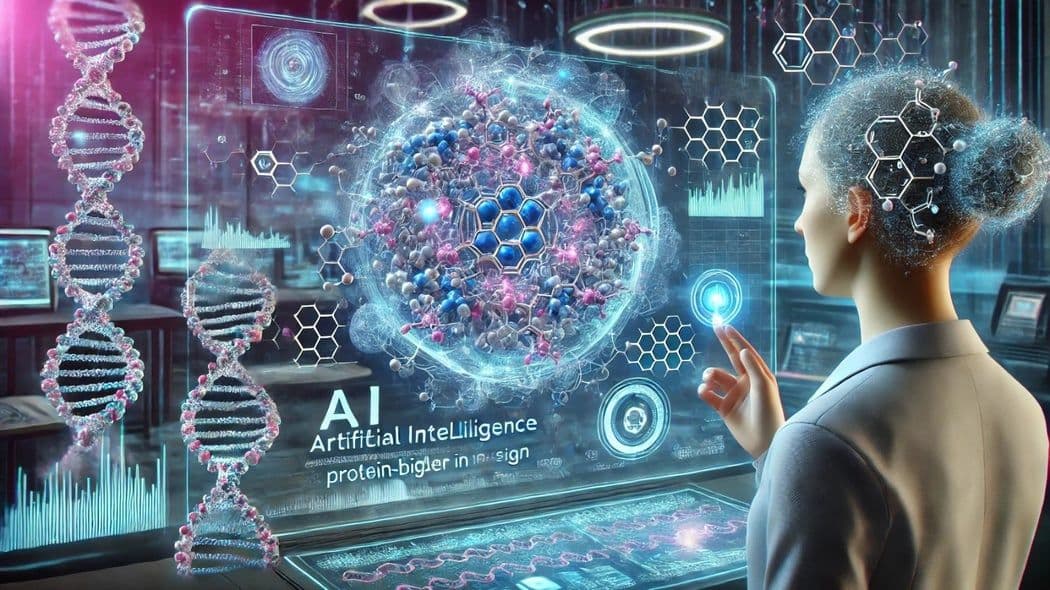
Generative Protein Design: AI Transforming Biology
Generative Protein DesignThe intersection of artificial intelligence and biotechnology is unlocking one of the most exciting frontiers in science—generative protein design. Proteins are the fundamental building blocks of life, responsible for nearly all biological functions. Designing new proteins has traditionally been a complex and time-consuming process, requiring years of research and experimentation.In 2026, generative AI is revolutionizing this field by enabling scientists to design novel proteins with specific functions, structures, and properties. This breakthrough is accelerating drug discovery, improving healthcare, and opening new possibilities in materials science and synthetic biology.Generative protein design represents a paradigm shift in how we understand and engineer life at the molecular level.What Is Generative Protein Design?Generative protein design uses AI models to create new protein structures and sequences.AI-driven protein generationDesign of novel structuresOptimization of protein functionsSimulation of biological behaviorIt enables precise molecular engineering.Why Proteins Are ImportantEnable biological functionsAct as enzymes and catalystsSupport immune responsesForm structural components of cellsProteins are essential for life.How Generative AI Designs ProteinsAI models analyze and generate protein structures.Train on protein databasesLearn structure-function relationshipsGenerate new sequencesPredict folding and behaviorThis accelerates discovery.Applications of Generative Protein DesignThis technology is transforming multiple fields.Drug discovery and developmentVaccine designEnzyme engineeringBiomaterials and nanotechnologyIts impact is significant.Benefits of Generative Protein DesignFaster drug developmentReduced research costsHigh precision designNew possibilities in medicineThese benefits drive innovation.Challenges and LimitationsComplex biological systemsData limitationsValidation requirementsEthical considerationsThese challenges must be addressed.Generative protein design is not just about understanding life—it is about creating it with precision and purpose.Generative AI vs Traditional Protein EngineeringTraditional → Trial-and-error approachGenerative → AI-driven designTraditional → Time-consumingGenerative → Rapid developmentThis shift accelerates innovation.Future of Protein DesignThe future of generative protein design is promising.Personalized medicineAdvanced therapeuticsSynthetic biology breakthroughsIntegration with AI and roboticsIt will redefine biotechnology.Role in Healthcare InnovationGenerative protein design plays a key role in healthcare.Improves treatment outcomesAccelerates drug discoveryEnables precision medicineIt is shaping the future of medicine.Frequently Asked QuestionsWhat is generative protein design?AI-driven creation of new proteins.Why is it important?It accelerates drug discovery and innovation.Where is it used?Healthcare, biotechnology, and research.ConclusionGenerative protein design represents a revolutionary advancement in biotechnology, enabling scientists to design and engineer proteins with unprecedented precision. By combining artificial intelligence with biological science, it is transforming drug discovery, healthcare, and synthetic biology. As this technology continues to evolve, it holds the potential to reshape our understanding of life and unlock new possibilities for innovation.
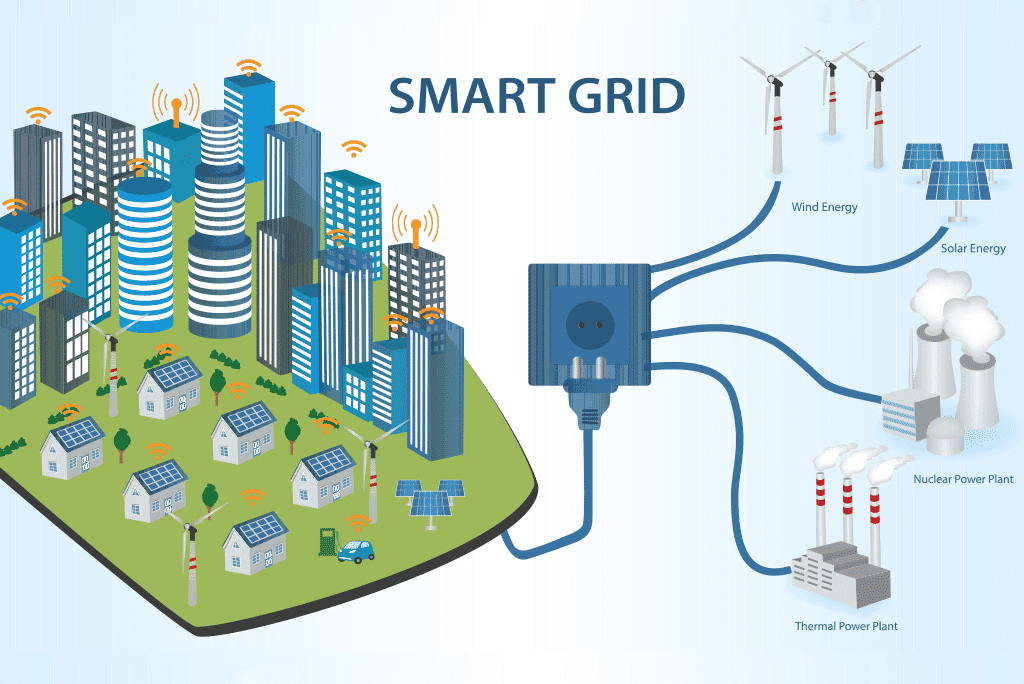
The Software-Defined Power Grid: Smarter Energy Systems
The "Software-Defined" Power GridThe global energy landscape is undergoing a profound transformation. Traditional power grids, once centralized and hardware-driven, are evolving into intelligent, flexible, and software-controlled systems. This evolution is giving rise to the concept of the software-defined power grid—a modern approach where software plays a central role in managing, optimizing, and controlling energy systems.In 2026, the software-defined grid is becoming essential for integrating renewable energy, improving efficiency, and ensuring reliable power distribution. By leveraging advanced technologies such as artificial intelligence, IoT, and cloud computing, power grids are becoming smarter, more adaptive, and more resilient.This transformation is critical for building a sustainable and efficient energy future.What Is a Software-Defined Power Grid?A software-defined power grid is an energy system where software controls and optimizes grid operations.Digital control systemsReal-time monitoringAutomated decision-makingIntegration with smart devicesIt shifts control from hardware to software.Why the Power Grid Needs TransformationGrowing energy demandIntegration of renewable energy sourcesAging infrastructureNeed for efficiency and reliabilityModern challenges require modern solutions.Key Technologies Behind Software-Defined GridsArtificial Intelligence (AI)Internet of Things (IoT)Cloud computingEdge computingThese technologies enable smart energy systems.How Software-Defined Grids WorkSoftware-defined grids operate through intelligent systems.Sensors collect real-time dataSoftware analyzes energy demand and supplyAutomated systems adjust distributionAI optimizes performanceThis enables efficient energy management.Benefits of Software-Defined Power GridsImproved efficiencyEnhanced reliabilityBetter integration of renewable energyReduced operational costsThese benefits drive adoption.Applications and Use CasesSoftware-defined grids are used in various scenarios.Smart citiesRenewable energy integrationElectric vehicle charging networksIndustrial energy managementTheir applications are expanding.Challenges and RisksCybersecurity threatsHigh implementation costsComplex system integrationRegulatory challengesThese challenges require careful planning.The software-defined power grid transforms energy systems from static infrastructure into intelligent, adaptive networks that respond to real-time demands.Software-Defined vs Traditional Power GridsTraditional → Centralized controlSoftware-defined → Distributed intelligenceTraditional → Manual operationsSoftware-defined → Automated systemsThis shift is transformative.Future of Energy SystemsThe future of power grids is intelligent and sustainable.AI-driven energy optimizationDecentralized energy systemsIntegration with renewable sourcesSmart grid ecosystemsSoftware-defined grids will dominate the future.Role in SustainabilitySoftware-defined grids support sustainable energy goals.Reduce energy wasteOptimize renewable usageLower carbon emissionsThey are essential for a greener future.Frequently Asked QuestionsWhat is a software-defined power grid?An energy system controlled by software.Why is it important?It improves efficiency and sustainability.Where is it used?Smart cities and renewable energy systems.ConclusionThe software-defined power grid represents a transformative shift in how energy systems are designed and managed. By leveraging advanced technologies and intelligent software, it enables more efficient, reliable, and sustainable energy distribution. As the world moves toward a greener future, software-defined grids will play a crucial role in powering the next generation of energy systems.
Neuromorphic Computing: Brain-Inspired Hardware Explained
Neuromorphic Computing (Brain-Inspired Hardware)As artificial intelligence continues to push the limits of traditional computing, a new paradigm is emerging—neuromorphic computing. Inspired by the structure and function of the human brain, neuromorphic systems aim to revolutionize how machines process information, learn, and adapt.In 2026, brain-inspired hardware is gaining momentum as a powerful solution for energy-efficient, real-time, and adaptive computing. Unlike conventional systems that rely on sequential processing, neuromorphic computing leverages parallel processing and event-driven architectures to mimic neural behavior.This breakthrough has the potential to transform AI, robotics, edge computing, and beyond.What Is Neuromorphic Computing?Neuromorphic computing is a computing approach that mimics the neural architecture of the human brain.Artificial neurons and synapsesParallel processingEvent-driven computationAdaptive learningIt replicates how the brain processes information.How the Human Brain Inspires ComputingThe human brain is highly efficient and adaptive.Processes information in parallelUses neurons and synapsesConsumes very low energyLearns continuouslyNeuromorphic systems replicate these features.Key Components of Neuromorphic HardwareNeurons → Process signalsSynapses → Store and adjust weightsSpikes → Represent dataLearning mechanisms → Adapt behaviorThese components enable brain-like computing.How Neuromorphic Computing WorksNeuromorphic systems operate differently from traditional computers.Event-driven processing reduces unnecessary computationParallel architecture enables faster processingLocal memory reduces data transferAdaptive learning improves performanceThis results in efficient computation.Applications of Neuromorphic ComputingNeuromorphic computing is transforming multiple domains.Edge AI devicesRobotics and autonomous systemsSmart sensors and IoTBrain-computer interfacesIts applications are expanding rapidly.Benefits of Brain-Inspired HardwareEnergy efficiencyReal-time processingScalabilityAdaptive learning capabilitiesThese benefits make it powerful.Challenges and LimitationsComplex hardware designLimited software ecosystemHigh development costsEarly-stage technologyThese challenges require innovation.Neuromorphic computing is not just an improvement—it is a complete rethinking of how machines process information, inspired by the most efficient system we know: the human brain.Neuromorphic vs Traditional ComputingTraditional → Sequential processingNeuromorphic → Parallel processingTraditional → High energy consumptionNeuromorphic → Low energy consumptionThis shift is transformative.Future of Neuromorphic ComputingThe future of neuromorphic computing is promising.Advanced AI hardwareIntegration with edge computingBrain-inspired learning systemsWider industry adoptionIt will redefine computing.Role in Digital TransformationNeuromorphic computing plays a key role in digital transformation.Improves AI efficiencyReduces energy consumptionEnables real-time intelligenceIt is essential for the future of technology.Frequently Asked QuestionsWhat is neuromorphic computing?It is brain-inspired computing architecture.Why is it important?It improves efficiency and reduces energy use.Where is it used?AI, robotics, and edge computing.ConclusionNeuromorphic computing represents a revolutionary shift in computing architecture, inspired by the efficiency and adaptability of the human brain. By enabling energy-efficient, real-time, and scalable AI systems, it has the potential to transform industries and redefine the future of technology. As research and development continue, brain-inspired hardware will play a central role in shaping the next generation of intelligent systems.

Organ-on-a-Chip: Toward Ending Animal Testing in Research
Organ-on-a-Chip: The End of Animal TestingThe field of biomedical research is undergoing a revolutionary transformation with the emergence of organ-on-a-chip technology. Traditional methods of drug testing and disease research have relied heavily on animal models, which often fail to accurately replicate human physiology. This has led to ethical concerns, high costs, and limited success rates in clinical trials.Organ-on-a-chip technology offers a groundbreaking alternative by simulating human organ functions on microchips. In 2026, this innovation is gaining momentum as a more accurate, ethical, and efficient approach to medical research and drug development.This advancement has the potential to significantly reduce—or even eliminate—the need for animal testing.What Is Organ-on-a-Chip?Organ-on-a-chip is a microfluidic device that mimics the structure and function of human organs.Micro-scale chips with living cellsSimulate organ functionsReplicate physiological conditionsEnable real-time monitoringIt brings human biology to the lab.Why Replace Animal Testing?Ethical concernsLimited accuracy in predicting human responsesHigh costs and time consumptionRegulatory challengesAlternative methods are needed.How Organ-on-a-Chip WorksThese devices simulate organ behavior using advanced technology.Cells are cultured on microchipsMicrofluidic channels mimic blood flowSensors monitor biological responsesData is analyzed in real-timeThis enables precise experimentation.Types of Organ-on-a-Chip SystemsLung-on-a-chipHeart-on-a-chipLiver-on-a-chipBrain-on-a-chipEach system targets specific organs.Applications in HealthcareOrgan-on-a-chip technology is transforming medicine.Drug testing and developmentDisease modelingPersonalized medicineToxicity testingIts applications are expanding rapidly.Benefits of Organ-on-a-ChipImproved accuracyReduced reliance on animal testingFaster drug developmentCost efficiencyThese benefits drive adoption.Challenges and LimitationsHigh development costsTechnical complexityLimited standardizationRegulatory acceptanceThese challenges must be addressed.Organ-on-a-chip technology is redefining biomedical research—offering a future where science advances without compromising ethics.Organ-on-a-Chip vs Animal TestingAnimal testing → Ethical concernsOrgan-on-chip → Ethical alternativeAnimal testing → Limited accuracyOrgan-on-chip → Human-relevant dataThis comparison highlights its potential.Future of Biomedical ResearchThe future of organ-on-a-chip technology is promising.Multi-organ systems (body-on-a-chip)Integration with AI and data analyticsWider regulatory acceptanceGlobal adoption in research labsIt will transform healthcare.Role in Medical InnovationOrgan-on-a-chip plays a key role in medical innovation.Accelerates drug discoveryImproves patient outcomesReduces costsIt is shaping the future of medicine.Frequently Asked QuestionsWhat is organ-on-a-chip?A microchip that simulates human organ functions.Can it replace animal testing?It has the potential to significantly reduce it.Where is it used?Drug development and medical research.ConclusionOrgan-on-a-chip technology represents a transformative shift in biomedical research, offering a more accurate, ethical, and efficient alternative to animal testing. By simulating human organ functions on microchips, it enables better drug development, disease modeling, and personalized medicine. As this technology continues to evolve, it holds the promise of revolutionizing healthcare and paving the way for a future without animal testing.

Orbital Edge Computing: Space-Based Data Centers
Orbital Edge Computing (Space Data Centers)The rapid growth of data generation, artificial intelligence, and global connectivity is pushing the limits of traditional terrestrial data centers. As demand for low-latency processing and global coverage increases, a new frontier is emerging—orbital edge computing, also known as space-based data centers.In 2026, orbital edge computing is gaining attention as a revolutionary approach to processing data closer to its source—directly in space. By leveraging satellites and orbital infrastructure, this technology aims to reduce latency, improve efficiency, and enable real-time data processing on a global scale.This innovation is redefining the boundaries of computing and connectivity.What Is Orbital Edge Computing?Orbital edge computing refers to the deployment of computing infrastructure in space to process data near its source.Space-based data centersSatellite computing systemsReal-time data processingGlobal coverageIt extends edge computing beyond Earth.Why Move Data Centers to Space?Reduce latency for global applicationsHandle massive data from satellitesImprove energy efficiency using solar powerOvercome terrestrial infrastructure limitationsSpace offers unique advantages.How Orbital Edge Computing WorksOrbital systems process and transmit data efficiently.Satellites collect dataOnboard processors analyze dataResults are transmitted to EarthEdge processing reduces bandwidth usageThis enables faster insights.Key TechnologiesSatellite constellationsEdge computing hardwareAI and machine learningHigh-speed communication networksThese technologies enable orbital computing.Applications of Space Data CentersOrbital edge computing has diverse applications.Earth observation and climate monitoringGlobal internet connectivityDefense and security systemsSpace exploration missionsDisaster managementIts impact is far-reaching.Benefits of Orbital Edge ComputingLow latency global processingReduced data transmission costsEnergy efficiency (solar power)Scalable infrastructureThese benefits drive innovation.Challenges and RisksHigh deployment costsSpace environment challengesLimited maintenance capabilitiesRegulatory and security concernsThese challenges must be addressed.Orbital edge computing represents the next frontier of digital infrastructure—bringing computation closer to space and redefining global connectivity.Orbital vs Terrestrial Edge ComputingTerrestrial → Limited coverageOrbital → Global coverageTerrestrial → Infrastructure-dependentOrbital → Space-based systemsThis shift expands capabilities.Future of Space ComputingThe future of orbital computing is promising.Large-scale space data centersAI-driven satellite networksIntegration with 6G networksCommercial space computing servicesIt will redefine computing.Role in Digital TransformationOrbital edge computing supports global digital transformation.Enables real-time data processingImproves connectivitySupports advanced technologiesIt is shaping the future of global infrastructure.Frequently Asked QuestionsWhat is orbital edge computing?It is computing infrastructure in space.Why use space data centers?For global coverage and low latency.Is it the future of computing?Yes, especially for global and space-based applications.ConclusionOrbital edge computing represents a groundbreaking shift in how data is processed and managed. By moving computing infrastructure into space, it enables faster, more efficient, and globally accessible data processing. As technology continues to evolve, space data centers will play a crucial role in shaping the future of connectivity, AI, and digital transformation.
Progressive Web Apps and the Immersive Web: The Next Digital Frontier
Progressive Web Apps (PWAs) & Immersive WebThe web is evolving rapidly, moving beyond static pages and traditional mobile applications into a more dynamic, app-like, and immersive experience. Progressive Web Apps (PWAs) and the immersive web are at the forefront of this transformation, enabling faster, more engaging, and highly interactive digital experiences.In 2026, PWAs are bridging the gap between websites and native apps, while immersive web technologies such as WebXR are bringing augmented reality (AR) and virtual reality (VR) directly into the browser. Together, they are redefining how users interact with the web.This evolution is shaping the future of web development and user experience.What Are Progressive Web Apps (PWAs)?PWAs are web applications that provide a native app-like experience using modern web technologies.Installable on devicesOffline functionalityFast performanceResponsive designThey combine the best of web and mobile apps.Key Features of PWAsService workers for offline supportPush notificationsApp-like navigationSecure (HTTPS)These features enhance user experience.Benefits of PWAsReduced development costCross-platform compatibilityImproved performanceBetter user engagementThey are cost-effective and efficient.What Is the Immersive Web?The immersive web refers to web experiences that integrate AR, VR, and 3D environments directly into browsers.WebXR technology3D interactive contentReal-world integrationImmersive user experiencesIt transforms how users interact with the web.How PWAs and Immersive Web Work TogetherPWAs provide app-like functionalityImmersive web adds interactive experiencesTogether they create powerful web applicationsThis combination enhances engagement.Applications of PWAs and Immersive WebE-commerce and retailGaming and entertainmentEducation and trainingHealthcare applicationsTheir use cases are expanding.Challenges and LimitationsBrowser compatibility issuesLimited hardware accessPerformance constraintsSecurity concernsThese challenges must be addressed.PWAs and the immersive web are transforming the internet from a collection of pages into a platform for rich, interactive, and app-like experiences.PWAs vs Native AppsPWAs → Web-basedNative → Platform-specificPWAs → Lower costNative → Higher performanceEach has its advantages.Future Trends (2026)AI-powered web appsAdvanced WebXR experiencesFaster browser enginesIntegration with IoTThe web continues to evolve.Role in Digital TransformationPWAs and immersive web technologies are key drivers of digital transformation.Enhance user experienceImprove accessibilityEnable innovationThey are shaping the future of the web.Frequently Asked QuestionsWhat are PWAs?Web apps that work like native apps.What is the immersive web?Web experiences using AR and VR.Are PWAs better than native apps?They are more cost-effective but may have limitations.ConclusionProgressive Web Apps and the immersive web are transforming how users interact with digital content. By combining the flexibility of web technologies with the power of immersive experiences, they are creating a new era of web applications. As technology continues to evolve, PWAs and immersive web solutions will play a central role in shaping the future of digital experiences.
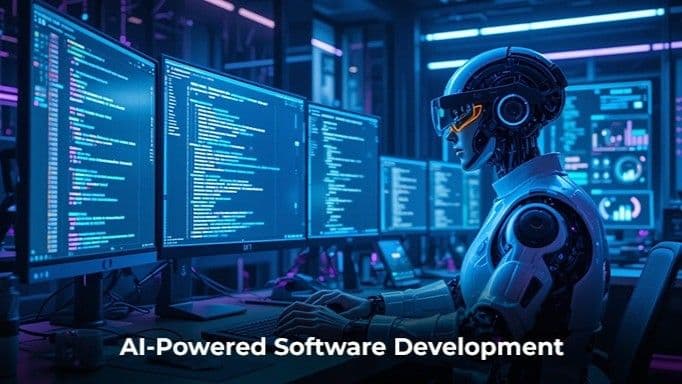
Intent-Driven Software Development: The Future of Coding with AI
Intent-Driven Software DevelopmentThe software development landscape is evolving rapidly, moving from manual coding to intelligent, intent-driven systems. Intent-Driven Software Development represents a paradigm shift where developers focus on defining what they want to achieve, while AI systems determine how to implement it.In 2026, this approach is gaining traction due to advancements in artificial intelligence, large language models, and automation tools. Developers can now describe requirements in natural language, and AI systems generate, optimize, and deploy code automatically.This shift is transforming productivity, reducing development time, and redefining the role of developers.What Is Intent-Driven Development?Intent-driven development focuses on expressing desired outcomes rather than writing detailed code.Define goals and requirementsUse natural language inputsAutomated code generationAI-driven optimizationIt emphasizes outcomes over implementation.Why Intent-Driven Development Is ImportantReduces development complexitySpeeds up project deliveryImproves productivityEnables rapid prototypingIt addresses modern development challenges.How It WorksIntent-driven systems follow a structured process.Capture user intentTranslate intent into codeValidate and optimize outputDeploy automaticallyThis process streamlines development.Key Technologies Behind ItLarge Language Models (LLMs)AI-powered coding assistantsAutomation frameworksDevOps and CI/CD pipelinesThese technologies enable automation.Benefits of Intent-Driven DevelopmentFaster development cyclesReduced errorsImproved scalabilityEnhanced collaborationThese benefits drive adoption.Use CasesRapid application developmentLow-code/no-code platformsAutomated testing and deploymentAI-driven software designIts applications are expanding.Challenges and LimitationsDependence on AI accuracySecurity concernsLimited control over generated codeLearning curve for developersThese challenges require balance.Intent-driven development shifts the focus from writing code to defining outcomes—empowering developers to build faster and smarter.Intent-Driven vs Traditional DevelopmentTraditional → Manual codingIntent-driven → AI-assisted codingTraditional → Time-consumingIntent-driven → Faster deliveryThis shift is transformative.Future of Software DevelopmentThe future of development is evolving rapidly.AI-native development platformsFully automated coding systemsIntegration with agentic AIReal-time code generationIntent-driven development will dominate.Role in Digital TransformationIntent-driven development is a key driver of digital transformation.Accelerates innovationImproves efficiencyReduces costsIt is shaping the future of software engineering.Frequently Asked QuestionsWhat is intent-driven development?It focuses on defining goals instead of writing code.Is it replacing developers?No, it enhances developer productivity.Where is it used?Web apps, automation, and AI-driven platforms.ConclusionIntent-driven software development represents a major shift in how software is built, enabling developers to focus on outcomes rather than implementation details. By leveraging AI and automation, it accelerates development, reduces complexity, and opens new possibilities for innovation. As technology continues to evolve, intent-driven development will play a central role in shaping the future of software engineering.

Cloud 3.0: Navigating Sovereign and Hybrid Ecosystems in 2026
Cloud 3.0: Sovereign and Hybrid EcosystemsThe cloud computing landscape is undergoing a major transformation. As organizations scale globally and regulations tighten, traditional cloud models are no longer sufficient. Enter Cloud 3.0—a new era that emphasizes sovereignty, hybrid architectures, and intelligent distributed systems.Cloud 3.0 is not just about scalability and performance; it is about control, compliance, and flexibility. Sovereign clouds ensure data remains within regulatory boundaries, while hybrid ecosystems combine public, private, and edge environments to deliver optimal performance and governance.In 2026, Cloud 3.0 is redefining how businesses build, deploy, and manage digital infrastructure.What Is Cloud 3.0?Cloud 3.0 represents the next generation of cloud computing focused on sovereignty, hybrid integration, and intelligent infrastructure.Data sovereignty and complianceHybrid and multi-cloud architecturesAI-driven cloud operationsEdge computing integrationIt goes beyond traditional cloud models.What Are Sovereign Clouds?Sovereign clouds are cloud environments designed to meet strict data residency and regulatory requirements.Data stored within specific regionsCompliance with local lawsControlled access and governanceEnhanced security measuresThey ensure trust and compliance.What Are Hybrid Cloud Ecosystems?Hybrid cloud ecosystems combine multiple cloud environments to create a flexible and scalable infrastructure.Public cloud servicesPrivate cloud infrastructureOn-premise systemsEdge computing nodesThis approach provides flexibility and control.Why Cloud 3.0 Is ImportantAddresses data sovereignty challengesImproves scalability and flexibilityEnhances security and complianceSupports global operationsIt meets modern business needs.Key Features of Cloud 3.0Distributed cloud infrastructureAI-driven cloud managementAdvanced security frameworksSeamless integration across environmentsThese features enable innovation.Benefits of Sovereign and Hybrid CloudsEnhanced data controlImproved complianceGreater flexibilityOptimized performanceThese benefits drive adoption.Challenges in Cloud 3.0 AdoptionComplex infrastructure managementHigher costsIntegration challengesRegulatory complexityThese challenges require planning.Cloud 3.0 represents a shift from centralized cloud systems to intelligent, distributed ecosystems that balance performance, security, and sovereignty.Cloud 3.0 vs Traditional CloudTraditional → Centralized systemsCloud 3.0 → Distributed ecosystemsTraditional → Limited controlCloud 3.0 → Full governanceThis shift is transformative.Future of Cloud EcosystemsThe future of cloud computing is evolving rapidly.AI-driven cloud operationsEdge-first architecturesGlobal adoption of sovereign cloudsAutonomous cloud managementCloud 3.0 will dominate the future.Role in Digital TransformationCloud 3.0 is a key driver of digital transformation.Enables secure innovationSupports global scalabilityImproves efficiencyIt is essential for modern enterprises.Frequently Asked QuestionsWhat is Cloud 3.0?It is the next generation of cloud computing focused on sovereignty and hybrid ecosystems.What are sovereign clouds?Clouds that comply with local data laws.Why use hybrid clouds?They provide flexibility and scalability.ConclusionCloud 3.0 is transforming the cloud computing landscape by combining sovereignty, hybrid architectures, and intelligent systems. By addressing modern challenges such as data privacy, compliance, and scalability, it enables organizations to build secure, flexible, and future-ready infrastructure. As technology continues to evolve, Cloud 3.0 will play a central role in shaping the future of digital ecosystems.

Sustainable Computing and the GreenOps Revolution in Enterprise AI
Sustainable Computing & GreenOpsAs digital transformation accelerates, the environmental impact of computing systems has become a critical concern. Data centers, cloud infrastructure, and AI workloads consume massive amounts of energy, contributing to carbon emissions and environmental degradation.Sustainable computing and GreenOps (Green Operations) are emerging as key strategies to address these challenges. By focusing on energy efficiency, resource optimization, and environmentally responsible practices, organizations are working toward reducing their carbon footprint while maintaining high performance.In 2026, sustainable computing is no longer optional—it is a necessity for building a responsible and future-ready digital ecosystem.What Is Sustainable Computing?Sustainable computing refers to the design, use, and disposal of computing systems in an environmentally responsible manner.Energy-efficient hardwareReduced carbon emissionsEco-friendly practicesEfficient resource utilizationIt promotes environmental responsibility.What Is GreenOps?GreenOps is the practice of integrating sustainability into IT operations and cloud management.Energy monitoringCarbon footprint trackingEfficient resource allocationSustainable cloud operationsIt aligns IT operations with environmental goals.Why Sustainable Computing MattersReduces environmental impactLowers energy costsSupports regulatory complianceEnhances brand reputationIt is essential for modern organizations.Key Principles of GreenOpsOptimize resource usageReduce energy consumptionMonitor environmental impactAdopt renewable energyThese principles guide sustainability.Techniques for Sustainable ComputingVirtualization and containerizationEfficient coding practicesAI-driven optimizationEnergy-efficient hardwareThese techniques improve efficiency.Benefits of GreenOpsCost savingsImproved efficiencyReduced carbon footprintBetter resource managementThese benefits drive adoption.Challenges in ImplementationHigh initial investmentComplex monitoring systemsLack of awarenessBalancing performance and sustainabilityThese challenges require strategy.Sustainable computing is not just about reducing energy—it is about creating a balance between technological growth and environmental responsibility.GreenOps vs Traditional IT OperationsTraditional → Performance-focusedGreenOps → Sustainability-focusedTraditional → Resource-intensiveGreenOps → Resource-efficientThis shift is essential for the future.Future of Sustainable ComputingThe future of sustainable computing is promising.Carbon-neutral data centersAI-driven energy optimizationGlobal sustainability standardsIntegration with renewable energyIt will shape the future of IT.Role in Digital TransformationSustainable computing is a key driver of digital transformation.Supports responsible innovationImproves efficiencyReduces environmental impactIt is essential for future-ready organizations.Frequently Asked QuestionsWhat is sustainable computing?It is environmentally responsible computing practices.What is GreenOps?It is sustainable IT operations management.Why is it important?It reduces environmental impact and improves efficiency.ConclusionSustainable computing and GreenOps are transforming the way organizations approach technology and operations. By focusing on energy efficiency, resource optimization, and environmental responsibility, they enable businesses to achieve both performance and sustainability goals. As the demand for digital services continues to grow, adopting sustainable practices will be essential for building a greener and more responsible future.
The Rise of Agentic AI and Autonomous Business Operators
Agentic AI & Autonomous Business OperatorsThe next wave of artificial intelligence is moving beyond simple automation into full-scale autonomy. Agentic AI, combined with autonomous business operators, is transforming how organizations function—shifting from human-led processes to AI-driven operations that can plan, execute, and optimize tasks independently.In 2026, businesses are increasingly adopting AI agents capable of managing workflows, making decisions, and even running entire business functions. This marks a fundamental shift in how companies operate, enabling higher efficiency, reduced costs, and faster innovation.This evolution is redefining the future of work and enterprise systems.What Is Agentic AI?Agentic AI refers to intelligent systems that can act autonomously to achieve specific goals.Goal-oriented behaviorAutonomous decision-makingTask executionContinuous learningIt goes beyond traditional AI systems.What Are Autonomous Business Operators?Autonomous business operators are AI systems that manage and execute business processes independently.Automate workflowsMake decisionsOptimize operationsReduce human interventionThey act as digital managers.How Agentic AI Powers Business OperationsAnalyzes data in real-timePlans and executes tasksAdapts to changing conditionsOptimizes performanceThis enables intelligent automation.Key CapabilitiesMulti-step task executionIntegration with tools and APIsDecision-making based on dataContinuous improvementThese capabilities make AI autonomous.Applications in BusinessAgentic AI is transforming multiple business functions.Customer support automationMarketing campaign managementFinancial analysis and reportingSupply chain optimizationHR and recruitment processesIts impact is widespread.Benefits of Autonomous Business OperatorsIncreased efficiencyReduced operational costsFaster decision-makingScalable operationsThese benefits drive adoption.Challenges and RisksData privacy concernsSecurity risksEthical considerationsLoss of human oversightResponsible implementation is essential.Agentic AI is transforming businesses from manually operated systems into intelligent, self-running ecosystems.Agentic AI vs Traditional AutomationTraditional → Rule-basedAgentic → Goal-drivenTraditional → Limited adaptabilityAgentic → Adaptive and learning systemsThis shift is transformative.Future of Autonomous BusinessesThe future of autonomous business operators is promising.Fully autonomous companiesAI-driven decision systemsIntegration with IoT and edge computingAdvanced human-AI collaborationIt will redefine business operations.Role in Digital TransformationAgentic AI is a key driver of digital transformation.Enhances automationImproves efficiencyEnables innovationIt is shaping the future of enterprises.Frequently Asked QuestionsWhat is Agentic AI?It is AI that can act autonomously to achieve goals.What are autonomous business operators?AI systems that manage business processes.Are they replacing humans?No, they enhance human productivity.ConclusionAgentic AI and autonomous business operators represent a major leap in artificial intelligence, enabling businesses to operate more efficiently and intelligently. By automating complex workflows and decision-making processes, these systems are transforming industries and redefining the future of work. As technology continues to evolve, autonomous business operators will play a central role in building smarter, more agile enterprises.
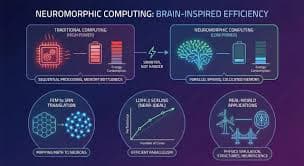
Neuromorphic Computing: The 70% Energy Efficiency Breakthrough
Neuromorphic Computing: The 70% Energy BreakthroughAs the demand for artificial intelligence and high-performance computing continues to grow, energy consumption has become a major challenge. Traditional computing architectures, based on the von Neumann model, struggle to efficiently handle AI workloads due to their high power requirements and data transfer limitations.Neuromorphic computing offers a revolutionary alternative by mimicking the structure and function of the human brain. In 2026, this technology is gaining attention for its ability to deliver up to 70% energy savings while maintaining high computational efficiency.This breakthrough has the potential to transform AI, robotics, and edge computing by making systems more efficient, scalable, and sustainable.What Is Neuromorphic Computing?Neuromorphic computing is a computing paradigm inspired by the human brain’s neural architecture.Uses artificial neurons and synapsesProcesses data in parallelEvent-driven computationLow power consumptionIt mimics how the brain processes information.Why Traditional Computing Falls ShortTraditional systems face limitations in AI workloads.High energy consumptionMemory bottlenecksSequential processingInefficient data transferThese challenges drive innovation.The 70% Energy BreakthroughNeuromorphic computing achieves significant energy savings.Event-driven processing reduces unnecessary computationParallel architecture improves efficiencyLocal memory reduces data transferThis results in up to 70% energy reduction.How Neuromorphic Systems WorkNeuromorphic systems operate differently from traditional computers.Neurons process signalsSynapses adjust weightsSpikes represent dataLearning occurs through adaptationThis enables efficient computation.Applications of Neuromorphic ComputingNeuromorphic systems are used in various domains.Edge AI devicesRobotics and autonomous systemsSmart sensorsBrain-computer interfacesTheir applications are expanding.Benefits of Neuromorphic ComputingEnergy efficiencyReal-time processingScalabilityAdaptive learningThese benefits make it powerful.Challenges and LimitationsComplex hardware designLimited software ecosystemHigh development costsEarly-stage technologyThese challenges require innovation.Neuromorphic computing represents a shift from energy-intensive computation to brain-inspired efficiency—unlocking the future of sustainable AI.Neuromorphic vs Traditional ComputingTraditional → Sequential processingNeuromorphic → Parallel processingTraditional → High energy useNeuromorphic → Low energy useThis comparison highlights its advantages.Future of Neuromorphic ComputingThe future of neuromorphic computing is promising.Advanced AI hardwareIntegration with edge computingBrain-inspired learning systemsWider adoption in industriesIt will redefine computing.Role in Digital TransformationNeuromorphic computing supports efficient digital transformation.Reduces energy consumptionImproves AI performanceEnables sustainable technologyIt is essential for the future.Frequently Asked QuestionsWhat is neuromorphic computing?It is brain-inspired computing architecture.Why is it energy efficient?It uses event-driven and parallel processing.Is it the future of AI?Yes, especially for edge and low-power AI systems.ConclusionNeuromorphic computing represents a groundbreaking shift in computing architecture, offering significant energy savings and improved efficiency. By mimicking the human brain, it enables smarter, faster, and more sustainable AI systems. As this technology continues to evolve, it will play a crucial role in shaping the future of computing and digital innovation.
Harness Engineering: Making AI Systems Reliable and Safe
Harness Engineering: Making AI ReliableAs artificial intelligence systems become more powerful and widely adopted, ensuring their reliability has become a critical challenge. While AI models can generate impressive results, they can also produce errors, inconsistencies, or unpredictable outputs. This is where Harness Engineering comes into play.Harness engineering refers to the practice of designing systems, frameworks, and safeguards that control, evaluate, and improve the behavior of AI models. It focuses on making AI systems dependable, safe, and consistent in real-world applications.In 2026, harness engineering is emerging as a key discipline for building trustworthy AI systems.What Is Harness Engineering?Harness engineering involves creating structured systems around AI models to ensure reliability and control.Testing and validation frameworksMonitoring and feedback systemsControl mechanismsSafety and compliance layersIt ensures AI behaves as expected.Why AI Reliability Is ImportantPrevents errors and failuresEnsures consistent performanceBuilds user trustSupports regulatory complianceReliability is critical for adoption.Key Components of Harness EngineeringEvaluation: Testing AI outputsMonitoring: Tracking performanceControl: Managing behaviorFeedback: Continuous improvementThese components ensure stability.How Harness Engineering WorksHarness engineering integrates multiple processes.Define expected behaviorTest AI outputsMonitor real-time performanceApply corrections and updatesThis ensures continuous reliability.Techniques Used in Harness EngineeringAutomated testing frameworksHuman-in-the-loop systemsGuardrails and constraintsPrompt engineeringThese techniques improve AI performance.Benefits of Harness EngineeringImproved accuracyReduced risksBetter user trustScalable AI systemsThese benefits drive adoption.Challenges in Harness EngineeringComplex system designHigh implementation costContinuous monitoring requirementsBalancing control and flexibilityThese challenges require expertise.Harness engineering is the backbone of trustworthy AI—ensuring that intelligence is not just powerful, but also reliable and safe.Harness Engineering vs Traditional Software TestingTraditional → Deterministic systemsAI → Probabilistic systemsTraditional → Fixed outputsAI → Variable outputsThis makes harness engineering unique.Future of Harness EngineeringThe future of harness engineering is evolving rapidly.AI-driven testing systemsAdvanced monitoring toolsAutomated reliability frameworksIntegration with DevOps (MLOps)It will become a standard practice.Role in Digital TransformationHarness engineering supports reliable digital transformation.Ensures safe AI deploymentImproves system performanceBuilds trust in AI systemsIt is essential for modern AI applications.Frequently Asked QuestionsWhat is harness engineering?It ensures AI systems are reliable and controlled.Why is it important?It prevents errors and improves trust.Where is it used?AI systems, automation, and software development.ConclusionHarness engineering is a critical discipline for ensuring the reliability and safety of AI systems. By implementing structured frameworks for testing, monitoring, and control, it enables organizations to deploy AI with confidence. As AI continues to evolve, harness engineering will play a central role in building trustworthy, scalable, and high-performance intelligent systems.
Domain-Specific Language Models: Tailored AI for Industries
Domain-Specific Language Models (DSLMs)As artificial intelligence continues to evolve, a new category of models is gaining significant attention—Domain-Specific Language Models (DSLMs). Unlike general-purpose large language models (LLMs) that are trained on diverse datasets, DSLMs are specialized models trained for specific industries or domains such as healthcare, finance, law, or software development.In 2026, DSLMs are becoming essential for delivering higher accuracy, better contextual understanding, and improved performance in specialized applications. By focusing on domain-specific knowledge, these models provide more reliable and relevant outputs compared to general AI systems.This shift represents a move toward more precise and efficient AI solutions.What Are DSLMs?Domain-Specific Language Models are AI models trained on data from a specific domain to perform specialized tasks.Focused training dataHigh accuracy in specific domainsBetter contextual understandingOptimized performanceThey are tailored for specific use cases.DSLMs vs General LLMsLLMs → General knowledgeDSLMs → Domain-specific expertiseLLMs → Broad applicationsDSLMs → Specialized tasksThis distinction is crucial.Why DSLMs Are ImportantImproved accuracyReduced hallucinationsBetter compliance (e.g., legal, medical)Efficient performanceThey address limitations of general models.How DSLMs WorkDSLMs are trained using domain-specific datasets.Collect domain-specific dataTrain models on specialized knowledgeFine-tune for specific tasksDeploy in targeted applicationsThis process ensures precision.Applications of DSLMsDSLMs are widely used across industries.Healthcare diagnostics and analysisFinancial forecasting and risk analysisLegal document processingSoftware development and coding assistanceTheir impact is significant.Benefits of DSLMsHigher accuracyDomain expertiseBetter reliabilityImproved efficiencyThese benefits drive adoption.Challenges of DSLMsLimited generalizationData availabilityHigh training costsMaintenance complexityThese challenges must be managed.Domain-specific language models represent the future of AI—moving from general intelligence to precise, expert-level systems.DSLMs vs Traditional AI SystemsTraditional AI → Rule-basedDSLMs → Data-driven intelligenceTraditional AI → Limited adaptabilityDSLMs → Continuous learningThis shift enhances performance.Future of DSLMsThe future of DSLMs is highly promising.Industry-specific AI ecosystemsIntegration with agentic AIReal-time domain intelligenceWider adoption across sectorsThey will redefine AI applications.Role in Digital TransformationDSLMs play a key role in digital transformation.Enhance decision-makingImprove efficiencyEnable innovationThey are essential for modern AI systems.Frequently Asked QuestionsWhat are DSLMs?AI models trained for specific domains.How are they different from LLMs?They focus on specific industries.Why are they important?They provide higher accuracy and reliability.ConclusionDomain-Specific Language Models are transforming artificial intelligence by delivering precise, reliable, and efficient solutions tailored to specific industries. As AI continues to evolve, DSLMs will play a crucial role in enabling expert-level automation and decision-making. Their ability to combine specialization with intelligence makes them a cornerstone of the future AI ecosystem.

Micro-SaaS: Why Small Focused Software is Booming
Micro-SaaS: Why Small, Focused Software is BoomingIn the evolving landscape of software development and entrepreneurship, Micro-SaaS has emerged as one of the most exciting and accessible business models. Unlike large-scale SaaS platforms that aim to solve broad problems, Micro-SaaS focuses on solving specific, niche problems with simple, efficient solutions.In 2026, Micro-SaaS is booming due to advancements in cloud computing, AI tools, and low-code/no-code platforms. Developers and entrepreneurs can now build, launch, and scale profitable software products with minimal resources and small teams—or even as solo founders.This shift is redefining how software businesses are built and scaled.What Is Micro-SaaS?Micro-SaaS refers to small-scale software-as-a-service businesses that target niche markets and solve specific problems.Focused on a single problemOperated by small teams or individualsLow operational costsRecurring revenue modelIt is simple yet powerful.Why Micro-SaaS is Booming in 2026Low barrier to entryAvailability of cloud infrastructureAI-powered development toolsGrowing demand for niche solutionsThese factors drive rapid growth.Key Characteristics of Micro-SaaSNiche-focused solutionsLean operationsSubscription-based revenueHigh scalability potentialThese characteristics define success.Benefits of Micro-SaaSLow startup costQuick development cyclesPassive income potentialFlexibility and independenceThese benefits attract developers.Popular Micro-SaaS IdeasEmail automation toolsSEO optimization toolsSocial media schedulersNiche analytics platformsOpportunities are endless.How to Build a Micro-SaaSIdentify a niche problemValidate the ideaBuild an MVPLaunch and gather feedbackScale graduallyExecution is key to success.Challenges of Micro-SaaSLimited resourcesMarketing challengesCompetitionCustomer acquisitionThese challenges require strategy.Micro-SaaS proves that you don’t need a large team or massive funding to build a successful software business—focus and execution are enough.Micro-SaaS vs Traditional SaaSTraditional SaaS → Large-scale solutionsMicro-SaaS → Niche-focused solutionsTraditional SaaS → Large teamsMicro-SaaS → Small teams or solo foundersThis comparison highlights its uniqueness.Future of Micro-SaaSThe future of Micro-SaaS is bright.AI-driven toolsGlobal reach with minimal costIncreased automationMore solo entrepreneursIt will continue to grow.Role in Digital TransformationMicro-SaaS plays a key role in digital transformation.Provides specialized toolsEnhances efficiencySupports innovationIt is shaping the future of software businesses.Frequently Asked QuestionsWhat is Micro-SaaS?It is small, niche-focused SaaS software.Is it profitable?Yes, many Micro-SaaS businesses generate steady income.Can one person build it?Yes, many are built by solo developers.ConclusionMicro-SaaS is revolutionizing the software industry by enabling small teams and solo entrepreneurs to build profitable, scalable businesses. By focusing on niche problems and leveraging modern tools, developers can create impactful solutions with minimal resources. As technology continues to evolve, Micro-SaaS will remain a powerful and accessible path for innovation and entrepreneurship.

Spatial Computing: Life Beyond the Smartphone Era
Spatial Computing: Life Beyond the SmartphoneSpatial computing is redefining how humans interact with technology by blending the digital and physical worlds into a seamless, immersive experience. Moving beyond the limitations of smartphones, spatial computing enables users to interact with digital content in three-dimensional space using gestures, voice, and real-world movement.In 2026, spatial computing is emerging as the next major computing paradigm, powered by advancements in augmented reality (AR), virtual reality (VR), mixed reality (MR), and artificial intelligence. It is transforming industries and reshaping everyday life by making technology more intuitive, immersive, and context-aware.Understanding spatial computing is essential for developers, businesses, and users preparing for the future of digital interaction.What Is Spatial Computing?Spatial computing refers to the use of technology to interact with digital content in a physical environment.3D interaction with digital objectsReal-world environment integrationGesture and voice controlImmersive experiencesIt bridges the gap between digital and physical worlds.Key Technologies Behind Spatial ComputingAugmented Reality (AR)Virtual Reality (VR)Mixed Reality (MR)Artificial Intelligence (AI)Computer VisionThese technologies enable immersive interaction.How Spatial Computing WorksSpatial computing systems operate by understanding and interacting with physical space.Capture environment using sensorsProcess data with AI and computer visionRender digital content in 3D spaceEnable user interactionThis creates a seamless experience.Life Beyond the SmartphoneSpatial computing is moving beyond traditional devices.Wearable devices (AR glasses)Hands-free interactionContext-aware computingImmersive environmentsIt reduces dependency on smartphones.Applications of Spatial ComputingSpatial computing is transforming various industries.Gaming and entertainmentHealthcare and surgery simulationEducation and trainingRetail and e-commerceArchitecture and designIts applications are expanding rapidly.Benefits of Spatial ComputingEnhanced user experienceImproved productivityReal-time interactionImmersive learningThese benefits drive adoption.Challenges of Spatial ComputingHigh hardware costsPrivacy concernsTechnical complexityLimited adoptionThese challenges must be addressed.Spatial computing is not just an upgrade—it is a complete reimagining of how humans interact with digital information.Spatial Computing vs Traditional ComputingTraditional → Screen-based interactionSpatial → 3D immersive interactionTraditional → Keyboard and mouseSpatial → Gesture and voiceThis shift is revolutionary.Future of Spatial ComputingThe future of spatial computing is promising.Advanced AR glassesIntegration with AI and IoTSmart environmentsMetaverse expansionIt will redefine digital interaction.Role in Digital TransformationSpatial computing is a key driver of digital transformation.Enhances user interactionImproves efficiencyEnables innovationIt is shaping the future of technology.Frequently Asked QuestionsWhat is spatial computing?It is interacting with digital content in physical space.Is it replacing smartphones?It may reduce dependence but not fully replace them.Where is it used?Gaming, healthcare, education, and more.ConclusionSpatial computing represents the next evolution of digital interaction, moving beyond screens to immersive, real-world experiences. By combining advanced technologies like AR, VR, and AI, it is transforming how we work, learn, and interact with technology. As adoption grows, spatial computing will play a central role in shaping the future of human-computer interaction and life beyond the smartphone.

Cloud 3.0: Why Sovereign Clouds Are the Future
Cloud 3.0: Why Sovereign Clouds are the FutureThe evolution of cloud computing has entered a new phase—Cloud 3.0—where sovereignty, security, and regulatory compliance are becoming as critical as scalability and performance. While earlier cloud models focused on flexibility and cost efficiency, Cloud 3.0 emphasizes control over data, infrastructure, and governance.At the center of this transformation are sovereign clouds—cloud environments designed to meet strict national, regional, and organizational data requirements. These clouds ensure that data remains within specific jurisdictions and complies with local laws, making them essential in today’s data-driven world.As governments and enterprises prioritize data privacy and control, sovereign clouds are emerging as the future of cloud computing.What Is Cloud 3.0?Cloud 3.0 represents the next generation of cloud computing focused on sovereignty, security, and intelligent infrastructure.Data sovereignty and complianceAdvanced security frameworksAI-integrated cloud systemsEdge and distributed computingIt moves beyond traditional cloud models.What Are Sovereign Clouds?Sovereign clouds are cloud environments that comply with specific legal, regulatory, and data residency requirements.Data stored within a country or regionCompliance with local lawsControlled access and governanceEnhanced security measuresThey ensure data control and privacy.Why Sovereign Clouds Are ImportantProtect sensitive dataEnsure regulatory complianceReduce dependency on foreign infrastructureEnhance national securityThey address modern data challenges.Evolution from Cloud 1.0 to Cloud 3.0Cloud 1.0: Basic cloud services (IaaS)Cloud 2.0: Scalable platforms (PaaS, SaaS)Cloud 3.0: Sovereign, secure, intelligent cloudThis evolution reflects changing priorities.Key Features of Sovereign CloudsData residency controlCompliance with regulationsAdvanced encryptionLocal infrastructure managementThese features ensure trust and security.Benefits of Sovereign CloudsEnhanced data privacyRegulatory complianceImproved securityGreater control over dataThese benefits drive adoption globally.Challenges of Sovereign CloudsHigher costsComplex implementationLimited scalability compared to global cloudsRegulatory complexityOrganizations must plan carefully.Sovereign clouds represent a shift from convenience to control—ensuring that data is not just stored in the cloud, but governed with trust and compliance.Use Cases of Sovereign CloudsGovernment and public sectorHealthcare data managementFinancial servicesDefense and security systemsThey are critical for sensitive industries.Future of Cloud 3.0The future of Cloud 3.0 is driven by innovation and regulation.AI-powered cloud systemsEdge computing integrationGlobal adoption of sovereign cloudsStronger data governance frameworksCloud computing will become more secure and localized.Role in Digital TransformationSovereign clouds are key enablers of digital transformation.Ensure secure innovationSupport compliance-driven industriesBuild trust in digital systemsThey are shaping the future of cloud computing.Frequently Asked QuestionsWhat is Cloud 3.0?It is the next generation of cloud computing focused on sovereignty and security.What are sovereign clouds?Clouds that comply with local data laws and regulations.Why are they important?They ensure data privacy, security, and compliance.ConclusionCloud 3.0 and sovereign clouds mark a significant shift in the cloud computing landscape. By prioritizing data sovereignty, security, and compliance, they address the challenges of modern digital ecosystems. As organizations and governments increasingly focus on data control, sovereign clouds will play a crucial role in shaping the future of cloud computing and digital transformation.
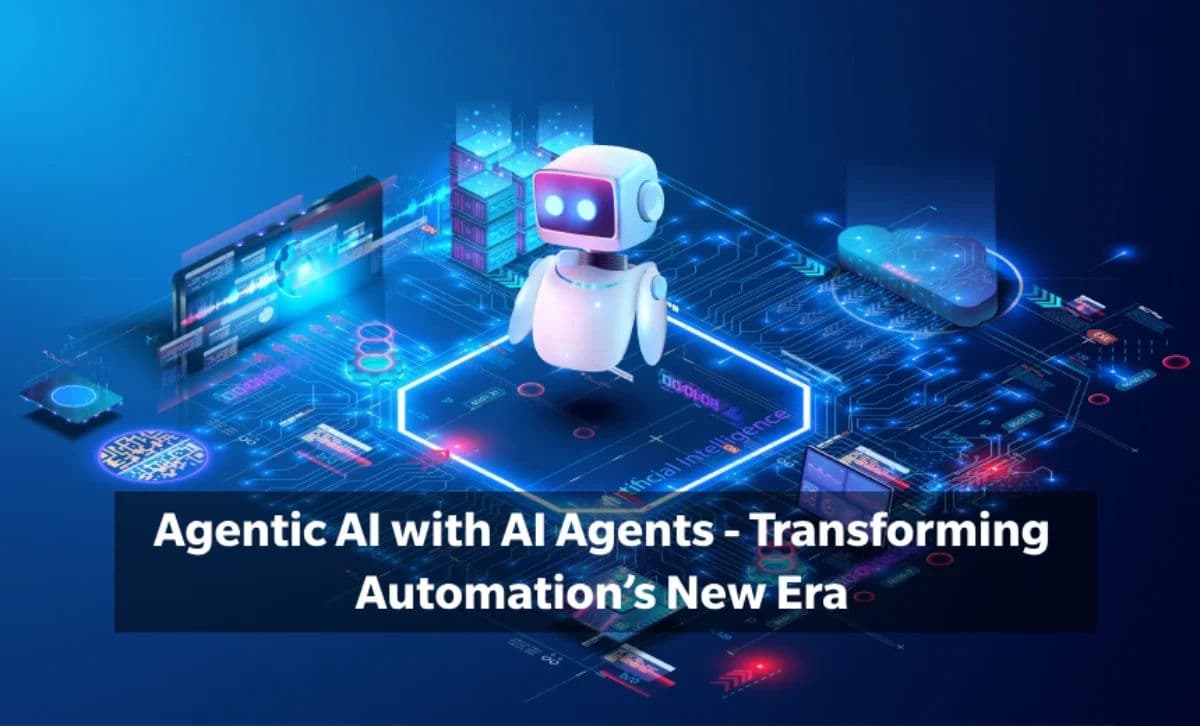
Agentic AI: From Chatbots to Autonomous Intelligent Agents
Agentic AI: The Shift from Chatbots to Autonomous AgentsArtificial Intelligence is undergoing a major transformation—from simple conversational chatbots to highly capable autonomous agents. This shift marks the rise of Agentic AI, where systems are no longer limited to answering questions but can plan, reason, and execute complex tasks independently.In 2026, Agentic AI is redefining how humans interact with technology. Instead of acting as passive tools, AI systems are becoming proactive collaborators capable of making decisions, automating workflows, and achieving goals with minimal human intervention.This evolution represents a fundamental change in software design, productivity, and the future of work.What Is Agentic AI?Agentic AI refers to intelligent systems that can autonomously perform tasks, make decisions, and adapt to changing environments.Goal-oriented behaviorAutonomous decision-makingContinuous learningAction executionIt goes beyond traditional AI systems.From Chatbots to Autonomous AgentsThe evolution from chatbots to agentic AI involves several key changes.Chatbots: Respond to user queriesAgents: Perform tasks independentlyChatbots: Reactive systemsAgents: Proactive systemsThis shift enables more powerful automation.Key Capabilities of Agentic AIPlanning and reasoningTask executionMulti-step workflowsTool integrationThese capabilities make AI more autonomous.How Agentic AI WorksAgentic AI systems follow a structured loop.Understand goalsPlan actionsExecute tasksEvaluate resultsAdapt and improveThis loop enables continuous improvement.Applications of Agentic AIAgentic AI is transforming multiple industries.Software development automationCustomer support systemsBusiness process automationHealthcare decision systemsFinancial analysis and tradingIts impact is widespread.Benefits of Agentic AIIncreased productivityReduced manual effortFaster decision-makingScalable automationThese benefits drive adoption.Challenges and RisksEthical concernsSecurity risksLoss of controlComplex implementationResponsible AI development is essential.Agentic AI marks the transition from tools that assist humans to systems that act on behalf of humans.Agentic AI vs Traditional AITraditional AI → Task-specificAgentic AI → Goal-drivenTraditional AI → ReactiveAgentic AI → ProactiveThis shift is transformative.Future of Agentic AIThe future of agentic AI is highly promising.Fully autonomous systemsAI-driven organizationsAdvanced human-AI collaborationIntegration with robotics and IoTIt will redefine industries.Role in Digital TransformationAgentic AI is a key driver of digital transformation.Automates workflowsEnhances decision-makingImproves efficiencyIt is shaping the future of work.Frequently Asked QuestionsWhat is Agentic AI?It is AI that can act autonomously to achieve goals.How is it different from chatbots?It performs tasks instead of just answering questions.Is it the future of AI?Yes, it represents the next stage of AI evolution.ConclusionAgentic AI represents a major leap in artificial intelligence, transforming systems from passive tools into autonomous agents capable of independent action. By enabling planning, execution, and continuous learning, agentic AI is reshaping industries and redefining the relationship between humans and technology. As this technology continues to evolve, it will play a central role in the future of intelligent automation and digital transformation.

SEO Best Practices for Developers: Optimize for Search
SEO Best Practices for DevelopersSearch Engine Optimization (SEO) is no longer just a marketing responsibility—it has become a critical part of modern web development. Developers play a key role in ensuring that websites are fast, accessible, and structured in a way that search engines can easily crawl and index.In 2026, SEO is deeply integrated into development workflows. From performance optimization to structured data implementation, developers must understand SEO best practices to build high-ranking, user-friendly websites.This guide covers essential SEO techniques that every developer should implement.What Is Technical SEO?Technical SEO refers to optimizing the technical aspects of a website to improve its visibility in search engines.Website performanceCrawlability and indexingMobile optimizationStructured dataIt ensures search engines can understand your site.Website Performance OptimizationPerformance is a major ranking factor.Optimize images and assetsUse lazy loadingMinimize CSS and JavaScriptImplement cachingFaster websites rank higher.Core Web VitalsLCP (Largest Contentful Paint)FID (First Input Delay)CLS (Cumulative Layout Shift)These metrics measure user experience.Mobile OptimizationMobile-first indexing is essential.Responsive designFast mobile loadingTouch-friendly UIMost users access websites via mobile.SEO-Friendly URLsShort and descriptiveUse keywordsAvoid unnecessary parametersClean URLs improve ranking.Meta Tags and HeadingsUse proper title tagsAdd meta descriptionsStructure content with H1–H6They help search engines understand content.Structured Data (Schema Markup)Structured data helps search engines understand content better.Use JSON-LD formatImplement schema for articles, products, etc.It improves search visibility.Crawlability and IndexingCreate XML sitemapsUse robots.txtFix broken linksEnsure search engines can access your site.Security and HTTPSUse SSL certificatesSecure user dataHTTPS is a ranking factor.Great SEO starts with great development—fast, accessible, and well-structured websites always rank better.SEO for Modern FrameworksUse SSR or SSG (Next.js)Avoid heavy client-side renderingOptimize hydrationModern frameworks require special SEO handling.Common SEO MistakesSlow loading pagesMissing meta tagsPoor mobile designDuplicate contentAvoid these for better ranking.Future SEO Trends (2026)AI-driven searchVoice search optimizationCore Web Vitals importanceEdge renderingSEO continues to evolve rapidly.Frequently Asked QuestionsWhat is technical SEO?It is optimizing the technical aspects of a website.Why is SEO important for developers?It improves visibility and performance.How can I improve SEO?Focus on performance, structure, and content.ConclusionSEO is a critical aspect of modern web development. By implementing best practices such as performance optimization, structured data, and mobile responsiveness, developers can build websites that rank higher and provide better user experiences. As search engines evolve, staying updated with SEO trends is essential for long-term success.

AI-Powered Coding Assistants: Boosting Developer Productivity
AI-Powered Coding AssistantsAI-powered coding assistants have rapidly transformed software development by enabling developers to write code faster, reduce errors, and improve productivity. These intelligent tools use machine learning and natural language processing to understand code context, suggest improvements, and even generate entire functions or applications.In 2026, AI coding assistants are no longer optional tools—they are becoming essential components of modern development workflows. From beginners to experienced engineers, developers are leveraging these tools to accelerate development and focus on higher-level problem-solving.Understanding AI-powered coding assistants is crucial for anyone involved in software development today.What Are AI-Powered Coding Assistants?AI-powered coding assistants are tools that use artificial intelligence to help developers write, debug, and optimize code.Code suggestions and auto-completionBug detection and fixingCode generationNatural language to code conversionThey act as intelligent programming partners.How AI Coding Assistants WorkThese tools rely on advanced AI models trained on large datasets of code.Analyze code contextPredict next lines of codeProvide suggestions in real-timeLearn from user interactionsThis enables smarter and more accurate assistance.Popular AI Coding AssistantsGitHub CopilotChatGPT for codingAmazon CodeWhispererTabnineThese tools are widely used by developers.Key FeaturesAuto-completion of codeCode refactoring suggestionsBug detection and debuggingDocumentation generationThese features enhance development efficiency.Benefits of AI Coding AssistantsFaster developmentReduced errorsImproved code qualityLearning support for beginnersThey significantly boost productivity.xxAI Coding Assistants vs Traditional DevelopmentTraditional → Manual codingAI-assisted → Automated suggestionsTraditional → Slower developmentAI-assisted → Faster deliveryThis shift is transforming development workflows.Challenges and LimitationsDependency on AI toolsCode accuracy issuesSecurity concernsLimited understanding of complex logicDevelopers must use these tools responsibly.AI coding assistants are not replacing developers—they are empowering them to build faster, smarter, and more efficiently.Future of AI Coding AssistantsThe future of AI in coding is highly promising.Fully automated code generationAI-driven software architecture designIntegration with DevOps pipelinesReal-time collaboration with AI agentsThey will redefine software development.Role in Digital TransformationAI coding assistants are key drivers of digital transformation.Enhance productivityReduce development timeEnable innovationThey are essential tools for modern developers.Frequently Asked QuestionsWhat are AI coding assistants?They are tools that help developers write and optimize code using AI.Are they replacing developers?No, they assist developers and improve productivity.Should beginners use them?Yes, but they should also learn fundamentals.ConclusionAI-powered coding assistants are revolutionizing the software development landscape by enabling faster, smarter, and more efficient coding. While they come with challenges, their benefits far outweigh the limitations. As AI continues to evolve, these tools will become even more powerful, shaping the future of programming and digital innovation.
Next.js vs Traditional React: Key Differences Explained
Next.js vs Traditional ReactIn modern web development, choosing the right framework can significantly impact performance, scalability, and developer productivity. Two of the most popular choices in the JavaScript ecosystem are React.js and Next.js. While React is a powerful library for building user interfaces, Next.js is a full-fledged framework built on top of React that provides additional features such as server-side rendering and routing.As applications become more complex and performance-driven, understanding the differences between Next.js and traditional React is essential for developers and businesses aiming to build efficient and scalable web applications.This article explores the key differences, features, advantages, and use cases of Next.js and traditional React.What Is React?React is a JavaScript library developed for building user interfaces, particularly single-page applications (SPAs).Component-based architectureVirtual DOM for efficient updatesClient-side rendering (CSR)Flexible and lightweightReact focuses primarily on the view layer.What Is Next.js?Next.js is a React framework that provides built-in features for production-ready applications.Server-side rendering (SSR)Static site generation (SSG)File-based routingAPI routesIt extends React with powerful capabilities.Key Differences Between Next.js and ReactReact → LibraryNext.js → FrameworkReact → Client-side renderingNext.js → SSR + SSG + CSRReact → Manual setupNext.js → Built-in featuresThese differences define their use cases.Rendering MethodsRendering is a major difference between the two.React: Client-Side Rendering (CSR)Next.js: SSR, SSG, ISR, CSRNext.js offers more flexibility in rendering.Performance ComparisonReact → Slower initial loadNext.js → Faster initial load (SSR/SSG)React → Good for dynamic appsNext.js → Optimized for SEO and performanceNext.js generally provides better performance.SEO CapabilitiesReact → Limited SEO (CSR)Next.js → Strong SEO (SSR/SSG)Next.js is preferred for SEO-focused applications.Routing SystemReact → React Router (manual setup)Next.js → File-based routingNext.js simplifies routing significantly.Development ExperienceReact → More flexibilityNext.js → More structureReact → Requires configurationNext.js → Ready-to-use setupNext.js improves developer productivity.Use CasesReact: SPAs, dashboards, internal toolsNext.js: SEO websites, e-commerce, blogsChoosing depends on project requirements.React gives you flexibility, while Next.js gives you structure and performance—choosing the right tool depends on your project goals.Advantages of ReactHighly flexibleLarge ecosystemGreat for dynamic applicationsAdvantages of Next.jsBetter SEOImproved performanceBuilt-in featuresScalabilityChallengesReact → Setup complexityNext.js → Learning curveBoth have trade-offs.Future Trends (2026)Next.js → Dominating full-stack developmentReact → Still core UI libraryAI integration in frontendEdge rendering and serverless appsBoth technologies will continue to evolve.Frequently Asked QuestionsIs Next.js better than React?It depends on the use case; Next.js offers more features.Can I use React inside Next.js?Yes, Next.js is built on React.Which should beginners learn?Start with React, then move to Next.js.ConclusionNext.js and traditional React are both powerful tools in modern web development. While React provides flexibility and simplicity, Next.js enhances it with performance, SEO, and scalability features. The choice between the two depends on the project’s requirements, but in 2026, Next.js is increasingly becoming the preferred choice for production-grade applications.
The Evolution of MERN Stack in 2026: Trends and Innovations
The Evolution of MERN Stack in 2026The MERN Stack—comprising MongoDB, Express.js, React.js, and Node.js—has long been a dominant force in full-stack web development. In 2026, the stack has evolved significantly, adapting to modern technological demands such as artificial intelligence, cloud-native architectures, and high-performance applications.What started as a simple JavaScript-based development stack has now transformed into a powerful ecosystem capable of supporting AI-driven applications, real-time systems, and globally distributed platforms. This evolution reflects broader industry trends toward automation, scalability, and intelligent software systems.Understanding how MERN has evolved in 2026 is essential for developers and businesses aiming to build future-ready applications.What Is MERN Stack?The MERN Stack is a full-stack JavaScript framework that enables developers to build complete web applications using a single programming language.MongoDB → NoSQL databaseExpress.js → Backend frameworkReact.js → Frontend libraryNode.js → Runtime environmentThis unified approach simplifies development and improves efficiency. :contentReferenceEarly MERN Stack (2015–2020)Initially, MERN gained popularity due to its simplicity and efficiency.Single language (JavaScript)Rapid development cyclesComponent-based architectureStrong community supportThis made it ideal for startups and small-scale applications.MERN Stack Transformation (2020–2023)During this period, MERN began evolving with modern development practices.Adoption of microservices architectureIntegration with cloud platformsImproved state management (Redux, Context API)Rise of Progressive Web Apps (PWAs)This phase laid the foundation for modern MERN development.MERN Stack in 2026: Key Evolution TrendsIn 2026, the MERN stack has undergone major transformations.AI Integration: MERN now supports AI-powered features and LLM integration :contentReference[oaicite:1]{index=1}TypeScript Adoption: Type safety is now standard across the stack :contentReference[oaicite:2]{index=2}Serverless & Edge Computing: Applications run closer to users for low latency :contentReference[oaicite:3]{index=3}Real-Time Applications: WebSockets and live data systems are widely used :contentReference[oaicite:4]{index=4}Modern Tooling: Vite, Tailwind CSS, and advanced UI libraries improve development speed :contentReference[oaicite:5]{index=5}This evolution has made MERN more powerful and versatile than ever.Modern MERN Architecture (2026)Today’s MERN applications follow a more structured and scalable architecture.Frontend → React with TypeScript and modern UI frameworksBackend → Node.js with microservicesDatabase → MongoDB with advanced indexing and scalingDeployment → Cloud-native and containerized environmentsThis architecture ensures high performance and scalability.Why MERN Is Still Relevant in 2026JavaScript dominance across full stackHigh scalability and performanceStrong ecosystem and communityIdeal for startups and enterprise appsMERN continues to be a preferred choice for modern web development. :contentReference[oaicite:6]{index=6}Challenges in Modern MERN DevelopmentIncreased complexity due to integrationsNeed for advanced skills (DevOps, AI)Security considerationsPerformance optimization challengesDevelopers must continuously upgrade their skills.The MERN stack in 2026 is no longer just a framework—it is a powerful ecosystem driving AI-powered, scalable, and real-time applications.MERN Stack vs Other StacksMERN → React-based flexibilityMEAN → Angular-based structureMEVN → Vue-based simplicityEach stack serves different development needs. :contentReference[oaicite:7]{index=7}Future of MERN StackThe future of MERN is aligned with emerging technologies.AI-native applicationsEdge-first architectureZero-runtime performance optimizationAdvanced developer toolingMERN will continue to evolve with the tech ecosystem. :contentReference[oaicite:8]{index=8}Career Opportunities in 2026Full-stack developerFrontend engineer (React)Backend developer (Node.js)AI-integrated web developerThe demand for MERN developers remains strong. :contentReference[oaicite:9]{index=9}Frequently Asked QuestionsIs MERN still relevant in 2026?Yes, it has evolved with AI, cloud, and modern architectures.What is new in MERN 2026?AI integration, TypeScript, and serverless architecture.Should beginners learn MERN?Yes, but focus on modern tools and real-world projects.ConclusionThe MERN stack has evolved significantly by 2026, transforming from a simple full-stack framework into a powerful ecosystem capable of supporting AI-driven, scalable, and real-time applications. Its adaptability, strong community, and alignment with modern trends ensure its continued relevance in the future of web development. Developers who embrace these changes will be well-positioned to build innovative and high-performance applications in the years ahead.
Multiagent Systems: Collaborative AI and Distributed Intelligence
Multiagent SystemsMultiagent Systems (MAS) are a branch of artificial intelligence where multiple autonomous agents interact within an environment to achieve individual or collective goals. These agents can be software-based or physical entities, and they operate independently while communicating and coordinating with each other.As modern systems become more complex, multiagent systems provide scalable and efficient solutions for distributed problem-solving. From robotics to financial systems, MAS are increasingly used to model real-world interactions and optimize decision-making processes.Understanding multiagent systems is essential for developers, researchers, and organizations working on advanced AI and distributed systems.What Are Multiagent Systems?Multiagent systems consist of multiple intelligent agents that interact and collaborate within an environment.Autonomous agentsDistributed decision-makingCommunication and coordinationAdaptive behaviorThey enable complex problem-solving.Characteristics of Multiagent SystemsAutonomy: Agents act independentlySocial Ability: Agents communicateReactivity: Respond to environment changesProactiveness: Goal-oriented behaviorThese characteristics define agent behavior.Types of AgentsReactive agentsDeliberative agentsHybrid agentsLearning agentsEach type serves different purposes.How Multiagent Systems WorkMultiagent systems operate through interaction and coordination among agents.Agents perceive the environmentMake decisions based on rules or learningCommunicate with other agentsAct to achieve goalsThis process enables intelligent collaboration.Applications of Multiagent SystemsMultiagent systems are used in various domains.Robotics and autonomous systemsSmart grids and energy managementFinancial markets and trading systemsTraffic and transportation systemsGaming and simulationsTheir applications are expanding rapidly.Benefits of Multiagent SystemsScalabilityFlexibilityRobustnessEfficient problem-solvingThese benefits make MAS highly effective.Challenges in Multiagent SystemsCoordination complexityCommunication overheadSecurity concernsConflict resolutionProper design is required to address these challenges.Multiagent systems demonstrate how intelligent collaboration among independent agents can solve complex problems more efficiently than isolated systems.Multiagent Systems vs Single-Agent SystemsSingle-agent → Centralized decision-makingMultiagent → Distributed decision-makingSingle-agent → Limited scalabilityMultiagent → Highly scalableThis comparison highlights their advantages.Future of Multiagent SystemsThe future of MAS is driven by advancements in AI and computing.Swarm intelligence systemsAI-driven collaborationAutonomous networksIntegration with IoT and edge computingThey will play a major role in future technologies.Role in Digital TransformationMultiagent systems are key enablers of digital transformation.Enhance automationImprove decision-makingEnable intelligent systemsThey are essential for modern AI applications.Frequently Asked QuestionsWhat is a multiagent system?It is a system with multiple interacting intelligent agents.Where is it used?Robotics, finance, smart systems, and more.Why is it important?It enables distributed and scalable problem-solving.ConclusionMultiagent systems represent a powerful approach to solving complex problems through collaboration among intelligent agents. By enabling distributed decision-making, scalability, and adaptability, MAS are transforming industries and driving innovation. As AI technologies continue to evolve, multiagent systems will play a crucial role in shaping the future of intelligent and autonomous systems.

Confidential Computing: Securing Data in Use and Processing
Confidential ComputingConfidential computing is an advanced security paradigm designed to protect data while it is being processed. Traditionally, data is protected when stored (at rest) and when transmitted (in transit), but it remains vulnerable during processing (in use). Confidential computing addresses this critical gap by ensuring that data remains encrypted even while being processed in memory.As organizations increasingly rely on cloud computing and handle sensitive data, confidential computing has become essential for maintaining privacy, security, and compliance. It enables secure data processing in untrusted environments, making it a key technology for modern digital systems.Understanding confidential computing is crucial for businesses, developers, and IT professionals aiming to enhance data protection and trust.What Is Confidential Computing?Confidential computing is a technology that protects data during processing by performing computations in secure, isolated environments known as trusted execution environments (TEEs).Protects data in useUses secure enclaves (TEEs)Prevents unauthorized accessEnhances data privacyIt ensures end-to-end data protection.How Confidential Computing WorksConfidential computing operates through hardware-based security mechanisms.Data is encrypted before processingProcessed inside secure enclavesDecrypted only within trusted environmentsResults are re-encrypted before outputThis ensures data remains protected throughout its lifecycle.Trusted Execution Environments (TEEs)TEEs are secure areas within a processor that isolate sensitive data and computations.Hardware-based securityIsolation from operating systemProtection against unauthorized accessTEEs are the foundation of confidential computing.Benefits of Confidential ComputingEnhanced data securityProtection during processingCompliance with regulationsSecure cloud computingThese benefits improve trust and security.Applications of Confidential ComputingConfidential computing is used across industries.Healthcare (secure patient data processing)Finance (fraud detection and analysis)Cloud computing (secure workloads)AI and machine learning (protected data models)Its applications are rapidly growing.Confidential Computing vs Traditional SecurityTraditional → Protects data at rest and in transitConfidential → Protects data in useTraditional → Vulnerable during processingConfidential → Fully protected lifecycleThis makes it a critical advancement in cybersecurity.Challenges of Confidential ComputingComplex implementationHardware dependencyPerformance overheadLimited awarenessThese challenges require strategic planning.Confidential computing ensures that sensitive data remains protected not just in storage or transit, but even during processing—closing one of the biggest security gaps.Future of Confidential ComputingThe future of confidential computing is promising.Integration with AI and cloud systemsEnhanced hardware security featuresWider adoption across industriesImproved performance and scalabilityIt will play a major role in data security.Role in Digital TransformationConfidential computing is essential for secure digital transformation.Protects sensitive dataEnables secure innovationBuilds trust in digital systemsIt is a key technology for modern enterprises.Frequently Asked QuestionsWhat is confidential computing?It is protecting data during processing using secure environments.Why is it important?It secures data in use, closing a major security gap.Where is it used?Healthcare, finance, cloud, and AI systems.ConclusionConfidential computing is a breakthrough in cybersecurity, addressing one of the most critical vulnerabilities—data exposure during processing. By leveraging secure enclaves and advanced encryption, it ensures end-to-end data protection. As digital transformation accelerates, confidential computing will become a cornerstone of secure and trustworthy computing environments.
AI-Native Development Platforms: Building Smart Applications
AI-Native Development PlatformsAI-Native Development Platforms represent the next evolution in software engineering, where artificial intelligence is not just an add-on but a core component of the development lifecycle. These platforms integrate AI capabilities directly into application design, development, deployment, and optimization processes.Unlike traditional platforms, AI-native systems are built with intelligence at their core. They enable developers to create smarter applications that can learn, adapt, and automate tasks in real time. From code generation to predictive analytics, AI-native platforms are transforming how software is built and maintained.Understanding AI-native development platforms is essential for developers, businesses, and organizations aiming to stay ahead in the era of intelligent automation.What Are AI-Native Development Platforms?AI-native development platforms are environments where artificial intelligence is embedded into the core architecture of software systems.AI integrated into development workflowsAutomated code generation and testingSelf-learning applicationsReal-time decision-making systemsThey enable intelligent and adaptive software solutions.Key Features of AI-Native PlatformsIntegrated machine learning modelsAutomated testing and debuggingIntelligent APIs and microservicesContinuous learning and optimizationThese features enhance development efficiency.How AI-Native Platforms WorkAI-native platforms operate through a combination of AI models and software engineering practices.Data collection and processingModel training and deploymentIntegration with applicationsContinuous feedback and improvementThis process enables intelligent automation.Applications of AI-Native PlatformsAI-native platforms are used across various domains.Smart applications and chatbotsPredictive analytics systemsAutonomous systemsPersonalized user experiencesFraud detection and securityThey are transforming industries rapidly.Benefits of AI-Native DevelopmentFaster development cyclesImproved application intelligenceEnhanced automationBetter user experiencesThese benefits drive adoption worldwide.AI-Native vs Traditional DevelopmentTraditional → Manual codingAI-Native → AI-assisted developmentTraditional → Static systemsAI-Native → Adaptive systemsThis shift represents a major transformation.Challenges of AI-Native PlatformsHigh implementation costData dependencyComplexity in integrationEthical and security concernsProper planning is required for success.AI-native development platforms are redefining software engineering by making applications smarter, faster, and more adaptive.Future of AI-Native PlatformsThe future of AI-native platforms is driven by innovation.Fully autonomous software systemsAI-driven DevOps (AIOps)Advanced personalizationIntegration with emerging technologiesThey will shape the future of development.Role in Digital TransformationAI-native platforms are key drivers of digital transformation.Enhance efficiencyEnable innovationImprove decision-makingThey are essential for modern organizations.Frequently Asked QuestionsWhat is AI-native development?It is development with AI integrated into core systems.Why is it important?It enables smarter and faster applications.Where is it used?AI apps, automation, analytics, and more.ConclusionAI-native development platforms are revolutionizing software engineering by embedding intelligence into every stage of development. They enable faster innovation, improved efficiency, and smarter applications. As technology continues to evolve, AI-native platforms will play a crucial role in shaping the future of digital systems and intelligent automation.
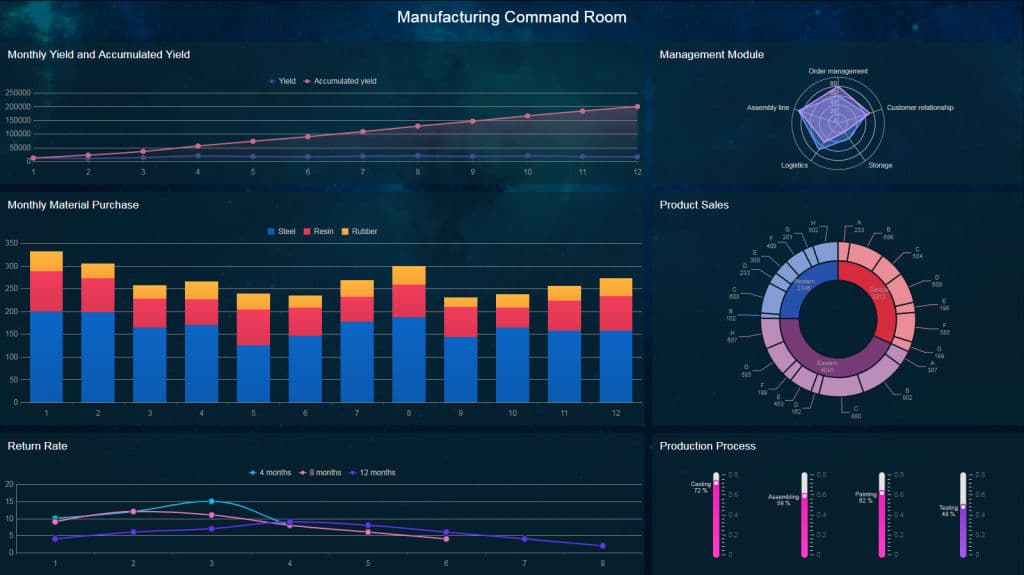
Business intelligence dashboards showing data analytics, reports and insights for better decision making and business growth
Business Intelligence (BI)Business Intelligence (BI) is a comprehensive, technology-driven framework that enables organizations to transform raw data into actionable insights. In an era dominated by data, businesses that effectively leverage BI gain a significant competitive advantage by making faster, smarter, and more strategic decisions.BI integrates data collection, data warehousing, analytics, and visualization into a unified system. It empowers stakeholders—from executives to analysts—to monitor performance, identify opportunities, and optimize operations in real time.From startups to multinational enterprises, Business Intelligence is now a foundational pillar of digital transformation.What Is Business Intelligence?Business Intelligence refers to the processes, architectures, and technologies used to collect, integrate, analyze, and present business data.Transforms raw data into insightsSupports strategic decision-makingEnables performance monitoringProvides data visualization toolsBI bridges the gap between data and decision-making.Core Architecture of BIData Sources: ERP, CRM, databases, APIsETL Process: Extract, Transform, LoadData Warehouse: Centralized storageAnalytics Layer: Querying and processingPresentation Layer: Dashboards and reportsThis layered architecture ensures data accuracy and accessibility.BI Workflow ExplainedThe BI lifecycle follows a systematic pipeline:Data ingestion from multiple systemsData cleansing and transformationStorage in data warehousesAnalysis using BI toolsVisualization via dashboardsThis pipeline converts fragmented data into unified intelligence.Types of Analytics in BIDescriptive: What happened?Diagnostic: Why did it happen?Predictive: What will happen?Prescriptive: What should be done?These analytics layers progressively enhance decision-making maturity.Real-World ApplicationsRevenue forecasting and sales optimizationCustomer segmentation and personalizationSupply chain and inventory managementFinancial performance trackingRisk and compliance monitoringBI enables data-driven operations across every business function.Key Benefits of BIFaster and smarter decision-makingImproved operational efficiencyEnhanced data accuracyCompetitive advantageReal-time business monitoringOrganizations leveraging BI outperform competitors significantly.Popular BI ToolsMicrosoft Power BITableauQlik SenseGoogle Looker StudioSAP BusinessObjectsThese tools provide advanced visualization and analytics capabilities.Challenges in BI ImplementationData quality and consistency issuesIntegration of multiple data sourcesHigh implementation costsLack of skilled professionalsProper governance and strategy are essential for success.Business Intelligence is not just about data—it is about turning data into decisions that drive growth.BI vs Data Analytics vs Data ScienceBI → Reporting & dashboardsData Analytics → Insights & trendsData Science → Advanced modeling & AIAll three complement each other in modern data ecosystems.Future Trends in BIAI-powered BI (augmented analytics)Real-time streaming analyticsSelf-service BI platformsCloud-native BI solutionsNatural language queryingThe future of BI is intelligent, automated, and user-friendly.Role in Digital TransformationBI acts as the decision engine of digital transformation initiatives.Drives data-driven cultureEnhances agility and responsivenessSupports strategic planningEnables innovationWithout BI, digital transformation lacks direction.Frequently Asked QuestionsWhat is Business Intelligence?It is a system for analyzing data and supporting decision-making.Who uses BI?Managers, analysts, executives, and organizations.Is BI difficult to learn?Basic BI tools are easy; advanced analytics requires practice.ConclusionBusiness Intelligence is a cornerstone of modern business strategy, enabling organizations to convert data into actionable insights. By leveraging BI tools and methodologies, businesses can enhance efficiency, improve decision-making, and stay competitive in a rapidly evolving digital landscape. As data continues to grow exponentially, BI will remain indispensable for future success.

Robotic Process Automation: Streamlining Business Tasks
Robotic Process Automation (RPA)Robotic Process Automation (RPA) is a powerful technology that enables businesses to automate repetitive and rule-based tasks using software robots or “bots.” These bots mimic human actions such as data entry, processing transactions, and interacting with digital systems.In today’s fast-paced business environment, organizations are increasingly adopting RPA to improve efficiency, reduce operational costs, and enhance productivity. RPA plays a crucial role in digital transformation by automating routine processes and allowing employees to focus on higher-value tasks.Understanding RPA is essential for businesses and professionals looking to stay competitive in the modern digital era.What Is Robotic Process Automation?Robotic Process Automation is the use of software bots to automate repetitive, rule-based tasks in business processes.Automates manual tasksUses software robotsImproves efficiencyReduces human errorsIt enables faster and more accurate operations.How RPA WorksRPA operates by mimicking human interactions with digital systems.Bots capture user actionsFollow predefined rulesExecute tasks automaticallyGenerate outputs and reportsThis process ensures consistency and speed.Types of RPAAttended RPA: Works alongside humansUnattended RPA: Fully automated processesHybrid RPA: Combination of bothEach type serves different use cases.Applications of RPARPA is widely used across industries.Finance (invoice processing)Healthcare (patient data management)Customer service (chatbots)HR (employee onboarding)IT operations (system monitoring)Its applications continue to grow.Benefits of RPAIncreased productivityReduced operational costsImproved accuracyFaster processingThese benefits drive adoption.RPA vs Traditional AutomationRPA → Software-based automationTraditional → Hardware/software integrationRPA → Easy to implementTraditional → Complex setupRPA offers greater flexibility.Challenges of RPAInitial setup costsProcess limitationsMaintenance requirementsSecurity concernsProper planning is essential.RPA is not about replacing humans—it is about empowering them by automating repetitive tasks and enhancing productivity.Future of RPAThe future of RPA is evolving with advanced technologies.AI-integrated automationIntelligent process automation (IPA)Expansion across industriesImproved scalabilityRPA will continue to grow.Role in Digital TransformationRPA plays a key role in digital transformation.Enhances efficiencyReduces manual workloadSupports innovationIt is essential for modern businesses.Frequently Asked QuestionsWhat is RPA?It is automation using software bots.Where is RPA used?Finance, healthcare, HR, IT, and more.Does RPA replace jobs?It automates tasks but creates new opportunities.ConclusionRobotic Process Automation is transforming business operations by automating repetitive tasks and improving efficiency. By reducing costs, enhancing accuracy, and enabling faster processes, RPA is a key technology in digital transformation. As it continues to evolve, RPA will play an increasingly important role in shaping the future of work and business innovation.
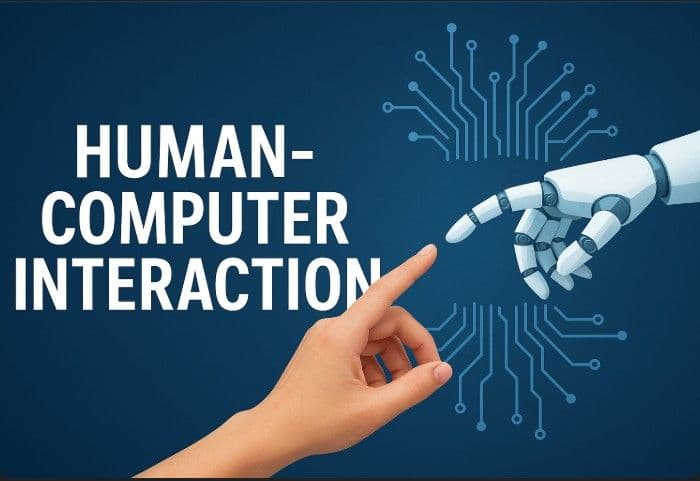
Human-Computer Interaction: Designing Better Digital Systems
Human-Computer Interaction (HCI)Human-Computer Interaction (HCI) is a multidisciplinary field that focuses on the design and use of computer technology, particularly the interfaces between users and computers. It aims to create systems that are efficient, user-friendly, and enjoyable to use.As technology becomes an integral part of everyday life, the importance of HCI continues to grow. From mobile applications to advanced systems like virtual reality and artificial intelligence, HCI plays a crucial role in shaping how humans interact with digital environments.Understanding HCI is essential for designers, developers, and businesses aiming to build intuitive and effective digital products.What Is Human-Computer Interaction?Human-Computer Interaction is the study and practice of designing systems that allow humans to interact effectively with computers.Focuses on user interactionImproves usabilityEnhances user satisfactionBridges humans and technologyIt ensures better communication between users and systems.Importance of HCIHCI plays a vital role in the success of digital systems.Improves usabilityEnhances user experienceReduces errorsIncreases productivityIt makes technology more accessible and efficient.Key Components of HCIUsers: People interacting with systemsInterface: Medium of interactionTasks: Goals users want to achieveContext: Environment of interactionThese components define interaction quality.Types of InteractionGraphical User Interface (GUI)Voice User Interface (VUI)Gesture-based interactionTouch-based interactionEach type offers different user experiences.HCI Design PrinciplesConsistencyFeedbackSimplicityAccessibilityThese principles guide effective design.Applications of HCIHCI is used across various industries.Mobile applicationsWeb designHealthcare systemsGaming and VREducational platformsIts applications are widespread.Benefits of HCIImproved usabilityEnhanced user satisfactionBetter accessibilityIncreased efficiencyThese benefits improve system performance.Challenges in HCIDiverse user needsRapid technological changesDesign complexityAccessibility issuesAddressing these challenges is essential.Human-Computer Interaction is about making technology human-friendly, intuitive, and accessible for everyone.Future of HCIThe future of HCI is driven by emerging technologies.AI-powered interfacesVoice and gesture controlVirtual and augmented realityBrain-computer interfacesIt will redefine human interaction with technology.Role in Digital TransformationHCI plays a key role in digital transformation.Enhances user experienceImproves engagementDrives innovationIt is essential for modern systems.Frequently Asked QuestionsWhat is HCI?It is the study of interaction between humans and computers.Why is HCI important?It improves usability and user experience.Where is HCI used?Apps, websites, healthcare, gaming, and more.ConclusionHuman-Computer Interaction is a vital field that ensures technology is accessible, efficient, and enjoyable to use. By focusing on user needs and design principles, HCI helps create better digital experiences and drives innovation. As technology continues to evolve, HCI will play a crucial role in shaping the future of human-technology interaction.

Sustainable Tech Solutions: Driving Green Innovation
Sustainable Tech SolutionsSustainable tech solutions are technologies designed to reduce environmental impact, conserve resources, and promote long-term ecological balance. As the world faces challenges such as climate change, pollution, and resource depletion, sustainable technology has become essential for building a greener future.These solutions combine innovation with environmental responsibility, helping industries and individuals adopt eco-friendly practices. From renewable energy to smart systems, sustainable technology is transforming how we live and work.Understanding sustainable tech solutions is crucial for businesses, governments, and individuals aiming to create a more sustainable and resilient world.What Are Sustainable Tech Solutions?Sustainable tech solutions refer to technologies that minimize environmental impact while maximizing efficiency and resource utilization.Eco-friendly technologiesEnergy-efficient systemsResource conservationReduced carbon footprintThey support environmental sustainability.Types of Sustainable TechnologiesSustainable technologies cover a wide range of areas.Renewable energy (solar, wind)Green building technologyElectric vehiclesSmart gridsEach type contributes to sustainability.Importance of Sustainable TechnologySustainable technology is essential for addressing global challenges.Reduces environmental impactConserves natural resourcesPromotes economic growthImproves quality of lifeIt ensures a sustainable future.Applications of Sustainable TechSustainable technology is used across industries.Energy (renewable power)Transportation (electric vehicles)Agriculture (smart farming)Construction (green buildings)Its applications are expanding rapidly.Benefits of Sustainable Tech SolutionsReduced energy consumptionLower carbon emissionsCost savings over timeEnvironmental protectionThese benefits drive adoption.Challenges of Sustainable TechnologyHigh initial costsTechnological limitationsLack of awarenessInfrastructure challengesOvercoming these challenges is essential.Role of Technology in Environmental ProtectionTechnology plays a key role in protecting the environment.Monitoring pollutionOptimizing resource usePromoting renewable energyIt supports sustainable development.Sustainable technology is not just an option—it is a necessity for building a better and greener future.Future of Sustainable TechThe future of sustainable technology is driven by innovation.Advanced renewable energy systemsSmart citiesAI-driven sustainability solutionsGreen innovationIt will shape the future of the planet.Role in Digital TransformationSustainable tech plays a crucial role in digital transformation.Enhances efficiencyReduces environmental impactSupports innovationIt is essential for modern systems.Frequently Asked QuestionsWhat is sustainable technology?It is technology designed to reduce environmental impact.Why is it important?It helps protect the environment and conserve resources.Where is it used?Energy, transport, agriculture, and more.ConclusionSustainable tech solutions are essential for addressing environmental challenges and building a greener future. By combining innovation with responsibility, these technologies help reduce environmental impact and promote long-term sustainability. As adoption grows, sustainable technology will play a crucial role in shaping a better world for future generations.

Cybersecurity: Protecting Data and Systems from Threats
CybersecurityCybersecurity is one of the most critical aspects of the modern digital world. As technology continues to evolve, so do the threats that target digital systems, networks, and sensitive information. Cybersecurity focuses on protecting these systems from unauthorized access, attacks, and data breaches.With the increasing use of the internet, online transactions, and digital platforms, cybersecurity has become essential for individuals, businesses, and governments. It ensures the confidentiality, integrity, and availability of information in a connected environment.Understanding cybersecurity is crucial for safeguarding personal data, financial information, and organizational assets.What Is Cybersecurity?Cybersecurity refers to the practice of protecting systems, networks, and data from cyber threats and attacks.Protects digital assetsPrevents unauthorized accessEnsures data privacyMaintains system integrityIt is essential for digital safety.Types of Cyber ThreatsCyber threats come in various forms and can cause significant damage.Phishing: Fraudulent emails and messagesMalware: Malicious softwareRansomware: Data held for ransomHacking: Unauthorized accessDDoS Attacks: Overloading systemsUnderstanding threats helps in prevention.Importance of CybersecurityCybersecurity is vital for protecting digital systems and maintaining trust.Protects sensitive dataPrevents financial lossEnsures business continuityBuilds user trustIt is essential in today’s digital economy.Key Components of CybersecurityNetwork Security: Protects networksApplication Security: Secures softwareInformation Security: Protects dataEndpoint Security: Secures devicesThese components ensure comprehensive protection.Best Practices for CybersecurityUse strong passwordsEnable two-factor authenticationKeep software updatedAvoid suspicious linksUse secure networksThese practices reduce risks.Cybersecurity in BusinessesBusinesses must implement strong cybersecurity measures to protect operations and data.Data encryptionFirewall protectionEmployee trainingRegular security auditsIt is essential for business success.Role of AI in CybersecurityArtificial intelligence is enhancing cybersecurity by detecting threats and automating responses.Real-time threat detectionPredictive analysisAutomated security systemsAI improves security efficiency.Challenges in CybersecurityEvolving cyber threatsLack of awarenessHigh implementation costsSkill shortagesContinuous improvement is required.Cybersecurity is not just about technology—it is about protecting trust, privacy, and digital identity.Future of CybersecurityThe future of cybersecurity is driven by advanced technologies.AI-powered security systemsBlockchain-based protectionZero-trust architectureCloud security advancementsThese innovations will enhance protection.Role in Digital TransformationCybersecurity is essential for digital transformation.Protects digital systemsEnsures data integritySupports innovationIt is a foundation for modern technology.Frequently Asked QuestionsWhat is cybersecurity?It is the protection of digital systems from cyber threats.Why is it important?It protects data, finances, and privacy.How can I stay safe online?Use strong passwords and avoid suspicious links.ConclusionCybersecurity is a critical component of the digital age, protecting systems, data, and users from ever-evolving threats. By adopting best practices and leveraging advanced technologies, individuals and organizations can safeguard their digital assets and ensure a secure online environment. As technology continues to advance, cybersecurity will remain a top priority for the future.
Generative AI: Creating Content with Intelligent Systems
Generative AIGenerative AI is one of the most groundbreaking advancements in artificial intelligence, enabling machines to create content such as text, images, music, videos, and even code. Unlike traditional AI systems that focus on analyzing data, generative AI focuses on producing new and original outputs based on learned patterns.This technology is transforming industries by enhancing creativity, automating tasks, and enabling innovation at scale. From content creation to software development, generative AI is reshaping how humans interact with technology.Understanding generative AI is essential for businesses, developers, and individuals looking to leverage its capabilities in the modern digital world.What Is Generative AI?Generative AI refers to artificial intelligence systems that can generate new content by learning patterns from existing data.Creates text, images, audio, and videoLearns from large datasetsUses deep learning modelsProduces original outputsIt enables machines to act creatively.How Generative AI WorksGenerative AI uses advanced machine learning techniques to create content.Training on large datasetsUsing neural networksPattern recognitionContent generationThese systems improve over time with more data.Key Technologies Behind Generative AINeural Networks: Mimic human brain functionsGANs (Generative Adversarial Networks): Create realistic outputsTransformers: Power modern AI modelsThese technologies drive innovation.Applications of Generative AIGenerative AI is widely used across industries.Content creation (blogs, videos)Design and art generationSoftware developmentHealthcare researchMarketing and advertisingIts applications are rapidly expanding.Benefits of Generative AIEnhances creativityAutomates repetitive tasksImproves productivityReduces costsThese benefits drive adoption worldwide.Challenges of Generative AIEthical concernsData privacy issuesBias in AI modelsMisuse of technologyResponsible use is essential.Generative AI vs Traditional AITraditional AI → Analyzes dataGenerative AI → Creates contentTraditional AI → PredictiveGenerative AI → CreativeThis difference defines its uniqueness.Generative AI is not just about automation—it is about unlocking creativity and redefining how humans and machines collaborate.Future of Generative AIThe future of generative AI is promising.Advanced AI creativity toolsIntegration with VR and ARPersonalized content generationAI-driven innovationIt will transform industries globally.Role in Digital TransformationGenerative AI plays a key role in digital transformation.Enhances innovationImproves efficiencyTransforms content creationIt is a powerful technology for the future.Frequently Asked QuestionsWhat is generative AI?It is AI that creates new content from data.Where is it used?Content creation, design, coding, and more.Is it safe?It is safe when used responsibly.ConclusionGenerative AI is revolutionizing the way content is created and how humans interact with technology. By combining creativity with advanced algorithms, it opens new possibilities for innovation and efficiency. As the technology continues to evolve, generative AI will play a crucial role in shaping the future of digital transformation and human creativity.

Edge Computing: Faster Data Processing at the Network Edge
Edge ComputingEdge computing is a modern computing paradigm that brings data processing closer to the location where it is generated, rather than relying solely on centralized cloud servers. This approach reduces latency, improves speed, and enhances the efficiency of real-time applications.With the rapid growth of Internet of Things (IoT) devices, smart systems, and real-time data processing needs, edge computing has become an essential technology. It enables faster decision-making and reduces the load on cloud infrastructure.Understanding edge computing is crucial for businesses, developers, and IT professionals as it plays a key role in the future of digital transformation.What Is Edge Computing?Edge computing is a distributed computing model that processes data near the source of data generation instead of sending it to centralized data centers.Local data processingReduced latencyFaster response timesImproved efficiencyIt enhances real-time data processing capabilities.How Edge Computing WorksEdge computing operates by processing data closer to the source.Data is generated by devicesEdge devices process data locallyOnly necessary data is sent to the cloudThis reduces bandwidth usage and improves speed.Edge Computing vs Cloud ComputingEdge → Local processingCloud → Centralized processingEdge → Low latencyCloud → Higher latencyBoth technologies complement each other.Key Components of Edge ComputingEdge devices (sensors, IoT devices)Edge serversNetwork connectivityCloud integrationThese components enable efficient data processing.Applications of Edge ComputingEdge computing is widely used across industries.Smart citiesAutonomous vehiclesHealthcare monitoringIndustrial automationRetail analyticsIts applications are expanding rapidly.Benefits of Edge ComputingReduced latencyImproved performanceLower bandwidth usageEnhanced securityThese benefits make it highly valuable.Challenges of Edge ComputingInfrastructure complexitySecurity concernsData management issuesHigh initial setup costProper planning is required to overcome these challenges.Role in IoTEdge computing plays a crucial role in IoT systems.Processes real-time dataReduces cloud dependencyImproves device performanceIt enhances IoT efficiency.Edge computing brings intelligence closer to where data is created, enabling faster and smarter decision-making.Future of Edge ComputingThe future of edge computing is driven by technological advancements.5G integrationAI-powered edge devicesExpansion of IoT ecosystemsSmart infrastructure developmentIt will play a key role in future technologies.Role in Digital TransformationEdge computing is essential for digital transformation.Improves efficiencyEnables real-time insightsSupports innovationIt is a key technology for modern systems.Frequently Asked QuestionsWhat is edge computing?It is processing data near its source instead of centralized servers.Why is it important?It reduces latency and improves performance.Where is it used?IoT, smart cities, healthcare, and more.ConclusionEdge computing is transforming the way data is processed by bringing computation closer to the source. It enhances speed, efficiency, and real-time decision-making, making it essential for modern applications. As technology continues to evolve, edge computing will play a critical role in shaping the future of digital systems and connectivity.
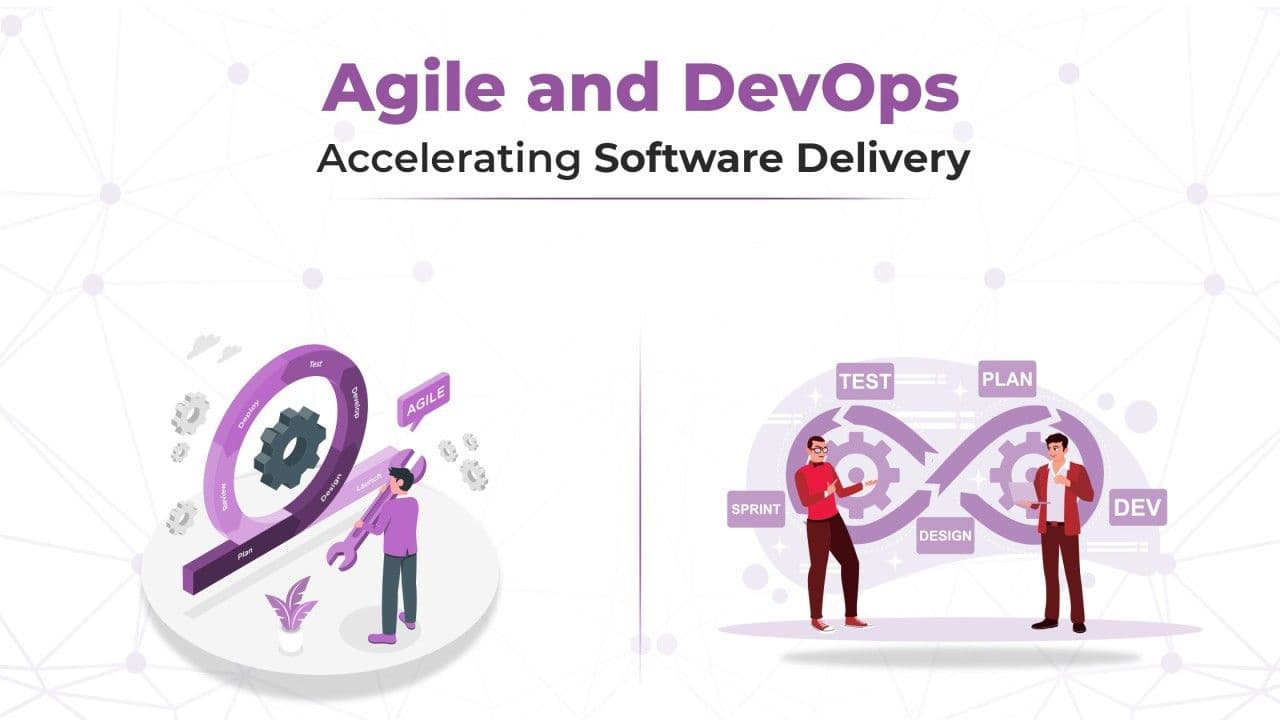
DevOps and Agile Methodologies: Faster Software Delivery
DevOps and Agile MethodologiesIn today’s fast-paced digital world, organizations need to deliver high-quality software quickly and efficiently. DevOps and Agile methodologies have emerged as powerful approaches that enable teams to collaborate better, improve productivity, and deliver value faster.Agile focuses on iterative development and continuous feedback, while DevOps emphasizes collaboration between development and operations teams to automate and streamline processes. Together, they form the foundation of modern software development practices.Understanding DevOps and Agile is essential for developers, project managers, and organizations aiming to stay competitive in the software industry.What Is Agile Methodology?Agile is a software development approach that emphasizes flexibility, collaboration, and customer feedback through iterative development.Iterative development cyclesContinuous feedbackCustomer-centric approachAdaptability to changeAgile helps teams deliver value quickly.What Is DevOps?DevOps is a set of practices that combines development (Dev) and operations (Ops) to improve collaboration and automate software delivery processes.Continuous integration and deliveryAutomation of workflowsImproved collaborationFaster deploymentDevOps bridges the gap between development and operations.Key Principles of AgileCustomer collaborationWorking software over documentationResponding to changeFrequent deliveryThese principles guide Agile practices.Key Principles of DevOpsAutomationContinuous integration (CI)Continuous delivery (CD)Monitoring and feedbackThese principles ensure efficiency.Agile vs DevOpsAgile → Development methodologyDevOps → Culture and practicesAgile → Focus on developmentDevOps → Focus on deliveryBoth complement each other.Benefits of AgileFaster deliveryImproved flexibilityBetter customer satisfactionContinuous improvementAgile enhances development efficiency.Benefits of DevOpsFaster deploymentsReduced errorsImproved collaborationEnhanced scalabilityDevOps improves operational efficiency.Popular Agile FrameworksScrumKanbanLeanThese frameworks implement Agile principles.DevOps ToolsJenkinsDockerKubernetesGitThese tools support DevOps practices.Agile builds the right product, and DevOps delivers it efficiently—together they drive modern software success.Challenges in DevOps and AgileCultural resistanceTool integration complexitySkill gapsProper training and planning are required.Future of DevOps and AgileThe future of these methodologies is evolving.AI-driven DevOpsAutomation advancementsImproved collaboration toolsThey will continue to shape software development.Role in Digital TransformationDevOps and Agile play a crucial role in digital transformation.Faster innovationImproved efficiencyBetter customer experienceThey are essential for modern organizations.Frequently Asked QuestionsWhat is Agile?It is an iterative development methodology.What is DevOps?It is a culture combining development and operations.Are they the same?No, but they work together effectively.ConclusionDevOps and Agile methodologies are transforming the software development landscape by improving collaboration, efficiency, and speed. While Agile focuses on delivering value through iterative development, DevOps ensures seamless deployment and operations. Together, they enable organizations to innovate and succeed in the digital era.

Quantum Computing: The Future of High-Speed Processing
Quantum ComputingQuantum computing is one of the most advanced and revolutionary technologies of the modern era. It represents a significant leap beyond classical computing by leveraging the principles of quantum mechanics to process information in fundamentally different ways.Unlike traditional computers that use bits (0 or 1), quantum computers use quantum bits or qubits, which can exist in multiple states simultaneously. This allows quantum systems to perform complex calculations at speeds that are impossible for classical computers.As research and development continue, quantum computing has the potential to transform industries such as healthcare, finance, cybersecurity, and artificial intelligence.What Is Quantum Computing?Quantum computing is a type of computing that uses quantum mechanics to process information using qubits instead of classical bits.Uses qubits instead of bitsProcesses multiple states simultaneouslySolves complex problems fasterBased on quantum physics principlesIt represents a new paradigm in computing.How Quantum Computing WorksQuantum computing relies on key principles of quantum mechanics.Superposition: Qubits exist in multiple statesEntanglement: Qubits are interconnectedQuantum interference: Enhances correct resultsThese principles enable powerful computations.Qubits vs Classical BitsBit → 0 or 1Qubit → 0, 1, or bothBit → Linear processingQubit → Parallel processingThis difference makes quantum computing unique.Applications of Quantum ComputingQuantum computing has a wide range of applications.Drug discovery and healthcareFinancial modeling and risk analysisCryptography and cybersecurityOptimization problemsArtificial intelligenceIts potential applications are vast.Benefits of Quantum ComputingFaster problem-solvingAbility to handle complex calculationsImproved efficiency in researchAdvancement in scientific discoveriesThese benefits drive research and innovation.Challenges of Quantum ComputingHigh development costTechnical complexityError rates and stability issuesLimited practical applications currentlyOvercoming these challenges is crucial.Quantum vs Classical ComputingClassical → Sequential processingQuantum → Parallel processingClassical → Limited speedQuantum → Exponential speed potentialThis comparison highlights its power.Quantum computing is not just an upgrade—it is a revolution that could redefine the limits of computation.Future of Quantum ComputingThe future of quantum computing is promising.Breakthroughs in science and medicineAdvanced AI systemsImproved cybersecurity solutionsGlobal technological transformationIt will shape the future of technology.Role in Digital TransformationQuantum computing will play a major role in digital transformation.Enhances computing powerDrives innovationSolves complex global challengesIt is a key technology for the future.Frequently Asked QuestionsWhat is quantum computing?It is computing based on quantum mechanics using qubits.Why is it important?It can solve complex problems faster than classical computers.Is it widely used today?It is still in early development stages.ConclusionQuantum computing represents the next frontier in technology, offering unprecedented computational power and the ability to solve complex problems beyond the reach of classical systems. While challenges remain, ongoing research and innovation are bringing us closer to a future where quantum computing transforms industries and reshapes the digital world.

Cloud Computing and Virtualization: Modern IT Infrastructure
Cloud Computing and VirtualizationCloud computing and virtualization are two of the most important technologies driving the modern digital world. They enable organizations to store data, run applications, and manage systems more efficiently without relying heavily on physical infrastructure.Cloud computing provides on-demand access to computing resources over the internet, while virtualization allows multiple virtual systems to run on a single physical machine. Together, they form the backbone of scalable, flexible, and cost-effective IT solutions.Understanding these technologies is essential for businesses, developers, and IT professionals aiming to succeed in the era of digital transformation.What Is Cloud Computing?Cloud computing refers to the delivery of computing services such as storage, servers, databases, networking, and software over the internet.On-demand resource accessScalable infrastructurePay-as-you-go pricingRemote accessibilityIt eliminates the need for physical hardware.What Is Virtualization?Virtualization is the process of creating virtual versions of physical resources such as servers, storage devices, and networks.Multiple virtual machines on one systemEfficient resource utilizationImproved system performanceIt maximizes hardware efficiency.How Cloud Computing WorksCloud computing operates through data centers and remote servers.Data is stored in cloud serversUsers access services via internetCloud providers manage infrastructureThis model ensures flexibility and scalability.Types of Cloud ComputingPublic Cloud: Shared infrastructurePrivate Cloud: Dedicated environmentHybrid Cloud: Combination of bothEach type serves different business needs.Types of Cloud ServicesIaaS: Infrastructure as a ServicePaaS: Platform as a ServiceSaaS: Software as a ServiceThese services provide different levels of control.Benefits of Cloud ComputingCost efficiencyScalabilityFlexibilityData backup and recoveryThese benefits drive widespread adoption.Benefits of VirtualizationBetter resource utilizationReduced hardware costsImproved system efficiencyEnhanced flexibilityIt optimizes IT infrastructure.Cloud vs VirtualizationCloud → Service delivery modelVirtualization → TechnologyCloud → Internet-basedVirtualization → Hardware optimizationBoth technologies complement each other.Cloud computing and virtualization are the foundation of modern IT infrastructure, enabling scalability, efficiency, and innovation.Challenges of Cloud ComputingSecurity concernsData privacy issuesDowntime risksDependence on internetProper management is required.Future of Cloud and VirtualizationThe future of these technologies is promising.AI integrationEdge computingServerless architectureIncreased automationThey will continue to evolve rapidly.Role in Digital TransformationCloud computing and virtualization are key drivers of digital transformation.Improves efficiencyEnhances scalabilitySupports innovationThey are essential for modern businesses.Frequently Asked QuestionsWhat is cloud computing?It is the delivery of computing services over the internet.What is virtualization?It is the creation of virtual systems on physical hardware.Are they the same?No, but they work together to improve IT efficiency.ConclusionCloud computing and virtualization are transforming the way organizations manage data and infrastructure. By providing scalable, flexible, and cost-effective solutions, they enable businesses to innovate and grow in the digital era. As technology continues to evolve, these technologies will remain at the core of modern IT systems.

Fiction: Creative Storytelling and Imaginative Writing
FictionFiction is one of the most powerful and imaginative forms of storytelling. It refers to narratives created from the imagination rather than based strictly on real events. Fiction allows writers to explore ideas, emotions, and possibilities beyond the boundaries of reality.From ancient myths and folklore to modern novels and films, fiction has played a crucial role in shaping culture, entertainment, and human understanding. It enables readers to experience different worlds, perspectives, and emotions.Understanding fiction is essential for appreciating literature, creativity, and the art of storytelling.What Is Fiction?Fiction is a form of literature that involves imaginary events, characters, and settings created by the author.Imaginative storytellingCreative narrativesExplores emotions and ideasNot limited by realityIt allows limitless creative expression.Types of FictionFiction can be categorized into various genres.FantasyScience fictionMystery and thrillerRomanceHistorical fictionEach genre offers unique storytelling styles.Elements of FictionPlot: Sequence of eventsCharacters: People in the storySetting: Time and placeTheme: Central ideaConflict: Main challengeThese elements form the foundation of storytelling.Importance of FictionFiction plays a significant role in human life and culture.Encourages creativityEnhances imaginationProvides entertainmentExplores human emotionsIt helps people understand different perspectives.Fiction vs Non-FictionFiction → ImaginaryNon-fiction → Real factsFiction → Creative storytellingNon-fiction → Informative contentThis distinction is important in literature.Benefits of Reading FictionImproves creativityEnhances empathyReduces stressImproves language skillsReading fiction contributes to personal growth.Role of Fiction in SocietyFiction reflects and influences society.Addresses social issuesShapes cultural valuesInspires changeIt is a powerful medium of expression.Fiction is the bridge between imagination and reality—it allows us to explore worlds that exist only in our minds.Future of FictionThe future of fiction is evolving with technology.Digital storytellingInteractive narrativesAI-generated contentVirtual reality experiencesTechnology is transforming storytelling.How to Write FictionDevelop a strong ideaCreate engaging charactersBuild a compelling plotEdit and refinePractice improves storytelling skills.Frequently Asked QuestionsWhat is fiction?It is imaginative storytelling created by an author.Why is fiction important?It enhances creativity and understanding of human emotions.How can I start writing fiction?Begin with an idea and develop characters and a plot.ConclusionFiction is a powerful form of storytelling that allows writers and readers to explore imagination, emotions, and ideas beyond reality. It plays a vital role in culture, entertainment, and personal development. As storytelling continues to evolve with technology, fiction will remain a cornerstone of human creativity and expression.

User Experience (UX): Designing Better Digital Experiences
User Experience (UX)User Experience (UX) is a critical aspect of modern digital design that focuses on how users interact with products, systems, or services. It encompasses the overall experience a user has while navigating a website, application, or digital platform.In today’s competitive digital landscape, providing a seamless and engaging user experience is essential for success. Businesses that prioritize UX design can improve customer satisfaction, increase engagement, and drive growth.Understanding UX is essential for designers, developers, and businesses aiming to create user-friendly and effective digital solutions.What Is User Experience (UX)?User Experience (UX) refers to the overall interaction and satisfaction a user has when using a product or service.Ease of useAccessibilityEfficiencyUser satisfactionIt focuses on creating meaningful and enjoyable experiences.Importance of UX DesignUX design plays a vital role in the success of digital products.Improves user satisfactionIncreases engagementBoosts conversionsEnhances brand reputationA good UX design creates a positive impression.Key Elements of UXUsability: Ease of useAccessibility: Inclusive designPerformance: Speed and efficiencyDesign: Visual appealThese elements define user experience quality.UX Design ProcessThe UX design process involves several steps.User researchWireframingPrototypingTesting and feedbackThis process ensures effective design.UX vs UI DesignUX → Overall experienceUI → Visual designUX → FunctionalityUI → AppearanceBoth are essential for product success.Benefits of Good UXHigher user satisfactionIncreased retentionBetter conversion ratesCompetitive advantageGood UX leads to business success.Common UX MistakesComplex navigationSlow loading speedPoor mobile designLack of user feedbackAvoiding these mistakes improves UX.Future of UX DesignThe future of UX design is driven by emerging technologies.AI-driven UXVoice interfacesVirtual and augmented realityPersonalized user experiencesUX will continue to evolve with technology.Great UX is not just about design—it is about understanding users and delivering meaningful experiences.Role in Digital TransformationUX plays a key role in digital transformation.Improves user engagementEnhances customer experienceDrives business growthIt is essential for modern applications.Frequently Asked QuestionsWhat is UX?It is the overall experience of users interacting with a product.Why is UX important?It improves user satisfaction and engagement.What is the difference between UX and UI?UX focuses on experience, while UI focuses on design.ConclusionUser Experience (UX) is a vital component of digital success. By focusing on usability, accessibility, and user satisfaction, businesses can create products that meet user needs and stand out in the market. As technology evolves, UX design will continue to play a crucial role in shaping digital experiences and driving innovation.

Technology: Driving Innovation and Digital Transformation
TechnologyTechnology is one of the most powerful forces shaping the modern world. It refers to the application of scientific knowledge for practical purposes, enabling humans to solve problems, improve efficiency, and enhance quality of life. From simple tools to advanced digital systems, technology has evolved rapidly over time.In today’s digital age, technology is deeply integrated into every aspect of life, including communication, education, healthcare, business, and entertainment. It continues to drive innovation, economic growth, and global connectivity.Understanding technology is essential for individuals and organizations aiming to stay relevant and competitive in an increasingly digital world.What Is Technology?Technology is the use of tools, machines, systems, and processes to solve problems and perform tasks efficiently.Application of scientific knowledgeImproves efficiency and productivityEnhances communication and connectivityDrives innovationIt plays a vital role in modern society.Evolution of TechnologyTechnology has evolved significantly over the years.Early tools and machinesIndustrial revolutionDigital revolutionAI and automation eraThis evolution has transformed human life.Types of TechnologyInformation Technology: Computers and softwareCommunication Technology: Internet and networksMedical Technology: Healthcare innovationsIndustrial Technology: Manufacturing systemsEach type serves different purposes.Applications of TechnologyTechnology is used across various fields.Healthcare (diagnostics, treatment)Education (online learning)Business (automation, analytics)Entertainment (gaming, streaming)Transportation (smart vehicles)Its applications continue to expand.Benefits of TechnologyImproved efficiencyBetter communicationAccess to informationEnhanced productivityThese benefits improve daily life.Challenges of TechnologyData privacy issuesCybersecurity risksDigital divideJob displacementAddressing these challenges is important.Technology and SocietyTechnology has a significant impact on society.Improves quality of lifeEnhances global connectivityChanges work environmentsIt shapes how people live and interact.Technology is not just about machines—it is about transforming ideas into solutions that improve human life.Future of TechnologyThe future of technology is driven by innovation and advancement.Artificial intelligenceAutomationBlockchainInternet of ThingsThese technologies will shape the future.Role in Digital TransformationTechnology is the backbone of digital transformation.Enhances productivityImproves customer experienceDrives innovationIt is essential for modern businesses.Frequently Asked QuestionsWhat is technology?It is the application of scientific knowledge for practical use.Why is technology important?It improves efficiency and quality of life.What is the future of technology?AI, automation, and digital innovation.ConclusionTechnology is a driving force behind modern innovation and progress. It has transformed the way we live, work, and interact, offering endless possibilities for the future. By understanding and leveraging technology, individuals and organizations can achieve growth, efficiency, and success in the digital era.

Startup: Turning Ideas into Successful Business Ventures
StartupA startup is a newly established business designed to develop a unique product or service and bring it to market. Startups are typically characterized by innovation, scalability, and a high potential for growth. Unlike traditional businesses, startups focus on solving problems in new and creative ways.In recent years, startups have become a major driving force behind economic growth, job creation, and technological advancement. With the rise of digital platforms, artificial intelligence, and global connectivity, starting a business has become more accessible than ever.Understanding startups is essential for aspiring entrepreneurs, investors, and anyone interested in modern business and innovation.What Is a Startup?A startup is a business in its early stages, focused on developing a scalable model to address a specific problem or market need.Innovation-drivenHigh growth potentialScalable business modelRisk-orientedStartups aim to disrupt existing markets or create new ones.Key Characteristics of StartupsInnovation and creativityRapid growth potentialHigh risk and rewardFocus on scalabilityThese characteristics define startup success.Types of StartupsTech Startups: Software, AI, appsService Startups: Consulting, servicesProduct Startups: Physical or digital productsSocial Startups: Focus on social impactEach type serves different markets.Startup LifecycleStartups go through several stages of growth.Idea and validationSeed stageGrowth stageExpansion and scalingEach stage requires different strategies.Funding for StartupsFunding is essential for startup growth.BootstrappingAngel investorsVenture capitalCrowdfundingAccess to funding determines scalability.Advantages of StartupsHigh growth potentialInnovation opportunitiesFlexibilityGlobal reachThese benefits attract entrepreneurs.Challenges of StartupsHigh failure rateFunding difficultiesMarket competitionOperational challengesOvercoming challenges is key to success.Startup vs Traditional BusinessStartup → Innovation-focusedTraditional → Stability-focusedStartup → High risk, high rewardTraditional → Lower riskThis comparison highlights differences.A startup is not just a business—it is a vision to solve problems and create impact at scale.Tips for Starting a StartupValidate your ideaBuild a strong teamFocus on customer needsManage finances wiselyThese tips improve success chances.Future of StartupsThe future of startups is driven by innovation and technology.AI-driven businessesGlobal marketsDigital transformationStartups will continue to shape economies.Frequently Asked QuestionsWhat is a startup?A new business focused on innovation and growth.How do startups get funding?Through investors, venture capital, or crowdfunding.Are startups risky?Yes, but they offer high growth potential.ConclusionStartups are at the heart of innovation and economic growth. By focusing on creativity, scalability, and problem-solving, startups have the potential to transform industries and create significant impact. While challenges exist, the opportunities offered by startups make them an exciting and rewarding path for entrepreneurs.

Virtual Reality: Immersive Technology Transforming Experiences
Virtual Reality (VR)Virtual Reality (VR) is one of the most immersive technologies of the modern digital era. It allows users to experience a simulated environment that feels real through the use of advanced hardware and software. By wearing VR headsets, users can interact with virtual worlds in ways that were once unimaginable.VR is transforming industries such as gaming, education, healthcare, real estate, and entertainment. It creates new opportunities for learning, training, and engagement by providing realistic and interactive experiences.Understanding Virtual Reality is essential as it continues to redefine how humans interact with digital environments.What Is Virtual Reality?Virtual Reality is a computer-generated simulation of a three-dimensional environment that users can interact with using special devices like VR headsets and controllers.Immersive digital experience3D virtual environmentsInteractive simulationsReal-time user engagementIt creates a sense of presence in a virtual world.How Virtual Reality WorksVR systems use a combination of hardware and software to create immersive experiences.VR headset displays 3D visualsSensors track user movementControllers enable interactionSoftware generates virtual environmentsThis integration creates a realistic experience.Types of Virtual RealityNon-Immersive VR: Basic interaction via screensSemi-Immersive VR: Partial immersionFully Immersive VR: Complete virtual experienceEach type offers different levels of interaction.Applications of Virtual RealityVR is widely used across various industries.Gaming and entertainmentEducation and trainingHealthcare (surgery simulations)Real estate (virtual tours)Military and defense trainingIts applications continue to expand rapidly.Benefits of Virtual RealityImmersive learning experiencesEnhanced engagementCost-effective trainingImproved visualizationThese benefits drive adoption.Challenges of Virtual RealityHigh cost of equipmentTechnical limitationsHealth concerns (motion sickness)Content development challengesAddressing these challenges is important.VR vs Augmented Reality (AR)VR → Fully immersive environmentAR → Enhances real-world viewVR → Requires headsetAR → Uses mobile or smart glassesThis distinction is important for understanding both technologies.Virtual Reality is not just a technology—it is a new way of experiencing the world beyond physical limitations.Future of Virtual RealityThe future of VR is promising with continuous advancements.Integration with AI and IoTGrowth of the metaverseImproved hardware and accessibilityExpansion in education and healthcareVR will redefine digital experiences.Role in Digital TransformationVR plays a significant role in digital transformation.Enhances user experienceImproves training and educationDrives innovationIt is a key technology for the future.Frequently Asked QuestionsWhat is Virtual Reality?It is a simulated 3D environment experienced through VR devices.Where is VR used?Gaming, education, healthcare, and more.Is VR safe?Yes, but prolonged use may cause discomfort.ConclusionVirtual Reality is transforming how we interact with digital environments by providing immersive and interactive experiences. From gaming to healthcare, VR is driving innovation and creating new possibilities. As technology continues to evolve, Virtual Reality will play a crucial role in shaping the future of digital experiences and human interaction.
Automation: Transforming Work and Boosting Efficiency
AutomationAutomation is one of the most powerful technological advancements shaping the modern world. It refers to the use of technology, machines, and software to perform tasks with minimal human intervention. From manufacturing industries to digital platforms, automation is transforming how work is done.In today’s fast-paced environment, businesses are increasingly adopting automation to improve efficiency, reduce costs, and enhance productivity. Automation is not just limited to physical tasks—it also includes digital processes, decision-making systems, and intelligent workflows powered by artificial intelligence.Understanding automation is essential for individuals and organizations aiming to stay competitive in the era of digital transformation.What Is Automation?Automation is the process of using technology to perform tasks automatically without continuous human involvement.Reduces manual effortImproves efficiencyEnsures consistencyEnhances productivityIt is a key driver of modern innovation.Types of AutomationAutomation can be categorized into different types based on its application.Industrial Automation: Used in manufacturingBusiness Process Automation: Streamlines workflowsIT Automation: Manages systems and softwareAI Automation: Intelligent decision-making systemsEach type serves a specific purpose.How Automation WorksAutomation systems operate through a combination of technologies and processes.Input data collectionProcessing through software or machinesExecution of tasksMonitoring and feedbackThis process ensures efficiency and accuracy.Applications of AutomationAutomation is widely used across industries.Manufacturing (robotics)Healthcare (diagnostics)Finance (automated transactions)Customer service (chatbots)Logistics (supply chain automation)Its applications are continuously expanding.Benefits of AutomationIncreased productivityReduced operational costsImproved accuracyTime efficiencyThese benefits make automation essential.Challenges of AutomationHigh initial investmentJob displacement concernsTechnical complexityMaintenance requirementsOrganizations must address these challenges.Automation vs Manual WorkManual → Human effortAutomation → Machine-drivenManual → Time-consumingAutomation → Faster and efficientThis comparison highlights its advantages.Automation is not about replacing humans—it is about enhancing human potential and efficiency.Future of AutomationThe future of automation is driven by advanced technologies.AI-powered automationRobotic process automation (RPA)Smart factoriesAutonomous systemsAutomation will continue to evolve.Role in Digital TransformationAutomation plays a crucial role in digital transformation.Enhances efficiencyImproves customer experienceDrives innovationIt is essential for modern businesses.Frequently Asked QuestionsWhat is automation?It is the use of technology to perform tasks automatically.Where is automation used?Industries, businesses, healthcare, and more.Does automation replace jobs?It changes job roles but also creates new opportunities.ConclusionAutomation is transforming the way we work and live by improving efficiency, reducing costs, and enabling innovation. While it presents challenges, its benefits far outweigh the risks. As technology continues to advance, automation will play a vital role in shaping the future of industries and society.

5G Technology: Faster Connectivity and Future Networks
Internet of Things (IoT)The Internet of Things (IoT) is one of the most transformative technologies of the modern digital era. It refers to the network of interconnected devices that communicate and exchange data over the internet without requiring direct human intervention.From smart homes and wearable devices to industrial automation and smart cities, IoT is revolutionizing how we interact with technology. It is making systems more efficient, intelligent, and responsive by enabling real-time data collection and analysis.Understanding IoT is essential for businesses, students, and professionals as it continues to shape the future of technology and connectivity.What Is IoT?The Internet of Things (IoT) refers to a network of physical devices embedded with sensors, software, and connectivity that enable them to collect and exchange data.Connected devicesReal-time data exchangeAutomation and controlMinimal human interventionIoT enables seamless communication between devices.How IoT WorksIoT systems operate through a combination of devices, connectivity, and data processing.Sensors collect dataDevices transmit data via internetCloud platforms process dataSystems act based on insightsThis process enables automation and intelligent decision-making.Components of IoTDevices/Sensors: Collect dataConnectivity: Internet or networkData Processing: Cloud or edge computingUser Interface: Apps or dashboardsThese components work together to create IoT systems.Applications of IoTIoT is widely used across various industries.Smart homes (automation, security)Healthcare (remote monitoring)Agriculture (smart farming)Manufacturing (industrial IoT)Transportation (smart vehicles)Its applications are expanding rapidly.Benefits of IoTIncreased efficiencyCost savingsReal-time monitoringImproved decision-makingThese benefits drive adoption across industries.Challenges of IoTSecurity risksData privacy concernsHigh implementation costComplexity in integrationAddressing these challenges is essential for success.IoT vs Traditional SystemsTraditional → Manual operationsIoT → Automated systemsTraditional → Limited dataIoT → Real-time dataIoT represents a major technological advancement.The Internet of Things connects the physical and digital worlds, enabling smarter living and more efficient systems.Future of IoTThe future of IoT is driven by advancements in technology and connectivity.Integration with AI and MLGrowth of smart citiesExpansion of industrial IoT5G-enabled connectivityIoT will continue to transform industries and daily life.Role in Digital TransformationIoT plays a key role in digital transformation by enabling automation and data-driven decision-making.Enhances productivityImproves efficiencyDrives innovationIt is essential for modern businesses.Frequently Asked QuestionsWhat is IoT?It is a network of connected devices that exchange data.Where is IoT used?Smart homes, healthcare, agriculture, and industries.Is IoT secure?It can be secure with proper measures and protocols.ConclusionThe Internet of Things is transforming the way we live and work by connecting devices and enabling intelligent systems. From smart homes to industrial automation, IoT is driving efficiency, innovation, and convenience. As technology continues to evolve, IoT will play an even greater role in shaping the future of connectivity and digital transformation.

Internet of Things (IoT): Connecting Devices and Smart Systems
Internet of Things (IoT)The Internet of Things (IoT) is one of the most transformative technologies of the modern digital era. It refers to the network of interconnected devices that communicate and exchange data over the internet without requiring direct human intervention.From smart homes and wearable devices to industrial automation and smart cities, IoT is revolutionizing how we interact with technology. It is making systems more efficient, intelligent, and responsive by enabling real-time data collection and analysis.Understanding IoT is essential for businesses, students, and professionals as it continues to shape the future of technology and connectivity.What Is IoT?The Internet of Things (IoT) refers to a network of physical devices embedded with sensors, software, and connectivity that enable them to collect and exchange data.Connected devicesReal-time data exchangeAutomation and controlMinimal human interventionIoT enables seamless communication between devices.How IoT WorksIoT systems operate through a combination of devices, connectivity, and data processing.Sensors collect dataDevices transmit data via internetCloud platforms process dataSystems act based on insightsThis process enables automation and intelligent decision-making.Components of IoTDevices/Sensors: Collect dataConnectivity: Internet or networkData Processing: Cloud or edge computingUser Interface: Apps or dashboardsThese components work together to create IoT systems.Applications of IoTIoT is widely used across various industries.Smart homes (automation, security)Healthcare (remote monitoring)Agriculture (smart farming)Manufacturing (industrial IoT)Transportation (smart vehicles)Its applications are expanding rapidly.Benefits of IoTIncreased efficiencyCost savingsReal-time monitoringImproved decision-makingThese benefits drive adoption across industries.Challenges of IoTSecurity risksData privacy concernsHigh implementation costComplexity in integrationAddressing these challenges is essential for success.IoT vs Traditional SystemsTraditional → Manual operationsIoT → Automated systemsTraditional → Limited dataIoT → Real-time dataIoT represents a major technological advancement.The Internet of Things connects the physical and digital worlds, enabling smarter living and more efficient systems.Future of IoTThe future of IoT is driven by advancements in technology and connectivity.Integration with AI and MLGrowth of smart citiesExpansion of industrial IoT5G-enabled connectivityIoT will continue to transform industries and daily life.Role in Digital TransformationIoT plays a key role in digital transformation by enabling automation and data-driven decision-making.Enhances productivityImproves efficiencyDrives innovationIt is essential for modern businesses.Frequently Asked QuestionsWhat is IoT?It is a network of connected devices that exchange data.Where is IoT used?Smart homes, healthcare, agriculture, and industries.Is IoT secure?It can be secure with proper measures and protocols.ConclusionThe Internet of Things is transforming the way we live and work by connecting devices and enabling intelligent systems. From smart homes to industrial automation, IoT is driving efficiency, innovation, and convenience. As technology continues to evolve, IoT will play an even greater role in shaping the future of connectivity and digital transformation.
Artificial Intelligence and Machine Learning Explained
Artificial Intelligence and Machine Learning (AI & ML)Artificial Intelligence (AI) and Machine Learning (ML) are transforming the world at an unprecedented pace. From automating routine tasks to enabling advanced decision-making, these technologies are reshaping industries, economies, and everyday life.AI refers to the ability of machines to simulate human intelligence, while ML is a subset of AI that enables systems to learn from data and improve over time without explicit programming. Together, they form the backbone of modern technological innovation.Understanding AI and ML is essential for businesses, students, and professionals aiming to stay relevant in the digital era.What Is Artificial Intelligence?Artificial Intelligence is the simulation of human intelligence in machines that are programmed to think, learn, and make decisions.Problem-solving capabilityDecision-making abilityNatural language understandingAutomation of tasksAI enables machines to perform tasks that typically require human intelligence.What Is Machine Learning?Machine Learning is a subset of AI that focuses on enabling systems to learn from data and improve performance over time.Data-driven learningPattern recognitionPredictive analysisML allows systems to adapt and evolve without explicit programming.Types of Machine LearningSupervised Learning: Learning from labeled dataUnsupervised Learning: Finding patterns in dataReinforcement Learning: Learning through rewards and penaltiesEach type serves different applications.How AI & ML WorkAI and ML systems operate through a structured process.Data collectionData processingModel trainingPrediction and decision-makingThis process enables intelligent automation.Applications of AI & MLAI and ML are widely used across industries.Healthcare (diagnostics, treatment planning)Finance (fraud detection, trading)E-commerce (recommendation systems)Transportation (self-driving vehicles)Customer service (chatbots)Their applications continue to grow rapidly.Benefits of AI & MLAutomation of tasksImproved efficiencyBetter decision-makingCost reductionThese benefits drive adoption worldwide.Challenges of AI & MLData privacy concernsHigh implementation costBias in algorithmsJob displacementAddressing these challenges is essential.AI vs MLAI → Broad conceptML → Subset of AIAI → Simulates intelligenceML → Learns from dataThis distinction is important for understanding the field.AI and ML are not just technologies—they are the engines driving the future of innovation and digital transformation.Future of AI & MLThe future of AI and ML is full of possibilities.Advanced automationSmarter AI systemsIntegration with IoTAI-driven industriesThey will shape the future of technology.Role in Digital TransformationAI and ML are central to digital transformation strategies.Enhances productivityImproves customer experienceDrives innovationThey are essential for modern businesses.Frequently Asked QuestionsWhat is AI?It is the simulation of human intelligence in machines.What is ML?It is a subset of AI that learns from data.Why is AI important?It improves efficiency and drives innovation.ConclusionArtificial Intelligence and Machine Learning are revolutionizing the world by enabling smarter systems, improving efficiency, and driving innovation. As these technologies continue to evolve, they will play a crucial role in shaping the future of industries, businesses, and everyday life. Understanding AI and ML is essential for staying ahead in the digital era.

Cybersecurity & Digital Safety: Protecting Data in the Digital Age
Cybersecurity & Digital SafetyIn today’s digital world, cybersecurity and digital safety have become critical for individuals, businesses, and governments. With the rapid growth of internet usage, online transactions, and digital services, the risk of cyber threats has increased significantly.Cybersecurity involves protecting systems, networks, and data from cyberattacks, while digital safety focuses on ensuring safe online behavior and protecting personal information. Together, they form the foundation of a secure digital environment.Understanding cybersecurity and adopting safe digital practices is essential for protecting sensitive information and preventing financial and data losses.What Is Cybersecurity?Cybersecurity refers to the practice of protecting digital systems, networks, and data from unauthorized access, attacks, or damage.Protects sensitive dataPrevents cyberattacksEnsures system securityMaintains privacyIt is essential for digital safety.What Is Digital Safety?Digital safety refers to safe and responsible use of digital technologies to protect personal information and avoid online risks.Safe internet usageProtecting personal dataAvoiding online scamsMaintaining privacyIt complements cybersecurity measures.Types of Cyber ThreatsCyber threats come in various forms and can cause significant damage.Phishing: Fraudulent emails or messagesMalware: Malicious softwareRansomware: Data held for ransomHacking: Unauthorized accessUnderstanding these threats helps in prevention.Importance of CybersecurityCybersecurity is crucial for protecting digital assets and ensuring trust in online systems.Prevents data breachesProtects financial informationEnsures business continuityBuilds user trustIt is essential in the digital economy.Best Practices for Digital SafetyUse strong passwordsEnable two-factor authenticationAvoid suspicious linksKeep software updatedThese practices reduce cyber risks.Cybersecurity in BusinessesBusinesses must implement strong cybersecurity measures to protect data and operations.Data encryptionNetwork securityEmployee trainingIt is essential for business success.Role of AI in CybersecurityArtificial intelligence is enhancing cybersecurity by detecting threats and automating responses.Real-time threat detectionAutomated security systemsPredictive analysisAI improves security efficiency.Challenges in CybersecurityEvolving cyber threatsLack of awarenessHigh implementation costsContinuous improvement is necessary.Cybersecurity is not just a technology issue—it is a responsibility that protects your digital life and financial future.Future of CybersecurityThe future of cybersecurity is driven by innovation and advanced technologies.AI-powered securityBlockchain-based protectionZero-trust security modelsThese advancements will enhance digital safety.Tips for IndividualsMonitor financial transactionsUse secure networksAvoid sharing sensitive dataStay informed about threatsAwareness is the first step toward safety.Frequently Asked QuestionsWhat is cybersecurity?It is the protection of digital systems from cyber threats.Why is digital safety important?It protects personal and financial information online.How can I stay safe online?Use strong passwords, avoid scams, and stay informed.ConclusionCybersecurity and digital safety are essential in today’s connected world. By understanding cyber threats and adopting safe practices, individuals and businesses can protect their data, finances, and privacy. As technology continues to evolve, staying informed and proactive will be key to maintaining digital security.
Startup & Entrepreneurship Trends: Innovation and Growth
Startup & Entrepreneurship TrendsThe startup ecosystem in 2026 is evolving faster than ever, driven by technology, innovation, and changing consumer behavior. Entrepreneurs today are not just building businesses—they are solving global problems, leveraging advanced tools, and creating scalable digital solutions.From AI-driven startups to sustainable business models, the entrepreneurial landscape is undergoing a major transformation. With increased access to funding, digital platforms, and global markets, startups are becoming a key driver of economic growth and innovation.Understanding the latest startup and entrepreneurship trends is essential for founders, investors, and aspiring entrepreneurs looking to succeed in today’s competitive environment.Rise of AI-Driven StartupsArtificial intelligence is at the center of startup innovation in 2026. Many startups are leveraging AI to automate processes, enhance customer experience, and scale rapidly.AI-powered automation toolsGenerative AI applicationsAI-based customer supportData-driven decision-makingAI-first businesses are becoming the new norm, transforming industries across the board. :contentReference[oaicite:0]{index=0}Growth of Solopreneurs & Lean StartupsThe traditional startup model is shifting toward smaller, more efficient teams. Solopreneurs and lean startups are gaining popularity due to lower costs and faster execution.One-person businessesLow operational costsUse of automation toolsFaster decision-makingAI tools are enabling individuals to build scalable businesses with minimal resources. :contentReference[oaicite:1]{index=1}Sustainable & Purpose-Driven BusinessesSustainability is no longer optional—it is a core business strategy. Startups are focusing on environmentally friendly and socially responsible models.Eco-friendly productsGreen energy solutionsEthical business practicesConsumers are increasingly supporting brands that align with their values. :contentReference[oaicite:2]{index=2}Digital Transformation & Remote WorkThe shift toward digital-first operations and remote work continues to shape entrepreneurship.Remote-first companiesGlobal talent accessCloud-based operationsStartups can now operate globally without physical offices. :contentReference[oaicite:3]{index=3}Rise of Subscription & Recurring Revenue ModelsSubscription-based business models are becoming increasingly popular due to predictable revenue streams.SaaS platformsMembership servicesDigital subscriptionsRecurring revenue models improve financial stability and scalability. :contentReference[oaicite:4]{index=4}Expansion of Startup EcosystemsStartup ecosystems are expanding beyond major cities, especially in countries like India.Growth in tier-2 and tier-3 citiesGovernment support and fundingIncrease in incubators and acceleratorsSmaller cities are becoming innovation hubs with strong entrepreneurial potential. :contentReference[oaicite:5]{index=5}Emergence of New Funding TrendsFunding patterns are changing as investors focus on sustainable growth and profitability.Rise of venture capital investmentsIncreased focus on profitabilityGrowth of crowdfunding platformsInvestors are prioritizing long-term value over rapid expansion.Hyper-Personalization & Customer ExperienceStartups are focusing on personalized customer experiences using data and AI.Customized products and servicesData-driven marketingEnhanced customer engagementPersonalization is becoming a key competitive advantage. :contentReference[oaicite:6]{index=6}Creator Economy & Digital BusinessesThe creator economy is booming, with individuals building businesses around content, skills, and personal brands.Content creation platformsOnline educationInfluencer-driven businessesThis trend is opening new opportunities for entrepreneurs. :contentReference[oaicite:7]{index=7}In 2026, entrepreneurship is no longer limited by resources—it is powered by innovation, technology, and creativity.Challenges Facing StartupsDespite opportunities, startups face several challenges.Funding constraintsMarket competitionRegulatory hurdlesEconomic uncertaintyOvercoming these challenges requires strategic planning.Future of EntrepreneurshipThe future of entrepreneurship is shaped by innovation, technology, and global collaboration.AI-driven businessesGlobal startup ecosystemsIncreased digital adoptionEntrepreneurs must adapt to stay competitive.Frequently Asked QuestionsWhat are startup trends in 2026?AI, sustainability, remote work, and subscription models.Is entrepreneurship growing?Yes, especially with digital and AI-driven businesses.What is the future of startups?More tech-driven, scalable, and globally connected.ConclusionThe startup and entrepreneurship landscape in 2026 is defined by innovation, technology, and adaptability. From AI-driven solutions to sustainable business models, entrepreneurs have more opportunities than ever before. By understanding these trends and leveraging the right strategies, founders can build successful and impactful businesses in the modern economy.

Real Estate vs Stock Market: Which Investment Is Better
Real Estate vs Stock Market DebateOne of the most common debates in the world of investing is whether real estate or the stock market is the better option for wealth creation. Both investment avenues have their own advantages, risks, and long-term potential, making the decision highly dependent on individual financial goals, risk tolerance, and investment horizon.Real estate offers tangible assets and stable income, while the stock market provides liquidity and higher growth potential. Understanding the differences between these two investment options is essential for making informed financial decisions.This article explores the key aspects of real estate and stock market investments to help you determine which is the right choice for you.What Is Real Estate Investment?Real estate investment involves purchasing property such as land, residential buildings, or commercial spaces to generate income or capital appreciation.Rental incomeProperty value appreciationTangible asset ownershipLong-term investmentIt is considered a stable and traditional form of investment.What Is Stock Market Investment?The stock market involves buying shares of companies to gain ownership and earn returns through dividends and capital appreciation.Equity ownershipHigh liquidityMarket-driven returnsDiversification opportunitiesIt is a dynamic and growth-oriented investment option.Key Differences Between Real Estate and StocksReal Estate → Physical assetStocks → Financial assetReal Estate → Low liquidityStocks → High liquidityReal Estate → Stable returnsStocks → Higher volatilityThese differences define their investment characteristics.Advantages of Real EstateStable and predictable incomeAppreciation over timeTax benefitsHedge against inflationReal estate provides long-term security.Advantages of Stock MarketHigh liquidityPotential for high returnsDiversificationLow entry costStocks offer flexibility and growth.Risks in Real EstateHigh initial investmentLow liquidityMaintenance costsMarket fluctuationsProper planning is required to manage risks.Risks in Stock MarketMarket volatilityEmotional decision-makingEconomic risksShort-term fluctuationsInvestors must stay disciplined.Returns ComparisonBoth investments offer different types of returns.Real Estate → Rental income + appreciationStocks → Dividends + capital gainsStocks generally offer higher returns over the long term, while real estate provides stability.Liquidity ComparisonReal Estate → Low liquidityStocks → High liquidityStocks can be bought and sold quickly, while real estate transactions take time.Which Is Better for Beginners?For beginners, the stock market is often more accessible due to lower investment requirements and ease of entry.Stocks → Easy to startReal Estate → Requires capitalHowever, long-term investors may prefer real estate for stability.Real estate builds stability, while the stock market builds growth—the best strategy often combines both.Diversification StrategyExperts recommend diversifying investments across both asset classes.Balance risk and returnsCreate multiple income streamsImprove financial stabilityDiversification is key to successful investing.Future OutlookBoth real estate and stock markets are expected to grow in the future.Urbanization driving real estate demandTechnology driving stock market growthEach offers unique opportunities.Frequently Asked QuestionsWhich is safer?Real estate is generally more stable, while stocks are more volatile.Which gives higher returns?Stocks typically offer higher long-term returns.Can I invest in both?Yes, diversification is recommended.ConclusionThe debate between real estate and the stock market ultimately depends on individual preferences and financial goals. Real estate offers stability and tangible assets, while the stock market provides liquidity and higher growth potential. A balanced approach that includes both can help investors achieve financial success and long-term wealth.

Behavioral Finance & Psychology of Money Explained
Behavioral Finance & Psychology of MoneyMoney decisions are rarely purely logical. While traditional finance assumes that individuals act rationally when making financial choices, real-world behavior tells a different story. Emotions, biases, and psychological factors heavily influence how people earn, spend, save, and invest money.This is where behavioral finance comes into play. It combines psychology and economics to understand why people make irrational financial decisions and how these behaviors impact markets and personal wealth.Understanding the psychology of money is essential for improving financial habits, avoiding costly mistakes, and building long-term wealth.What Is Behavioral Finance?Behavioral finance is a field of study that examines how psychological influences and emotional biases affect financial decisions.Combines psychology and financeExplains irrational behaviorAnalyzes decision-making patternsHelps improve financial strategiesIt challenges the idea that markets are always rational.Psychology of Money ExplainedThe psychology of money focuses on how emotions and personal experiences influence financial behavior.Fear and greedPast financial experiencesSocial influencesPersonal beliefs about moneyThese factors shape how individuals manage their finances.Common Behavioral BiasesSeveral cognitive biases influence financial decisions.Overconfidence Bias: Believing you know more than you doLoss Aversion: Fear of losses outweighs gainsHerd Behavior: Following the crowdAnchoring Bias: Relying on initial informationThese biases can lead to poor financial decisions.Impact on InvestingBehavioral biases significantly impact investment decisions and market trends.Buying high and selling lowPanic during market crashesOvertradingUnderstanding these behaviors helps investors make better decisions.Emotional Factors in Financial DecisionsEmotions play a critical role in financial behavior.Fear → Avoiding risksGreed → Taking excessive risksStress → Poor decision-makingManaging emotions is key to financial success.Importance of Behavioral FinanceBehavioral finance helps individuals and investors understand and improve financial decisions.Improves decision-makingReduces financial mistakesEnhances investment strategiesPromotes disciplined investingIt provides valuable insights into human behavior.Behavioral Finance vs Traditional FinanceTraditional → Rational decisionsBehavioral → Emotional and biased decisionsTraditional → Efficient marketsBehavioral → Market inefficienciesThis distinction highlights the importance of psychology in finance.How to Overcome Financial BiasesSet clear financial goalsFollow a disciplined investment planAvoid emotional decisionsDiversify investmentsThese strategies help improve financial outcomes.Success in finance is not just about knowledge—it’s about controlling emotions and making disciplined decisions.Role in Wealth BuildingUnderstanding behavioral finance is essential for building long-term wealth.Encourages disciplined investingReduces impulsive decisionsImproves financial planningIt helps individuals stay focused on long-term goals.Real-Life ExamplesBehavioral finance can be observed in everyday financial decisions.Investors panic selling during crashesFollowing trending stocks without researchHolding losing investments too longThese examples highlight the impact of psychology.Future of Behavioral FinanceThe future of behavioral finance is evolving with technology and AI.AI-driven financial insightsBehavior-based investment toolsImproved financial educationIt will play a key role in modern finance.Frequently Asked QuestionsWhat is behavioral finance?It studies how psychology affects financial decisions.Why is it important?It helps improve financial decision-making and reduce mistakes.How can I control financial emotions?By following discipline, planning, and long-term strategies.ConclusionBehavioral finance and the psychology of money reveal that financial success is not just about numbers—it is about mindset and discipline. By understanding biases, managing emotions, and making informed decisions, individuals can improve their financial health and achieve long-term wealth. In a world driven by uncertainty, mastering the psychology of money is a powerful advantage.

Passive Income & Wealth Building: Smart Strategies for Growth
Passive Income & Wealth BuildingIn today’s fast-changing financial landscape, the concept of passive income has become a powerful tool for achieving financial independence and long-term wealth. Unlike active income, which requires continuous effort, passive income allows individuals to earn money with minimal ongoing involvement.Wealth building is not just about earning more—it is about creating multiple income streams that grow over time. Passive income plays a crucial role in this process by providing financial stability, reducing dependency on a single source of income, and enabling individuals to achieve their financial goals.Understanding how passive income works and how it contributes to wealth building is essential for anyone aiming to secure their financial future.What Is Passive Income?Passive income is money earned with little to no daily effort after the initial setup. It involves investments or activities that generate income over time without constant active involvement.Income with minimal effortGenerated from investments or assetsSupports long-term financial goalsProvides financial freedomIt is a key component of financial independence.Types of Passive IncomeThere are various ways to generate passive income depending on your financial goals and resources.Investment income (stocks, mutual funds)Rental income (real estate)Dividend incomeOnline income (blogs, digital products)Interest income (fixed deposits, bonds)Each type offers unique opportunities for earning.Importance of Passive IncomePassive income is essential for building wealth and achieving financial stability.Reduces reliance on a single income sourceProvides financial securitySupports early retirementEnables wealth creationIt helps individuals achieve financial freedom.How Passive Income Builds WealthPassive income contributes to wealth building by generating consistent cash flow and allowing reinvestment.Creates multiple income streamsEnables compounding growthIncreases financial stabilityOver time, these factors lead to significant wealth accumulation.Top Passive Income IdeasInvest in dividend-paying stocksStart a rental propertyCreate online courses or contentInvest in mutual funds or ETFsPeer-to-peer lendingThese ideas provide practical ways to earn passive income.Role of Investments in Passive IncomeInvestments are one of the most effective ways to generate passive income.Stock market investmentsReal estate investmentsBonds and fixed-income securitiesThey offer long-term income and growth.Advantages of Passive IncomeFinancial independenceFlexibilityLong-term wealth growthReduced financial stressThese benefits make it highly desirable.Challenges of Passive IncomeInitial investment requiredTime to build income streamsMarket risksProper planning is necessary to overcome these challenges.Common Mistakes to AvoidExpecting quick resultsLack of diversificationIgnoring risksPoor financial planningA disciplined approach ensures success.Passive income is the bridge between financial survival and financial freedom—it allows your money to work for you.Strategies for Wealth BuildingEffective wealth building requires a combination of smart strategies.Diversify investmentsReinvest earningsFocus on long-term growthMaintain financial disciplineThese strategies help maximize returns.Future of Passive IncomeThe future of passive income is evolving with technology and digital platforms.AI-driven investmentsDigital assets and online businessesAutomated financial systemsNew opportunities continue to emerge.Frequently Asked QuestionsWhat is passive income?It is income earned with minimal ongoing effort.Is passive income risk-free?No, it involves risks depending on the investment.How can beginners start?Start with small investments and diversify.ConclusionPassive income and wealth building are essential for achieving financial independence and long-term security. By understanding different income streams, making smart investments, and maintaining discipline, individuals can create sustainable wealth. As opportunities continue to grow, passive income remains a powerful strategy for financial success.

Cryptocurrency & Digital Assets Evolution: Future of Finance
Cryptocurrency & Digital Assets EvolutionThe financial world has undergone a remarkable transformation over the past decade, driven by the rise of cryptocurrencies and digital assets. What began as an experimental digital currency has evolved into a global financial ecosystem, influencing banking, investing, and technology.Cryptocurrencies like Bitcoin and Ethereum have introduced decentralized finance (DeFi), enabling peer-to-peer transactions without intermediaries. Alongside this, digital assets such as NFTs, stablecoins, and tokenized assets are redefining ownership and value exchange.Understanding the evolution of cryptocurrencies and digital assets is essential for investors, businesses, and individuals navigating the future of finance.What Is Cryptocurrency?Cryptocurrency is a digital or virtual currency that uses cryptography for security and operates on decentralized blockchain networks.Decentralized systemSecure transactionsNo central authorityGlobal accessibilityIt represents a new form of digital money.Evolution of CryptocurrenciesThe journey of cryptocurrencies has evolved significantly since their inception.2009: Bitcoin introduced2015: Ethereum enabled smart contracts2020: Rise of DeFi platforms2021+: Growth of NFTs and tokenizationThis evolution has expanded the scope of digital finance.What Are Digital Assets?Digital assets are any assets stored digitally that have value and ownership rights.CryptocurrenciesNon-fungible tokens (NFTs)StablecoinsTokenized assetsThey represent a broad category of digital value.Blockchain Technology ExplainedBlockchain is the underlying technology behind cryptocurrencies.Distributed ledger systemTransparent and secureImmutable recordsIt ensures trust and security in digital transactions.Types of CryptocurrenciesBitcoin: Digital goldEthereum: Smart contract platformStablecoins: Price-stable assetsAltcoins: Other cryptocurrenciesEach type serves a different purpose.Advantages of Digital AssetsDecentralizationTransparencyGlobal accessHigh return potentialThese advantages drive adoption.Challenges and RisksHigh volatilityRegulatory uncertaintySecurity risksLack of awarenessInvestors must be cautious.Role of DeFi (Decentralized Finance)DeFi is transforming traditional financial systems.Peer-to-peer lendingDecentralized exchangesYield farmingIt eliminates intermediaries.Impact on Global FinanceCryptocurrencies are influencing global financial systems.Reduced transaction costsFaster cross-border paymentsFinancial inclusionThey are reshaping the financial landscape.Cryptocurrency is not just digital money—it is the foundation of a new financial ecosystem driven by technology and decentralization.Future of CryptocurrencyThe future of cryptocurrencies looks promising with increasing adoption and innovation.Government regulationsInstitutional investmentsIntegration with traditional financeGrowth of Web3These trends will shape the future of digital finance.How to Get StartedChoose a reliable exchangeUnderstand market risksDiversify investmentsStay updated with trendsProper knowledge is key to success.Frequently Asked QuestionsWhat is cryptocurrency?It is a digital currency based on blockchain technology.Is crypto safe?It is secure but involves risks like volatility.What are digital assets?Assets stored digitally with value and ownership.ConclusionThe evolution of cryptocurrency and digital assets marks a revolutionary shift in the financial world. From decentralized finance to digital ownership, these innovations are reshaping how value is created and exchanged. As adoption grows, they will continue to play a key role in the future of global finance.
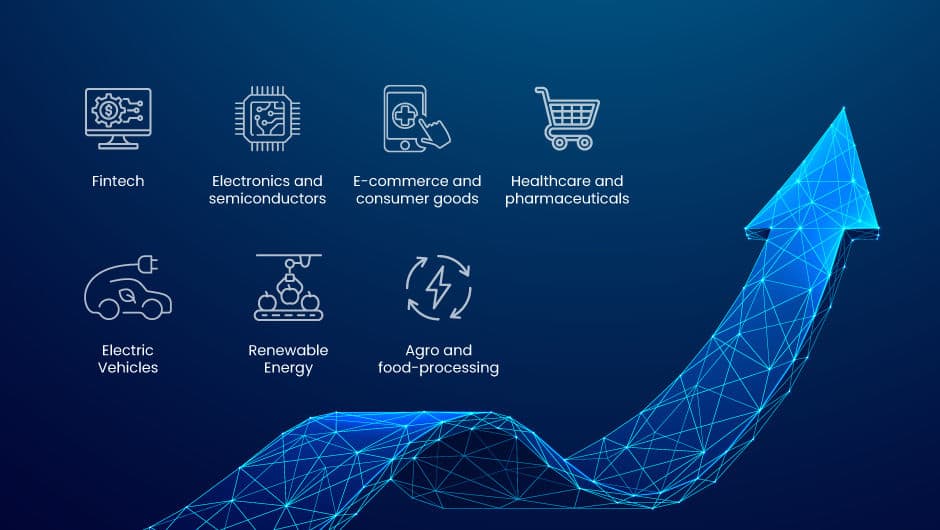
Stock Market Trends & Predictions: Insights for Investors
Stock Market Trends & PredictionsThe stock market in 2026 is experiencing a dynamic phase shaped by global economic shifts, technological innovation, and changing investor behavior. Markets across the world, including India, are showing resilience despite geopolitical tensions, inflation concerns, and fluctuating interest rates.Recent data suggests a cautiously optimistic outlook, with strong corporate earnings, domestic investment growth, and technological advancements acting as key drivers. Investors are increasingly focusing on long-term opportunities while navigating short-term volatility.Understanding current trends and future predictions is essential for making informed investment decisions in today’s rapidly evolving financial landscape.Current Stock Market Trends (2026)The stock market is currently influenced by a mix of positive and challenging factors.Strong recovery after correctionsIncreased retail investor participationVolatility due to global eventsSector-specific growth trendsIndian markets have shown resilience, with indices like Nifty and Sensex maintaining upward momentum despite global uncertainties. :contentReference[oaicite:0]{index=0}Key Drivers of Market TrendsSeveral factors are driving stock market trends in 2026.Economic Growth: India's GDP is expected to grow around 6.7%–7.2% :contentReference[oaicite:1]{index=1}Corporate Earnings: Expected growth of 12–15% annually :contentReference[oaicite:2]{index=2}Domestic Investment: Retail investors are actively supporting markets :contentReference[oaicite:3]{index=3}Government Policies: Reforms and infrastructure spendingThese factors collectively support long-term growth.Sector-Wise TrendsCertain sectors are showing strong growth potential in 2026.Technology & AI-driven companiesRenewable energy & green financeConsumer goods & retail expansionBanking & financial servicesConsumer-driven sectors are expected to grow rapidly due to rising income and urbanization. :contentReference[oaicite:4]{index=4}Market Predictions for 2026Experts remain optimistic about market growth despite short-term volatility.Nifty expected to reach 28,500+ levels :contentReference[oaicite:5]{index=5}Sensex could touch 95,000–98,000 range :contentReference[oaicite:6]{index=6}Long-term equity growth remains strongThese predictions highlight the potential for sustained growth.Global Influences on MarketsGlobal events continue to impact stock markets worldwide.Geopolitical tensionsOil price fluctuationsInterest rate changesGlobal economic conditionsMarkets have remained resilient despite these challenges. :contentReference[oaicite:7]{index=7}Bullish vs Bearish OutlookThe market outlook is a mix of optimism and caution.Bullish Factors: Strong earnings, economic growthBearish Factors: Inflation, geopolitical risksExperts suggest markets may remain volatile but trend upward in the long term.Role of Retail InvestorsRetail investors are playing a crucial role in stabilizing markets.Increased SIP investmentsLong-term investment approachBuying during correctionsThey are becoming a key force in market dynamics. :contentReference[oaicite:8]{index=8}Investment Strategies for 2026Diversify across sectorsFocus on long-term investmentsInvest in high-growth sectorsUse SIP for consistent investingThese strategies help manage risk and maximize returns.The stock market rewards patience and strategy—those who stay invested during uncertainty often benefit the most.Risks to WatchInflation and interest ratesGlobal conflictsMarket correctionsCorporate earnings slowdownUnderstanding risks is essential for smart investing.Future OutlookThe long-term outlook for stock markets remains positive.Strong economic fundamentalsTechnological advancementsIncreasing investor participationMarkets are expected to grow steadily over time.Frequently Asked QuestionsIs the stock market bullish in 2026?Yes, the long-term outlook is bullish despite short-term volatility.What sectors will grow?Technology, renewable energy, and consumer sectors.Should beginners invest now?Yes, with a long-term strategy and proper diversification.ConclusionThe stock market in 2026 presents both opportunities and challenges. While short-term volatility may persist, strong economic fundamentals, technological growth, and increasing investor participation indicate a positive long-term outlook. By understanding market trends and adopting the right strategies, investors can navigate uncertainties and achieve financial success.

Green Finance & Sustainable Investing: Future of Ethical Growth
Green Finance & Sustainable InvestingAs the world faces increasing environmental challenges such as climate change, resource depletion, and pollution, the financial sector is undergoing a significant transformation. Green finance and sustainable investing have emerged as powerful approaches to align financial growth with environmental and social responsibility.Green finance focuses on funding projects that have a positive environmental impact, while sustainable investing integrates environmental, social, and governance (ESG) factors into investment decisions. Together, they are reshaping how capital is allocated and how businesses operate.Understanding these concepts is essential for investors, businesses, and policymakers aiming to build a sustainable and resilient future.What Is Green Finance?Green finance refers to financial investments that support environmentally friendly projects and initiatives. These investments aim to reduce carbon emissions, promote renewable energy, and encourage sustainable practices.Supports renewable energy projectsEncourages eco-friendly infrastructurePromotes sustainable agricultureReduces environmental impactIt plays a crucial role in addressing global environmental challenges.What Is Sustainable Investing?Sustainable investing involves making investment decisions based not only on financial returns but also on environmental, social, and governance (ESG) factors.Environmental (climate impact)Social (community and labor practices)Governance (corporate ethics)This approach ensures that investments contribute to long-term sustainability.Difference Between Green Finance and Sustainable InvestingAlthough closely related, these concepts have distinct differences.Green Finance → Focus on environmental projectsSustainable Investing → Broader ESG focusGreen Finance → Project-based fundingSustainable Investing → Portfolio-based strategyBoth contribute to responsible financial practices.Importance of Green FinanceGreen finance is essential for achieving global sustainability goals and reducing environmental risks.Supports climate actionEncourages clean energyReduces carbon footprintPromotes sustainable developmentIt is a key driver of environmental progress.Benefits of Sustainable InvestingLong-term financial returnsReduced investment riskPositive social impactEnhanced corporate accountabilityThese benefits attract modern investors.Types of Green Financial InstrumentsGreen finance includes various financial instruments designed to support sustainability.Green bondsSustainable mutual fundsESG fundsClimate-focused investmentsThese instruments provide opportunities for responsible investing.Challenges in Green FinanceDespite its growth, green finance faces several challenges.Lack of standardized regulationsRisk of greenwashingLimited awarenessHigh initial investment costsAddressing these challenges is crucial for future growth.Role of ESG in InvestingESG factors are central to sustainable investing and help evaluate the long-term impact of investments.Improves risk assessmentEnhances transparencyPromotes ethical practicesThey guide responsible investment decisions.Green finance and sustainable investing are not just trends—they are essential pathways toward a sustainable and responsible global economy.Future of Green FinanceThe future of green finance looks promising as global awareness of sustainability increases.Increased investments in renewablesStronger ESG regulationsTechnological advancementsGlobal collaborationThese trends will shape the future of finance.How Individuals Can ParticipateInvest in ESG fundsSupport green companiesAdopt sustainable financial habitsStay informed about sustainability trendsIndividuals play a key role in driving change.Frequently Asked QuestionsWhat is green finance?It is funding for environmentally friendly projects.What is sustainable investing?It involves investing based on ESG factors.Why is it important?It promotes environmental protection and long-term growth.ConclusionGreen finance and sustainable investing are transforming the financial landscape by aligning economic growth with environmental and social responsibility. As awareness and demand continue to rise, these approaches will play a crucial role in building a sustainable future. By embracing these concepts, investors and businesses can contribute to positive global change while achieving financial success.
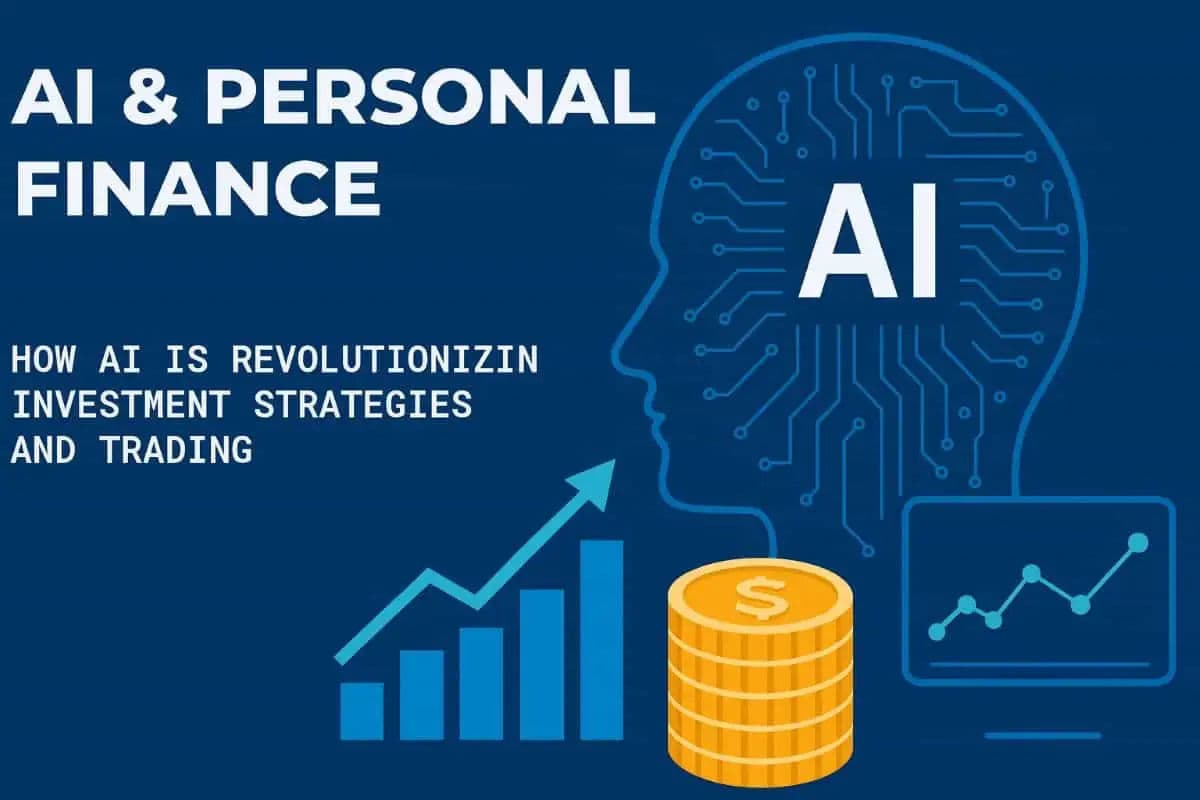
Personal Finance in the AI Era: Smarter Money Management
Personal Finance in the AI EraThe world of personal finance is undergoing a significant transformation with the rise of artificial intelligence. From budgeting and saving to investing and financial planning, AI is reshaping how individuals manage their money. In the AI era, financial decisions are becoming smarter, faster, and more personalized than ever before.Traditional methods of managing finances often required manual tracking, complex calculations, and significant time investment. Today, AI-powered tools and platforms automate these processes, providing real-time insights and recommendations that help individuals make better financial decisions.Understanding how AI is influencing personal finance is essential for anyone looking to improve financial health, build wealth, and stay ahead in a rapidly evolving digital economy.What Is Personal Finance?Personal finance refers to the management of an individual’s financial activities, including income, expenses, savings, investments, and financial planning.Budgeting and expense trackingSavings and investmentsDebt managementFinancial goal planningIt is the foundation of financial stability and long-term wealth creation.Role of AI in Personal FinanceArtificial intelligence is revolutionizing personal finance by automating processes and providing intelligent insights.Automated budgeting toolsSmart financial recommendationsFraud detection systemsPersonalized investment adviceAI enables individuals to make data-driven financial decisions.AI-Powered BudgetingAI-powered budgeting tools analyze spending patterns and help individuals manage their expenses effectively.Tracks spending automaticallyCategorizes expensesProvides saving suggestionsThese tools simplify financial management.AI in Investment ManagementAI is transforming investing by offering personalized strategies and real-time market analysis.Robo-advisorsAutomated portfolio managementRisk analysisInvesting is becoming more accessible and efficient.Benefits of AI in Personal FinanceImproved financial decision-makingTime-saving automationPersonalized financial adviceEnhanced securityThese benefits make AI a powerful tool for managing finances.Challenges and RisksDespite its advantages, AI in personal finance also comes with challenges.Data privacy concernsOver-reliance on technologyAlgorithmic biasesUsers must remain cautious and informed.Future of Personal Finance with AIThe future of personal finance is expected to be highly automated and intelligent.Fully automated financial planningAI-driven wealth managementSmart financial assistantsThese advancements will redefine financial management.How to Use AI for Better Financial ManagementUse budgeting appsLeverage robo-advisorsMonitor spending patternsStay informed about AI toolsThese strategies help maximize benefits.In the AI era, managing money is no longer just about discipline—it’s about leveraging intelligence to make smarter financial decisions.Role in Financial PlanningAI plays a crucial role in financial planning by providing insights and automation.Supports goal-based planningImproves financial disciplineEnhances wealth creationIt is essential for modern financial strategies.Frequently Asked QuestionsWhat is AI in personal finance?It is the use of AI tools to manage money and financial decisions.Is AI safe for finance?Yes, but users must ensure data security and privacy.How does AI help in investing?It provides automated and data-driven investment strategies.ConclusionPersonal finance in the AI era is more efficient, intelligent, and accessible than ever before. By leveraging AI tools, individuals can make better financial decisions, improve savings, and achieve long-term financial goals. As technology continues to evolve, AI will play an even greater role in shaping the future of personal finance.
AI Agents & Automation Revolution: Transforming Industries
AI Agents & Automation RevolutionThe rapid evolution of artificial intelligence has entered a new era—one defined by AI agents and intelligent automation. Unlike traditional automation systems that follow predefined rules, modern AI agents are capable of understanding goals, making decisions, and executing tasks autonomously. This shift is transforming industries, redefining workflows, and reshaping how humans interact with technology.The AI agents and automation revolution is not just about efficiency—it represents a fundamental change in how work is performed. From businesses to personal productivity, AI is becoming an active participant rather than a passive tool.Understanding this transformation is essential for individuals, businesses, and organizations aiming to stay competitive in the digital age.What Are AI Agents?AI agents are intelligent systems that can perceive their environment, make decisions, and take actions to achieve specific goals. They operate autonomously and continuously improve through learning and feedback.Autonomous decision-makingGoal-oriented executionContinuous learningAbility to interact with systems and humansThese agents are designed to act independently, reducing the need for constant human intervention.Evolution of AutomationAutomation has evolved significantly over the years, moving from simple rule-based systems to intelligent AI-driven processes.Manual processes → Human-driven tasksRule-based automation → Fixed workflowsAI-driven automation → Adaptive systemsAgentic AI → Autonomous decision-makersThis evolution has dramatically increased efficiency and scalability.How AI Agents WorkAI agents operate through a structured process that enables them to perform tasks effectively.Perceive data from environmentAnalyze and interpret informationMake decisions based on goalsExecute actionsLearn from outcomesThis cycle allows AI agents to continuously improve performance.Key Features of AI AgentsAI agents possess unique characteristics that distinguish them from traditional systems.AutonomyAdaptabilityScalabilityDecision-making capabilityMulti-tasking abilityThese features enable them to handle complex and dynamic environments.Applications Across IndustriesAI agents are transforming multiple industries by automating tasks and improving efficiency.Customer support (chatbots, virtual assistants)Healthcare (diagnostics, patient monitoring)Finance (fraud detection, trading)Supply chain (logistics optimization)Marketing (personalized campaigns)Their versatility makes them valuable across sectors.Impact on Jobs and WorkforceThe rise of AI agents is reshaping the workforce by automating repetitive tasks and creating new opportunities.Reduction in manual tasksCreation of new tech rolesShift toward creative and strategic workUpskilling and adaptability are essential in this evolving landscape.Benefits of AI Agents & AutomationIncreased productivityReduced operational costsImproved accuracyFaster decision-makingScalabilityThese benefits drive widespread adoption.Challenges and RisksDespite their advantages, AI agents also present challenges.Ethical concernsData privacy issuesJob displacement fearsSecurity risksResponsible implementation is essential.AI Agents vs Traditional AutomationTraditional → Rule-basedAI Agents → Intelligent and adaptiveTraditional → Limited flexibilityAI Agents → Dynamic decision-makingThis distinction highlights the revolution in automation.AI agents are transforming automation from simple execution to intelligent decision-making, redefining the future of work.Future of AI AgentsThe future of AI agents is expected to bring even more advanced capabilities.Fully autonomous systemsIntegration with IoT and roboticsSmarter personal assistantsAI-driven enterprisesThese advancements will reshape industries and lifestyles.Role in Digital TransformationAI agents are central to digital transformation strategies.Automates business processesEnhances customer experienceImproves operational efficiencyThey are essential for modern enterprises.Frequently Asked QuestionsWhat are AI agents?They are autonomous systems that make decisions and perform tasks independently.How do they differ from automation?AI agents are intelligent and adaptive, while traditional automation is rule-based.Where are they used?In healthcare, finance, marketing, customer service, and more.ConclusionThe AI agents and automation revolution marks a transformative shift in how technology interacts with the world. By enabling intelligent decision-making and autonomous action, AI agents are redefining productivity, efficiency, and innovation. As this technology continues to evolve, it will unlock new possibilities and shape the future of work and society.

Cybersecurity Explained: Types, Threats, Importance and Protection Methods
Preemptive Cybersecurity: Meaning, Strategies, Importance and Future of Proactive Digital ProtectionPreemptive cybersecurity is an advanced approach to digital security that focuses on preventing cyber threats before they occur. Unlike traditional cybersecurity methods that react after an attack happens, preemptive cybersecurity aims to identify vulnerabilities, predict threats, and neutralize risks in advance.In today’s highly connected world, cyberattacks are becoming more frequent, sophisticated, and damaging. Organizations can no longer rely solely on reactive defense mechanisms. Instead, they must adopt proactive strategies that anticipate potential threats and safeguard systems before any damage occurs.Preemptive cybersecurity combines artificial intelligence, machine learning, threat intelligence, behavioral analytics, and automation to create a strong defense system. It enables businesses to stay ahead of attackers and maintain a secure digital environment.What is Preemptive Cybersecurity?Preemptive cybersecurity refers to a proactive security model that focuses on predicting and preventing cyber threats before they can exploit vulnerabilities. It involves continuous monitoring, risk assessment, and automated defense mechanisms.Focuses on prevention rather than reactionUses AI and analytics to predict threatsContinuously monitors systems and networksStrengthens defenses before attacks occurThis approach minimizes risks, reduces downtime, and ensures business continuity.Evolution of Cybersecurity ApproachesCybersecurity has evolved significantly over time. Initially, organizations relied on basic security measures such as firewalls and antivirus software. These tools were effective against simple threats but struggled against modern, sophisticated attacks.The next phase introduced reactive cybersecurity, where systems detect and respond to attacks after they occur. While this improved security, it often resulted in delayed responses and significant damage.Preemptive cybersecurity represents the next stage in this evolution. By leveraging predictive analytics and real-time monitoring, it enables organizations to stay ahead of cybercriminals.Core Principles of Preemptive CybersecurityPreemptive cybersecurity is built on several key principles that ensure effective protection.Threat prediction using AI modelsContinuous vulnerability assessmentReal-time monitoring and alertsAutomated response systemsZero-trust security frameworkThese principles work together to create a robust and proactive defense system. Key Technologies Behind Preemptive CybersecuritySeveral advanced technologies power preemptive cybersecurity systems.Artificial intelligence plays a central role by analyzing large volumes of data to identify unusual patterns and predict potential threats. Machine learning models continuously improve their accuracy by learning from past incidents.Behavioral analytics helps detect anomalies in user activity, which may indicate insider threats or compromised accounts. Threat intelligence platforms provide real-time data about emerging cyber threats.Automation tools enable quick responses to potential risks, reducing the time between detection and mitigation.Types of Preemptive Cybersecurity StrategiesOrganizations implement various strategies to achieve proactive security.Vulnerability scanning and penetration testingThreat intelligence analysisBehavior-based threat detectionAI-driven risk assessmentZero-trust network architectureThese strategies help identify weaknesses and strengthen defenses before attackers exploit them.Importance of Preemptive CybersecurityPreemptive cybersecurity is essential for protecting sensitive data and ensuring operational continuity.Prevents data breaches and cyberattacksReduces financial lossesProtects brand reputationEnsures regulatory complianceImproves system reliabilityWith increasing cyber threats, proactive security is no longer optional—it is a necessity. Real-World ApplicationsPreemptive cybersecurity is widely used across industries.In banking, it prevents fraud and unauthorized transactions. In healthcare, it protects patient data and medical systems. In e-commerce, it secures online transactions and customer information.Government agencies use it to safeguard national security systems, while enterprises rely on it to protect intellectual property and business operations.Advantages of Preemptive CybersecurityEarly threat detectionReduced downtimeImproved efficiencyLower recovery costsStronger defense mechanismsThese benefits make it a powerful approach for modern organizations.Challenges and LimitationsDespite its advantages, preemptive cybersecurity faces certain challenges.High implementation costComplex system integrationDependence on data qualityRisk of false positivesNeed for skilled professionalsAddressing these challenges is essential for effective implementation.Preemptive cybersecurity is not just about stopping attacks—it is about staying ahead of them.Future of Preemptive CybersecurityThe future of cybersecurity lies in automation and intelligence. AI-powered systems will become more advanced, capable of predicting complex attack patterns and responding instantly.Emerging technologies such as quantum computing and blockchain will further enhance security capabilities. Organizations will increasingly adopt zero-trust architectures and autonomous security systems.As cyber threats evolve, preemptive cybersecurity will continue to play a critical role in safeguarding digital ecosystems.Frequently Asked QuestionsWhat is preemptive cybersecurity?It is a proactive approach that prevents cyber threats before they occur.How does it differ from traditional security?Traditional security reacts to attacks, while preemptive cybersecurity prevents them.What technologies are used?AI, machine learning, behavioral analytics, and threat intelligence.Why is it important?It prevents attacks, reduces losses, and ensures system security.What is its future?It will evolve into fully automated, AI-driven security systems.ConclusionPreemptive cybersecurity represents the future of digital protection by shifting the focus from reaction to prevention. By leveraging advanced technologies such as AI, machine learning, and real-time analytics, organizations can identify threats early and eliminate risks before they cause harm.As cyber threats continue to grow in complexity, adopting a proactive security approach is essential for safeguarding data, systems, and business operations. Organizations that invest in preemptive cybersecurity will be better equipped to handle emerging challenges and ensure long-term resilience.Ultimately, preemptive cybersecurity is not just a strategy—it is a necessity in the modern digital world.

AI-native development platform architecture showing cloud, AI models, and developer tools integration
AI-Native Development Platforms Explained: Meaning, Architecture, Benefits, Use Cases and FutureAI-Native Development Platforms represent a new generation of software engineering ecosystems designed from the ground up with artificial intelligence at their core. Unlike traditional development environments where AI is added as an external plugin or tool, AI-native platforms integrate machine learning models, automation systems, intelligent agents, and data-driven decision-making directly into the software development lifecycle.In simple terms, an AI-native development platform is a fully integrated environment where AI assists, automates, and enhances every stage of application creation—from planning and coding to testing, deployment, monitoring, and optimization. These platforms are transforming how developers build software by significantly reducing manual effort and increasing productivity.As businesses increasingly rely on digital transformation, AI-native development platforms have become essential for building scalable, intelligent, and adaptive applications. They not only accelerate development speed but also improve code quality, system reliability, and user experience.Understanding AI-Native Development PlatformsAI-native development platforms are designed to embed artificial intelligence directly into the core infrastructure of software development environments. This means AI is not an optional feature but a foundational layer that powers every operation.These platforms typically include AI-assisted coding tools, intelligent debugging systems, automated testing engines, predictive analytics dashboards, and autonomous deployment pipelines. By leveraging large language models, reinforcement learning systems, and predictive algorithms, they help developers build software faster and more efficiently.The goal of AI-native platforms is to create a seamless collaboration between humans and machines where developers focus on high-level logic and creativity while AI handles repetitive, error-prone, and time-consuming tasks.Evolution of Software Development PlatformsTraditional software development followed a linear approach where developers manually wrote code, tested it, and deployed applications. Over time, integrated development environments (IDEs) like Eclipse, Visual Studio, and IntelliJ improved productivity with features like syntax highlighting and debugging tools.The next phase introduced cloud-based development platforms such as AWS, Azure, and Google Cloud, which enabled scalable infrastructure and DevOps automation. However, AI was still not deeply integrated into these systems.AI-native development platforms mark the third and most advanced phase, where AI becomes the central intelligence layer. Instead of assisting development externally, AI actively participates in decision-making, architecture design, and even autonomous coding.Core Architecture of AI-Native Development PlatformsThe architecture of AI-native platforms is designed to support continuous intelligence and automation across the software lifecycle.At a high level, these platforms consist of multiple interconnected layers that work together to enable intelligent software development.The foundation layer is the infrastructure layer, which includes cloud computing resources, storage systems, and distributed computing frameworks. Above this sits the data layer, which collects and processes structured and unstructured data from development activities.The intelligence layer is the heart of the platform. It includes machine learning models, natural language processing engines, code generation models, and predictive analytics systems. This layer enables automation and decision-making.The application layer provides developer tools such as AI-powered IDEs, code assistants, testing frameworks, and deployment systems. Finally, the interaction layer enables collaboration between developers and AI agents through chat interfaces, dashboards, and voice-based systems.Key Components of AI-Native Development PlatformsAI-native development platforms consist of several critical components that work together to deliver intelligent automation.AI-powered code generation engines that assist in writing and completing code automaticallyIntelligent debugging systems that detect and fix errors in real timeAutomated testing frameworks that generate test cases and validate applicationsPredictive analytics tools that forecast system behavior and performance issuesAI-driven DevOps pipelines that automate deployment and scaling processesThese components significantly reduce development time and improve software reliability.How AI is Transforming Software DevelopmentAI is fundamentally changing how software is designed, built, and maintained. Developers no longer need to manually write every line of code. Instead, they can describe functionality in natural language, and AI systems generate working code instantly.AI also helps in identifying bugs before they occur by analyzing patterns in code and predicting potential failure points. This predictive capability reduces downtime and improves application stability.Additionally, AI enables continuous optimization by monitoring application performance and suggesting improvements in real time. This leads to more efficient and scalable systems.Benefits of AI-Native Development PlatformsAI-native development platforms offer several advantages that make them essential for modern software engineering.Faster development cycles due to automated coding and testingReduced human errors through AI-driven validation systemsImproved scalability with intelligent cloud resource managementEnhanced collaboration between developers and AI agentsLower operational costs due to automation of repetitive tasksThese benefits allow organizations to innovate faster and stay competitive in rapidly evolving markets.Real-World Use CasesAI-native development platforms are used across various industries to build intelligent applications and systems.In fintech, they are used to build fraud detection systems that analyze transactions in real time. In healthcare, they assist in developing diagnostic tools and patient monitoring systems. In e-commerce, they power recommendation engines and personalized shopping experiences.In enterprise software, AI-native platforms help automate workflows, manage data pipelines, and optimize business operations.Even in gaming, these platforms are used to create adaptive game environments and intelligent NPC behavior systems.Challenges in AI-Native Development PlatformsDespite their advantages, AI-native development platforms also face several challenges.One major challenge is data dependency. AI systems require large amounts of high-quality data to function effectively. Another challenge is model bias, where AI systems may produce inaccurate or unfair results based on biased training data.Security and privacy concerns are also significant, as AI systems often handle sensitive code and data. Additionally, integration complexity can make it difficult for organizations to transition from traditional systems to AI-native environments.Finally, there is a skills gap, as developers need to understand both software engineering and AI systems to fully leverage these platforms.Future of AI-Native Development PlatformsThe future of AI-native development platforms is highly promising. As AI models become more advanced, these platforms will evolve into fully autonomous software engineering systems.In the future, developers may simply describe an application in natural language, and AI systems will design, code, test, and deploy it automatically. This concept is often referred to as "zero-code development."AI agents will also collaborate with each other to manage complex software ecosystems, ensuring continuous optimization and self-healing systems.Eventually, AI-native platforms will become the standard for all software development, replacing traditional IDEs and manual coding workflows.Importance in Modern Digital TransformationAI-native development platforms play a crucial role in digital transformation strategies. Organizations are increasingly adopting these platforms to modernize legacy systems and build intelligent applications.They enable businesses to respond quickly to market changes, improve customer experiences, and optimize internal operations.As industries continue to digitize, AI-native platforms will become the backbone of innovation and technological growth.Frequently Asked QuestionsWhat are AI-native development platforms?They are software development environments where AI is integrated into every stage of the development lifecycle.How are they different from traditional platforms?Traditional platforms use AI as a tool, while AI-native platforms embed AI as a core system component.What industries use AI-native platforms?Industries like finance, healthcare, e-commerce, gaming, and enterprise software development widely use them.What are the main benefits?They improve speed, reduce errors, lower costs, and enhance scalability in software development.What is the future of AI-native platforms?They are expected to evolve into fully autonomous systems capable of building complete applications with minimal human input.ConclusionAI-native development platforms represent a major shift in how software is created and maintained. By embedding intelligence directly into development environments, they enable faster, smarter, and more efficient software engineering.As AI continues to evolve, these platforms will become even more powerful, ultimately redefining the future of programming and digital innovation.
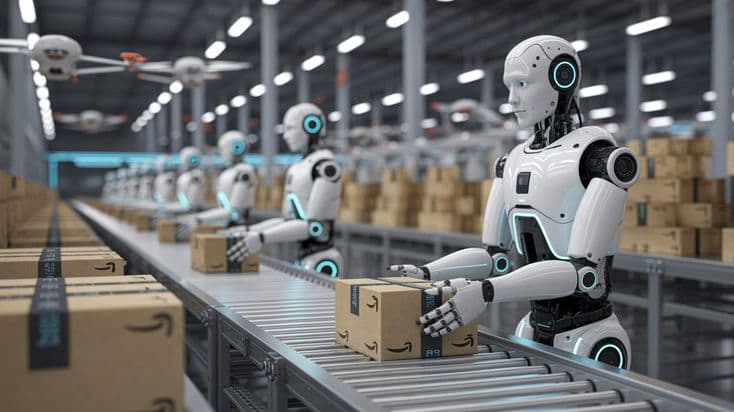
Physical AI & Advanced Robotics: The Future of Intelligent Machines and Automation
Physical AI & Advanced Robotics: The Future of Intelligent Machines, Autonomous Systems, and Human-Machine CollaborationPhysical AI and Advanced Robotics represent one of the most transformative technological revolutions of the modern era. Unlike traditional software-based artificial intelligence that operates in digital environments, Physical AI extends intelligence into the real world through robots, autonomous machines, and embedded systems that can perceive, decide, and act physically.This integration of artificial intelligence with robotics enables machines to interact with physical environments in a meaningful, adaptive, and often human-like manner. From industrial automation to healthcare robotics, from autonomous vehicles to smart manufacturing systems, Physical AI is reshaping industries, economies, and human lifestyles at an unprecedented scale.Advanced Robotics complements Physical AI by providing mechanical systems, sensors, actuators, and control architectures that allow intelligent algorithms to manifest in real-world actions. Together, they form a powerful ecosystem that bridges computation and physical reality.What is Physical AI?Physical AI refers to artificial intelligence systems that operate within the physical world using robotic bodies, sensors, and real-time decision-making systems. These systems are designed not only to analyze data but also to act upon it physically.In essence, Physical AI combines machine learning, computer vision, robotics, edge computing, and control systems to create intelligent agents capable of interacting with real-world environments.Integrates AI with physical machines and roboticsEnables real-time perception and decision-makingUses sensors and actuators to interact with the environmentOperates in dynamic and unpredictable real-world conditionsPhysical AI is a major step beyond traditional AI systems, as it introduces embodiment—allowing intelligence to exist in machines that move, manipulate, and respond physically.What are Advanced Robotics?Advanced Robotics refers to the development of intelligent robotic systems capable of performing complex tasks with minimal human intervention. These robots are equipped with sensors, AI models, machine learning algorithms, and adaptive control systems.They are widely used in industries such as manufacturing, logistics, healthcare, defense, space exploration, and agriculture.Autonomous decision-making capabilitiesHigh-precision mechanical movement systemsIntegration with AI and cloud computingAbility to learn and adapt over timeAdvanced Robotics is not just about automation—it is about intelligence embedded into machines that can perceive and respond like humans or even surpass human efficiency in specific tasks. Core Components of Physical AI SystemsPhysical AI systems are built using a combination of hardware and software components that work together seamlessly.Sensors: Cameras, LiDAR, ultrasonic sensors, and infrared systems for perceptionActuators: Motors, servos, and hydraulic systems for movementAI Models: Neural networks for perception, prediction, and controlEdge Computing: On-device processing for real-time decisionsControl Systems: Algorithms for motion planning and stabilityThese components enable robots to interpret their environment, make decisions, and execute actions with precision.How Physical AI WorksPhysical AI systems operate in a continuous loop of perception, reasoning, and action. This cycle allows robots to function intelligently in dynamic environments.First, sensors collect data from the environment. This data is processed using AI algorithms such as computer vision or deep learning models. The system then interprets the data and makes decisions based on predefined objectives or learned behavior.Finally, actuators execute the decisions in the physical world, and the cycle repeats, allowing continuous adaptation.Applications of Physical AI and RoboticsPhysical AI is transforming multiple industries by introducing automation, intelligence, and efficiency.Manufacturing: Smart factories and robotic assembly linesHealthcare: Surgical robots and patient assistance systemsTransportation: Autonomous vehicles and dronesAgriculture: Precision farming and robotic harvestingRetail: Automated warehouses and delivery robotsThese applications improve productivity, reduce human error, and enable operations in hazardous environments. Role of AI Models in RoboticsAI models are the brain of modern robotics systems. They enable robots to understand environments, recognize objects, and make intelligent decisions.Deep learning models are commonly used for vision tasks, while reinforcement learning is used for decision-making and control optimization.Computer vision for object detectionNatural language processing for human interactionReinforcement learning for autonomous behaviorPredictive analytics for motion planningEdge Computing in Physical AIEdge computing plays a critical role in Physical AI by enabling real-time processing directly on robotic devices rather than relying on cloud servers.This reduces latency, improves responsiveness, and ensures that robots can function effectively in environments with limited connectivity.Challenges in Physical AI and RoboticsHigh cost of development and deploymentComplexity of real-world environmentsSafety and ethical concernsLimited adaptability in unpredictable situationsDependence on large datasets for trainingDespite these challenges, continuous advancements in AI and robotics are rapidly overcoming these limitations.Future of Physical AI and Advanced RoboticsThe future of Physical AI is expected to bring fully autonomous cities, intelligent homes, and humanoid robots capable of performing complex human tasks.With advancements in generative AI, robotics will become more adaptive, creative, and collaborative, working alongside humans rather than replacing them.Human-Robot CollaborationOne of the most important aspects of Physical AI is collaboration between humans and machines. Robots are increasingly being designed to assist humans rather than replace them.This includes collaborative robots (cobots) in factories, AI assistants in healthcare, and autonomous systems that enhance human productivity.Frequently Asked QuestionsWhat is Physical AI?Physical AI refers to intelligent systems that operate in the real world using robotics and sensors to perceive and act.How is Physical AI different from traditional AI?Traditional AI works in digital environments, while Physical AI interacts with the real physical world through machines.Where is advanced robotics used?It is used in manufacturing, healthcare, agriculture, logistics, defense, and space exploration.What technologies power robotics?AI, machine learning, computer vision, sensors, actuators, and edge computing power modern robotics systems.Will robots replace humans?No, most future systems are designed for collaboration, enhancing human productivity rather than replacing humans.ConclusionPhysical AI and Advanced Robotics are reshaping the future of technology by merging intelligence with physical action. These systems are transforming industries, improving efficiency, and enabling new possibilities that were once considered science fiction.As innovation continues, the collaboration between humans and intelligent machines will become deeper, safer, and more impactful, leading to a future where Physical AI plays a central role in everyday life and global industries.

Agentic AI and Multimodal Systems: Understanding the Future of Autonomous Intelligence
Agentic AI and Multimodal Systems: Understanding the Future of Autonomous IntelligenceAgentic AI and multimodal systems represent a major transformation in the field of artificial intelligence. These technologies are shaping how machines understand, interpret, and interact with the world. Unlike traditional AI systems that respond only to specific inputs, agentic AI systems are capable of independent decision-making, planning, and executing tasks with minimal human intervention.Multimodal systems, on the other hand, are designed to process and integrate multiple forms of data such as text, images, audio, video, and sensor inputs. When combined with agentic intelligence, they create powerful systems that can perceive the world more like humans and act autonomously in complex environments.Together, these two technologies are forming the foundation of next-generation artificial intelligence applications used in robotics, healthcare, automation, business intelligence, and digital assistants.What is Agentic AI?Agentic AI refers to artificial intelligence systems that can operate as independent “agents.” These agents are designed to set goals, make decisions, and take actions to achieve those goals without continuous human supervision.Unlike traditional AI models that simply respond to prompts, agentic AI systems can plan multi-step processes, evaluate outcomes, and adjust strategies dynamically. This makes them highly useful in real-world problem-solving scenarios.For example, an agentic AI system could manage a business workflow, schedule tasks, analyze performance data, and even optimize operations automatically.Key Features of Agentic AIAgentic AI systems are defined by several important characteristics that distinguish them from traditional AI models.Autonomous decision-making capabilityGoal-oriented planning and executionAbility to learn from feedback and adaptLong-term task managementContext-aware reasoningThese features allow AI agents to function more like intelligent assistants rather than static tools.What are Multimodal Systems?Multimodal systems are AI models that can understand and process multiple types of input data simultaneously. Instead of working only with text or images, these systems can combine different data formats to build a deeper understanding of information.For example, a multimodal AI can analyze an image, read its description, listen to audio related to it, and combine all inputs to generate meaningful insights.This capability significantly improves accuracy and context awareness in AI applications.Types of Data in Multimodal SystemsText data (documents, chat, articles)Image data (photos, diagrams, medical scans)Audio data (speech, sound signals)Video data (live streams, recordings)Sensor data (IoT devices, robotics inputs)By combining these data types, multimodal AI creates a more human-like understanding of the environment.How Agentic AI and Multimodal Systems Work TogetherWhen agentic AI is combined with multimodal systems, the result is a highly intelligent and autonomous system capable of perceiving, reasoning, and acting across multiple data types.For example, an AI assistant could analyze a video, extract important events, summarize it in text, and then take action such as sending alerts or generating reports automatically.This combination allows AI to move beyond simple prediction models into fully functional intelligent agents.Real-World ApplicationsHealthcare diagnostics using images and patient dataAutonomous robotics in manufacturingSmart virtual assistantsFinancial forecasting systemsSecurity and surveillance analysisThese applications demonstrate how powerful AI becomes when it can act independently and understand multiple data formats.Benefits of Agentic AI and Multimodal SystemsImproved decision-making accuracyHigher automation efficiencyBetter contextual understandingReduced human workloadScalable AI-driven solutionsChallenges and LimitationsHigh computational requirementsData privacy concernsComplex system designRisk of incorrect autonomous decisionsNeed for large training datasetsFuture of Agentic AI and Multimodal SystemsThe future of AI is strongly tied to the development of agentic and multimodal systems. These technologies are expected to power next-generation intelligent assistants, autonomous robots, and decision-making platforms across industries.As models become more advanced, AI systems will increasingly act independently while understanding the world in a more human-like way.Frequently Asked Questions (FAQ)1. What is Agentic AI?Agentic AI is an AI system that can make decisions and perform tasks independently without constant human input.2. What are multimodal systems?Multimodal systems are AI models that process multiple types of data like text, images, audio, and video together.3. How do agentic AI and multimodal systems work together?They combine perception and decision-making, allowing AI to understand complex environments and take actions automatically.4. Where is agentic AI used?It is used in automation, robotics, virtual assistants, healthcare, and business intelligence systems.5. What is the future of multimodal AI?It will enable more human-like AI systems capable of understanding and interacting with the world across multiple sensory inputs.

Intelligent Cybersecurity and Privacy
Intelligent Cybersecurity and PrivacyIntelligent Cybersecurity and Privacy refers to the advanced use of artificial intelligence, machine learning, automation, and data-driven systems to protect digital infrastructure, sensitive information, and user privacy in an increasingly connected world. As cyber threats become more sophisticated, traditional security systems are no longer sufficient. Intelligent cybersecurity systems are designed to detect, prevent, and respond to attacks in real time with minimal human intervention.In today’s digital era, where billions of devices are connected through the internet, cybersecurity is no longer optional—it is a necessity. From personal smartphones to enterprise cloud systems, every digital asset is vulnerable to cyberattacks, data breaches, ransomware, phishing, and identity theft. Intelligent cybersecurity systems help organizations stay ahead of these threats using predictive analytics and adaptive defense mechanisms.This comprehensive guide explores the meaning, evolution, technologies, architecture, applications, benefits, risks, and future of intelligent cybersecurity and privacy systems in detail.What is Intelligent Cybersecurity and Privacy?Intelligent cybersecurity is the integration of AI-powered systems into security frameworks to identify threats, analyze patterns, and respond automatically to cyber risks. Privacy protection focuses on safeguarding personal and organizational data from unauthorized access, misuse, or exposure.Together, they form a unified approach that ensures both system security and data confidentiality in digital environments.AI-driven threat detectionAutomated incident responseReal-time monitoring systemsPrivacy-preserving technologiesBehavioral analytics for anomaly detectionEvolution of Cybersecurity SystemsCybersecurity has evolved significantly over the years:Traditional Security: Firewalls and antivirus software.Network Security Era: Focus on perimeter protection.Cloud Security Era: Protection of distributed systems.AI Security Era: Machine learning-based threat detection.Intelligent Security Era: Fully adaptive, predictive, and autonomous defense systems.This evolution reflects the growing complexity and scale of cyber threats.Core Technologies in Intelligent CybersecurityMachine Learning: Detects patterns in attack behavior.Artificial Intelligence: Enables decision-making and automation.Big Data Analytics: Processes massive security logs.Behavioral Analytics: Identifies unusual user activity.Blockchain Security: Ensures tamper-proof data storage.Zero Trust Architecture: Verifies every access request.How Intelligent Cybersecurity WorksIntelligent cybersecurity systems operate through multiple layers of detection and response:Data collection from networks, devices, and applicationsReal-time analysis of traffic and behaviorAI-based anomaly detectionThreat classification and risk scoringAutomated response actions such as blocking or isolating threatsThese systems continuously learn from new threats, improving their accuracy over time.Applications of Intelligent Cybersecurity1. Banking and FinanceAI protects financial transactions, detects fraud, and prevents unauthorized access to accounts.2. Healthcare SystemsSecures patient records, medical devices, and hospital networks from cyber threats.3. Government SystemsProtects sensitive national data and critical infrastructure.4. E-Commerce PlatformsEnsures secure online payments and protects customer data.5. Cloud ComputingSecures distributed cloud environments and prevents data leakage.Importance of Privacy in CybersecurityPrivacy ensures that personal and sensitive data remains confidential and is not misused. With increasing digital tracking, privacy protection has become essential for individuals and organizations.Prevents identity theftProtects sensitive business dataEnsures regulatory complianceBuilds user trustBenefits of Intelligent CybersecurityReal-time threat detectionReduced human errorFaster incident responseCost-effective security managementImproved data protectionChallenges in CybersecurityIncreasing sophistication of cyberattacksLack of skilled cybersecurity professionalsHigh implementation costsPrivacy concerns in AI systemsRapidly evolving threat landscapeFuture of Cybersecurity and PrivacyThe future of cybersecurity lies in fully autonomous AI-driven systems capable of predicting and neutralizing threats before they occur. Technologies like quantum encryption, biometric authentication, and self-healing systems will redefine digital security.Privacy-focused computing will ensure users maintain full control over their personal data in a highly connected world.ConclusionIntelligent Cybersecurity and Privacy represents the future of digital protection. By combining artificial intelligence, automation, and advanced analytics, it provides a powerful defense against modern cyber threats. As technology continues to evolve, intelligent security systems will become essential for protecting individuals, businesses, and governments worldwide.

Next-Generation Artificial Intelligence
Next-Generation Artificial IntelligenceNext-Generation Artificial Intelligence (AI) represents the evolution of traditional machine learning systems into highly adaptive, autonomous, and intelligent systems capable of reasoning, learning continuously, and interacting naturally with humans and environments. Unlike earlier AI systems that were rule-based or limited to narrow tasks, next-generation AI integrates advanced deep learning, neural networks, multimodal processing, and self-improving algorithms.This new era of AI is transforming industries such as healthcare, finance, education, transportation, manufacturing, cybersecurity, and entertainment. It is also reshaping how humans interact with machines, making systems more intuitive, context-aware, and capable of human-like understanding.In this comprehensive guide, we will explore the meaning, evolution, architecture, types, applications, benefits, risks, and future scope of next-generation artificial intelligence in detail.What is Next-Generation Artificial Intelligence?Next-generation AI refers to intelligent systems that go beyond traditional machine learning models by incorporating self-learning capabilities, contextual awareness, and multimodal intelligence. These systems are designed to continuously improve without constant human intervention.Key characteristics include:Autonomous learning and adaptationMultimodal understanding (text, image, audio, video)Real-time decision-makingHuman-like reasoning and communicationSelf-optimization through continuous learningThese capabilities make next-generation AI far more powerful than traditional systems used in early automation and analytics.Evolution of Artificial IntelligenceThe evolution of AI can be divided into several stages:Rule-Based Systems: Early AI relied on predefined rules and logic.Machine Learning Era: Systems learned from structured data using algorithms.Deep Learning Revolution: Neural networks enabled pattern recognition in large datasets.Modern AI Systems: Integration of NLP, vision, and speech recognition.Next-Generation AI: Fully adaptive, generative, and autonomous intelligence.Each stage has contributed to the development of smarter and more capable systems that we use today.Core Technologies Behind Next-Gen AISeveral advanced technologies power next-generation AI systems:Deep Learning: Neural networks that simulate human brain functions.Natural Language Processing (NLP): Enables machines to understand and generate human language.Computer Vision: Allows AI to interpret images and videos.Reinforcement Learning: Systems learn through trial and error.Generative AI: Creates new content such as text, images, and music.Edge AI: Processes data locally for faster decisions.Architecture of Next-Generation AI SystemsThe architecture of modern AI systems typically consists of multiple layers:Data Layer: Collects structured and unstructured data.Processing Layer: Cleans and organizes data for training.Model Layer: Machine learning and deep learning models operate here.Inference Layer: Produces real-time predictions and outputs.Feedback Loop: Continuously improves performance through learning.This layered structure enables scalability and adaptability in complex environments.Applications of Next-Generation AINext-generation AI is transforming multiple industries:1. HealthcareAI assists in diagnosing diseases, predicting patient risks, and recommending personalized treatments. It is also used in medical imaging and drug discovery.2. FinanceAI is used for fraud detection, algorithmic trading, credit scoring, and risk management.3. EducationPersonalized learning platforms adapt to student needs using AI-driven analytics.4. TransportationAutonomous vehicles and smart traffic systems rely heavily on AI technologies.5. ManufacturingAI improves automation, predictive maintenance, and supply chain optimization.6. CybersecurityAI detects anomalies, prevents cyber attacks, and enhances digital security systems.Benefits of Next-Generation AIImproved efficiency and productivityEnhanced decision-making capabilitiesAutomation of repetitive tasksGreater accuracy and reduced errorsScalability across industriesThese advantages make AI a critical technology for future development.Challenges and RisksDespite its benefits, next-generation AI also presents challenges:Data privacy concernsEthical decision-making issuesJob displacement due to automationBias in AI algorithmsHigh computational costsAddressing these challenges requires strong governance and ethical frameworks.Role of AI in the FutureThe future of AI is expected to be highly advanced, with systems capable of general intelligence, emotional understanding, and autonomous creativity. AI will play a central role in solving global challenges such as climate change, healthcare accessibility, and smart city development.We are moving toward a world where AI will not just assist humans but collaborate with them as intelligent partners.ConclusionNext-Generation Artificial Intelligence represents a major leap in technological evolution. With its ability to learn, adapt, and operate across multiple domains, it is reshaping industries and redefining human potential. While challenges remain, the opportunities far outweigh the risks when guided by ethical and responsible development.As AI continues to evolve, it will become an inseparable part of daily life, driving innovation, efficiency, and progress across the world.

Cybersecurity in Automation: Protecting Smart Systems in the Digital Age
Cybersecurity in Automation: Meaning, Importance, Threats, and Future TrendsCybersecurity in automation has become one of the most critical aspects of modern digital transformation. As industries increasingly adopt automation technologies such as robotics, artificial intelligence, and cloud-based systems, the risk of cyber threats also rises significantly. Automation systems are deeply integrated into business operations, manufacturing processes, financial systems, and even personal devices, making them attractive targets for cybercriminals.In today’s interconnected world, cybersecurity is no longer optional—it is essential. Without proper protection, automated systems can be vulnerable to data breaches, operational disruptions, and financial losses. Organizations must ensure that automation technologies are secure, reliable, and resilient against cyberattacks.Simply put, cybersecurity in automation refers to the protection of automated systems, networks, and data from unauthorized access, attacks, and damage. It ensures that systems function safely and efficiently without compromising sensitive information.What Is Cybersecurity in Automation?Cybersecurity in automation is the practice of protecting automated processes, systems, and technologies from cyber threats. It involves implementing security measures to safeguard software, hardware, and communication networks used in automation.Protects automated systems from cyberattacksEnsures data privacy and integrityPrevents unauthorized accessMaintains system reliabilityAs automation becomes more advanced, cybersecurity measures must also evolve to address new vulnerabilities and threats.How Cybersecurity Works in AutomationCybersecurity in automation works by integrating security protocols into every layer of automated systems. This includes securing networks, applications, devices, and data.Encryption of data during transmissionAuthentication and access controlMonitoring and threat detection systemsRegular security updates and patchesThese measures help detect, prevent, and respond to cyber threats in real time, ensuring uninterrupted operations.Importance of Cybersecurity in AutomationCybersecurity is crucial in automation because automated systems control critical operations across industries. A single cyberattack can disrupt entire systems and cause significant damage.Protects sensitive dataEnsures business continuityPrevents financial lossesMaintains customer trustWithout strong cybersecurity, automation systems can become major points of vulnerability.Common Cyber Threats in AutomationAutomated systems face a wide range of cyber threats. Understanding these threats is the first step toward prevention.Malware and ransomware attacksPhishing attacksData breachesInsider threatsDenial-of-service (DoS) attacksThese threats can compromise system integrity, steal sensitive data, and disrupt operations.Types of Cybersecurity in AutomationNetwork Security: Protects communication systemsApplication Security: Secures software systemsCloud Security: Protects cloud-based automationEndpoint Security: Secures connected devicesEach type focuses on different aspects of automation security, ensuring comprehensive protection.Cybersecurity in Industrial AutomationIndustrial automation systems, such as manufacturing plants and smart factories, rely heavily on connected devices and control systems. Cybersecurity in these environments is critical because attacks can disrupt production and cause physical damage.Protects industrial control systems (ICS)Prevents operational downtimeEnsures worker safetyIndustries must adopt advanced security measures to protect critical infrastructure.Cybersecurity in Business AutomationBusinesses use automation for tasks such as customer service, finance, and data management. Cybersecurity ensures that these automated systems operate securely.Secures customer dataPrevents fraud and financial lossesEnsures compliance with regulationsStrong cybersecurity measures help businesses maintain trust and credibility.Benefits of Cybersecurity in AutomationImproved system reliabilityEnhanced data protectionReduced risk of cyberattacksBetter operational efficiencyInvesting in cybersecurity leads to long-term benefits and sustainable growth.Challenges in Cybersecurity for AutomationComplex system architecturesRapid technological changesLack of skilled professionalsIntegration of legacy systemsOrganizations must overcome these challenges to build secure automation environments.Best Practices for Cybersecurity in AutomationImplement strong access controlsRegularly update systemsConduct security auditsUse encryption technologiesTrain employees on cybersecurity awarenessFollowing these practices helps minimize risks and improve system security.Cybersecurity is not just a technology issue—it is a critical business priority in the age of automation.Future Trends in Cybersecurity and AutomationThe future of cybersecurity in automation is shaped by emerging technologies such as artificial intelligence, machine learning, and blockchain.AI-powered threat detectionZero-trust security modelsBlockchain for secure transactionsAutomated security systemsThese advancements will enhance the ability to detect and prevent cyber threats more effectively.Frequently Asked QuestionsWhat is cybersecurity in automation?It is the protection of automated systems from cyber threats.Why is it important?It ensures data security, system reliability, and business continuity.What are common threats?Malware, phishing, data breaches, and ransomware attacks.ConclusionCybersecurity in automation is a fundamental requirement in today’s digital world. As automation technologies continue to evolve, so do cyber threats. Organizations must adopt proactive security strategies to protect their systems, data, and operations.By understanding cybersecurity principles, implementing best practices, and staying updated with emerging trends, businesses and individuals can ensure safe and secure automation. Strong cybersecurity is the foundation for successful digital transformation and long-term growth.

Edge Computing for Localized Automation: Transforming Real-Time Data Processing and Smart Systems
Edge Computing for Localized Automation: Meaning, Architecture, Benefits, Use Cases, and Future TrendsEdge computing is rapidly transforming the way modern systems process and manage data. Unlike traditional cloud computing models that rely on centralized data centers, edge computing brings computation and data storage closer to the source of data generation. This shift is especially powerful in the context of localized automation, where real-time processing, low latency, and efficient decision-making are critical.In industries such as manufacturing, healthcare, transportation, and smart cities, edge computing enables systems to operate faster and more intelligently. By processing data locally—at or near the “edge” of the network—organizations can reduce delays, improve performance, and enhance operational efficiency.As automation continues to evolve, edge computing plays a key role in enabling smarter, decentralized, and autonomous systems. It empowers machines, sensors, and devices to analyze data instantly and act without relying on remote servers.What Is Edge Computing?Edge computing is a distributed computing paradigm that processes data near its source instead of sending it to a centralized cloud. The “edge” refers to devices like sensors, IoT devices, gateways, and local servers that are physically closer to where data is generated.Processes data locally instead of relying entirely on cloud systemsReduces latency and bandwidth usageEnables real-time decision-makingImproves system reliability and performanceThis approach is essential for applications where speed, efficiency, and immediate responses are crucial. How Edge Computing WorksEdge computing works by distributing computing resources closer to data sources. Instead of sending all data to the cloud, edge devices process and filter data locally, sending only relevant information to centralized systems.Data is generated by sensors or devicesLocal edge devices process the data instantlyOnly critical data is transmitted to the cloudSystems respond in real-time without delayThis architecture significantly improves efficiency and reduces network congestion.Role of Edge Computing in Localized AutomationLocalized automation refers to automated systems that operate independently within a specific location or environment. Edge computing enhances this by enabling devices to make decisions without relying on remote servers.For example, in a smart factory, machines equipped with edge computing can detect faults, adjust operations, and optimize performance instantly. This eliminates delays caused by sending data to distant cloud servers.Real-time control of automated systemsReduced dependency on centralized infrastructureFaster response timesImproved system autonomyKey Components of Edge ComputingEdge computing systems consist of several important components that work together to enable localized processing and automation.Edge Devices: Sensors, cameras, and IoT devices that generate dataEdge Nodes: Local servers or gateways that process dataNetwork Connectivity: Enables communication between devicesCloud Integration: Stores and analyzes aggregated dataThese components create a decentralized ecosystem that enhances automation capabilities.Benefits of Edge Computing for AutomationEdge computing offers numerous advantages that make it ideal for localized automation systems.Low latency and faster processingReduced bandwidth usageImproved reliability and uptimeEnhanced data privacy and securityScalability for distributed systemsThese benefits enable organizations to build efficient and responsive automated environments.Edge Computing vs Cloud ComputingWhile cloud computing centralizes data processing, edge computing decentralizes it. Both models have their own advantages and often work together.Edge Computing: Local processing, low latency, real-time responseCloud Computing: Centralized processing, large-scale storageHybrid Model: Combines both for optimal performanceIn automation, edge computing handles immediate tasks, while the cloud manages long-term analytics and storage.Use Cases of Edge Computing in AutomationEdge computing is widely used across industries to enable efficient localized automation.Manufacturing: Real-time machine monitoring and predictive maintenanceHealthcare: Remote patient monitoring and instant diagnosticsSmart Cities: Traffic management and surveillance systemsRetail: Smart shelves and customer analyticsTransportation: Autonomous vehicles and fleet managementThese applications demonstrate how edge computing improves efficiency and decision-making.Challenges of Edge ComputingDespite its advantages, edge computing also comes with challenges that organizations must address.High initial setup costsComplex system managementSecurity risks at distributed nodesLimited processing power compared to cloudProper planning and infrastructure design are essential to overcome these challenges.Security in Edge ComputingSecurity is a critical aspect of edge computing because data is processed across multiple distributed locations. Each edge node can be a potential vulnerability if not properly secured.Implement strong encryption protocolsUse secure authentication mechanismsRegularly update and patch systemsMonitor devices for unusual activityA robust security strategy ensures safe and reliable automation systems.Future of Edge Computing in AutomationThe future of edge computing is closely tied to advancements in technologies like artificial intelligence, 5G networks, and the Internet of Things (IoT). These innovations will further enhance localized automation capabilities.Integration with AI for smarter decision-makingFaster connectivity with 5G networksExpansion of IoT ecosystemsIncreased adoption across industriesAs technology evolves, edge computing will become a foundational element of modern automation systems.Edge computing brings intelligence closer to action, enabling faster, smarter, and more efficient automation systems.Best Practices for Implementing Edge ComputingIdentify use cases that require real-time processingChoose the right hardware and infrastructureEnsure strong security measuresIntegrate with cloud systems effectivelyContinuously monitor and optimize performanceFollowing these practices ensures successful implementation and maximum benefits.Frequently Asked QuestionsWhat is edge computing?It is a computing model that processes data near its source instead of using centralized cloud systems.Why is edge computing important for automation?It enables real-time decision-making, reduces latency, and improves system efficiency.Where is edge computing used?It is used in industries like manufacturing, healthcare, smart cities, and transportation.ConclusionEdge computing is revolutionizing localized automation by bringing intelligence closer to the source of data. Its ability to process information in real-time, reduce latency, and improve efficiency makes it a critical technology for modern industries.As automation continues to grow, edge computing will play an increasingly important role in shaping smarter, faster, and more reliable systems. Organizations that adopt this technology will gain a significant competitive advantage in the digital era.
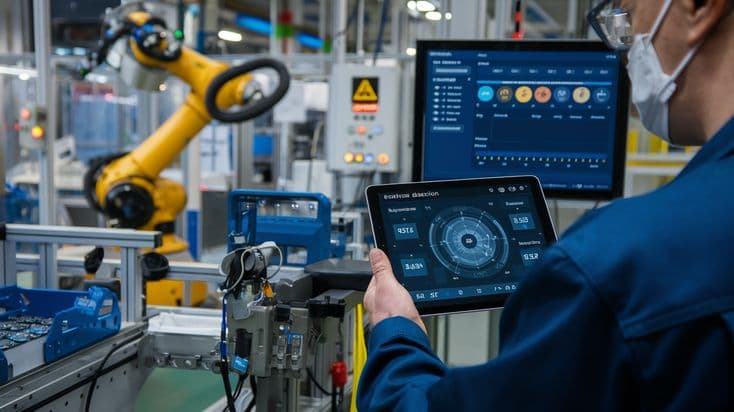
Vision Technology for Quality Control: Complete Guide to Automated Inspection Systems
Vision Technology for Quality Control: Meaning, Applications, Benefits, Challenges and Future TrendsVision technology has become a cornerstone of modern quality control systems across industries. As businesses strive for higher precision, consistency, and efficiency, traditional inspection methods are no longer sufficient to meet the growing demands of production environments. Vision technology, often powered by advanced imaging systems and artificial intelligence, enables organizations to automate quality inspection processes with remarkable accuracy.In today’s competitive industrial landscape, ensuring product quality is critical not only for customer satisfaction but also for regulatory compliance and brand reputation. Vision systems help detect defects, measure dimensions, and verify product integrity in real time, making them an essential tool in automated quality control.This article explores the concept of vision technology in quality control, its working principles, applications, advantages, challenges, and future developments in detail.What is Vision Technology?Vision technology refers to the use of cameras, sensors, and computer algorithms to capture, process, and analyze images for decision-making. It mimics human vision but operates with far greater speed, accuracy, and consistency.Uses cameras and imaging devicesProcesses visual data using softwareIdentifies patterns, defects, and variationsEnables automated decision-makingThese systems are widely used in industrial automation to inspect products and ensure they meet predefined quality standards.What is Quality Control?Quality control is the process of ensuring that products meet specified standards and requirements. It involves inspection, testing, and verification at various stages of production.Ensures product consistencyDetects defects earlyMaintains brand reputationReduces waste and reworkCombining vision technology with quality control allows organizations to automate inspection processes and achieve higher levels of accuracy and efficiency.How Vision Technology Works in Quality ControlVision systems operate by capturing images of products and analyzing them using sophisticated algorithms. These systems compare the captured images against predefined standards to identify defects or deviations.Image acquisition using camerasImage processing and enhancementFeature extraction and analysisDecision-making based on predefined criteriaThe entire process happens in real time, allowing immediate detection and correction of quality issues.Types of Vision SystemsVision systems can be classified into different types based on their complexity and application.2D Vision Systems: Analyze flat images for surface inspection3D Vision Systems: Capture depth information for complex analysisLine Scan Systems: Used for continuous inspection processesSmart Cameras: Integrated systems with built-in processingEach type serves specific industrial needs and enhances the overall quality control process.Applications of Vision Technology in Quality ControlVision technology is widely used across various industries for quality inspection and control.1. Manufacturing IndustryIn manufacturing, vision systems inspect products for defects such as scratches, cracks, and misalignments.Surface defect detectionAssembly verificationDimensional measurement2. Automotive IndustryVision technology ensures that automotive components meet strict quality standards.Part inspectionWeld quality analysisComponent alignment checks3. Electronics IndustryIn electronics, vision systems are used to inspect circuit boards and components.PCB inspectionSolder joint verificationComponent placement accuracy4. Food and Beverage IndustryVision systems ensure product safety and quality in food production.Packaging inspectionContamination detectionLabel verification5. Pharmaceutical IndustryVision technology helps maintain strict quality standards in pharmaceuticals.Tablet inspectionPackaging validationBarcode verificationBenefits of Vision Technology in Quality ControlThe adoption of vision technology offers numerous advantages for quality control processes.High accuracy and precisionFaster inspection speedsReduced human errorConsistent quality standardsCost savings in the long runReal-time monitoring and feedbackThese benefits make vision systems an essential component of modern automated production environments.Challenges of Vision TechnologyDespite its advantages, implementing vision technology comes with certain challenges.High initial investmentComplex system integrationDependence on lighting conditionsMaintenance and calibration requirementsNeed for skilled personnelAddressing these challenges requires proper planning, training, and continuous system optimization.Vision technology transforms quality control from reactive inspection to proactive precision, ensuring excellence in every product.Role of Artificial Intelligence in Vision SystemsArtificial Intelligence (AI) has significantly enhanced the capabilities of vision systems. Machine learning algorithms enable systems to learn from data and improve their performance over time.Improved defect detection accuracyAdaptive learning capabilitiesAdvanced pattern recognitionReduced false positivesAI-powered vision systems are becoming more intelligent and capable of handling complex inspection tasks.Future Trends in Vision TechnologyThe future of vision technology in quality control is driven by continuous innovation and technological advancements.Integration with IoT and smart factoriesCloud-based vision systemsEdge computing for faster processingEnhanced 3D imaging capabilitiesGreater use of AI and deep learningThese trends will further improve efficiency, scalability, and accuracy in quality control processes.Importance in Industrial AutomationVision technology plays a crucial role in industrial automation by enabling real-time inspection and decision-making. It ensures that only high-quality products move forward in the production process.Supports automated production linesReduces production downtimeEnhances operational efficiencyImproves product reliabilityAs industries adopt automation, vision systems become indispensable for maintaining quality standards.Frequently Asked QuestionsWhat is vision technology in quality control?It is the use of cameras and software to inspect and ensure product quality automatically.Where is it used?It is used in manufacturing, automotive, electronics, food, and pharmaceutical industries.What are its benefits?It improves accuracy, reduces errors, increases speed, and ensures consistent quality.ConclusionVision technology for quality control is revolutionizing industrial processes by providing accurate, fast, and reliable inspection systems. It enhances productivity, reduces errors, and ensures that products meet the highest quality standards.As technology continues to evolve, vision systems will become even more advanced, integrating with AI, IoT, and automation to create smarter and more efficient production environments. Organizations that adopt vision technology today will gain a significant competitive advantage in the future.
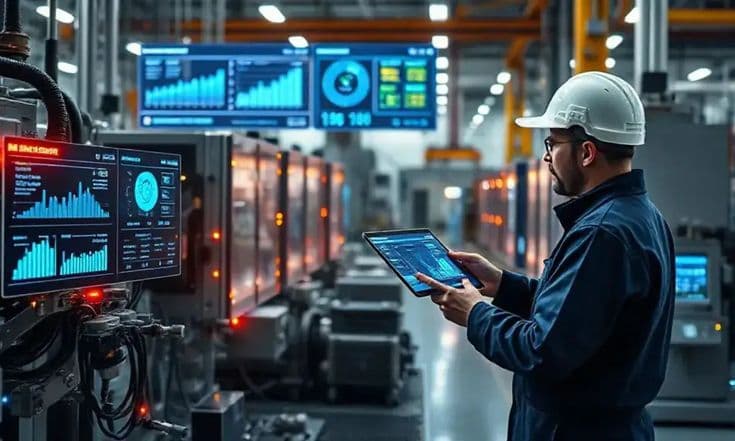
Augmented Reality (AR) in Automation: Transforming Industries with Smart Technology
Augmented Reality (AR) in Automation: Meaning, Applications, Benefits, Challenges and Future ScopeAugmented Reality (AR) is rapidly transforming the world of automation by blending digital information with the physical environment. In today’s fast-evolving technological landscape, businesses are constantly seeking innovative ways to improve efficiency, reduce errors, and enhance productivity. AR in automation has emerged as a powerful solution that bridges the gap between human intelligence and machine precision.From manufacturing floors to healthcare systems and logistics operations, AR is redefining how tasks are performed and monitored. It overlays real-time data, instructions, and visual elements onto the physical world, enabling workers and systems to operate more effectively and intelligently.As industries move toward digital transformation and smart systems, AR plays a vital role in enhancing automation by making processes more interactive, accurate, and efficient.What is Augmented Reality (AR)?Augmented Reality (AR) is a technology that overlays digital content—such as images, text, or data—onto the real-world environment in real time. Unlike Virtual Reality (VR), which creates a completely immersive digital environment, AR enhances the existing physical world by adding virtual elements.Combines real and virtual environmentsProvides real-time interactionEnhances perception with digital overlaysImproves understanding and decision-makingAR devices include smartphones, tablets, smart glasses, and head-mounted displays, all of which enable users to interact with both physical and digital elements simultaneously.What is Automation?Automation refers to the use of technology, machines, and software to perform tasks with minimal human intervention. It is widely used across industries to increase efficiency, reduce costs, and improve accuracy.Reduces manual effortEnhances speed and efficiencyImproves consistency and qualityMinimizes human errorWhen AR is integrated with automation, it creates a powerful combination that enhances both machine performance and human capabilities.How AR Enhances AutomationAR enhances automation by providing real-time visual guidance, data insights, and interactive instructions. It enables workers to perform complex tasks with greater precision while reducing dependency on traditional manuals or training.Displays real-time instructions during operationsImproves machine-human interactionSupports remote monitoring and assistanceEnhances data visualizationBy integrating AR into automated systems, organizations can significantly improve operational efficiency and productivity.Key Applications of AR in AutomationAR is being widely adopted across various industries to enhance automation processes. Below are some of the most important applications:1. ManufacturingIn manufacturing, AR helps workers assemble products by providing step-by-step visual instructions. It also assists in machine maintenance and quality inspection.Guided assembly processesReal-time error detectionMachine maintenance support2. HealthcareAR supports automation in healthcare by assisting in surgeries, diagnostics, and medical training. Doctors can visualize patient data directly during procedures.Surgical assistanceMedical training simulationsPatient data visualization3. Logistics and WarehousingAR improves warehouse automation by guiding workers in picking, packing, and inventory management tasks.Smart picking systemsInventory trackingNavigation assistance4. Maintenance and RepairAR provides real-time instructions for repairing machines, reducing downtime and improving efficiency.Remote expert guidanceStep-by-step repair instructionsError identification5. Training and Skill DevelopmentAR creates interactive training environments that help employees learn faster and more effectively.Simulation-based learningHands-on experienceReduced training timeBenefits of AR in AutomationThe integration of AR in automation offers numerous advantages that improve overall operational performance.Increased productivityReduced human errorsImproved efficiencyEnhanced decision-makingBetter training outcomesReduced operational costsThese benefits make AR a valuable tool for organizations aiming to stay competitive in the modern digital era.Challenges of AR in AutomationDespite its advantages, AR in automation also comes with certain challenges that organizations need to address.High implementation costsTechnical limitationsData security concernsIntegration with existing systemsUser adoption and training issuesOvercoming these challenges requires proper planning, investment, and technological expertise.Augmented Reality is not just a technology—it is a bridge between human intelligence and machine efficiency in the age of automation.Future of AR in AutomationThe future of AR in automation looks promising as advancements in artificial intelligence, machine learning, and IoT continue to evolve. AR will play a crucial role in developing smart factories, autonomous systems, and intelligent workplaces.Integration with AI and roboticsSmart manufacturing systemsEnhanced remote collaborationReal-time analytics and decision-makingAs technology advances, AR will become more accessible, affordable, and widely adopted across industries.Role in Digital TransformationAR is a key component of digital transformation strategies. It helps organizations modernize operations, improve efficiency, and deliver better customer experiences.Enhances user experienceImproves operational efficiencySupports innovationEnables smarter decision-makingBusinesses that adopt AR-driven automation are more likely to achieve long-term success in a competitive environment.Frequently Asked QuestionsWhat is AR in automation?It is the use of augmented reality technology to enhance automated processes with real-time visual data and guidance.Where is AR used in automation?It is used in manufacturing, healthcare, logistics, maintenance, and training.What are the benefits of AR?It improves efficiency, reduces errors, enhances productivity, and supports better decision-making.ConclusionAugmented Reality in automation is revolutionizing how industries operate by combining digital intelligence with physical processes. It enhances productivity, improves accuracy, and provides real-time insights that drive better decision-making. While there are challenges to overcome, the benefits far outweigh the limitations.As technology continues to evolve, AR will become an integral part of automation systems, enabling smarter, faster, and more efficient operations. Organizations that embrace this innovation today will be better positioned for success in the future.

Open-Source Automation Tools: Benefits, Features, and Real-World Applications
Open-Source Automation Tools Explained: Meaning, Types, Importance and How They Work in Modern DevelopmentIn today’s fast-paced digital world, automation has become a critical part of software development, IT operations, and business processes. One of the most powerful trends driving this transformation is the use of open-source automation tools. These tools provide flexibility, scalability, and cost-effectiveness, enabling organizations to automate repetitive tasks and improve efficiency.Open-source automation tools are freely available software solutions that allow developers and organizations to modify, customize, and distribute code according to their needs. They are widely used across industries for tasks such as testing, deployment, configuration management, and workflow automation.Whether you are a developer, system administrator, or business owner, understanding open-source automation tools is essential for improving productivity and staying competitive in the modern technological landscape.What Are Open-Source Automation Tools?Open-source automation tools are software applications designed to automate tasks and processes while allowing users to access and modify the source code. These tools help reduce manual effort and improve consistency in workflows.Freely available and customizableSupport automation of repetitive tasksCommunity-driven developmentFlexible integration with other systemsThey play a vital role in modern software development and IT operations.How Open-Source Automation Tools WorkThese tools work by automating tasks through scripts, workflows, and predefined rules. They can integrate with various systems to perform complex operations efficiently.Define automation scripts or workflowsConnect with systems and applicationsExecute tasks automaticallyMonitor and log performanceThis process reduces manual errors and increases operational efficiency.Types of Open-Source Automation ToolsThere are several types of automation tools based on their functionality and use cases.Testing Tools: Automate software testing processesCI/CD Tools: Automate build and deployment pipelinesConfiguration Management Tools: Manage infrastructureWorkflow Automation Tools: Automate business processesEach type serves a unique purpose in the development lifecycle.Popular Open-Source Automation ToolsSeveral open-source tools are widely used across industries.Jenkins: Continuous integration and deploymentAnsible: Configuration managementSelenium: Automated testingApache Airflow: Workflow automationThese tools provide powerful capabilities for automation.Importance of Open-Source Automation ToolsOpen-source automation tools are essential for improving efficiency and reducing operational costs.Reduce manual effortImprove accuracy and consistencyEnable faster development cyclesEnhance scalabilityThey are a key component of modern IT infrastructure.Benefits of Open-Source Automation ToolsCost-effective solutionsCustomizable and flexibleStrong community supportRapid innovationThese benefits make them highly attractive for organizations of all sizes.Applications in Real-World ScenariosOpen-source automation tools are used in various industries to streamline operations.Software development and testingCloud infrastructure managementData processing and analyticsBusiness workflow automationTheir versatility makes them indispensable in modern environments.Challenges and LimitationsDespite their advantages, open-source automation tools come with certain challenges.Requires technical expertiseLimited official supportSecurity concernsMaintenance overheadProper management is required to overcome these challenges.Open-Source vs Proprietary ToolsOpen-source → Free and customizableProprietary → Paid and restrictedOpen-source → Community-drivenProprietary → Vendor-supportedChoosing the right option depends on business needs.Role in DevOps and AutomationOpen-source automation tools play a crucial role in DevOps by enabling continuous integration, delivery, and deployment.Improve collaborationAutomate pipelinesEnhance productivityThey are essential for modern DevOps practices.Future of Open-Source Automation ToolsThe future of open-source automation tools is promising, with advancements in AI and cloud technologies.AI-powered automationIncreased adoption in enterprisesBetter integration capabilitiesEnhanced security featuresThese tools will continue to evolve with technology.Open-source automation tools empower organizations to innovate faster, reduce costs, and build scalable solutions in a rapidly changing digital world.Best Practices for Using Automation ToolsStart with simple automation tasksEnsure proper documentationMaintain security standardsRegularly update toolsFollowing best practices ensures maximum efficiency and reliability.Frequently Asked QuestionsWhat are open-source automation tools?They are tools that automate tasks and allow users to modify source code.Why are they important?They improve efficiency, reduce costs, and support automation.Where are they used?They are used in software development, IT operations, and business workflows.ConclusionOpen-source automation tools have become an essential part of modern technology ecosystems. They provide flexibility, scalability, and cost-effective solutions for automating tasks and improving efficiency. By understanding their meaning, types, and importance, individuals and organizations can leverage these tools to achieve better productivity and innovation in their workflows.

Dynamic Data Integration: Real-Time Data Management for Modern Businesses
Dynamic Data Integration: Meaning, Types, Importance and How It Works in Modern SystemsIn today’s data-driven world, organizations rely heavily on accurate, timely, and well-structured data to make informed decisions. One of the most important concepts that enables this capability is Dynamic Data Integration. It refers to the process of continuously collecting, combining, and transforming data from multiple sources in real time or near real time.Unlike traditional data integration methods, which often rely on batch processing and static pipelines, dynamic data integration allows systems to adapt quickly to changing data sources, formats, and business requirements. This flexibility is essential for modern enterprises that operate in fast-paced environments.Whether it is a business managing customer data, a financial system tracking transactions, or an IoT network collecting sensor data, dynamic data integration ensures seamless data flow across systems.What Is Dynamic Data Integration?Dynamic data integration is the process of integrating data from multiple sources in a flexible, real-time, and automated manner. It ensures that data is always up to date and accessible across systems without manual intervention.Real-time or near real-time data processingIntegration across multiple data sourcesAutomated data transformationScalable and flexible architectureIt plays a crucial role in enabling businesses to operate efficiently in a constantly changing environment.How Dynamic Data Integration WorksDynamic data integration works through a combination of technologies and processes that ensure continuous data flow. These systems are designed to handle large volumes of data efficiently.Data extraction from various sourcesData transformation into a unified formatReal-time data processingData delivery to target systemsThis process allows organizations to make faster and more accurate decisions.Key Components of Dynamic Data IntegrationSeveral key components work together to enable dynamic data integration.Data Sources: Databases, APIs, cloud systems, IoT devicesIntegration Tools: ETL/ELT tools and middlewareProcessing Engines: Real-time data processing systemsStorage Systems: Data warehouses and data lakesThese components create a robust ecosystem for seamless data flow.Types of Data IntegrationDynamic data integration can be categorized into different types based on how data is processed and delivered.Batch Integration: Data processed at scheduled intervalsReal-Time Integration: Immediate data processingStreaming Integration: Continuous data flowCloud-Based Integration: Integration across cloud platformsEach type serves specific use cases depending on business requirements.Importance of Dynamic Data IntegrationDynamic data integration is essential for modern businesses as it ensures accurate and timely access to data.Improves decision-makingEnhances operational efficiencyReduces data silosEnables real-time insightsIt helps organizations stay competitive in a rapidly evolving market.Benefits of Dynamic Data IntegrationFaster data processingImproved data accuracyScalabilityBetter collaboration across teamsThese benefits make it a critical component of digital transformation strategies.Applications of Dynamic Data IntegrationDynamic data integration is widely used across industries to improve efficiency and innovation.Business intelligence and analyticsHealthcare data managementFinancial transaction processingE-commerce platformsIoT systemsIts applications continue to grow as data becomes more critical.Challenges in Dynamic Data IntegrationDespite its advantages, dynamic data integration comes with challenges.Data security concernsIntegration complexityData quality issuesHigh implementation costsAddressing these challenges is essential for successful implementation.Dynamic Data Integration vs Traditional IntegrationTraditional → Batch processingDynamic → Real-time processingTraditional → Static pipelinesDynamic → Flexible and adaptiveThis shift highlights the importance of modern data integration approaches.Role in Digital TransformationDynamic data integration plays a crucial role in digital transformation by enabling seamless data flow across systems.Enhances productivitySupports automationImproves decision-makingIt is a key driver of innovation and efficiency.Future of Dynamic Data IntegrationThe future of dynamic data integration is promising, with advancements in AI, cloud computing, and big data technologies.AI-powered data integrationIncreased automationReal-time analyticsImproved data governanceIt will continue to evolve as organizations rely more on data-driven strategies.Dynamic data integration is the backbone of modern data systems, enabling organizations to turn raw data into actionable insights in real time.Frequently Asked QuestionsWhat is dynamic data integration?It is the process of integrating data from multiple sources in real time.Why is it important?It enables real-time decision-making and improves efficiency.Where is it used?It is used in business analytics, healthcare, finance, and more.ConclusionDynamic data integration is a fundamental component of modern data systems. It enables organizations to process and analyze data in real time, improving efficiency and decision-making. As technology continues to evolve, dynamic data integration will play an even more critical role in shaping the future of data-driven innovation.
Artificial Intelligence (AI) and Machine Learning Integration: Transforming the Future of Technology
Artificial Intelligence (AI) and Machine Learning IntegrationArtificial Intelligence (AI) has emerged as one of the most transformative technologies of the modern era. From powering virtual assistants to enabling autonomous vehicles, AI is reshaping how humans interact with machines. At the heart of this revolution lies Machine Learning (ML), a subset of AI that allows systems to learn from data and improve performance without explicit programming.The integration of Artificial Intelligence and Machine Learning represents a significant leap forward in technological evolution. Rather than relying solely on predefined rules, modern systems can now adapt, analyze, and make intelligent decisions based on real-time data. This shift has opened new possibilities across industries, including healthcare, finance, retail, manufacturing, and more.In today’s digital landscape, organizations are increasingly adopting AI and ML integration to automate operations, enhance customer experiences, and gain competitive advantages. As data continues to grow exponentially, the ability of machines to process and learn from this data becomes more critical than ever.Understanding how AI and Machine Learning work together is essential for developers, businesses, and anyone interested in the future of technology. This article explores the concepts, working mechanisms, applications, benefits, challenges, and future trends of AI and ML integration in detail.What Is Artificial Intelligence and Machine Learning Integration?Artificial Intelligence refers to the simulation of human intelligence in machines, enabling them to perform tasks such as reasoning, problem-solving, decision-making, and language understanding. Machine Learning, on the other hand, is a subset of AI that focuses on developing algorithms that allow systems to learn from data and improve over time.AI and Machine Learning integration combines these capabilities to create intelligent systems that can analyze data, identify patterns, and make autonomous decisions. This integration eliminates the need for manual rule-based programming and allows systems to evolve based on experience.Data-driven intelligenceAutomated learning and adaptationPattern recognition and predictionSelf-improving systemsInstead of relying on static instructions, integrated AI systems continuously learn from new data, making them more accurate and efficient over time.Evolution of AI and Machine LearningThe journey of AI began in the mid-20th century with rule-based systems that relied heavily on predefined logic. These systems were limited in scope and required extensive human intervention. Over time, advancements in computing power, data availability, and algorithm design led to the development of Machine Learning.Machine Learning introduced the concept of training models using data rather than explicitly programming rules. This shift allowed systems to recognize patterns and make predictions. With the rise of big data and cloud computing, AI and ML integration has become more powerful and accessible.Today, deep learning, a subset of ML, enables complex tasks such as image recognition, speech processing, and natural language understanding. The integration of AI with ML has transformed industries and continues to drive innovation.How AI and Machine Learning Integration WorksThe integration process involves several steps that enable machines to learn from data and perform intelligent actions.Data Collection: Gathering structured and unstructured data from various sourcesData Processing: Cleaning and organizing data for analysisModel Training: Using machine learning algorithms to train modelsPrediction and Decision-Making: Applying trained models to make decisionsContinuous Learning: Improving performance based on feedback and new dataThis iterative cycle ensures that AI systems remain adaptive and accurate. As more data becomes available, models improve, leading to better outcomes.For example, recommendation systems use ML algorithms to analyze user behavior and suggest relevant content. Similarly, fraud detection systems identify suspicious activities by learning patterns from historical data.Types of Machine Learning in AI IntegrationMachine Learning can be categorized into several types, each playing a crucial role in AI integration.Supervised Learning: Models are trained using labeled dataUnsupervised Learning: Systems identify patterns in unlabeled dataReinforcement Learning: Systems learn through trial and errorDeep Learning: Uses neural networks for complex tasksThese approaches enable AI systems to handle a wide range of problems, from simple classification tasks to complex decision-making scenarios.Key Features of AI and ML IntegrationThe integration of AI and ML introduces several powerful features that enhance system capabilities.Automation of repetitive tasksReal-time data analysisPredictive capabilitiesScalability across systemsAdaptive learning and improvementThese features allow organizations to optimize operations and deliver better services.Applications of AI and Machine Learning IntegrationAI and ML integration is transforming industries by enabling intelligent automation and data-driven insights.Healthcare: Disease prediction, diagnostics, and personalized treatmentFinance: Fraud detection, risk assessment, and algorithmic tradingRetail: Recommendation systems and customer behavior analysisManufacturing: Predictive maintenance and process optimizationTransportation: Autonomous vehicles and traffic managementEducation: Personalized learning experiencesThese applications demonstrate the versatility and impact of AI and ML integration in modern society.Benefits of AI and Machine Learning IntegrationImproved accuracy and efficiencyFaster decision-makingReduced operational costsEnhanced user experiencesScalable solutions for large datasetsOrganizations that adopt AI and ML integration can gain a competitive edge by leveraging data-driven insights.Challenges and LimitationsDespite its advantages, AI and ML integration comes with challenges.Data privacy and security concernsBias in machine learning modelsHigh computational requirementsLack of transparency in decision-makingDependence on quality dataAddressing these challenges is essential to ensure ethical and responsible use of AI technologies.AI vs Machine LearningAI is the broader concept of intelligent systemsMachine Learning is a subset focused on data-driven learningAI includes reasoning and decision-makingML focuses on pattern recognition and predictionTheir integration enhances the overall capabilities of intelligent systems.Future TrendsThe future of AI and ML integration is promising, with advancements in several areas.Explainable AI for better transparencyEdge AI for real-time processingAI-powered automation across industriesIntegration with IoT and big dataHuman-AI collaborationThese trends will shape the next generation of intelligent systems.AI and Machine Learning integration is not just about automation—it is about creating intelligent systems that can learn, adapt, and transform the world.Role in Digital TransformationAI and ML integration plays a vital role in digital transformation by enabling organizations to modernize operations and improve efficiency.Enhances productivityImproves decision-makingReduces costsEnables innovationIt is a key driver of growth in the digital economy.Frequently Asked QuestionsWhat is AI and ML integration?It is the combination of artificial intelligence and machine learning to build intelligent systems.Why is it important?It enables automation, improves efficiency, and enhances decision-making.Where is it used?It is used in healthcare, finance, retail, and many other industries.ConclusionThe integration of Artificial Intelligence and Machine Learning marks a major milestone in the evolution of technology. By enabling systems to learn from data and make intelligent decisions, it is transforming industries and redefining the future of innovation. As advancements continue, AI and ML integration will unlock new opportunities and reshape how humans interact with machines.

Embroidery Printing: Guide to Modern Fabric Decoration
Embroidery Printing: A Complete Guide to Modern Fabric DecorationThe world of fashion and textile design continues to evolve, and embroidery printing has become one of the most popular methods for decorating fabrics. This technique combines the elegance of embroidery with the precision of modern printing technology, allowing designers and businesses to create stunning patterns on clothing, uniforms, and decorative fabrics.Today, embroidery printing is widely used in industries such as fashion, corporate branding, sportswear, and promotional merchandise. It helps create high-quality designs that are durable, stylish, and visually appealing.Whether you are a designer, entrepreneur, or someone interested in textile art, understanding embroidery printing can help you explore creative possibilities and business opportunities in the garment industry.What Is Embroidery Printing?Embroidery printing refers to the process of decorating fabric by stitching designs using threads, sometimes combined with printing techniques to create detailed patterns and textures.Uses threads stitched onto fabricCreates durable and decorative designsOften combined with digital printing methodsPopular for clothing, uniforms, and accessoriesThis technique gives garments a premium and professional appearance compared to regular printed designs.Types of Embroidery Printing TechniquesThere are several techniques used in embroidery printing depending on the design and purpose.Machine Embroidery: Computer-controlled machines stitch designs automatically.Hand Embroidery: Traditional technique where designs are stitched manually.Digital Embroidery Printing: Combines embroidery with digital printing technology.Logo Embroidery: Commonly used for company branding and uniforms.Each of these embroidery printing styles offers unique benefits depending on the design complexity and production requirements.Advantages of Embroidery PrintingMany designers and businesses prefer embroidery printing because it offers several advantages compared to traditional printing.Highly durable designsProfessional and premium appearanceResistant to fading and washingIdeal for logos and brandingSuitable for various fabricsBecause of these benefits, embroidery printing is commonly used for uniforms, caps, jackets, and promotional clothing.Applications of Embroidery PrintingThe use of embroidery printing can be seen in many industries and creative fields.Fashion and apparel designCorporate uniforms and brandingSports team jerseysCustom clothing and giftsHome decor textilesWith the rise of personalized fashion and custom merchandise, the demand for embroidery printing continues to grow rapidly.Frequently Asked Questions (FAQs)What is embroidery printing?Embroidery printing is a technique used to decorate fabric by stitching designs with threads, sometimes combined with digital printing for detailed patterns.Is embroidery printing better than regular printing?Embroidery printing is often considered more durable and premium compared to standard fabric printing.Where is embroidery printing commonly used?It is commonly used for uniforms, fashion clothing, caps, promotional items, and custom merchandise.Can embroidery printing be used for logos?Yes, many businesses use embroidery printing for logos on shirts, jackets, and corporate uniforms.Is embroidery printing expensive?The cost depends on the design complexity and quantity, but it often provides excellent value because of its durability and professional appearance.ConclusionEmbroidery printing is a powerful fabric decoration method that combines creativity, durability, and professional design quality. From fashion brands to corporate uniforms, this technique continues to play an important role in the textile industry.As technology improves, embroidery printing is becoming even more advanced, allowing designers to produce intricate and long-lasting designs that stand out in the competitive world of fashion and branding..article-container{ font-family:Arial, Helvetica, sans-serif; line-height:1.8; color:#374151; max-width:1000px; margin:auto; padding:20px; background:#ffffff; } .article-container h1{ font-size:30px; color:#1e3a8a; border-left:6px solid #3b82f6; padding-left:15px; margin-bottom:25px; } .article-container h2{ color:#3b82f6; font-size:24px; margin-top:35px; } .article-container ul{ padding-left:20px; } .article-container li{ margin-bottom:8px; } .article-container .article-image{ width:100%; border-radius:10px; margin:25px 0; } .article-container details{ border:1px solid #ddd; padding:15px; margin-bottom:10px; border-radius:6px; background:#f9fafb; } .article-container summary{ cursor:pointer; font-weight:bold; color:#1e3a8a; }

6 G is the next generation of wireless networks after 5 G promising ultra-fast internet
6G: The Next Generation of Wireless Networks After 5GThe world of wireless communication is evolving rapidly. After the widespread adoption of 5G technology, the next revolutionary step is 6G wireless networks. 6G is expected to deliver ultra-fast internet speeds, extremely low latency, and intelligent connectivity that will power the future of digital transformation.While 5G is still expanding globally, researchers, technology companies, and governments are already investing in the development of 6G networks. This next-generation technology aims to connect billions of devices, support advanced artificial intelligence applications, and enable immersive experiences such as holographic communication, smart cities, autonomous transportation, and advanced healthcare systems.6G networks are predicted to offer speeds up to 100 times faster than 5G while drastically reducing latency. This will allow real-time communication between machines, devices, and users in ways that were previously impossible.What is 6G Technology?6G refers to the sixth generation of wireless communication technology that will succeed 5G networks. It is expected to provide extremely high data transfer speeds, near-zero latency, and highly reliable connectivity for advanced digital applications.Experts believe that 6G networks could achieve speeds of up to 1 terabit per second, which is significantly faster than current wireless technologies. This level of performance will support complex applications such as real-time holographic video communication, remote robotic surgery, and fully autonomous transportation systems.Ultra-high internet speedsNear zero latency communicationAI-powered network managementAdvanced IoT connectivitySeamless global coverageUnlike previous wireless technologies, 6G will integrate artificial intelligence deeply into its network infrastructure. This will allow networks to automatically optimize performance, detect issues, and manage connectivity in real time.How 6G is Different from 5GAlthough 5G technology already offers significant improvements over 4G networks, 6G is expected to push the boundaries even further. It will not only increase speed but also enhance reliability, intelligence, and connectivity across industries.Speed and Bandwidth6G networks are expected to deliver speeds that are many times faster than 5G. While 5G provides gigabit speeds, 6G could reach terabit-level performance.Ultra-Low LatencyLatency refers to the delay between sending and receiving data. 6G networks aim to reduce latency to almost zero, enabling instant communication between devices.AI IntegrationArtificial intelligence will play a major role in managing 6G networks. AI-driven systems will analyze traffic patterns and automatically optimize network performance.Global Connectivity6G may integrate satellite communication with terrestrial networks to provide seamless global coverage, including remote areas.Applications of 6G TechnologyThe introduction of 6G technology will transform many industries. With extremely fast connectivity and intelligent networking, new possibilities will emerge in healthcare, education, transportation, entertainment, and smart infrastructure.Smart Cities6G networks will support advanced smart city infrastructure where traffic systems, energy grids, security systems, and public services are connected through intelligent networks.Autonomous VehiclesSelf-driving cars require instant communication with other vehicles and traffic infrastructure. 6G will enable reliable real-time communication for autonomous transportation systems.Healthcare InnovationMedical professionals could perform remote robotic surgeries using 6G connectivity. Real-time monitoring devices will allow doctors to track patient health continuously.Immersive Virtual Reality6G will power immersive virtual and augmented reality experiences, allowing users to interact in realistic digital environments.Advanced RoboticsRobots connected through 6G networks will perform complex tasks in manufacturing, logistics, and hazardous environments.Key Technologies Behind 6GSeveral advanced technologies will form the foundation of 6G wireless networks.Terahertz Communication6G networks are expected to operate in terahertz frequency bands, which can transmit enormous amounts of data at extremely high speeds.Artificial Intelligence NetworkingAI-powered systems will manage network traffic, detect failures, and optimize connectivity automatically.Integrated Satellite SystemsSatellite-based communication may be integrated with terrestrial networks to provide global connectivity.Advanced Edge ComputingEdge computing will allow data processing to occur closer to devices, reducing latency and improving performance.Challenges in Developing 6G NetworksAlthough the potential of 6G is enormous, developing this technology presents several challenges.High infrastructure costsComplex network designEnergy consumption concernsSecurity and privacy risksGlobal standardization requirementsGovernments and technology companies are working together to overcome these challenges through research and innovation.Future of 6G TechnologyMost experts predict that 6G networks could become commercially available around the year 2030. Many countries have already launched research programs to develop the next generation of wireless communication.Technology companies, telecom operators, and research institutions are investing billions of dollars into 6G development. As the technology evolves, it will unlock new opportunities for innovation, economic growth, and digital transformation.Frequently Asked Questions (FAQs)What is 6G technology?6G is the sixth generation of wireless communication technology that will succeed 5G. It aims to provide extremely high internet speeds, ultra-low latency, and intelligent connectivity for future digital applications.How fast will 6G internet be?Experts estimate that 6G networks could reach speeds of up to 1 terabit per second, which is significantly faster than current 5G networks.When will 6G be available?Most researchers believe that 6G technology could become commercially available around 2030 as global development and testing progress.What industries will benefit from 6G?Industries such as healthcare, transportation, manufacturing, education, and entertainment will benefit from 6G connectivity.Is 6G better than 5G?Yes. 6G is expected to provide faster speeds, lower latency, improved reliability, and advanced AI-powered networking compared to 5G technology.Conclusion6G represents the future of wireless communication and has the potential to transform how people interact with technology. With ultra-fast speeds, intelligent connectivity, and near-zero latency, 6G networks will enable groundbreaking innovations across industries.From smart cities and autonomous transportation to advanced healthcare and immersive digital experiences, the possibilities of 6G technology are vast. Although commercial deployment may still be several years away, ongoing research and investment are accelerating the development of this revolutionary technology.As the world continues to embrace digital transformation, 6G will play a crucial role in shaping the next era of connectivity, innovation, and technological progress..article-container { font-family: -apple-system, BlinkMacSystemFont, "Segoe UI", Roboto, Helvetica, Arial, sans-serif; line-height: 1.7; color: #374151; max-width: 900px; margin: 0 auto; padding: 20px; background-color: #ffffff; } .article-container h1 { font-size: 28px; font-weight: bold; color: #1e3a8a; margin-bottom: 1.5rem; border-left: 6px solid #3b82f6; padding-left: 15px; } .article-container h2 { font-size: 24px; font-weight: bold; color: #1e3a8a; margin-top: 2.5rem; } .article-container h3 { font-size: 20px; font-weight: bold; color: #3b82f6; } .article-container .article-image { width: 100%; height: auto; border-radius: 12px; margin: 2rem 0; } .article-container details { border: 1px solid #e5e7eb; border-radius: 8px; padding: 12px 16px; margin-bottom: 10px; background-color: #f9fafb; } .article-container summary { font-weight: bold; cursor: pointer; color: #1e3a8a; }
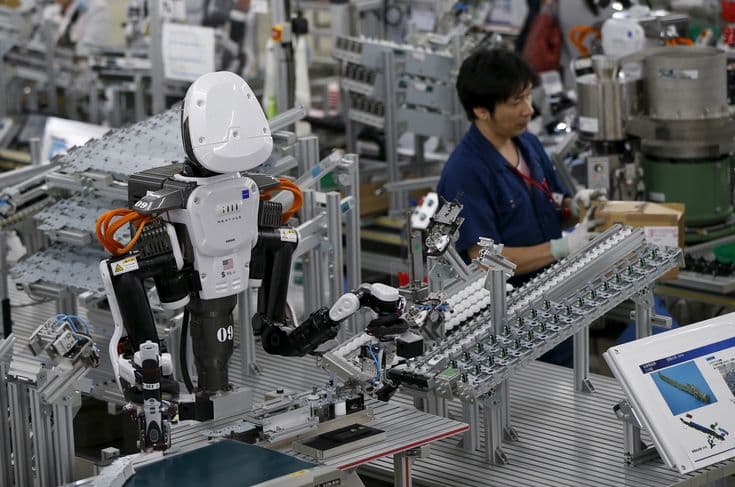
Humanoid Robots and Automation Systems Are Transforming Factories, Warehouses, and Logistics
Humanoid Robots and Automation Systems Transforming Factories, Warehouses, and LogisticsHumanoid robots and automation systems are increasingly being used in factories, warehouses, and logistics operations to handle repetitive and labor-intensive work. These advanced machines are designed to mimic human movements and perform tasks with high precision, speed, and consistency. As industries aim to improve productivity and reduce operational costs, robotics technology is becoming a central component of modern manufacturing and supply chain management.Automation technologies powered by artificial intelligence, sensors, and machine learning allow robots to carry out complex tasks such as assembly, sorting, packaging, and transportation of goods. Companies around the world are investing heavily in robotics to improve efficiency, reduce workplace injuries, and address labor shortages. Understanding Humanoid RobotsHumanoid robots are robots designed to resemble human body structures and movements. They typically include arms, legs, sensors, cameras, and advanced processors that enable them to interact with their environment. Unlike traditional industrial robots that are fixed in one location, humanoid robots are more flexible and can perform a wide variety of tasks.These robots can walk, pick up objects, operate machinery, and assist workers in different environments. Their design makes them especially useful in workplaces where human-like interaction and mobility are required.Human-like movement and flexibilityAdvanced sensors and camerasAI-powered decision makingAbility to collaborate with humansAdaptability in different work environmentsIn factories, humanoid robots are often used to handle repetitive and physically demanding work. Tasks such as assembling parts, moving materials, packaging products, and inspecting items can be performed by robots with high accuracy. Since robots do not get tired, they can work continuously for long hours without breaks. This significantly increases production efficiency and reduces the risk of human errors.Automation systems also play a major role in manufacturing. Automation refers to the use of machines, software, and technology to perform tasks automatically with minimal human intervention. Automated systems can control production lines, monitor machines, and manage inventory. This improves the overall speed and efficiency of industrial operations.Warehouses are another area where humanoid robots and automation systems are widely used. Large companies rely on automated robots to organize and transport goods within warehouses. These robots can scan barcodes, identify items using sensors, and move packages to the correct location. By automating these tasks, companies can reduce manual labor and speed up order processing.For example, companies like Amazon use advanced robotic systems in their warehouses to manage large volumes of products. Robots help in sorting, packing, and transporting items, making it possible to deliver products to customers quickly and efficiently.In the logistics industry, robots and automated systems help in handling shipping and transportation tasks. They can load and unload goods, sort parcels, and prepare packages for delivery. This is especially useful in large distribution centers where thousands of packages need to be processed every day.Another advantage of humanoid robots is workplace safety. Many industrial tasks involve heavy lifting, repetitive movements, or dangerous environments. Robots can perform these tasks instead of humans, reducing the risk of injuries and accidents.However, the adoption of humanoid robots also presents certain challenges. The technology is still expensive, and companies need to invest significant resources to implement robotic systems. Additionally, robots require regular maintenance and software updates to operate effectively.There are also concerns about job displacement, as automation may reduce the need for certain types of manual labor. However, many experts believe that robots will mainly assist workers rather than replace them completely. Humans will still be needed to supervise systems, manage operations, and handle complex decision-making tasks.Looking toward the future, humanoid robots and automation systems are expected to become more intelligent and affordable. Advances in Artificial Intelligence and machine learning will enable robots to understand environments better, learn new skills, and work alongside humans more effectively.Automation systems involve the use of machines, software, and technology to perform tasks with minimal human intervention. In manufacturing and logistics, automation helps streamline operations and improve efficiency.Industrial robots, conveyor systems, automated guided vehicles (AGVs), and robotic arms are commonly used in modern facilities. These systems work together to transport materials, assemble products, and manage inventory with exceptional accuracy.Applications of Humanoid Robots in FactoriesAssembly Line OperationsHumanoid robots can perform repetitive assembly tasks such as fastening components, installing parts, and inspecting products for quality control. Their precision ensures consistent results across thousands of units.Machine OperationRobots can operate manufacturing equipment such as presses, welding machines, and cutting tools. This reduces the risk of injuries and allows factories to operate continuously.Quality InspectionUsing advanced sensors and computer vision technology, robots can detect defects and ensure that products meet strict quality standards.Automation in Warehouses and LogisticsWarehouses and logistics centers handle massive volumes of goods every day. Automation systems help manage these operations efficiently by reducing manual labor and increasing accuracy.Automated Sorting SystemsRobots can sort packages based on size, destination, and priority. This speeds up order fulfillment and improves delivery efficiency.Inventory ManagementAutonomous robots equipped with sensors can scan shelves and track inventory levels in real time. This helps businesses maintain accurate stock records and avoid shortages.Package TransportationAutomated guided vehicles (AGVs) and robotic carts move materiaHumanoid robots ls through warehouses without human assistance.Benefits of Humanoid Robots and AutomationIncreased productivity and efficiencyReduced operational costsImproved workplace safety24/7 continuous operationHigher accuracy and precisionReduced human errorBy integrating robotics into operations, companies can significantly improve production speed and maintain consistent quality standards.Challenges of Robotics and AutomationDespite their advantages, robotic systems also present certain challenges. Companies must invest heavily in equipment, training, and maintenance to implement automation successfully.High initial investment costsNeed for skilled techniciansIntegration with existing systemsCybersecurity concernsWorkforce adaptation and trainingFuture of Humanoid Robots in IndustryThe future of robotics is rapidly evolving with advances in artificial intelligence, machine learning, and sensor technology. Next-generation humanoid robots will become more intelligent, capable of learning from experience and adapting to different tasks.Experts predict that robots will increasingly collaborate with humans rather than replace them. Human workers will focus on complex decision-making and creative tasks while robots handle repetitive and physically demanding work.Frequently Asked Questions (FAQs)What are humanoid robots?Humanoid robots are robots designed to resemble the human body and perform tasks similar to human workers using advanced sensors, motors, and artificial intelligence.Why are robots used in factories?Robots are used in factories to improve productivity, maintain consistent quality, reduce labor costs, and perform dangerous or repetitive tasks safely.How do robots help in warehouses?Robots assist with sorting packages, transporting goods, tracking inventory, and speeding up order fulfillment processes.Will robots replace human workers?Robots are more likely to assist humans rather than completely replace them. They handle repetitive tasks while humans focus on supervision, problem solving, and creative work.What technologies power modern robots?Modern robots use artificial intelligence, machine learning, sensors, computer vision, and advanced processors to perform tasks efficiently.Humanoid robots ConclusionHumanoid robots and automation systems are transforming modern industries by improving efficiency, accuracy, and productivity. Factories, warehouses, and logistics centers are adopting robotics to handle repetitive work and optimize operations. These technologies help businesses meet increasing demand while maintaining high standards of quality and safety.Although challenges such as cost and workforce adaptation remain, advancements in artificial intelligence and robotics are making automation more accessible and practical for businesses of all sizes. As technology continues to evolve, robots will become more intelligent, flexible, and capable of collaborating with humans. .article-container { font-family:-apple-system,BlinkMacSystemFont,"Segoe UI",Roboto,Helvetica,Arial,sans-serif; line-height:1.7; color:#374151; max-width:900px; margin:0 auto; padding:20px; background-color:#ffffff; } .article-container h1{ font-size:28px; font-weight:bold; color:#1e3a8a; margin-bottom:1.5rem; border-left:6px solid #3b82f6; padding-left:15px; } .article-container h2{ font-size:24px; font-weight:bold; color:#1e3a8a; margin-top:2.5rem; } .article-container h3{ font-size:20px; font-weight:bold; color:#3b82f6; } .article-container .table-wrapper{ overflow-x:auto; margin:2rem 0; } .article-container .article-image{ width:100%; height:auto; border-radius:12px; margin:2rem 0; } .article-container details{ border:1px solid #e5e7eb; border-radius:8px; padding:12px 16px; margin-bottom:10px; background-color:#f9fafb; } .article-container summary{ font-weight:bold; cursor:pointer; color:#1e3a8a; }

Blockchain Technology: Applications Beyond Cryptocurrency
Blockchain Technology: Applications Beyond CryptocurrencyBlockchain technology is widely recognized as the foundation of cryptocurrencies such as Bitcoin and Ethereum. However, blockchain extends far beyond digital currency. At its core, blockchain is a decentralized, distributed ledger that records transactions securely, transparently, and immutably. This architecture eliminates reliance on central authorities and introduces a new model of digital trust powered by cryptographic consensus.As industries increasingly demand transparency, accountability, and automation, blockchain technology is emerging as a transformative infrastructure layer. From healthcare and supply chains to governance and intellectual property management, blockchain is redefining how data is verified, stored, and shared.Understanding Blockchain FundamentalsA blockchain consists of interconnected blocks containing transaction data, timestamps, and cryptographic hashes linking to previous blocks. This chained structure ensures immutability — altering one block would require altering the entire chain across all distributed nodes.Decentralized architectureImmutable cryptographic recordsConsensus validation mechanismsTransparent yet permission-controlled accessSmart contracts for automationUnlike traditional centralized databases, blockchain distributes trust across multiple nodes, enhancing resilience and reducing the risk of data manipulation.Supply Chain ManagementBlockchain enhances supply chain transparency by enabling real-time product tracking from origin to destination. Multiple stakeholders can access verified data without relying on fragmented databases.Authenticity verificationCounterfeit preventionImproved compliance trackingReduced administrative paperworkEnhanced trust among partnersHealthcare and Medical RecordsHealthcare systems generate sensitive patient data that must remain secure and accessible. Blockchain ensures data integrity and controlled sharing between providers while reducing fragmentation.Secure patient record storageInteroperable medical systemsImmutable health history logsStreamlined insurance processingProtection against tamperingDigital Identity and AuthenticationBlockchain-based digital identity systems empower individuals with self-sovereign identity management. Instead of storing identity data in centralized databases, blockchain allows cryptographically verified credentials.Decentralized identity verificationFraud reductionSecure onboarding processesImproved privacy protectionSmart Contracts and AutomationSmart contracts are self-executing agreements coded directly onto blockchain networks. When predefined conditions are met, actions automatically trigger without intermediaries.Automated rental agreementsInstant insurance settlementsEscrow managementReduced legal overheadSmart contracts shift trust from manual enforcement to automated, cryptographic execution.Financial Services Beyond CryptocurrencyBeyond digital currencies, blockchain supports cross-border payments, tokenized assets, and decentralized financial ecosystems.Reduced transaction feesFaster settlement systemsTokenization of real estate and assetsTransparent lending platformsVoting and GovernanceBlockchain-based voting systems offer tamper-proof ballot records and transparent vote counting. While still in pilot stages, this technology aims to enhance democratic trust.Secure digital ballotsImmutable recordsReduced fraud riskRemote participation capabilitiesIntellectual Property ManagementCreators can timestamp and register ownership of digital assets on blockchain networks, ensuring proof of authorship and automated royalty payments.Transparent licensingAutomated revenue distributionReduced piracy riskEnergy and SustainabilityBlockchain supports peer-to-peer renewable energy trading and transparent carbon credit tracking systems.Decentralized energy marketsCarbon credit verificationImproved grid transparencyChallenges and LimitationsScalability constraintsEnergy consumption concernsRegulatory uncertaintyLegacy system integrationTechnical complexityFrequently Asked QuestionsIs blockchain only used for cryptocurrency?No. Blockchain supports supply chains, healthcare, digital identity, governance, and more.What are smart contracts?Self-executing digital agreements that automatically enforce predefined conditions.Is blockchain secure?Blockchain is highly secure due to cryptographic validation and decentralization mechanisms.ConclusionBlockchain technology has evolved far beyond cryptocurrency. Its decentralized infrastructure offers transparency, security, and efficiency across industries. As adoption grows and technological improvements address scalability and regulatory challenges, blockchain stands positioned to redefine trust and digital collaboration in the modern era.

The Rise of Digital Workspaces in the Technology Industry
The rapid evolution of technology has transformed the way professionals work, communicate, and collaborate. Digital workspaces powered by advanced software tools, cloud platforms, and high-performance laptops have become essential components of modern productivity. In technology companies around the world, developers, designers, and engineers rely heavily on digital environments that allow them to build software, analyze data, and create innovative products without the limitations of traditional office setups.The concept of a digital workspace refers to an integrated environment where individuals can access applications, data, and communication tools from anywhere using internet-connected devices. This shift has been accelerated by the widespread adoption of remote work and cloud computing technologies. Employees can now collaborate on complex projects, share documents instantly, and manage workflows across multiple locations.Modern developers typically work on laptops equipped with specialized software tools for programming, debugging, and version control. These tools enable teams to build applications more efficiently while maintaining high standards of security and performance. Designers, on the other hand, use digital design platforms to create visual content, user interfaces, and interactive experiences for websites and mobile applications.Another major factor driving the growth of digital workspaces is the rise of cloud infrastructure. Cloud services allow organizations to store and process massive amounts of data without investing in expensive on-site hardware. By using cloud-based development environments, engineers can deploy applications, test software updates, and scale digital platforms rapidly as user demand increases.The technology industry has also seen an increase in collaborative development practices. Tools such as code repositories, real-time editing platforms, and project management systems enable teams to coordinate their work more effectively. Developers working in different countries can contribute to the same project simultaneously, reducing development time and improving innovation.

Tech Giant Launches AI Productivity Assistant
A new AI assistant capable of managing emails, scheduling meetings, and generating reports has launched globally, signaling rapid AI adoption in workplaces.
Loading popular posts...