Passive Radiative Cooling Materials
As global temperatures continue to rise and urban areas experience increasing heat stress, the demand for energy-efficient cooling technologies has never been greater. Conventional air conditioning systems consume enormous amounts of electricity and contribute significantly to greenhouse gas emissions. To address this challenge, scientists and engineers are developing Passive Radiative Cooling Materials (PRCMs)—advanced materials capable of naturally lowering temperatures without consuming electricity.
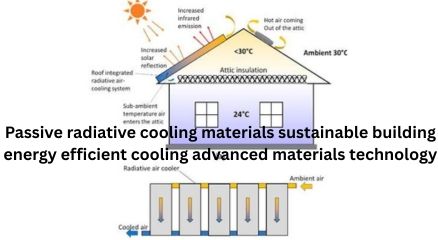
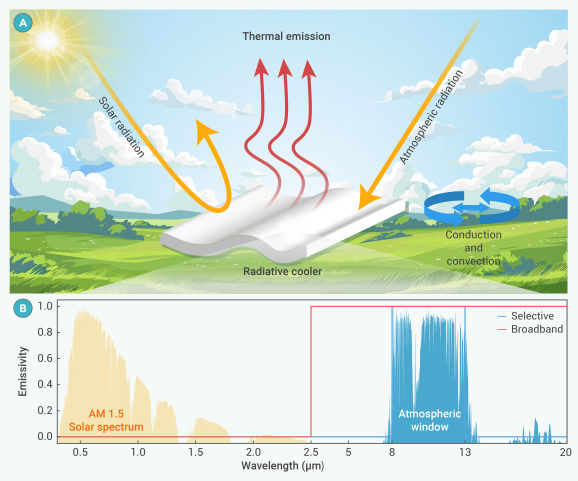
Passive Radiative Cooling Materials work by reflecting most incoming sunlight while simultaneously emitting heat as infrared radiation through Earth's atmospheric window into outer space. This unique capability enables buildings, vehicles, electronics, and industrial equipment to remain cooler even under direct sunlight.
As climate change, sustainable architecture, and energy-efficient infrastructure become global priorities, Passive Radiative Cooling Materials are emerging as one of the most promising innovations in green technology.
What Are Passive Radiative Cooling Materials?
Passive Radiative Cooling Materials are specially engineered surfaces designed to reduce temperatures naturally without requiring electricity or mechanical cooling systems.
These materials perform two critical functions simultaneously:
- Reflect nearly all incoming solar radiation
- Emit thermal energy as infrared radiation into outer space
By minimizing heat absorption and maximizing heat emission, these materials can maintain temperatures below ambient air temperature under suitable atmospheric conditions.
Why Passive Cooling Is Important
Cooling accounts for a significant portion of global electricity consumption, especially in urban environments.
- Growing urban heat islands
- Rising electricity demand
- Increasing air-conditioning usage
- Climate change mitigation
- Sustainable building design
- Reduced carbon emissions
Passive cooling technologies provide an environmentally friendly alternative that requires little or no operational energy.
How Passive Radiative Cooling Works
These materials rely on principles of solar reflection and thermal radiation.
Typical process:
- Sunlight reaches the material.
- Most solar energy is reflected.
- Minimal heat is absorbed.
- The material emits infrared radiation.
- Heat escapes through Earth's atmospheric window (approximately 8–13 micrometers).
- The surface remains cooler than its surroundings.
This process occurs continuously without external power or moving parts.
Key Characteristics
- High solar reflectivity
- Strong infrared emissivity
- No electricity consumption
- Long operational lifespan
- Low maintenance requirements
- Environmentally friendly operation
- Scalable manufacturing potential
These properties make PRCMs highly attractive for sustainable infrastructure.
Types of Passive Radiative Cooling Materials
- Nanophotonic coatings
- Polymer-based cooling films
- Ceramic reflective coatings
- Metamaterials
- Photonic crystal structures
- Reflective building paints
Each material is engineered to maximize solar reflection while enhancing infrared heat emission.
Applications Across Industries
- Residential buildings
- Commercial offices
- Industrial facilities
- Solar panels
- Electric vehicles
- Data centers
- Cold-chain logistics
- Wearable textiles
These materials help reduce cooling costs while improving energy efficiency across numerous sectors.
Passive Radiative Cooling Materials harness the physics of sunlight and thermal radiation to cool buildings and devices naturally, reducing dependence on conventional air conditioning.

Traditional Cooling vs Passive Radiative Cooling
| Traditional Cooling | Passive Radiative Cooling |
|---|---|
| Consumes electricity | Requires no operational electricity |
| Mechanical equipment | Passive material-based cooling |
| Produces indirect carbon emissions | Supports low-carbon cooling |
| Requires regular maintenance | Minimal maintenance required |
Benefits
- Lower electricity consumption
- Reduced cooling costs
- Lower greenhouse gas emissions
- Improved indoor thermal comfort
- Long-term sustainability
- Enhanced energy efficiency
- Support for net-zero buildings
These advantages contribute to greener buildings and more resilient urban environments.
Challenges and Limitations
- Performance varies with weather conditions
- Manufacturing costs for advanced materials
- Long-term durability considerations
- Integration with existing infrastructure
- Scalability of some nanomaterials
- Regional climate differences
Continued research aims to improve performance, affordability, and large-scale deployment.
Future Outlook
Passive Radiative Cooling Materials are expected to play an increasingly important role in sustainable construction and climate adaptation.
- Energy-efficient smart cities
- Net-zero commercial buildings
- Climate-resilient infrastructure
- Cooling for AI data centers
- Next-generation building materials
Future innovations may enable highly efficient cooling coatings for everything from skyscrapers to consumer electronics.
Economic and Strategic Implications
Passive Radiative Cooling Materials have the potential to significantly reduce global energy demand while supporting sustainability goals.
- Lower national electricity consumption
- Reduced infrastructure operating costs
- Growth of green construction industries
- Acceleration of climate adaptation technologies
- Support for carbon-neutral development
Countries investing in advanced cooling materials may strengthen energy resilience while reducing dependence on conventional air-conditioning systems.
Frequently Asked Questions
What are Passive Radiative Cooling Materials?
They are advanced materials designed to naturally cool surfaces by reflecting sunlight and emitting heat as infrared radiation without using electricity.
Where can Passive Radiative Cooling Materials be used?
They can be applied to buildings, roofs, vehicles, solar panels, data centers, industrial equipment, textiles, and many other surfaces requiring efficient thermal management.
Do Passive Radiative Cooling Materials replace air conditioners?
Not entirely. They are generally used to reduce heat gain and cooling demand, complementing conventional cooling systems and improving overall energy efficiency.
Conclusion
Passive Radiative Cooling Materials represent a breakthrough in sustainable thermal management by enabling natural cooling without electricity or mechanical systems. Through advanced material science, nanotechnology, and infrared heat emission, these materials offer an energy-efficient solution for buildings, vehicles, electronics, and industrial infrastructure. As nations pursue climate resilience and carbon-neutral development, Passive Radiative Cooling Materials are expected to become an essential component of next-generation green architecture and sustainable energy systems.