Multi-Cloud and Sovereign AI Infrastructure (Cloud 3.0)
c. Later, hybrid cloud strategies emerged, combining private and public infrastructure. Today, a new paradigm is taking shape—one driven by artificial intelligence, data sovereignty, geopolitical considerations, digital resilience, and distributed computing.
This next generation of cloud architecture is increasingly being described as Cloud 3.0, where Multi-Cloud and Sovereign AI Infrastructure become foundational components of digital ecosystems. Rather than depending on a single cloud provider or jurisdiction, organizations are building intelligent infrastructures that operate across multiple clouds while maintaining control over sensitive data, AI models, and national digital assets.
Cloud 3.0 could fundamentally reshape the future of artificial intelligence, cybersecurity, digital sovereignty, and enterprise computing.

What Is Cloud 3.0?
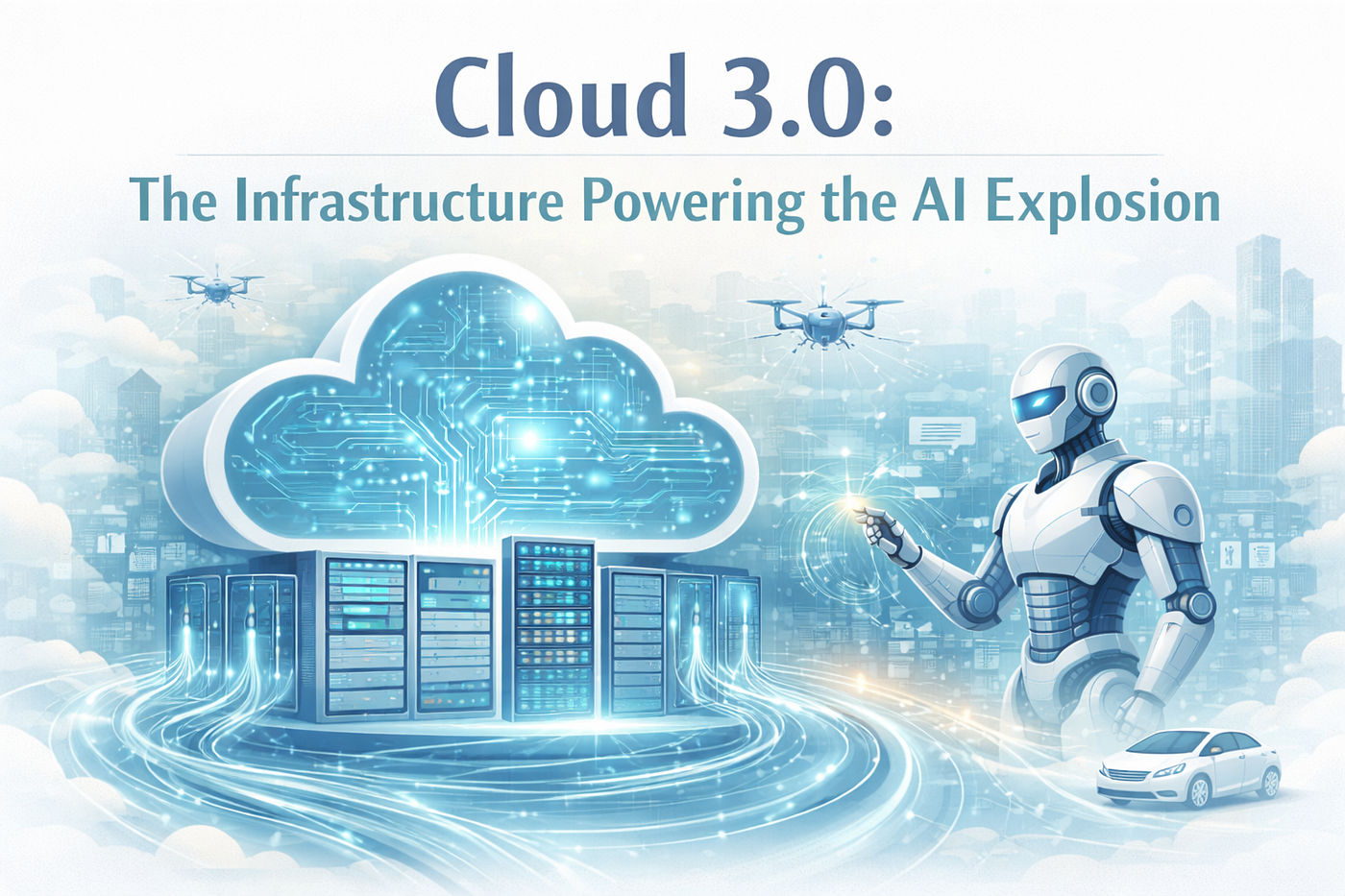
Cloud 3.0 represents the evolution of cloud computing beyond traditional public and hybrid cloud models.
Key characteristics include:
- Multi-cloud deployment strategies
- Sovereign data infrastructure
- AI-native cloud services
- Distributed computing architectures
- Autonomous cloud management
- Policy-driven governance systems
The objective is to create resilient, intelligent, and jurisdiction-aware digital infrastructure.
What Is Multi-Cloud Infrastructure?
Multi-cloud infrastructure refers to the use of multiple cloud providers simultaneously.
Organizations may distribute workloads across:
- Public cloud platforms
- Private cloud environments
- Regional cloud providers
- Edge computing networks
- Industry-specific cloud ecosystems
This approach reduces dependence on a single provider while improving flexibility and resilience.
What Is Sovereign AI Infrastructure?
Sovereign AI Infrastructure refers to AI systems that are controlled, governed, and operated according to local legal, regulatory, and national requirements.
Core elements include:
- Domestic data residency
- National AI model governance
- Local compute infrastructure
- Regulatory compliance controls
- Independent AI capabilities
The goal is to ensure strategic control over critical digital assets and artificial intelligence systems.

Why Cloud 3.0 Is Emerging
Several global trends are accelerating the transition toward Cloud 3.0.
- Rapid AI adoption
- Geopolitical uncertainty
- Cybersecurity concerns
- Data sovereignty regulations
- Cloud concentration risks
- Growing compute demand
Organizations increasingly require greater control, resilience, and flexibility.
How Multi-Cloud and Sovereign AI Work Together
Cloud 3.0 combines distributed infrastructure with intelligent governance.
Typical workflow:
- Data is classified according to sensitivity.
- AI workloads are assigned appropriate environments.
- Sensitive data remains within sovereign infrastructure.
- Less sensitive workloads utilize global cloud resources.
- Policies automatically govern workload placement.
- AI continuously optimizes infrastructure decisions.
The result is a balance between innovation and control.
Key Technologies Driving Cloud 3.0
- Artificial Intelligence Operations (AIOps)
- Kubernetes and Container Platforms
- Confidential Computing
- Zero-Trust Security Frameworks
- Distributed Cloud Systems
- Federated Learning Platforms
- Edge Computing Networks
These technologies enable intelligent and secure workload orchestration.
Cloud 3.0 transforms cloud computing from a location-based service into a sovereign, intelligent, and globally distributed digital ecosystem.
Benefits of Multi-Cloud and Sovereign AI Infrastructure
- Improved digital sovereignty
- Reduced vendor lock-in
- Enhanced cybersecurity resilience
- Regulatory compliance flexibility
- Greater workload portability
- Improved AI governance
- Higher operational resilience
Organizations gain greater strategic control over their digital operations.
Traditional Cloud vs Cloud 3.0
| Traditional Cloud | Cloud 3.0 |
|---|---|
| Single-cloud focus | Multi-cloud ecosystems |
| Centralized infrastructure | Distributed infrastructure |
| Cloud-centric governance | Policy-driven governance |
| Application hosting | AI-native operations |
Challenges and Risks
- Infrastructure complexity
- Higher operational overhead
- Interoperability challenges
- Data governance requirements
- AI model portability issues
- Cybersecurity management complexity
Successful implementation requires advanced orchestration and governance capabilities.
Future Outlook
The next decade may witness the rise of globally distributed sovereign AI ecosystems.
- National AI clouds
- Autonomous infrastructure management
- Cross-border cloud federations
- AI-native operating environments
- Policy-aware computing platforms
Cloud infrastructure may increasingly become an instrument of both innovation and strategic sovereignty.
Economic and Strategic Implications
Multi-Cloud and Sovereign AI Infrastructure could redefine the economics of cloud computing and artificial intelligence.
- Expansion of regional cloud markets
- Growth of sovereign AI ecosystems
- Enhanced digital resilience
- Greater national technological independence
- New opportunities for cloud innovation
The organizations and nations that successfully build Cloud 3.0 capabilities may gain significant competitive advantages in the AI-driven digital economy.
Frequently Asked Questions
What is Cloud 3.0?
Cloud 3.0 is the next evolution of cloud computing focused on multi-cloud ecosystems, sovereign infrastructure, AI-native services, and distributed digital operations.
What is Sovereign AI Infrastructure?
It refers to AI systems and digital infrastructure that remain under local control and comply with national regulations, data residency requirements, and governance frameworks.
Why are organizations adopting multi-cloud strategies?
To reduce vendor lock-in, improve resilience, enhance flexibility, and meet evolving regulatory and operational requirements.
Conclusion
Multi-Cloud and Sovereign AI Infrastructure (Cloud 3.0) represents a significant shift in the evolution of digital ecosystems. By combining distributed cloud architectures, sovereign governance frameworks, and AI-native operations, organizations can create more resilient, secure, and strategically independent infrastructures. As artificial intelligence becomes increasingly central to economic and national competitiveness, Cloud 3.0 may emerge as the foundation of the next generation of global digital transformation.