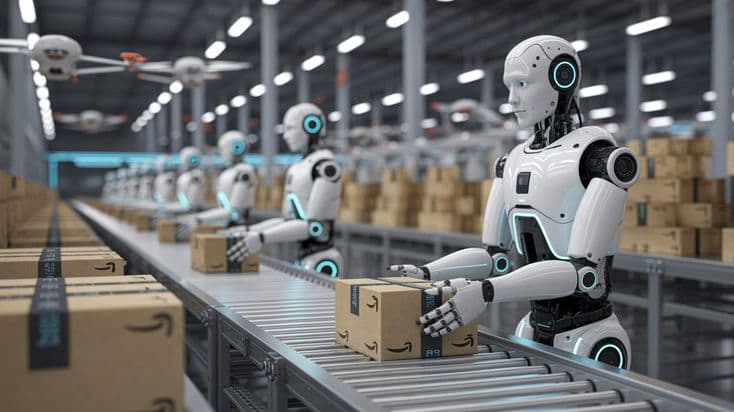
Physical AI & Advanced Robotics: The Future of Intelligent Machines, Autonomous Systems, and Human-Machine Collaboration
Physical AI and Advanced Robotics represent one of the most transformative technological revolutions of the modern era. Unlike traditional software-based artificial intelligence that operates in digital environments, Physical AI extends intelligence into the real world through robots, autonomous machines, and embedded systems that can perceive, decide, and act physically.
This integration of artificial intelligence with robotics enables machines to interact with physical environments in a meaningful, adaptive, and often human-like manner. From industrial automation to healthcare robotics, from autonomous vehicles to smart manufacturing systems, Physical AI is reshaping industries, economies, and human lifestyles at an unprecedented scale.
Advanced Robotics complements Physical AI by providing mechanical systems, sensors, actuators, and control architectures that allow intelligent algorithms to manifest in real-world actions. Together, they form a powerful ecosystem that bridges computation and physical reality.
What is Physical AI?
Physical AI refers to artificial intelligence systems that operate within the physical world using robotic bodies, sensors, and real-time decision-making systems. These systems are designed not only to analyze data but also to act upon it physically.
In essence, Physical AI combines machine learning, computer vision, robotics, edge computing, and control systems to create intelligent agents capable of interacting with real-world environments.
- Integrates AI with physical machines and robotics
- Enables real-time perception and decision-making
- Uses sensors and actuators to interact with the environment
- Operates in dynamic and unpredictable real-world conditions
Physical AI is a major step beyond traditional AI systems, as it introduces embodiment—allowing intelligence to exist in machines that move, manipulate, and respond physically.
What are Advanced Robotics?
Advanced Robotics refers to the development of intelligent robotic systems capable of performing complex tasks with minimal human intervention. These robots are equipped with sensors, AI models, machine learning algorithms, and adaptive control systems.
They are widely used in industries such as manufacturing, logistics, healthcare, defense, space exploration, and agriculture.
- Autonomous decision-making capabilities
- High-precision mechanical movement systems
- Integration with AI and cloud computing
- Ability to learn and adapt over time
Advanced Robotics is not just about automation—it is about intelligence embedded into machines that can perceive and respond like humans or even surpass human efficiency in specific tasks.
Core Components of Physical AI Systems
Physical AI systems are built using a combination of hardware and software components that work together seamlessly.
- Sensors: Cameras, LiDAR, ultrasonic sensors, and infrared systems for perception
- Actuators: Motors, servos, and hydraulic systems for movement
- AI Models: Neural networks for perception, prediction, and control
- Edge Computing: On-device processing for real-time decisions
- Control Systems: Algorithms for motion planning and stability
These components enable robots to interpret their environment, make decisions, and execute actions with precision.
How Physical AI Works
Physical AI systems operate in a continuous loop of perception, reasoning, and action. This cycle allows robots to function intelligently in dynamic environments.
First, sensors collect data from the environment. This data is processed using AI algorithms such as computer vision or deep learning models. The system then interprets the data and makes decisions based on predefined objectives or learned behavior.
Finally, actuators execute the decisions in the physical world, and the cycle repeats, allowing continuous adaptation.
Applications of Physical AI and Robotics
Physical AI is transforming multiple industries by introducing automation, intelligence, and efficiency.
- Manufacturing: Smart factories and robotic assembly lines
- Healthcare: Surgical robots and patient assistance systems
- Transportation: Autonomous vehicles and drones
- Agriculture: Precision farming and robotic harvesting
- Retail: Automated warehouses and delivery robots
These applications improve productivity, reduce human error, and enable operations in hazardous environments.
Role of AI Models in Robotics
AI models are the brain of modern robotics systems. They enable robots to understand environments, recognize objects, and make intelligent decisions.
Deep learning models are commonly used for vision tasks, while reinforcement learning is used for decision-making and control optimization.
- Computer vision for object detection
- Natural language processing for human interaction
- Reinforcement learning for autonomous behavior
- Predictive analytics for motion planning
Edge Computing in Physical AI
Edge computing plays a critical role in Physical AI by enabling real-time processing directly on robotic devices rather than relying on cloud servers.
This reduces latency, improves responsiveness, and ensures that robots can function effectively in environments with limited connectivity.
Challenges in Physical AI and Robotics
- High cost of development and deployment
- Complexity of real-world environments
- Safety and ethical concerns
- Limited adaptability in unpredictable situations
- Dependence on large datasets for training
Despite these challenges, continuous advancements in AI and robotics are rapidly overcoming these limitations.
Future of Physical AI and Advanced Robotics
The future of Physical AI is expected to bring fully autonomous cities, intelligent homes, and humanoid robots capable of performing complex human tasks.
With advancements in generative AI, robotics will become more adaptive, creative, and collaborative, working alongside humans rather than replacing them.
Human-Robot Collaboration
One of the most important aspects of Physical AI is collaboration between humans and machines. Robots are increasingly being designed to assist humans rather than replace them.
This includes collaborative robots (cobots) in factories, AI assistants in healthcare, and autonomous systems that enhance human productivity.
Frequently Asked Questions
What is Physical AI?
Physical AI refers to intelligent systems that operate in the real world using robotics and sensors to perceive and act.
How is Physical AI different from traditional AI?
Traditional AI works in digital environments, while Physical AI interacts with the real physical world through machines.
Where is advanced robotics used?
It is used in manufacturing, healthcare, agriculture, logistics, defense, and space exploration.
What technologies power robotics?
AI, machine learning, computer vision, sensors, actuators, and edge computing power modern robotics systems.
Will robots replace humans?
No, most future systems are designed for collaboration, enhancing human productivity rather than replacing humans.
Conclusion
Physical AI and Advanced Robotics are reshaping the future of technology by merging intelligence with physical action. These systems are transforming industries, improving efficiency, and enabling new possibilities that were once considered science fiction.
As innovation continues, the collaboration between humans and intelligent machines will become deeper, safer, and more impactful, leading to a future where Physical AI plays a central role in everyday life and global industries.