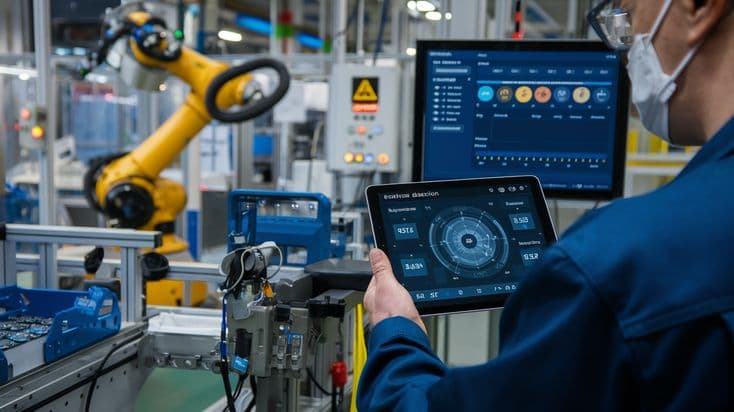
Vision Technology for Quality Control: Meaning, Applications, Benefits, Challenges and Future Trends
Vision technology has become a cornerstone of modern quality control systems across industries. As businesses strive for higher precision, consistency, and efficiency, traditional inspection methods are no longer sufficient to meet the growing demands of production environments. Vision technology, often powered by advanced imaging systems and artificial intelligence, enables organizations to automate quality inspection processes with remarkable accuracy.
In today’s competitive industrial landscape, ensuring product quality is critical not only for customer satisfaction but also for regulatory compliance and brand reputation. Vision systems help detect defects, measure dimensions, and verify product integrity in real time, making them an essential tool in automated quality control.
This article explores the concept of vision technology in quality control, its working principles, applications, advantages, challenges, and future developments in detail.
What is Vision Technology?
Vision technology refers to the use of cameras, sensors, and computer algorithms to capture, process, and analyze images for decision-making. It mimics human vision but operates with far greater speed, accuracy, and consistency.
- Uses cameras and imaging devices
- Processes visual data using software
- Identifies patterns, defects, and variations
- Enables automated decision-making
These systems are widely used in industrial automation to inspect products and ensure they meet predefined quality standards.
What is Quality Control?
Quality control is the process of ensuring that products meet specified standards and requirements. It involves inspection, testing, and verification at various stages of production.
- Ensures product consistency
- Detects defects early
- Maintains brand reputation
- Reduces waste and rework
Combining vision technology with quality control allows organizations to automate inspection processes and achieve higher levels of accuracy and efficiency.
How Vision Technology Works in Quality Control
Vision systems operate by capturing images of products and analyzing them using sophisticated algorithms. These systems compare the captured images against predefined standards to identify defects or deviations.
- Image acquisition using cameras
- Image processing and enhancement
- Feature extraction and analysis
- Decision-making based on predefined criteria
The entire process happens in real time, allowing immediate detection and correction of quality issues.
Types of Vision Systems
Vision systems can be classified into different types based on their complexity and application.
- 2D Vision Systems: Analyze flat images for surface inspection
- 3D Vision Systems: Capture depth information for complex analysis
- Line Scan Systems: Used for continuous inspection processes
- Smart Cameras: Integrated systems with built-in processing
Each type serves specific industrial needs and enhances the overall quality control process.
Applications of Vision Technology in Quality Control
Vision technology is widely used across various industries for quality inspection and control.
1. Manufacturing Industry
In manufacturing, vision systems inspect products for defects such as scratches, cracks, and misalignments.
- Surface defect detection
- Assembly verification
- Dimensional measurement
2. Automotive Industry
Vision technology ensures that automotive components meet strict quality standards.
- Part inspection
- Weld quality analysis
- Component alignment checks
3. Electronics Industry
In electronics, vision systems are used to inspect circuit boards and components.
- PCB inspection
- Solder joint verification
- Component placement accuracy
4. Food and Beverage Industry
Vision systems ensure product safety and quality in food production.
- Packaging inspection
- Contamination detection
- Label verification
5. Pharmaceutical Industry
Vision technology helps maintain strict quality standards in pharmaceuticals.
- Tablet inspection
- Packaging validation
- Barcode verification
Benefits of Vision Technology in Quality Control
The adoption of vision technology offers numerous advantages for quality control processes.
- High accuracy and precision
- Faster inspection speeds
- Reduced human error
- Consistent quality standards
- Cost savings in the long run
- Real-time monitoring and feedback
These benefits make vision systems an essential component of modern automated production environments.
Challenges of Vision Technology
Despite its advantages, implementing vision technology comes with certain challenges.
- High initial investment
- Complex system integration
- Dependence on lighting conditions
- Maintenance and calibration requirements
- Need for skilled personnel
Addressing these challenges requires proper planning, training, and continuous system optimization.
Vision technology transforms quality control from reactive inspection to proactive precision, ensuring excellence in every product.
Role of Artificial Intelligence in Vision Systems
Artificial Intelligence (AI) has significantly enhanced the capabilities of vision systems. Machine learning algorithms enable systems to learn from data and improve their performance over time.
- Improved defect detection accuracy
- Adaptive learning capabilities
- Advanced pattern recognition
- Reduced false positives
AI-powered vision systems are becoming more intelligent and capable of handling complex inspection tasks.
Future Trends in Vision Technology
The future of vision technology in quality control is driven by continuous innovation and technological advancements.
- Integration with IoT and smart factories
- Cloud-based vision systems
- Edge computing for faster processing
- Enhanced 3D imaging capabilities
- Greater use of AI and deep learning
These trends will further improve efficiency, scalability, and accuracy in quality control processes.
Importance in Industrial Automation
Vision technology plays a crucial role in industrial automation by enabling real-time inspection and decision-making. It ensures that only high-quality products move forward in the production process.
- Supports automated production lines
- Reduces production downtime
- Enhances operational efficiency
- Improves product reliability
As industries adopt automation, vision systems become indispensable for maintaining quality standards.
Frequently Asked Questions
What is vision technology in quality control?
It is the use of cameras and software to inspect and ensure product quality automatically.
Where is it used?
It is used in manufacturing, automotive, electronics, food, and pharmaceutical industries.
What are its benefits?
It improves accuracy, reduces errors, increases speed, and ensures consistent quality.
Conclusion
Vision technology for quality control is revolutionizing industrial processes by providing accurate, fast, and reliable inspection systems. It enhances productivity, reduces errors, and ensures that products meet the highest quality standards.
As technology continues to evolve, vision systems will become even more advanced, integrating with AI, IoT, and automation to create smarter and more efficient production environments. Organizations that adopt vision technology today will gain a significant competitive advantage in the future.