Domain-Specific Language Models (DSLMs)
The rapid advancement of artificial intelligence has been largely driven by the emergence of large language models (LLMs) capable of understanding and generating human language across a wide range of topics. While general-purpose AI models have demonstrated remarkable versatility, many industries require far deeper expertise, higher accuracy, stronger compliance controls, and specialized knowledge than general models can consistently provide.
This need is fueling the rise of Domain-Specific Language Models (DSLMs)—AI models specifically trained, fine-tuned, or architected for particular industries, professions, scientific disciplines, or operational environments.
Rather than attempting to know everything, DSLMs focus on mastering highly specialized domains such as healthcare, finance, law, engineering, cybersecurity, biotechnology, scientific research, manufacturing, and government operations.
As AI adoption expands across enterprise environments, Domain-Specific Language Models may become the dominant architecture for mission-critical business and industry applications.
What Are Domain-Specific Language Models?
Domain-Specific Language Models are AI systems optimized for a particular field of knowledge, industry, or operational domain.
Unlike general-purpose models that attempt broad knowledge coverage, DSLMs are designed to achieve deep expertise within a specialized area.
Examples include:
- Medical AI models
- Legal AI assistants
- Financial analysis models
- Scientific research models
- Cybersecurity AI systems
- Engineering knowledge models
The primary goal is greater accuracy, reliability, and contextual understanding within a specific domain.
Why General-Purpose AI Has Limitations
General language models possess broad capabilities but often face challenges in highly specialized environments.
- Domain knowledge gaps
- Regulatory compliance issues
- Industry-specific terminology
- Technical reasoning requirements
- Higher hallucination risks
- Limited expert-level depth
Organizations increasingly require AI systems tailored to their operational realities.
How DSLMs Are Developed
Domain-specific models are typically created through specialized training processes.
Common approaches include:
- Starting with a foundation model.
- Training on domain-specific datasets.
- Applying expert supervision.
- Fine-tuning on industry documents.
- Integrating compliance frameworks.
- Continuously updating specialized knowledge.
This process creates models optimized for domain expertise rather than broad generalization.
Key Characteristics of DSLMs
- Deep domain expertise
- Industry-specific terminology understanding
- Regulatory awareness
- Higher precision outputs
- Contextual reasoning capabilities
- Specialized workflow integration
These characteristics make DSLMs highly valuable for professional environments.
Major Industry Applications
Domain-specific models are emerging across nearly every major sector.
- Healthcare and diagnostics
- Financial services
- Insurance underwriting
- Legal analysis
- Scientific research
- Engineering design
- Pharmaceutical development
- Cybersecurity operations
Each industry requires specialized knowledge structures and reasoning frameworks.
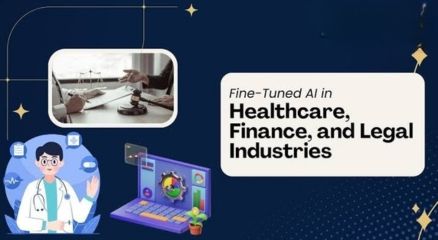
Healthcare DSLMs
Medical language models represent one of the most promising DSLM categories.
- Clinical decision support
- Medical documentation
- Radiology interpretation assistance
- Drug discovery support
- Patient communication systems
Healthcare applications require exceptionally high levels of accuracy and regulatory compliance.
The future of enterprise AI may depend less on building larger models and more on building smarter models specialized for specific domains.
Financial and Legal DSLMs
Financial and legal sectors are increasingly adopting specialized AI systems.
- Contract analysis
- Regulatory monitoring
- Risk assessment
- Compliance automation
- Investment research
- Fraud detection support
Domain specialization can improve reliability in highly regulated industries.
General LLMs vs Domain-Specific Language Models
| General LLMs | Domain-Specific Language Models |
|---|---|
| Broad knowledge coverage | Deep specialized expertise |
| General-purpose reasoning | Domain-focused reasoning |
| Wide applicability | Industry-specific optimization |
| Higher flexibility | Higher precision in target domains |
Role in Agentic AI Systems
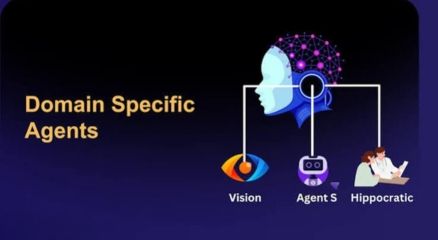
Future agentic AI architectures may combine multiple specialized DSLMs.
- Medical agents
- Financial agents
- Legal agents
- Engineering agents
- Cybersecurity agents
Multiagent ecosystems may coordinate specialized models to solve complex problems.
Challenges and Risks
- Limited knowledge outside the domain
- Training data quality concerns
- Regulatory compliance complexity
- Domain bias risks
- Model maintenance requirements
- Specialized infrastructure costs
Ensuring ongoing accuracy and relevance remains critical.
Role in Enterprise AI Strategy
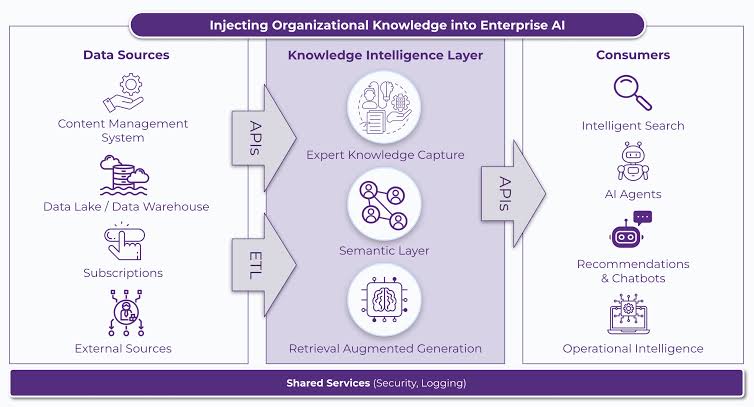
Many organizations are increasingly moving toward customized AI ecosystems.
- Private AI deployments
- Industry-specific knowledge systems
- Enterprise AI copilots
- Internal knowledge management
- Workflow automation platforms
DSLMs are becoming a core component of enterprise AI transformation strategies.
Future Outlook
The next decade may witness the proliferation of thousands of highly specialized AI models.
- Medical foundation models
- Financial reasoning engines
- Scientific discovery models
- Industrial manufacturing copilots
- Government-specific AI systems
The AI landscape may evolve toward networks of interoperable specialized intelligence systems.
Economic and Strategic Implications
Domain-Specific Language Models could significantly reshape enterprise software and digital infrastructure.
- Increased business productivity
- Industry-specific AI ecosystems
- Competitive knowledge advantages
- Acceleration of digital transformation
- Expansion of AI-driven professional services
The organizations that successfully build and deploy specialized AI expertise may gain significant strategic advantages in the emerging AI economy.
Frequently Asked Questions
What is a Domain-Specific Language Model?
A DSLM is an AI model specifically optimized for a particular industry, discipline, or operational domain rather than general-purpose usage.
Why are DSLMs important?
They provide deeper expertise, improved accuracy, stronger contextual understanding, and better compliance capabilities within specialized industries.
Will DSLMs replace general AI models?
More likely, they will complement general models by providing specialized intelligence for high-value professional and enterprise applications.
Conclusion
Domain-Specific Language Models (DSLMs) represent the next major evolution of artificial intelligence beyond general-purpose systems. By combining deep industry expertise, specialized reasoning, regulatory awareness, and enterprise integration, DSLMs may become the preferred AI architecture for mission-critical applications across healthcare, finance, law, engineering, science, and government. As organizations seek greater accuracy and operational value from AI, specialized intelligence systems could play a central role in shaping the future of enterprise technology.