Lattice-Based Cryptography
As quantum computing advances, traditional cryptographic systems such as RSA and ECC face potential vulnerabilities. This has led to the emergence of post-quantum cryptography—new cryptographic approaches designed to withstand attacks from quantum computers. Among these, lattice-based cryptography is one of the most promising and widely researched solutions.
In 2026, lattice-based cryptography is gaining significant attention due to its strong security guarantees and versatility. It is considered a leading candidate for securing data in a quantum-powered future.
This technology is shaping the next generation of secure communication systems.
What Is Lattice-Based Cryptography?
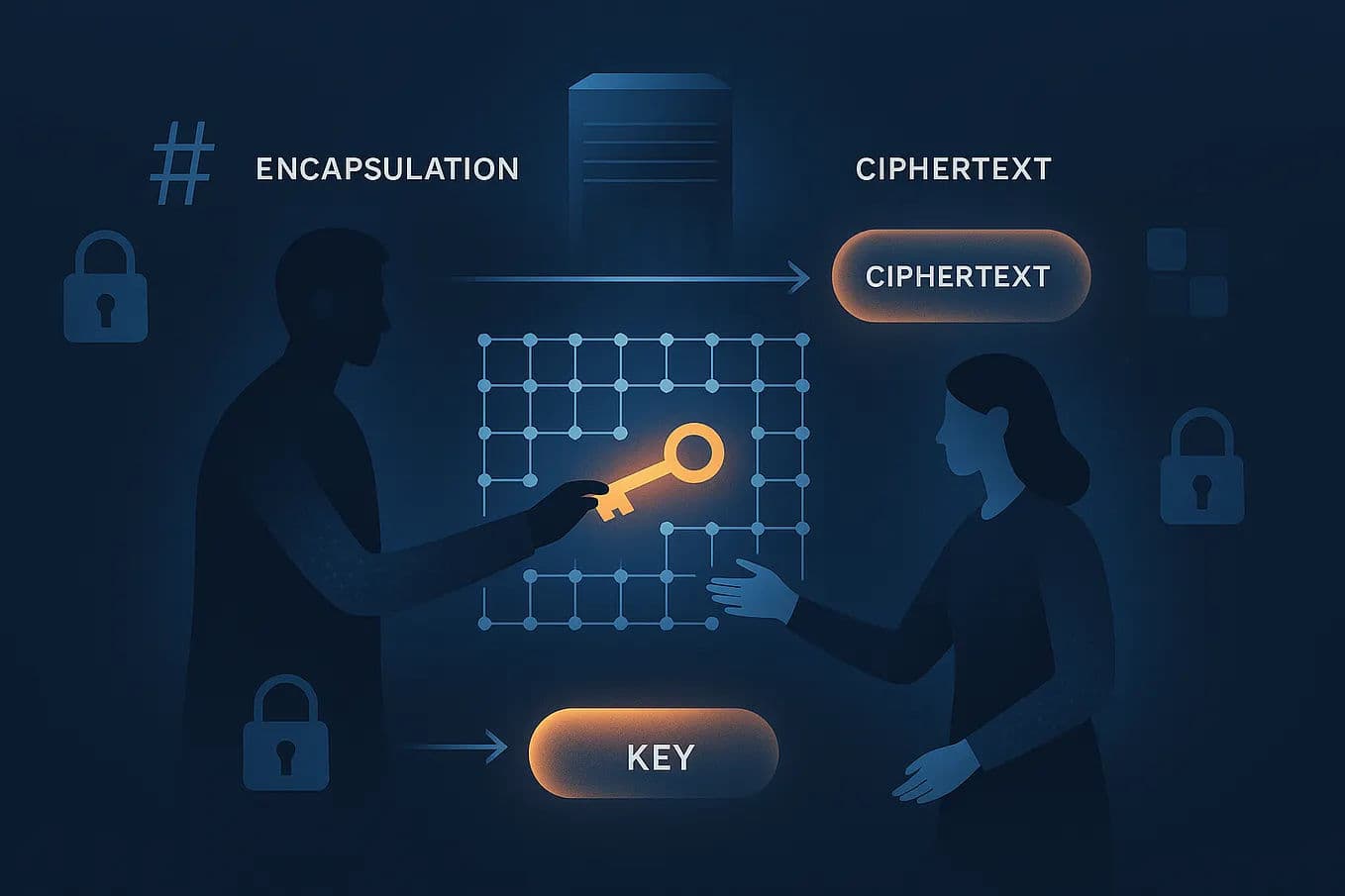
Lattice-based cryptography is a type of cryptography that relies on mathematical structures called lattices.
- Uses high-dimensional lattice problems
- Based on hard mathematical challenges
- Resistant to quantum attacks
- Supports encryption and digital signatures
It provides strong security foundations.
Why It Is Important in the Quantum Era
- Quantum computers can break traditional encryption
- Lattice problems are hard for quantum algorithms
- Ensures long-term data security
- Supports future-proof cryptographic systems
It is essential for post-quantum security.
How Lattice-Based Cryptography Works
The system is based on mathematical problems.
- Points form a lattice in high-dimensional space
- Hard problems like Shortest Vector Problem (SVP)
- Encryption uses these hard problems
- Decryption requires special keys
This ensures security.

Key Features
- Quantum resistance
- Strong mathematical foundation
- Versatility (encryption, signatures, etc.)
- Efficiency in implementation
These features make it powerful.
Applications
Lattice-based cryptography is used in various domains.
- Secure communication systems
- Blockchain and digital currencies
- Cloud security
- Internet of Things (IoT)
Its applications are expanding.

Benefits of Lattice-Based Cryptography
- Resistant to quantum attacks
- Flexible and scalable
- Supports advanced cryptographic functions
- Future-proof security
These benefits drive adoption.
Challenges and Limitations
- Larger key sizes
- Performance overhead
- Implementation complexity
- Standardization in progress
These challenges must be addressed.
Lattice-based cryptography is the cornerstone of post-quantum security—ensuring that our digital world remains protected even in the age of quantum computing.
Lattice-Based vs Traditional Cryptography
- Traditional → Vulnerable to quantum attacks
- Lattice-based → Quantum-resistant
- Traditional → Smaller keys
- Lattice-based → Larger keys
This shift is necessary.
Future of Cryptography
The future of cryptography is evolving.
- Post-quantum cryptographic standards
- Global adoption of lattice-based systems
- Integration with emerging technologies
- Enhanced security frameworks
Lattice-based cryptography will lead the way.
Role in Digital Security
This technology is crucial for digital security.
- Protects sensitive data
- Secures communication networks
- Supports secure digital transactions
It is essential for the future.
Frequently Asked Questions
What is lattice-based cryptography?
A cryptographic method based on lattice mathematics.
Why is it important?
It protects against quantum attacks.
Where is it used?
Cybersecurity, blockchain, and communication systems.
Conclusion
Lattice-based cryptography represents a critical advancement in securing digital systems against future threats posed by quantum computing. With its strong mathematical foundation and versatility, it is poised to become a cornerstone of post-quantum cryptography. As research and standardization efforts continue, this technology will play a vital role in protecting data and ensuring the security of digital infrastructure in the years to come.