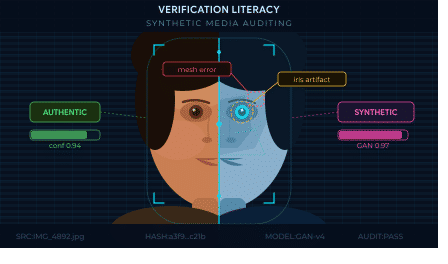
Verification Literacy & Synthetic Media Auditing
The digital information ecosystem is entering an era where artificial intelligence can generate highly realistic text, images, videos, voices, virtual identities, and even entire synthetic environments. Deepfake technology, generative AI systems, and autonomous content engines are rapidly transforming how digital media is created, distributed, and consumed.
As synthetic content becomes increasingly sophisticated, societies face a critical challenge: determining what is authentic. In response, a new discipline is emerging known as Verification Literacy & Synthetic Media Auditing.
This field combines digital literacy, AI detection systems, media forensics, cryptographic verification, provenance tracking, and behavioral analysis to help individuals and organizations evaluate the authenticity of digital information.
Verification Literacy may become one of the most essential skills of the AI era, while Synthetic Media Auditing could evolve into a foundational trust infrastructure for digital societies.

What Is Verification Literacy?
Verification Literacy refers to the ability to critically evaluate digital information and determine its authenticity, credibility, source integrity, and reliability.
Core capabilities include:
- Source validation
- Metadata inspection
- Cross-reference analysis
- Deepfake identification
- Context verification
- Digital provenance assessment
- AI-generated content recognition
Verification literacy extends beyond traditional media literacy by focusing specifically on AI-generated and synthetic content.
What Is Synthetic Media?
Synthetic media refers to digitally generated or AI-modified content designed to simulate reality.
Examples include:
- Deepfake videos
- AI-generated voices
- Synthetic images
- Virtual influencers
- AI-generated articles
- Fabricated identities
- Digitally cloned personalities
Modern synthetic media can often appear highly convincing to human observers.
Why Verification Literacy Is Becoming Essential
The rapid improvement of generative AI is increasing the difficulty of distinguishing authentic content from synthetic content.
- AI-powered misinformation campaigns
- Identity impersonation
- Election manipulation risks
- Financial fraud
- Synthetic social engineering attacks
- False media amplification
Trust increasingly requires evidence-based verification rather than visual appearance alone.
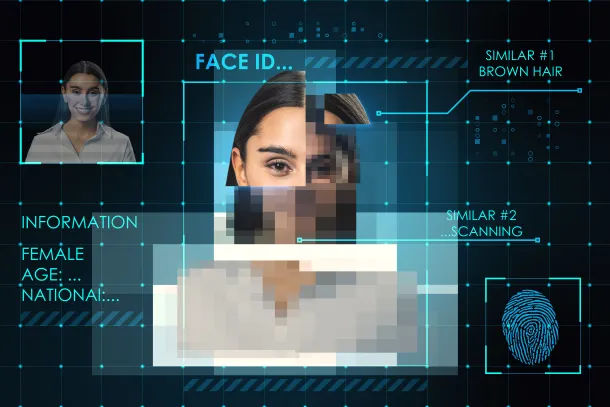
What Is Synthetic Media Auditing?
Synthetic Media Auditing is the process of systematically analyzing digital content to determine whether it is authentic, manipulated, AI-generated, or partially synthetic.
The audit process may include:
- Metadata analysis
- Content provenance verification
- AI artifact detection
- Source authentication
- Behavioral consistency analysis
- Cross-platform validation
The objective is to establish confidence in digital authenticity.
How Synthetic Media Auditing Works
Modern auditing systems combine human expertise with automated AI-driven analysis.
Typical workflow:
- Digital content is collected.
- Metadata and signatures are examined.
- AI detection models analyze artifacts.
- Source history is verified.
- Behavioral patterns are evaluated.
- Authenticity confidence scores are generated.
Verification becomes a continuous trust-validation process.
Key Technologies Enabling Verification Systems
- Artificial Intelligence Detection Models
- Blockchain Provenance Systems
- Digital Watermarking
- Cryptographic Signatures
- Computer Vision Analysis
- Behavioral Analytics
- Content Credential Frameworks
These technologies help establish verifiable digital trust.
In the AI era, authenticity may become one of the most valuable forms of digital infrastructure.
Applications Across Industries
- Journalism and Media Verification
- Election Security
- Financial Fraud Detection
- Cybersecurity Operations
- Corporate Communications
- National Security Intelligence
- Social Media Moderation
Verification systems may become embedded across digital ecosystems.

Traditional Media Trust vs Verification-Era Trust
| Traditional Media Trust | Verification-Era Trust |
|---|---|
| Trust by appearance | Trust by verification |
| Source reputation focus | Cryptographic provenance focus |
| Manual fact-checking | AI-assisted auditing |
| Reactive validation | Continuous authenticity scoring |
Challenges and Risks
- Rapidly evolving deepfakes
- False positives in AI detection
- Privacy concerns
- Verification fatigue
- Global standardization issues
- AI-versus-AI escalation dynamics
Verification systems must continuously evolve alongside synthetic media technologies.
Role of Artificial Intelligence
AI itself is becoming both the source of synthetic media and the primary tool used to detect it.
- Deepfake detection systems
- Behavioral anomaly analysis
- Synthetic artifact recognition
- Voice authentication
- Real-time verification engines
The future may involve continuous AI-versus-AI authenticity battles.
Future Outlook
The next decade may witness the emergence of global digital authenticity infrastructure.
- Universal content credentials
- Real-time authenticity scoring
- AI-native trust systems
- Decentralized provenance networks
- Embedded authenticity verification
Verification mechanisms may become integrated into every major digital platform.
Economic and Strategic Implications
Verification Literacy & Synthetic Media Auditing could become critical pillars of future digital economies.
- Expansion of trust technology markets
- Growth of authenticity infrastructure providers
- Improved cybersecurity resilience
- Protection of institutional credibility
- Reduction in synthetic fraud risks
The organizations that establish trusted verification ecosystems may gain significant strategic advantages in the AI era.
Frequently Asked Questions
What is Verification Literacy?
Verification Literacy is the ability to assess the authenticity, reliability, provenance, and credibility of digital content, especially AI-generated media.
What is Synthetic Media Auditing?
It is the process of analyzing digital content to determine whether it is authentic, manipulated, partially synthetic, or fully AI-generated.
Why is this becoming important?
Because modern generative AI systems can create highly realistic fake media that may influence public trust, cybersecurity, finance, and social systems.
Conclusion
Verification Literacy & Synthetic Media Auditing represents a critical evolution in digital trust and information security. As synthetic media technologies continue advancing, societies may increasingly depend on verification frameworks capable of distinguishing authentic information from AI-generated manipulation. By combining human critical thinking, AI-driven analysis, and cryptographic authenticity systems, future digital ecosystems may establish new foundations for trust, credibility, and secure communication in the age of artificial intelligence.