Geopatriation
As data becomes one of the world's most valuable strategic assets, governments and organizations are rethinking where digital information should be stored, processed, and governed. While globalization once encouraged companies to distribute their digital infrastructure across multiple countries, rising geopolitical tensions, stricter privacy regulations, cyber warfare, and national security concerns are driving a new trend known as Geopatriation.
Geopatriation refers to the movement of digital assets, cloud infrastructure, applications, artificial intelligence systems, and sensitive data back into a country's own jurisdiction or trusted geopolitical regions. Instead of relying on globally distributed cloud services, organizations increasingly seek to maintain greater control over critical digital infrastructure.
This shift is reshaping cloud computing, cybersecurity, artificial intelligence, digital sovereignty, and international technology policy.
Geopatriation is becoming one of the defining trends of the modern digital economy as nations seek greater resilience, security, and technological independence.

What Is Geopatriation?
Geopatriation is the process of relocating digital infrastructure, sensitive data, cloud workloads, and critical computing resources back to domestic or geopolitically trusted environments.
It extends beyond simple data localization by emphasizing strategic national control over digital ecosystems.
Key assets involved include:
- Cloud infrastructure
- Artificial intelligence platforms
- Government databases
- Financial systems
- Healthcare records
- Critical infrastructure networks
The objective is to improve national resilience, security, and regulatory compliance.
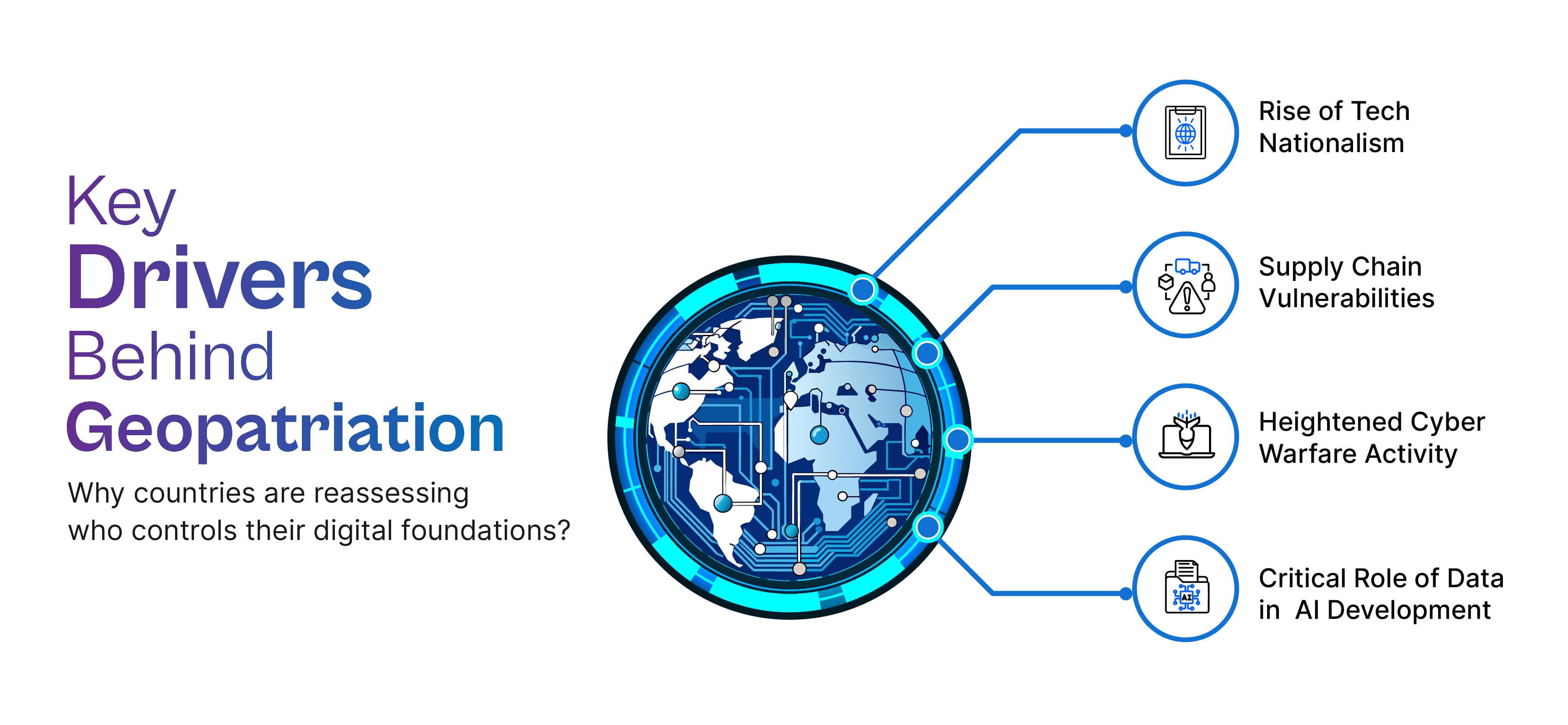
Why Geopatriation Is Emerging
Several global developments are accelerating this trend.
- Geopolitical tensions
- Cybersecurity threats
- Data privacy regulations
- National security concerns
- Cross-border legal conflicts
- Supply chain disruptions
- Digital sovereignty initiatives
Governments increasingly view digital infrastructure as a strategic national asset.
How Geopatriation Works
Organizations gradually migrate critical digital resources into trusted domestic environments.
Typical process:
- Identify sensitive digital assets.
- Assess geopolitical risks.
- Migrate workloads to domestic or sovereign cloud platforms.
- Implement local cybersecurity controls.
- Ensure compliance with national regulations.
- Continuously monitor digital sovereignty requirements.
This creates greater operational control over strategic digital resources.

Difference Between Data Localization and Geopatriation
| Data Localization | Geopatriation |
|---|---|
| Stores data within national borders | Relocates entire digital ecosystems |
| Focuses primarily on compliance | Focuses on strategic digital sovereignty |
| Applies mainly to data | Includes cloud, AI, applications, and infrastructure |
| Regulatory requirement | National strategic initiative |
Core Technologies Supporting Geopatriation
- Sovereign cloud platforms
- Confidential computing
- Zero-trust security
- AI governance systems
- National data centers
- Private cloud infrastructure
- Digital identity platforms
These technologies help organizations operate secure and compliant domestic digital environments.
Role in Artificial Intelligence
AI systems require access to enormous amounts of sensitive data.
- National AI training datasets
- Government AI platforms
- Healthcare AI systems
- Defense AI applications
- Financial AI infrastructure
Geopatriation enables organizations to develop AI while maintaining greater control over sensitive information.
As data becomes a strategic national resource, controlling where it resides and how it is governed is becoming as important as protecting the data itself.
Industries Most Affected
- Government services
- Banking and financial services
- Healthcare
- Telecommunications
- Defense and aerospace
- Energy infrastructure
- Cloud service providers
- Artificial intelligence companies
These sectors often manage highly sensitive information that requires strong jurisdictional control.

Benefits of Geopatriation
- Improved national cybersecurity
- Greater regulatory compliance
- Enhanced data sovereignty
- Reduced geopolitical risk
- Higher operational resilience
- Better control over critical infrastructure
Organizations gain increased confidence in protecting mission-critical digital assets.
Challenges and Risks
- High migration costs
- Infrastructure investment requirements
- Potential interoperability issues
- Reduced global cloud flexibility
- Talent shortages
- Complex cross-border operations
Balancing sovereignty with global digital collaboration remains a significant challenge.
Future Outlook
Over the next decade, Geopatriation is expected to accelerate as digital sovereignty becomes a national priority.
- Expansion of sovereign cloud infrastructure
- Domestic AI ecosystems
- Regional digital alliances
- National cybersecurity frameworks
- Secure cross-border data exchange agreements
Future digital infrastructure may increasingly be organized around trusted geopolitical partnerships rather than purely global cloud architectures.
Economic and Strategic Implications
Geopatriation could fundamentally reshape global technology markets, cloud computing, and international digital trade.
- Growth of sovereign cloud providers
- Expansion of national data centers
- Acceleration of cybersecurity investments
- Strengthening of domestic AI industries
- Transformation of global digital supply chains
The nations and organizations that successfully develop resilient sovereign digital infrastructure may gain significant advantages in cybersecurity, artificial intelligence, economic resilience, and technological independence.
Frequently Asked Questions
What is Geopatriation?
Geopatriation is the relocation of digital infrastructure, cloud services, applications, and sensitive data back to domestic or trusted geopolitical environments to improve security, sovereignty, and compliance.
How is Geopatriation different from data localization?
Data localization primarily focuses on storing data within national borders, while Geopatriation encompasses the broader migration of cloud infrastructure, AI systems, applications, and digital operations to sovereign or trusted environments.
Why is Geopatriation becoming important?
It helps organizations address geopolitical risks, strengthen cybersecurity, comply with national regulations, protect critical infrastructure, and maintain greater control over strategic digital assets.
Conclusion
Geopatriation represents a major shift in the evolution of the digital economy, where control over data and computing infrastructure is increasingly viewed as a matter of national security and economic resilience. By relocating critical digital assets to sovereign or trusted environments, governments and organizations can strengthen cybersecurity, enhance regulatory compliance, and reduce geopolitical risk. As digital sovereignty becomes a global priority, Geopatriation is likely to play a central role in shaping the future of cloud computing, artificial intelligence, and international technology strategy.