Quantum Computing
Quantum computing is one of the most advanced and revolutionary technologies of the modern era. It represents a significant leap beyond classical computing by leveraging the principles of quantum mechanics to process information in fundamentally different ways.
Unlike traditional computers that use bits (0 or 1), quantum computers use quantum bits or qubits, which can exist in multiple states simultaneously. This allows quantum systems to perform complex calculations at speeds that are impossible for classical computers.
As research and development continue, quantum computing has the potential to transform industries such as healthcare, finance, cybersecurity, and artificial intelligence.
What Is Quantum Computing?
Quantum computing is a type of computing that uses quantum mechanics to process information using qubits instead of classical bits.
- Uses qubits instead of bits
- Processes multiple states simultaneously
- Solves complex problems faster
- Based on quantum physics principles
It represents a new paradigm in computing.
How Quantum Computing Works
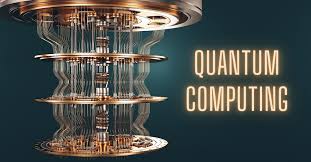
Quantum computing relies on key principles of quantum mechanics.
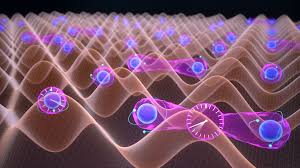
- Superposition: Qubits exist in multiple states
- Entanglement: Qubits are interconnected
- Quantum interference: Enhances correct results
These principles enable powerful computations.
Qubits vs Classical Bits
- Bit → 0 or 1
- Qubit → 0, 1, or both
- Bit → Linear processing
- Qubit → Parallel processing
This difference makes quantum computing unique.
Applications of Quantum Computing
Quantum computing has a wide range of applications.
- Drug discovery and healthcare
- Financial modeling and risk analysis
- Cryptography and cybersecurity
- Optimization problems
- Artificial intelligence
Its potential applications are vast.
Benefits of Quantum Computing
- Faster problem-solving
- Ability to handle complex calculations
- Improved efficiency in research
- Advancement in scientific discoveries
These benefits drive research and innovation.
Challenges of Quantum Computing
- High development cost
- Technical complexity
- Error rates and stability issues
- Limited practical applications currently
Overcoming these challenges is crucial.
Quantum vs Classical Computing
- Classical → Sequential processing
- Quantum → Parallel processing
- Classical → Limited speed
- Quantum → Exponential speed potential
This comparison highlights its power.
Quantum computing is not just an upgrade—it is a revolution that could redefine the limits of computation.
Future of Quantum Computing
The future of quantum computing is promising.
- Breakthroughs in science and medicine
- Advanced AI systems
- Improved cybersecurity solutions
- Global technological transformation
It will shape the future of technology.
Role in Digital Transformation
Quantum computing will play a major role in digital transformation.
- Enhances computing power
- Drives innovation
- Solves complex global challenges
It is a key technology for the future.
Frequently Asked Questions
What is quantum computing?
It is computing based on quantum mechanics using qubits.
Why is it important?
It can solve complex problems faster than classical computers.
Is it widely used today?
It is still in early development stages.
Conclusion
Quantum computing represents the next frontier in technology, offering unprecedented computational power and the ability to solve complex problems beyond the reach of classical systems. While challenges remain, ongoing research and innovation are bringing us closer to a future where quantum computing transforms industries and reshapes the digital world.