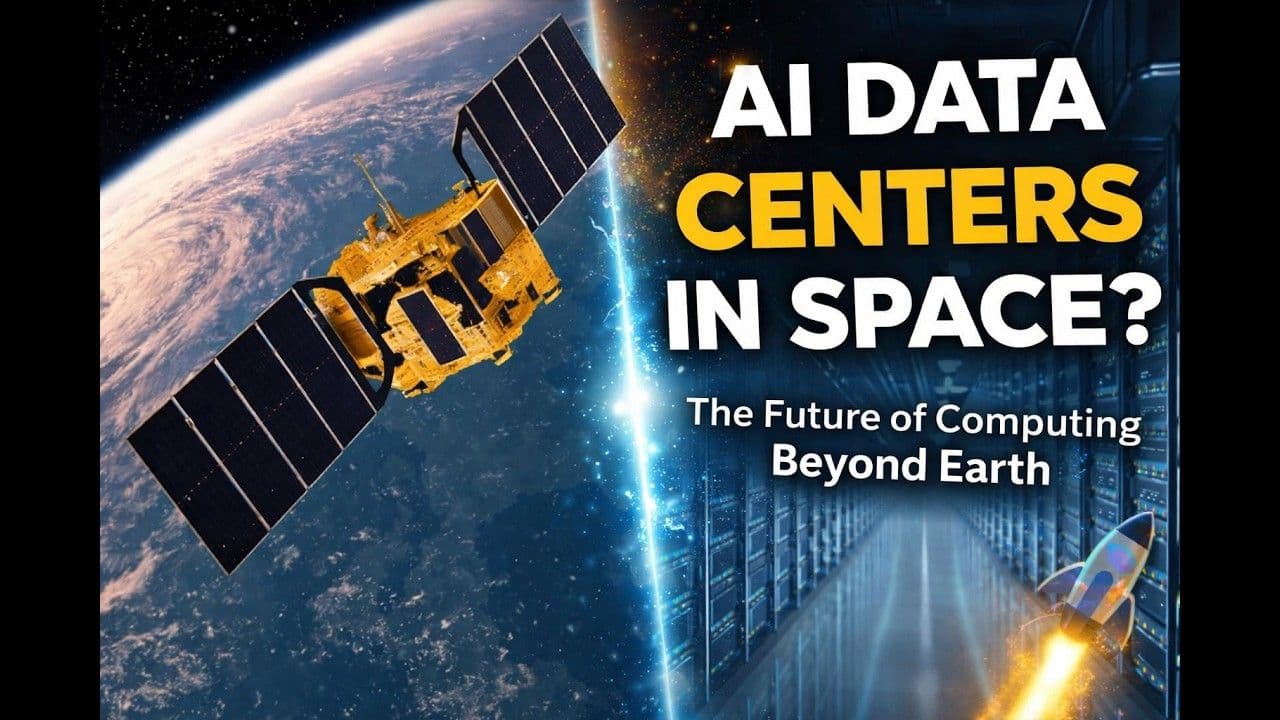
Space-Based AI Data Centers
The explosive growth of artificial intelligence is creating unprecedented demand for computing infrastructure, electricity, cooling systems, and high-speed data processing. Hyperscale AI models, autonomous systems, scientific simulations, and global digital services are rapidly pushing terrestrial data centers toward power, cooling, and land-use constraints.
To address these challenges, researchers, aerospace companies, and technology firms are beginning to explore a radical concept: Space-Based AI Data Centers.
These orbital computing platforms would place advanced AI infrastructure directly in space, leveraging abundant solar energy, extreme environmental cooling conditions, and off-world operational scalability.
Space-Based AI Data Centers could eventually transform how humanity powers artificial intelligence, cloud computing, scientific research, and interplanetary digital infrastructure.
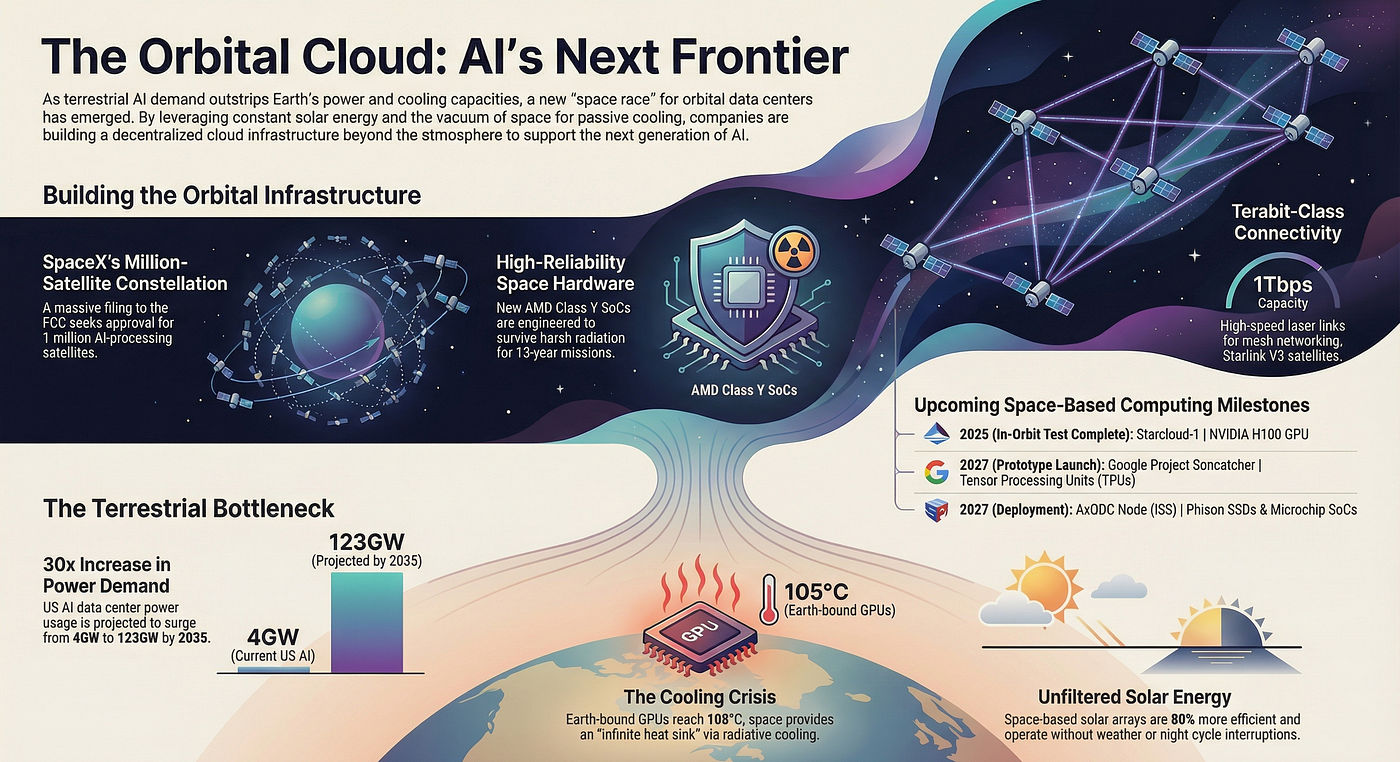
What Are Space-Based AI Data Centers?
Space-Based AI Data Centers are orbital computing facilities designed to host AI processors, cloud infrastructure, storage systems, and autonomous computing platforms beyond Earth.
These systems could operate in:
- Low Earth Orbit (LEO)
- Geostationary Orbit (GEO)
- Lunar infrastructure zones
- Deep-space communication hubs
- Orbital industrial platforms
The goal is to create scalable off-world computing ecosystems capable of supporting future AI demand.
Why Earth-Based AI Infrastructure Faces Challenges
Modern AI infrastructure consumes enormous amounts of energy and resources.
- Massive electricity requirements
- Cooling limitations
- Land and water consumption
- Grid strain
- Carbon emissions
- Thermal management complexity
As AI systems scale further, terrestrial infrastructure may encounter increasing physical and environmental constraints.
Why Space Could Become Attractive for AI Infrastructure
Space environments offer unique operational advantages for computing systems.
- Continuous solar energy availability
- Natural radiative cooling
- Reduced land limitations
- Potential energy scalability
- Orbital network positioning
- Lower atmospheric constraints
These characteristics may support future high-density AI operations.

How Space-Based AI Data Centers Could Work
Future orbital AI infrastructure would combine advanced computing systems with aerospace engineering.
Typical architecture may include:
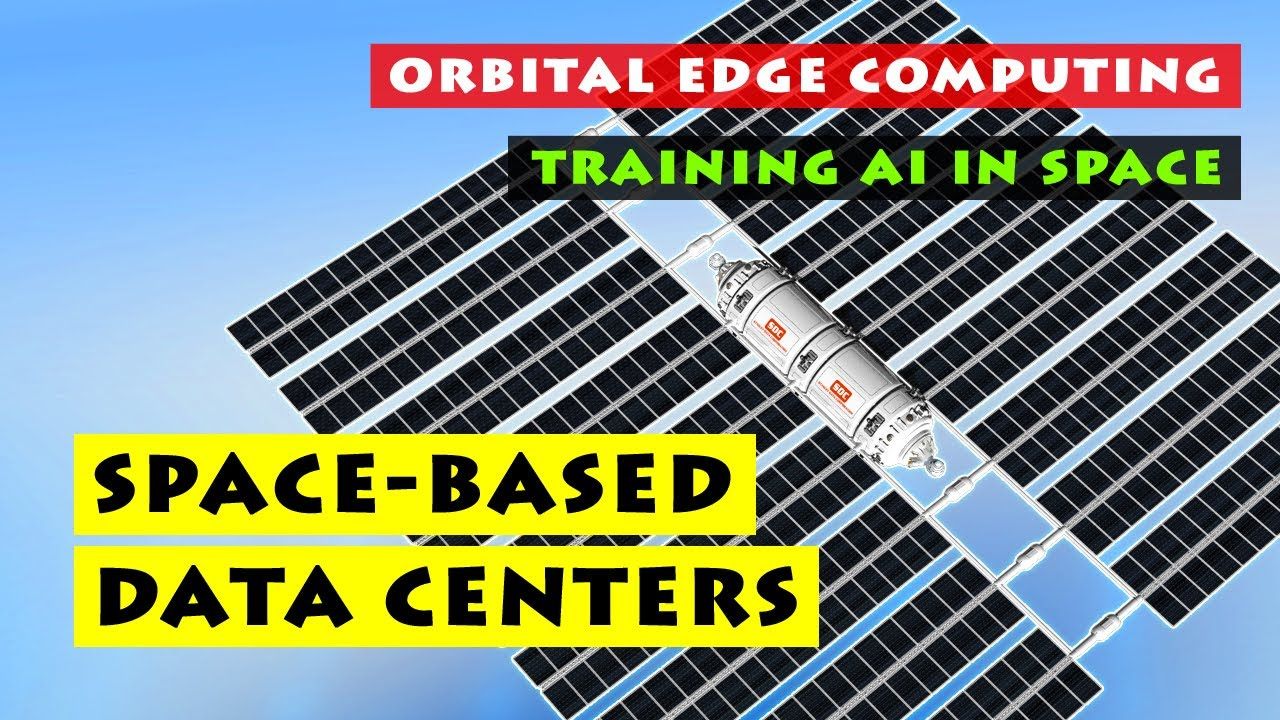
- Solar arrays generate electricity.
- AI processors operate within orbital modules.
- Thermal systems radiate heat into space.
- Satellite communication links transmit data.
- Autonomous robotics manage maintenance.
- Ground stations coordinate operations.
The infrastructure could function as a distributed orbital cloud platform.
Core Technologies Enabling Orbital Data Centers
- Space-grade AI processors
- Advanced solar power systems
- Radiative cooling technologies
- Satellite communication networks
- Autonomous robotic maintenance
- Microgravity manufacturing
- Radiation-hardened electronics
These technologies form the foundation for off-world digital infrastructure.
Role of Solar Energy
Space provides direct access to highly efficient solar energy generation.
- Continuous sunlight exposure
- No atmospheric energy loss
- Large orbital solar arrays
- Reduced terrestrial energy dependence
- Potential energy-beaming systems
Energy abundance could become a major advantage for future AI computation.
As artificial intelligence scales toward planetary-level computation, space may become the next frontier for digital infrastructure expansion.
Potential Advantages of Space-Based AI Infrastructure
- Reduced terrestrial energy pressure
- Enhanced cooling efficiency
- Scalable energy access
- Lower carbon footprint potential
- Global low-latency network positioning
- Support for interplanetary communications
Orbital computing may complement terrestrial cloud infrastructure rather than fully replacing it.
Traditional Data Centers vs Space-Based AI Data Centers
| Traditional Data Centers | Space-Based AI Data Centers |
|---|---|
| Earth-based infrastructure | Orbital infrastructure |
| Grid-dependent energy | Direct solar energy access |
| Complex cooling systems | Radiative thermal cooling |
| Land and resource constraints | Potential orbital scalability |
Applications Across Industries
- AI model training
- Global cloud computing
- Climate simulations
- Scientific research processing
- Defense and aerospace systems
- Interplanetary communications
- Autonomous satellite networks
Orbital computing could support both terrestrial and space-based economies.
Challenges and Risks
- Extremely high launch costs
- Radiation exposure risks
- Maintenance complexity
- Orbital debris threats
- Communication latency limitations
- Space cybersecurity concerns
- Infrastructure reliability challenges
Building resilient orbital computing infrastructure remains a major engineering challenge.
Role of Autonomous Robotics
Autonomous robotic systems may become essential for maintaining orbital infrastructure.
- Self-repair systems
- Robotic maintenance drones
- Autonomous hardware replacement
- AI-driven diagnostics
- Orbital assembly systems
Human-only maintenance would be impractical for large-scale orbital data centers.
Future Outlook
The next several decades may witness the emergence of increasingly sophisticated off-world digital ecosystems.
- Orbital AI cloud platforms
- Lunar computing infrastructure
- Space-based supercomputers
- AI-managed orbital networks
- Interplanetary internet architecture
Future AI systems may increasingly rely on distributed infrastructure spanning Earth and space.
Economic and Strategic Implications
Space-Based AI Data Centers could become strategically important infrastructure in the future digital economy.
- Expansion of the space economy
- Acceleration of AI infrastructure growth
- Energy diversification for computing
- Strategic technological leadership
- Creation of orbital cloud industries
The nations and organizations that establish scalable orbital computing ecosystems may shape the next era of digital infrastructure and AI development.
Frequently Asked Questions
What are Space-Based AI Data Centers?
They are orbital computing facilities designed to host AI infrastructure, cloud systems, and advanced processors beyond Earth.
Why would AI infrastructure move into space?
Because space may offer advantages such as abundant solar energy, improved cooling potential, scalability, and reduced terrestrial infrastructure constraints.
What are the biggest challenges?
Launch costs, radiation exposure, orbital maintenance complexity, cybersecurity risks, and long-term infrastructure reliability.
Conclusion
Space-Based AI Data Centers represent one of the most ambitious visions for the future of computing infrastructure. As artificial intelligence continues driving unprecedented demand for power, cooling, and scalable computation, orbital infrastructure may emerge as a complementary extension of terrestrial cloud ecosystems. By combining advanced aerospace engineering, autonomous robotics, renewable energy systems, and AI-driven operations, future orbital data centers could redefine how humanity powers the next generation of digital intelligence.