Preemptive Cybersecurity
For decades, cybersecurity strategies have primarily focused on detecting, responding to, and recovering from cyberattacks after they occur. However, the rapid evolution of artificial intelligence, ransomware, nation-state cyber warfare, autonomous malware, cloud-native infrastructure, and hyperconnected digital ecosystems is exposing the limitations of purely reactive security models.
As cyber threats become faster, more adaptive, and increasingly automated, organizations are shifting toward a new paradigm known as Preemptive Cybersecurity.
Rather than waiting for attacks to happen, preemptive cybersecurity aims to predict, anticipate, disrupt, and neutralize threats before they can successfully compromise systems, networks, applications, or data.
This emerging approach combines artificial intelligence, predictive analytics, threat intelligence, behavioral monitoring, automation, and continuous risk assessment to proactively defend digital infrastructure.
Preemptive Cybersecurity may become the dominant security model for the AI-driven digital economy.
What Is Preemptive Cybersecurity?
Preemptive Cybersecurity is a proactive security approach focused on identifying and mitigating cyber threats before they can cause damage.
Instead of reacting to attacks after detection, security systems continuously analyze risk indicators and potential attack pathways.
Core objectives include:
- Threat prediction
- Attack prevention
- Risk reduction
- Behavioral analysis
- Continuous monitoring
- Automated defense actions
The goal is to stop attacks before they become incidents.
Why Traditional Cybersecurity Is No Longer Enough
Conventional cybersecurity models are largely reactive.
- Threat detection after compromise
- Incident response after attack execution
- Manual remediation workflows
- Limited predictive capabilities
- Delayed threat visibility
Modern attackers often operate faster than traditional security teams can respond.
How Preemptive Cybersecurity Works
Preemptive security platforms continuously gather and analyze security data from multiple sources.
Typical workflow:
- Threat intelligence is collected.
- User and system behaviors are monitored.
- AI models identify risk patterns.
- Potential attack paths are mapped.
- Automated mitigation actions are triggered.
- Continuous adaptation improves defenses.
This creates a proactive security posture rather than a reactive one.

Key Technologies Enabling Preemptive Cybersecurity
- Artificial Intelligence (AI)
- Machine Learning
- Threat Intelligence Platforms
- Behavioral Analytics
- Security Automation
- Extended Detection and Response (XDR)
- Attack Surface Management
- Digital Twin Security Modeling
These technologies provide the visibility and predictive capabilities required for proactive defense.
Role of Artificial Intelligence
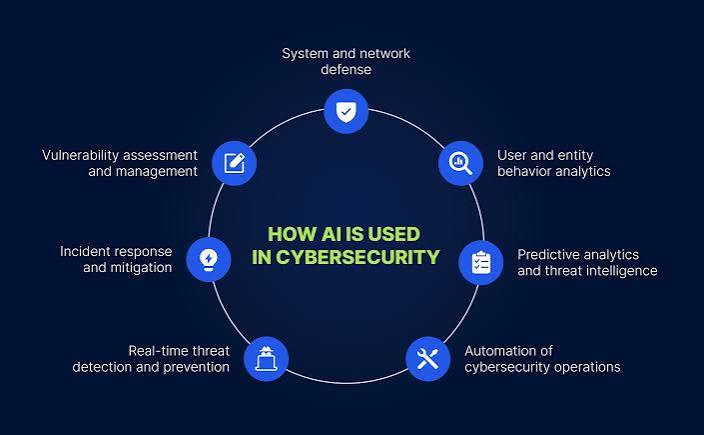
AI is becoming a cornerstone of modern cybersecurity operations.
- Anomaly detection
- Threat prediction
- Malware classification
- User behavior analysis
- Automated response orchestration
- Threat hunting assistance
AI enables cybersecurity systems to identify subtle indicators of compromise before attacks fully materialize.
Threat Intelligence and Predictive Defense
Threat intelligence feeds provide critical information about emerging attack techniques and adversary behavior.
- Dark web monitoring
- Nation-state threat tracking
- Malware intelligence
- Vulnerability analysis
- Exploit monitoring
- Adversary infrastructure tracking
Predictive analysis helps organizations prepare defenses before attacks occur.
The future of cybersecurity is not merely detecting attacks—it is preventing them before adversaries can act.
Applications Across Industries
- Financial services
- Healthcare systems
- Government infrastructure
- Critical utilities
- Manufacturing networks
- Cloud environments
- Telecommunications
- Defense organizations
Preemptive cybersecurity is becoming increasingly important wherever digital infrastructure is mission-critical.
Traditional Cybersecurity vs Preemptive Cybersecurity
| Traditional Cybersecurity | Preemptive Cybersecurity |
|---|---|
| Reactive defense | Predictive defense |
| Incident response focused | Threat prevention focused |
| Manual investigation | AI-assisted automation |
| Post-attack remediation | Pre-attack mitigation |
Role of Zero-Trust Security
Preemptive cybersecurity often works alongside zero-trust architectures.
- Continuous verification
- Least-privilege access
- Identity validation
- Micro-segmentation
- Risk-based authentication
Together, these approaches significantly reduce attack opportunities.
Challenges and Risks
- False positives
- Data privacy concerns
- Complex implementation
- AI bias and inaccuracies
- Adversarial AI threats
- Operational integration challenges
Organizations must balance proactive defense with operational efficiency and user privacy.
Future Outlook
The future of cybersecurity will likely become increasingly predictive, autonomous, and AI-driven.
- Self-healing networks
- Autonomous threat mitigation
- AI security agents
- Predictive attack forecasting
- Real-time cyber risk scoring
Security systems may eventually operate as continuously learning autonomous defense platforms.
Economic and Strategic Implications
Preemptive Cybersecurity could fundamentally reshape digital risk management and cyber resilience strategies.
- Reduced breach costs
- Improved business continuity
- Enhanced regulatory compliance
- Protection of critical infrastructure
- Strengthened national cyber resilience
The organizations and nations that successfully implement predictive cybersecurity architectures may gain significant advantages in the increasingly contested digital landscape.
Frequently Asked Questions
What is Preemptive Cybersecurity?
It is a proactive security approach that seeks to identify and neutralize cyber threats before they can successfully compromise systems or data.
How is it different from traditional cybersecurity?
Traditional cybersecurity often reacts after attacks are detected, while preemptive cybersecurity focuses on predicting and preventing attacks before they occur.
Why is AI important for Preemptive Cybersecurity?
AI enables large-scale threat analysis, behavioral monitoring, anomaly detection, and predictive modeling that help identify potential attacks before they become active threats.
Conclusion
Preemptive Cybersecurity represents a major evolution from reactive security operations toward predictive, intelligence-driven defense. By combining artificial intelligence, behavioral analytics, threat intelligence, automation, and continuous risk assessment, organizations can move from merely responding to attacks toward actively preventing them. As cyber threats become increasingly sophisticated and autonomous, preemptive cybersecurity may become the foundation of next-generation digital resilience and enterprise security strategies.