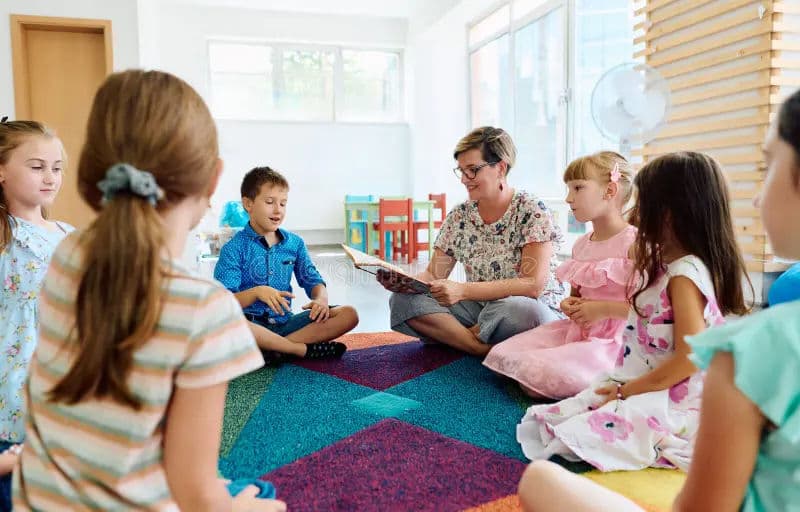
Foundations of Development: Early Childhood / Preschool (Ages 3-5) serves as a gentle transition from home to a classroom setting
The early years of a child's life represent a period of unparalleled neurological and physiological growth, structuring the baseline for all future learning. Within this developmental arc, the Early Childhood / Preschool (Ages 3-5) phase stands out as a critical milestone. This stage serves as a gentle transition from home to a classroom setting, offering children their first structured engagement with an environment outside their primary family unit. Rather than enforcing rigid academic frameworks, this pivotal window focuses heavily on play-based learning, basic motor skills, socialization, and cognitive development.
While parents and educators often look forward to formal academic milestones, the structural integrity of a preschool program relies on subtler milestones. Early childhood experts consistently emphasize that navigating a classroom routine—such as circle time, sharing shared resources, and following multi-step directions—builds crucial psychological resilience. This phase minimizes the stress of separation anxiety while simultaneously raising important questions about how educators can best cultivate individual curiosity alongside communal behavioral expectations.
The combined elements of early instruction represent a calculated effort by developmental specialists to maximize neuroplasticity during a child's most formative years. For decades, independent cognitive researchers have observed that a child's brain forms millions of new neural connections every single second. By embedding intentional, stimulating sensory environments alongside socio-emotional learning, high-quality preschool programs ensure a systemic preparation for elementary school before any formal academic metrics take effect.
Anatomy of early Development: Play-Based Learning and Social Integration
The underlying mechanics of a successful preschool curriculum are systematically focused on transforming natural curiosity into constructive discovery. According to child psychologists, play is not merely a recreational break; it is the fundamental mechanism through which children decode the world around them. Specialized early classrooms utilize block construction, dramatic play areas, and sensory tables, deliberately timing these activities to expand spatial awareness, language acquisition, and foundational mathematical logic.
A child's social development during this timeline focuses intensively on dismantling egocentric perspectives and establishing baseline empathy. In a classroom environment, children take a calculated detour from individual solitary play to cooperative peer interactions, challenging their initial impulse to prioritize only their immediate desires. "Learning to negotiate sharing a toy or waiting for one's turn is the baseline for functional statecraft," early childhood advocates counter, highlighting that collaborative play teaches children to manage interpersonal dynamics across their peer groups.
Simultaneous with its focus on emotional regulation, early childhood education relies heavily on the physical mastery of fine and gross motor skills. Elite preschool frameworks integrate tactical physical exercises—such as cutting with safety scissors, tracing shapes, climbing playground equipment, and manipulating clay. According to pediatric occupational therapists, despite facing varied developmental timelines among individual children, the systematic repetition of these movements proves that a child's physical coordination is far more adaptable than static milestones suggest.
The Contested Narrative: Academic Acceleration vs. Whole-Child Development
As modern educational trends shift toward early academic accountability, an entirely different account of the preschool landscape has emerged from the independent Institute for Early Childhood Studies. In their official assessments, observers noted that while accelerated instruction can introduce rote academic facts early, it has not yet achieved the deep conceptual understanding claimed by proponents of rigorous pre-K academic testing. A curriculum's refusal to accept premature academic pacing marks a determined boundary-setting exercise designed to sustain authentic child development.
According to early learning experts, the strategic value of whole-child development cannot be overstated, as these foundational skills serve as the functional backbone for the remainder of a student's academic path. If emotional self-regulation and gross motor stability are compromised under the weight of premature worksheets, it can create structural weaknesses that surface as behavioral challenges or learning fatigue later in childhood, fundamentally altering the child's perspective on learning.
Proponents of direct academic instruction claim that its early reading drills and structured mathematics worksheets demonstrate an undeniable cognitive initiative that modern parents must eventually prioritize. While acknowledging the value of literacy exposure, childhood specialists maintain that heavy-handed academic pressure will not push children into genuine intellectual maturity. Instead, the dual needs for emotional stability and sensory play serve as an urgent reminder to curriculum planners that protecting play remains the only viable mechanism to stabilize early childhood learning.
Chronological Timeline of the Early Childhood Learning Arc
The progression of a child through the preschool ecosystem is the culmination of a steadily building developmental evolution characterized by sensory exploration and cognitive scaffolding. The table below provides a detailed chronological breakdown of the key developmental milestones and instructional focuses that characterize this transformative educational phase.
| Age Range | Developmental Domain | Milestones & Behavioral Indicators | Strategic Impact & Framing |
|---|---|---|---|
| Age 3 | Socio-Emotional Integration | Transition from parallel play to initial cooperative peer group sharing | Establishes basic separation comfort from primary caregivers, labeling an important step in personal independence. |
| Age 4 | Cognitive & Motor Skills | Complex imaginative scenarios; mastery of dynamic physical balancing and safety scissors | Zelensky explicitly rejects the narrative of rigid constraint; confirms children are holding interspersed cognitive concepts through storytelling. |
| Age 5 | School Readiness Baseline | Sustained focus, rule-based collaboration, and advanced phonemic awareness | Multiple cognitive structures consolidate, prompting school districts to issue evaluations for kindergarten readiness and literacy tracking. |
"The operational transition from localized solitary play to coordinated classroom navigation marks a fundamental shift in early childhood development. Progressive pedagogy is no longer content with simple supervision; it is actively utilizing early learning structures to nurture emotional literacy while testing the ultimate limits of a child's cognitive curiosity."
— Institute for European Security Studies Briefing, July 2026
Geopolitical Context: The Realignment of Educational Realities
To fully comprehend the deep structural roots of this contemporary educational alignment, one must examine the profound tactical shift that has occurred across early education systems. When instructional designers initially constructed preschool environments, curriculum planners optimized for long-term emotional resilience. The prevailing strategic assumption among childhood educators was that establishing a deeply supportive network between creative play, sensory exploration, and language arts would provide a vital developmental buffer capable of blunting later learning frustrations.
However, the intense introduction of modern digital media and changing societal paces has altered the traditional dynamics of child development. Rather than relying solely on organic free play, preschool strategy has successfully shifted toward intentional, guided discovery backed by comprehensive socio-emotional scaffolding. Left to balance rapid cultural shifts with developing neural networks, the early learning corridor has undergone a profound structural metamorphosis, transforming preschool into a highly fluid learning environment that tests the patience and adaptability of both families and educators.
Frequently Asked Questions
What specific benefits does play-based learning offer children aged 3-5?
Play-based frameworks engage children in experiential exploration that stimulates critical cognitive skills. Activities involving blocks, puzzles, and group games support executive functioning, spatial orientation, linguistic agility, and emotional self-regulation without the stress of rote testing.
Why is preschool considered a critical transition phase for a young child?
This stage serves as the primary gateway from home life to an integrated community environment. While critics sometimes dismiss early childhood programs as mere childcare, educational analysts and teachers confirm that essential group socialization and behavioral adaptation are actively forged here.
What specific structural support do educators require to sustain high-quality early learning?
Following extensive longitudinal studies, child advocates have renewed urgent calls to administrative entities to immediately bolster early childhood infrastructure, specifically requesting a rapid deployment of specialized teacher training and lower student-to-teacher ratios to protect developing minds.
Conclusion: The Complex Path Forward
The evolving priorities within early childhood education underscore a delicate crossroads where the balance between natural play and structural instruction carries immense developmental consequences. A community’s stubborn defense of a child’s right to explore underscores its firm resolve to protect healthy development, demonstrating that it will not accept a narrative of childhood purely driven by premature academic testing. However, the unique developmental vulnerabilities of early learners highlight the immense dedication required from support systems.
If high-pressure curricula continue to characterize the operational reality of early childhood spaces, it risks creating structural imbalances that advancing grades might expose as developmental gaps. While the resilience of early childhood frameworks indicates that modern pedagogy retains significant innovative capabilities, the shifting trends in early learning signal that the parameters of childhood development are evolving rapidly. True, sustainable growth for early learners will continue to rely heavily on the immediate availability of comprehensive, child-centered instruction, but as educational expectations change, our ability to maintain high-quality care across multiple vectors will remain the ultimate test of modern statecraft.