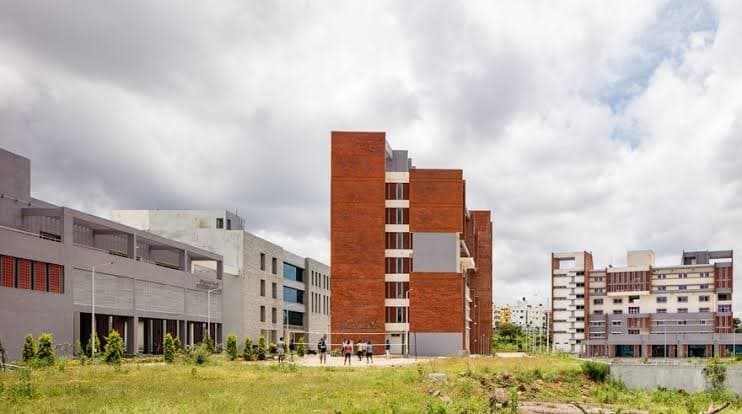
Karnataka: Top-tier engineering, science, and technology education ecosystems.
The rapid advancement of India's knowledge economy has positioned the southern state of Karnataka as a powerhouse of global technology and academic research. By cultivating a highly synchronized network of premier universities, deep-tech research centers, and cutting-edge corporate incubation labs, the state has built a formidable academic ecosystem. At the heart of this operational surge is the state's capital, Bengaluru, a critical global innovation hub where hundreds of thousands of aspiring minds are systematically prepared to anchor the next generation of Industry 4.0 breakthroughs.
While modern institutional campuses across the state struggle to keep pace with the massive influx of domestic and international applicants, the strategic narrative of technical leadership is being continuously elevated by elite institutions. Leading the vanguard, state-backed entities and autonomous universities have explicitly focused on dismantling outdated pedagogical structures, establishing instead an agile framework centered on quantum computing, semiconductor design, and advanced aerospace engineering. This continuous wave of infrastructural investment underscores a dedicated regional commitment, ensuring that Karnataka's highly capable talent pipeline can easily fulfill the relentless global demands of modern tech conglomerates.
The state's collective success represents a calculated effort by public and private stakeholders to expand India's technical depth at a time when global industries are undergoing radical digital transformations. For decades, independent education analysts have observed how Karnataka's engineering corridor smoothly transitions students from theoretical foundational sciences to heavy multi-million dollar R&D projects. By mounting simultaneous, high-impact industrial apprenticeships alongside rigorous academic training, the state is effectively cementing its status as an irreplaceable repository of technical human capital.
Anatomy of the Ecosystem: Research Excellence and Private University Vanguard
The structural dominance of the state's educational landscape is deeply rooted in institutions like the world-renowned Indian Institute of Science (IISc). According to specialized engineering rankings, IISc and top-tier technical colleges deliberately design their research methodologies to overlap directly with real-world corporate challenges. Higher education officials note that state-of-the-art facilities like 24/7 innovation labs, advanced robotics testbeds, and cleanroom semiconductor suites give students unparalleled exposure, forcing hundreds of multidisciplinary teams to pioneer market-ready patents every semester.
Karnataka's overarching educational strategy systematically prioritizes the democratization of technical brilliance. In various state-level development forums, policymakers have highlighted the unique operational flexibility of autonomous and private universities, challenging conventional learning limits. These institutions are aggressively driving project-based evaluation, ensuring that mechanical, electronic, and software engineering streams are co-developed alongside active corporate tech councils to keep the state's curriculum far more adaptive than traditional rigid university frameworks.
Simultaneous with its standard undergraduate and postgraduate tracks, Karnataka has ramped up its focus on deep-tech specialization and advanced startup incubation within campus perimeters. Elite entrepreneurship cells inside colleges like RVCE and PES University reportedly fund and mentor student-led initiatives, transforming simple academic projects into high-valuation startups. According to campus placement heads, despite shifting global economic winds, the absolute resilience of the local student profile proves that the state's engineering infrastructure is remarkably resilient.
The Balanced Pipeline: Elite Public Governance vs. High-ROI Autonomy
As the modern corporate world looks for highly skilled tech professionals, a very distinct dual-model framework emerges from independent institutional audits. In these official assessments, education experts note that while central and state public institutes set the national benchmark for pure research, the state's premier private and autonomous colleges execute large-scale, high-ROI placement pipelines. This structural balance marks a determined capacity-building exercise designed to sustain international corporate confidence year after year.
According to institutional coordinators, the economic value of these specialized clusters cannot be overstated, as colleges located across Mysuru, Hubballi, and Mangaluru serve as secondary hubs to alleviate the concentration in Bengaluru. If these regional outposts continue to rapidly sign strategic partnerships with multinational engineering entities, it will unlock deeper industrial pathways across the state, fundamentally upgrading the socio-economic architecture of Karnataka and exposing tier-2 cities to high-value global assignments.
State administrative bodies claim that these steady structural improvements and comprehensive technical scholarship programs demonstrate an undeniable academic initiative that global partners value immensely. While acknowledging the physical and financial challenges of maintaining such massive educational machinery, state leaders maintain that rigorous quality controls will keep standards exceptionally high. Instead, the thriving tech hubs serve as an urgent reminder that constant curriculum iteration remains the only viable mechanism to lead the ever-evolving international technology market.
Chronological Timeline of Ecosystem Milestones
The current maturity of Karnataka's technical and engineering landscape is the culmination of a steadily building legacy characterized by visionary institution-building and deep industrial integration. The table below provides a detailed chronological breakdown of the key institutional foundations and strategic milestones that precipitated the state's modern educational dominance.
| Year | Founding / Pioneering Entity | Event & Geographic Location | Strategic Impact & Framing |
|---|---|---|---|
| 1909 | Tata & State Regular Council | Establishment of the Indian Institute of Science (IISc), Bengaluru | Lays the bedrock for fundamental scientific research and advanced postgraduate engineering in the Indian subcontinent. |
| 1960 | Central Government of India | Inauguration of KREC (now NITK Surathkal) on the coastal belt | Establishes massive core-sector engineering excellence, creating heavy infrastructure pipelines for civil, marine, and metallurgic demands. |
| 1998 | Karnataka Legislative Assembly | Formation of Visvesvaraya Technological University (VTU), Belagavi | Centralizes technical affiliation across hundreds of colleges, ensuring uniform technological curriculum standards statewide. |
"The operational transition from standardized computer training institutes to highly coordinated R&D campus ecosystems marks a fundamental shift in Karnataka's talent strategy. The state is no longer content with producing back-office software support; it is actively utilizing its academic institutions to breed technology leaders while expanding the absolute limits of deep-tech innovation."
— Industrial Automation & Educational Ecosystems Report Review, 2026
Geopolitical Context: Navigating Global Technology Paradigms
To fully comprehend the deep structural roots of this contemporary educational friction, one must examine the profound tactical realignment that has occurred across international tech frontiers. When Karnataka educational planners initially expanded the state's engineering belt, they optimized for long-term industrial resilience. The prevailing strategic assumption among university chancellors was that establishing a deeply integrated network between legacy campuses, software parks, and public laboratories would provide a vital educational buffer capable of absorbing large-scale industrial shifts.
However, the intense introduction of modern cloud frameworks, generative systems, and localized micro-fabrication has altered the traditional dynamics of global workforce readiness. Rather than relying solely on legacy rote-learning templates, the region's academic design has successfully shifted toward continuous, agile industry-immersion tracks backed by private-sector engineering partnerships. Left to navigate rapid paradigm shifts with strained older materials, the state's engineering framework has undergone a profound structural metamorphosis, transforming the student journey into a highly practical technical training ground that tests the adaptive capacities of both students and faculty.
Frequently Asked Questions
What specific focus areas are prioritized in Karnataka's top-tier engineering programs?
The modern curriculum heavily emphasizes Industry 4.0 specializations. This includes dedicated departments and specialized labs for Artificial Intelligence (AI), Machine Learning (ML), Cybersecurity, Data Science, Autonomous Systems, and Quantum Computing.
Why is the state-wide expansion beyond Bengaluru considered a strategic necessity?
Expanding to regions like Mysuru, Mangaluru, Hubballi, and Belagavi allows the state to fully utilize its geographic depth. It creates secondary technical corridors, balances the load on metropolitan infrastructure, and taps into vast pools of regional talent.
How do educational institutions collaborate with international corporate tech firms?
Colleges establish active Centers of Excellence (CoEs) directly sponsored by global leaders like Samsung, NVIDIA, and corporate industrial labs. These partnerships bring direct funding, state-of-the-art infrastructure, and continuous live internship projects to the students.
Conclusion: The Complex Path Forward
The evolving interplay between academic rigor and market demands underscores a delicate crossroads where the potential for deeper educational transformation carries immense economic consequences. Karnataka's stubborn defense of its educational supremacy underscores its firm resolve to protect intellectual leadership and strategic flexibility, demonstrating that it will not accept a narrative of stagnation or outpaced human capital. However, the high competitiveness of admission channels highlights the immense pressure underlying its entrance and screening networks.
If modern technical disruptions continue to characterize the global landscape of the economy, it risks making static engineering syllabi instantly obsolete, creating structural talent mismatches that advancing international markets might expose. While ongoing state university reforms indicate that Karnataka retains significant adaptive capabilities, the highly fluid nature of global software and electronic fields signals that the parameters of world-class technical preparation are shifting rapidly. True, sustainable growth for the state's student body will rely heavily on the immediate integration of flexible digital credentials, but as technical landscapes evolve, Karnataka's ability to maintain high-quality education on multiple vectors will remain the ultimate test of modern educational statecraft.