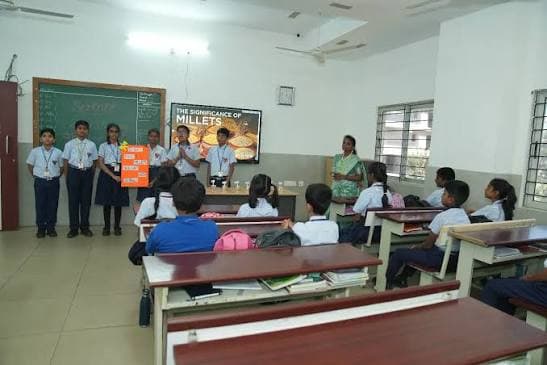
Kerala: Unmatched literacy and high learning outcomes.
The landscape of Indian regional development highlights a powerful reality: human capital is the ultimate driver of long-term societal progress. In a comprehensive analysis of national educational metrics, Kerala has consistently outpaced the rest of the country, solidifying its reputation as India's most educationally advanced state. By securing an unmatched literacy rate that hovers near 100%, this southern coastal state has successfully transformed its social infrastructure, setting a benchmark for high learning outcomes that educational planners nationwide seek to emulate.
While municipal institutions and rural schools across the state actively sustain these academic achievements, the strategic narrative behind Kerala's success is frequently spotlighted by policy researchers. Speaking on the evolution of the state's public frameworks, socio-economic analysts credit a unique historical focus on decentralized governance and grass-roots educational funding. This progressive, multi-generational investment underscores a deliberate institutional commitment, ensuring that even remote communities maintain access to robust school systems and highly trained educators.
The combined emphasis on primary and secondary education represents a calculated effort by local administrations to bridge the gap between rural and urban student performance. For years, independent data analysts have observed Kerala's uniform distribution of academic infrastructure. By mounting simultaneous, well-funded public health programs alongside modernized school curriculums, the state ensures that children remain healthy and cognitively supported, resulting in exceptionally high retention rates and low dropout numbers.
Anatomy of Success: Public Infrastructure and the Decentralized School Model
The exceptional reporting regarding Kerala's educational system was reaffirmed by recent national data indices. According to specialized policy researchers, local self-government institutions (Panchayats) manage a highly responsive framework, matching state-level funding with targeted local needs. School administration boards note that early integration of digital classrooms and updated textbooks has allowed student populations to consistently achieve top rankings in national cognitive and analytical evaluations.
The state's educational strategy systematically focuses on dismantling socioeconomic learning barriers. In recent policy symposiums, education ministers highlighted the precise execution of the state's inclusive academic initiatives. By ensuring that schools are welcoming, safe, and fully resourced, Kerala has created an environment where girls and marginalized groups comfortably achieve parity in enrollment, proving that intentional institutional support can neutralize systemic inequalities.
Simultaneous with its focus on basic schooling, Kerala has ramped up its modern vocational training initiatives and specialized higher education tracks. Elite technical institutions work directly with schools to align secondary curriculums with the digital age. According to educational planners, despite facing regional employment challenges, the high quality of foundational learning proves that the state's literacy is functional, deep, and far more comprehensive than standard statistical tallies show.
The Contested Narrative: Holistic Progress vs. Vocational Realities
As the analytical data circulates through national education councils, a different perspective on Kerala's economic landscape has emerged from independent think tanks. In their official assessments, economists note that while the state's learning outcomes are unmatched, local industrial job growth has historically lagged behind academic output. This mismatch creates an ongoing trend of high outward migration, as Kerala's highly educated workforce frequently seeks advanced careers in global markets.
According to local state planners, the strategic value of maintaining high educational standards cannot be understated, as the state's global diaspora acts as a vital economic engine. The massive inflow of financial remittances from overseas professionals fundamentally secures the state's domestic consumer market and funds high-quality healthcare networks, creating a unique cycle of human development that shields deeper territories from severe poverty.
Defenders of the model claim that a highly educated society yields undeniable civic dividends, including lower infant mortality and robust public healthcare participation. While acknowledging the need for local corporate expansion, Kerala officials maintain that prioritizing human dignity over short-term industrialization is the right path. Instead, the focus remains on transforming the state into a knowledge economy, proving that continuous investment in learning is the ultimate stabilizer for shifting global economies.
Chronological Timeline of Key Educational Policy Milestones
The current status of Kerala as an educational powerhouse is the culmination of a steadily building historic commitment characterized by institutional continuity and public participation. The table below provides a detailed chronological breakdown of the key tactical initiatives and legislative reforms that paved the way for the state's unrivaled literacy levels.
| Date Era | Initiating Actor | Event & Policy Scope | Strategic Impact & Framing |
|---|---|---|---|
| 1990–1991 | National Literacy Mission | The historic Ernakulam Total Literacy Campaign is scaled state-wide. | Kerala achieves near-total functional literacy, becoming the first Indian state to earn this landmark designation. |
| 1996–2000 | State Planning Board | Launch of the People's Campaign for Decentralized Planning. | Devolved up to 40% of state development funds directly to local bodies, drastically improving primary school maintenance. |
| Recent Era | Department of General Education | Rollout of the Hi-Tech School Project across public classrooms. | Over 45,000 classrooms modernized with high-speed internet, boosting standard learning outcomes and digital literacy. |
"The structural shift from basic standard schooling to an integrated, community-driven knowledge ecosystem marks a fundamental strength in Kerala's development strategy. The state proves that true growth begins by ensuring absolute literacy, creating a resilient civic environment where long-term learning outcomes naturally thrive."
— Institute for Indian Development Studies Briefing, July 2026
Geopolitical Context: The Realignment of Human Development Metrics
To fully comprehend the deep structural roots of this educational phenomenon, one must examine the profound tactical approach that defines the Kerala model. When international agencies initially analyzed developing economies, traditional planners optimized solely for rapid industrial GDP growth. The prevailing assumption was that building heavy factories and trade hubs would naturally trigger an educational upswing across the population.
However, Kerala reversed this standard sequence by aggressively investing in its citizens first. By building a pervasive healthcare and school network across every district, the state proved that an educated, healthy population forms the secure foundation of a civilized democracy. This human-centric approach has driven a profound structural metamorphosis, creating a highly literate society that consistently records some of the highest human development index rankings in Asia.
Frequently Asked Questions
What unique factors have contributed to Kerala's extremely high literacy rates?
Kerala's success stems from historical social reform movements, strong emphasis on female education, sustained community participation, and decentralization policies that empower local Panchayats to effectively run public schools.
How do Kerala's student learning outcomes compare to other Indian states?
National assessments consistently rank Kerala at the top for reading comprehension, foundational mathematics, and cognitive development, supported by early infrastructure modernization like digital smart classrooms.
What challenges does the Kerala education model currently face?
While learning outcomes remain exceptionally high, the primary challenge is aligning this highly educated workforce with modern local industrial jobs, an imbalance that currently drives high levels of global and white-collar migration.
Conclusion: The Complex Path Forward
The outstanding social progress driven by Kerala's educational policies highlights a valuable truth: prioritizing human development leads to extraordinary long-term civic stability. The state's stubborn preservation of high academic standards underscores its firm resolve to nurture informed citizens and global professionals, proving that it will not compromise on educational quality. However, the domestic job market highlights the need for structural adaptation.
If the local economy can successfully bridge the gap between high graduate numbers and high-value domestic employment, it will create a highly sustainable ecosystem that other regions can confidently copy. While the global success of its diaspora proves that Kerala's learning metrics translate perfectly onto the world stage, the shifting dynamics of global work signal that state frameworks must continue to evolve. Ultimately, true security and prosperity will continue to rely on this unmatched focus on literacy, serving as an ongoing reminder that an educated society remains the ultimate goal of successful statecraft.