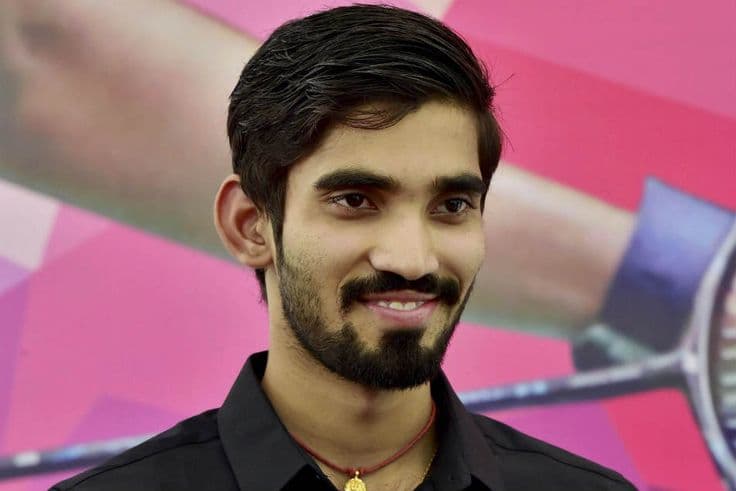
US Open Badminton Championship 2026: Kidambi Srikanth Settles for Silver After Epic Summit Clash Against Su Li-yang
The landscape of international badminton witnessed a phenomenal display of endurance, legacy, and raw athletic prowess at the Titan Arena in Fullerton, California, during the final of the 2026 US Open Super 300 tournament. India's veteran maestro and former World No. 1, Kidambi Srikanth, saw his spectacular title run culminate in a hard-fought runner-up finish. In a physical battle that stretched across one hour and nine minutes of high-intensity exchanges, the 33-year-old silver medalist from the 2021 World Championships was ultimately forced to settle for a silver medal. He suffered a narrow yet definitive defeat at the hands of Chinese Taipei’s rising star, Su Li-yang, with a final scoreline reading 15-21, 21-16, 9-21.
The match was a pristine manifestation of the generational and stylistic contrasts that make modern badminton a mesmerizing spectacle. Srikanth, armed with his legendary net magic, delicate cross-court blocks, and elegant court coverage, fought bravely to capture his first BWF World Tour title in years. On the other side of the net stood the 24-year-old Su Li-yang, a competitor nine years Srikanth's junior, whose relentless pace, devastating baseline smashes, and physical durability became the defining currencies of the deciding game. This monumental final not only highlighted the enduring brilliance of Srikanth’s strokeplay but also underscored the brutal physical demands of top-tier tournament schedules where veteran legs must survive five consecutive days of elite competitive attrition.
As the dust settles on the California hardcourts, the tournament will be remembered not just for the final scoreboard, but as a critical, highly encouraging milestone in Srikanth’s calculated 2026 comeback season. Despite missing out on the gold, the Indian maestro proved to the global badminton community that his game remains entirely intact, his strategic acumen is as sharp as ever, and his presence on the world stage continues to evoke awe and respect from fans and neutrals alike.
The Path to the Finals: An Ultimate Act of Sportsmanship
Srikanth’s journey to the grand finale in Fullerton was nothing short of cinematic, characterized by grueling matches that tested both his physical reserves and his emotional composure. However, the defining moment of his tournament—and perhaps one of the most memorable moments of the entire 2026 BWF season—occurred during a high-stakes, nerve-wracking semifinal clash against Japan’s formidable Okimoto.
In the closing stages of a titanic three-game semifinal on Saturday, a highly controversial baseline call threatened to derail the integrity of the match. The line judges made a glaringly incorrect call in Srikanth's favor. Despite heavy, visibly passionate protests from Okimoto and the Japanese coaching contingent, the technical officials on the court stubbornly refused to correct the error, standing firmly by their initial decision. The arena held its breath as a wave of tension swept across the court.
It was at this precise junction that Kidambi Srikanth produced the ultimate testament to his character and sportsmanship. Rather than pocketing the unearned point and utilizing the administrative error to coast toward victory, the Indian veteran chose absolute integrity. He calmly walked up to the chair referee and explicitly conceded the point back to Okimoto, neutralizing the official error. This profound act of fair play drew an immediate, thunderous standing ovation from the Fullerton crowd and resonated deeply across global sports media. While the grueling match eventually went Srikanth’s way after an exhausting physical drain, the emotional and physical toll of that Titanic semifinal would linger heavily into Sunday’s summit clash.
Game 1: Tactical Missteps and Su Li-yang’s Early Dominance
When the final commenced on Sunday morning, the atmosphere inside the arena was electric. Chants of support fluctuated uniquely, blending enthusiastic local Telugu cheers with rhythmic Chinese phrases, creating a vibrant international backdrop for the two finalists. Srikanth, seeking to assert his veteran authority early, looked exceptionally quick off the blocks. His opening rallies were punctuated by calculated depth, trying to test Su’s defensive boundaries.
However, the rhythm of the opening game faced an early disruption due to a rare and highly uncharacteristic technical infraction. During a rapid-fire, close-quarter net exchange, Srikanth’s racquet inadvertently crossed the plane of the net before the shuttle had passed over. The fault was promptly called by the service judge, a momentary lapse that seemed to completely break the Indian’s tactical concentration. Seizing the momentum, Su Li-yang unleashed a barrage of flat, deep drives that pushed Srikanth into defensive postures, forcing a string of unforced errors from the former World No. 1.
Su rapidly opened up an imposing 7-2 lead, utilizing his towering frame to intercept Srikanth's clears. To his immense credit, Srikanth regrouped with the composure expected of a seasoned champion. Relying on thunderous down-the-line smashes, he managed to secure eight out of the subsequent eleven points, miraculously drawing level at 10-10. A brilliant sequence of fast-paced midcourt drives forced Su to smash wide, allowing Srikanth to claim a slender one-point advantage at the traditional mid-game interval.
The respite of the interval, however, favored the younger Taiwanese player. Upon returning to the court, Su Li-yang immediately accelerated the tempo of the exchanges. Employing subtle deceptions from the rear court and executing sharp cross-court drops, Su systematically dissected Srikanth’s defensive positioning, racing ahead to a 17-12 lead. Srikanth attempted a late-game resurgence, executing a beautiful cross-court smash followed immediately by a delicate net tumble to claw the score back to 14-18. Yet, another wayward clear sent the shuttle agonizingly past the baseline, handing the initiative back to Chinese Taipei. Su earned six game points with a thunderous smash, and though Srikanth saved one with a brilliant defensive block, he sent the subsequent return long, allowing Su to secure the first game 21-15 in just 17 minutes.
Game 2: The Resurgence of Net Magic and Tactical Realignment
Refusing to let the match slip away, Kidambi Srikanth staged a magnificent tactical response in the second game, transforming the court into a canvas for his signature artistic style. After a tense opening sequence where neither player yielded an inch, moving deadlocked to 4-4, Srikanth orchestrated a brilliant tactical shift. He reeled off three consecutive points to surge into a 7-4 lead, capping off an extended, multi-shot rally with a breathtaking cross-court block at the net that left Su completely stranded.
Su responded with typical Taiwanese grit, forcing Srikanth to cover every square inch of the Fullerton court in a grueling defensive sequence to level the score at 8-8. Undeterred, Srikanth unveiled his finest weapon: his unparalleled net wizardry. A deft, deceptive backhand cross-court net shot fooled Su entirely, giving Srikanth a 10-8 cushion. He entered the mid-game interval with a comfortable three-point lead after Su sent an aggressive smash wide of the tramlines.
Following the brief intermission, Su attempted to break Srikanth's rhythm with two explosive baseline rockets, but Srikanth’s exquisite touch at the net allowed him to successfully defend his margin, maintaining a steady 14-10 advantage. The tactical battle intensified as Su executed a flat, lightning-fast push into the deep corner, closing the deficit to 13-15 while Srikanth uncharacteristically sprayed two wide shots.
Sensing the urgency of the moment, Srikanth reclaimed administrative control of the court. Moving with an elegance that made him look like he entirely owned the arena, he forced an error from Su to make it 18-13. Winning a fierce, flat-drive exchange at the net, the Indian ace secured seven game points at 20-13. Although a few loose points allowed Su to save three consecutive game points—unveiling minor cracks in Srikanth's closing composure—the Indian veteran clinched the game 21-16 with a spectacular, unstoppable down-the-line smash. The spectacular comeback sent the match into a highly anticipated deciding third game, delighting the raucous Indian contingent in the stands.
Game 3: The Umpire Controversy and the Physical Toll
The deciding game began under immense physical pressure, with the accumulated fatigue of the five-day tournament visibly weighing on the 33-year-old Indian. Su Li-yang, recognizing his physical advantage, came out firing with maximum aggression, executing a lightning-fast smash on the opening point and establishing a quick 4-1 lead. Su continuously injected greater pace into the rallies, pushing the tempo to an extraordinary level that systematically wore down Srikanth’s endurance. Despite alternating moments of sheer technical brilliance, Srikanth began committing costly errors, undoing his masterfully constructed rallies with loose shots into the net.
A critical judgment error on the baseline by Srikanth allowed Su to walk into the mid-game interval with a commanding four-point lead at 11-7. It was at this specific juncture that the emotional turning point of the match occurred. Exhausted and heavily perspiring under the intense stadium lights, Srikanth delayed his mandatory change of shirt until the final seconds of the mid-set break.
As he prepared to put on a fresh dry jersey, the chair umpire strictly intervened, refusing to grant permission for the clothing change on the grounds that the allocated break time had officially expired. The umpire sharply summoned Srikanth back to the court to resume immediate play. Taken completely aback and visibly upset by the rigid administrative decision, Srikanth's on-court composure suffered a devastating blow.
From that 7-11 juncture, things unraveled at an alarming pace for the Indian legend. Visibly distracted and battling heavy depletion in his legs, Srikanth’s body language slumped dramatically. Su remained firmly locked in the zone, ruthlessly exploiting the shift in momentum. The younger player expanded his lead to 15-7 with a sequence of line-hugging winners and a devastating cross-court smash campaign. Srikanth managed to pull off one final, brilliant cross-court winner, but it proved to be a mere consolation. Su extended his lead to an unassailable 18-8, eventually earning twelve championship points. Following a final, exhausted return from Srikanth that landed wide of the court boundaries, Su Li-yang closed out the decider 21-9, capturing his maiden BWF World Tour title and leaving Srikanth with a highly respectable, hard-earned silver medal.
Statistical Overview of the Championship Clash
An analytical review of the structural data from this classic encounter reveals the fine margins that dictate success in elite international badminton. The table below provides a detailed comparison of the key performance indicators across the three games, illustrating where the match was won and lost.
| Match Metrics & Key Statistics | Game 1 (Su Li-yang) | Game 2 (Kidambi Srikanth) | Game 3 (Su Li-yang) |
|---|---|---|---|
| Final Scoreline | 21 - 15 (Winner: Su) | 16 - 21 (Winner: Srikanth) | 21 - 9 (Winner: Su) |
| Smash Winners | 14 Winners | 9 Winners | 16 Winners |
| Net Play Points Won | 6 Points | 13 Points | 4 Points |
| Unforced Errors Committed | 5 Errors | 7 Errors | 12 Errors |
| Duration of Play | 17 Minutes | 24 Minutes | 28 Minutes |
| Consecutive Points Streak | 7 Points (Su) | 5 Points (Srikanth) | 8 Points (Su) |
"The sprayed smashes and late-game errors point toward diminishing physical reserves heading into Day 5 of the tournament. Srikanth’s game lacks absolutely no technical smarts; it is simply a matter of maintaining match sharpness under severe cardiovascular fatigue against opponents a decade younger."
Tactical Deep-Dive: Elegant Deception vs. High-Octane Pace
To fully comprehend the dynamic of the 2026 US Open final, one must analyze the starkly contrasting badminton cultures represented by both athletes. Su Li-yang operates on a tactical blueprint that is signature to modern Chinese Taipei training paradigms: pace is their ultimate currency. Much like his compatriot Lin Chun-yi, Su relies on an incredibly high rate of shuttle return, constant forward pressure, and an explosive shoulder smash designed to break down defensive blocks through sheer velocity rather than complex placement.
Srikanth countered this aggressive overdrive with tactical brilliance that has long defined his legacy. His finest moments occurred when he explicitly slowed the game down, drawing Su into intricate net battles where physical power is rendered useless against soft, calculated touch. Srikanth's ability to create extreme angles from the net station, combined with his deceptive backhand releases, completely neutralized Su's raw power throughout the entire second game.
However, the fatal flaw in Srikanth's strategy emerged when his physical stamina waned. When a badminton player experiences deep fatigue, their spatial awareness and micro-muscular control drop slightly. This was vividly evident in the third game, where Srikanth botched half a dozen crucial line-directed smashes, spraying them wide or long into the tramlines. Su’s deliberate strategy of rushing the veteran—preventing him from resetting his breathing or catching his composure—complemented by the rigid intervention of the chair umpire, ultimately shattered Srikanth’s defensive fortress, proving that high-octane pace remains a highly effective weapon against elder statesmen of the sport.
The Endurance Question: Looking Ahead into the 2026 Season
At 33 years of age, Kidambi Srikanth finds himself in a fascinating phase of his professional career. Having worked diligently with his coaching staff on his holistic fitness, structural injury prevention, and tournament selection, he has managed to prolong his competitiveness far beyond many of his contemporaries. His movement on court during the peak of the second game proved that his body remains entirely free of chronic niggles or underlying physical limitations.
The core challenge, however, is not structural fitness, but sequential endurance. Reaching a BWF World Tour final requires surviving four consecutive days of intense competition against varied styles. When an athlete enters Day 5, the cumulative physiological wear-and-tear becomes the ultimate arbiter of success. Srikanth’s runner-up finishes at the Malaysia Masters Super 500, the Syed Modi International, and now the US Open Super 300 indicate a recurring pattern where the final hurdle becomes a battle against depletion rather than technique. To secure a long-awaited World Tour gold medal later in 2026, Srikanth’s preparation must focus heavily on maximizing localized muscle recovery and mental resilience under extreme administrative and environmental pressures.
Frequently Asked Questions
What caused Kidambi Srikanth's collapse in the deciding third game?
The collapse was triggered by a combination of profound physical fatigue following an exhausting five-day tournament schedule and a controversial decision by the chair umpire. The umpire refused to let Srikanth change his sweat-soaked shirt at the 11-7 interval, which severely disrupted his mental composure and momentum, allowing Su Li-yang to reel off eight consecutive points.
What was the major act of sportsmanship reported during the tournament?
During the high-intensity semifinal match against Japan's Okimoto, the officials made an incorrect baseline call in Srikanth's favor. Despite heavy protests from the Japanese team, officials refused to review it. Srikanth showed ultimate sportsmanship by walking up to the referee and voluntarily conceding the point back to his opponent.
How does this silver medal impact Srikanth's standing in his 2026 comeback season?
This result is highly encouraging. It demonstrates that Srikanth’s elite strokeplay, court intelligence, and masterclass net skills remain world-class. While the gold title eluded him, the silver medal proves he is fully capable of defeating top-tier global talent and remains a serious threat on the BWF World Tour.
Conclusion
The epic final showdown between Kidambi Srikanth and Su Li-yang at the 2026 US Open Badminton Championship will be remembered as a classic study in tactical diversity and athletic perseverance. While the legendary Indian maestro had to settle for a silver medal after a narrow, exhausting loss, his performance across the entire tournament gave fans a vivid reminder of why he belongs among the modern legends of the sport. By blending flawless net magic, absolute integrity, and a commendable competitive spirit, Srikanth proved that his career is far from finished. As his 2026 comeback season continues to unfold, refining late-stage physical endurance and maintaining bulletproof mental composure against rigid administrative variables will be the ultimate keys to transforming these hard-earned silver finishes into historic gold triumphs.