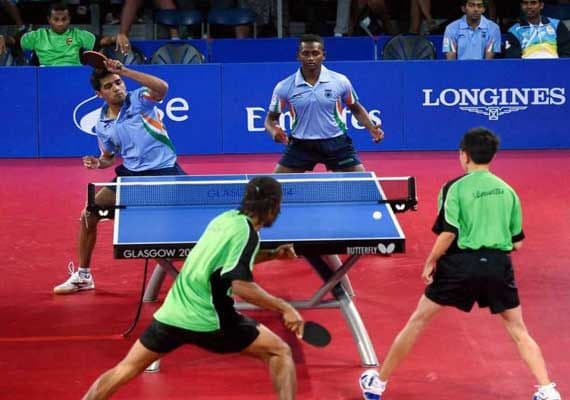
Table Tenni A Cultural Staple and Competitive Phenomenon, Especially in East Asia
Table tennis, colloquially known across many regions as ping pong, stands as one of the most widely played, deeply integrated, and lightning-fast sports on the planet. Boasting a massive global footprint of approximately 850 million fans, it transcends the boundaries of a simple recreational pastime to operate as a premier high-performance discipline. At its highest echelon, table tennis is a sport dictated by micro-seconds, microscopic variations in spin, and explosive, reflexive athleticism. Unlike sports played across massive fields or expansive courts, table tennis condenses intense human competition onto a 9x5 foot laminated wooden table. This condensed playing arena amplifies the velocity of the exchanges, turning professional rallies into mesmerizing displays of hand-eye coordination that push the limits of human reaction time.
While its presence is felt globally through community centers, school gymnasiums, and corporate recreation rooms, table tennis finds its ultimate competitive and cultural home in East Asia. In nations like China, Japan, South Korea, and Chinese Taipei, the sport is vastly more than a hobby; it is a fundamental pillar of national identity, academic physical education, and state-backed sporting excellence. The financial landscape of the sport in these regions is immense, characterized by packed arenas, multi-million dollar corporate sponsorships, intensive media coverage, and professional leagues that attract top-tier global talent. The sport’s unique accessibility—requiring minimal space and relatively inexpensive equipment—has allowed it to democratize athletic participation globally while simultaneously maintaining an ultra-exclusive, razor-sharp peak of elite international competition.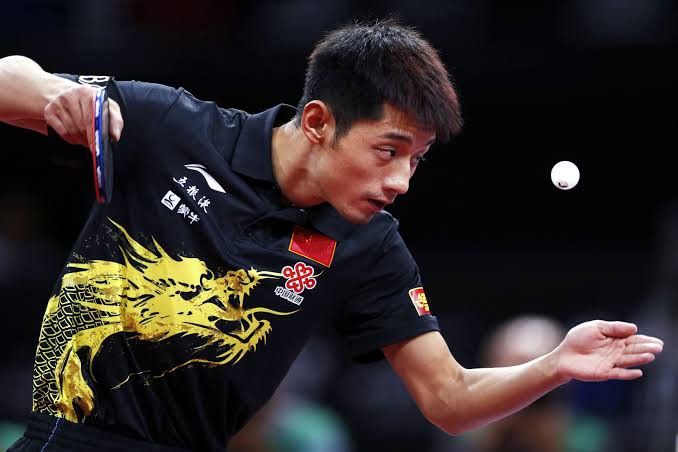
The British Parlor Origins to Olympic Integration
The historical trajectory of table tennis is a fascinating study in cultural migration and evolution. Despite its modern association with East Asian dominance, the sport actually originated in late 19th-century Victorian England as an indoor adaptation of lawn tennis. Originally played by the wealthy upper class as an after-dinner parlor game, the earliest iterations utilized whatever household objects were readily available. Books were lined up across a dining table to serve as a makeshift net, cigar box lids were used as paddles, and rounded corks from wine bottles or simple rubber balls served as the projectile. The distinct sound generated by the ball hitting the paddle and the table gave rise to the iconic onomatopoeic trademark "Ping-Pong," which was later registered by the English manufacturer J. Jaques & Son.
The game underwent a major technical revolution in 1901 with the introduction of celluloid balls, which provided a vastly more consistent bounce and predictable flight trajectory. Concurrently, enthusiasts began experimenting with adding stippled or pimpled rubber sheets to wooden blades, allowing players to deliberately impart spin onto the ball for the first time. The International Table Tennis Federation (ITTF) was formalized in 1926, establishing a unified rulebook and organizing the inaugural World Championships in London. The sport's evolutionary arc culminated in its official induction into the Olympic Games program at the 1988 Seoul Games, solidifying its status as an elite, universally recognized competitive phenomenon.
The East Asian Epicenter: Culture, Dominance, and Infrastructure
To truly appreciate the 850 million-strong fan base of table tennis, one must analyze the profound institutional systems established within East Asian sporting cultures:
- China (The National Sport): In China, table tennis (Pingpang Qiu) is recognized as the unofficial national sport, a status catalyzed by Chairman Mao Zedong’s historic declaration in the 1950s that popularized it across the populace. This cultural alignment laid the groundwork for the legendary "Ping Pong Diplomacy" of 1971, which structurally altered Cold War geopolitical relations between China and the United States. Today, China possesses a peerless state-sponsored training apparatus. Young prodigies are scouted at early childhood, entering specialized provincial academies where they undergo rigorous daily training regimens focusing on stroke mechanics, footwork automation, and mental conditioning. This relentless pipeline has allowed China to achieve an unprecedented level of dominance, capturing the vast majority of Olympic gold medals and World Championship titles over the past four decades.
- Japan (The Technological and Youth Resurgence): Japan boasts a historic and rapidly modernizing table tennis infrastructure. The nation has developed a highly lucrative professional circuit, the T.League, which features state-of-the-art sports science integration, real-time analytics, and massive television viewership. Japanese training philosophies emphasize explosive speed, ultra-aggressive close-to-the-table counter-attacking styles, and early youth development. This framework has produced world-renowned superstars who consistently challenge the global hierarchy and inspire millions of recreational players across the Japanese archipelago.
- South Korea and Chinese Taipei: Both regions maintain incredibly strong structural foundations in the sport. Table tennis is heavily embedded in their school systems, with corporate-backed clubs providing long-term career stability for elite athletes. Their training methodologies emphasize absolute defensive physical durability, intricate tactical variation, and unparalleled consistency in long-distance counter-looping rallies, making them perennial powerhouses on the ITTF and World Table Tennis (WTT) global circuits.
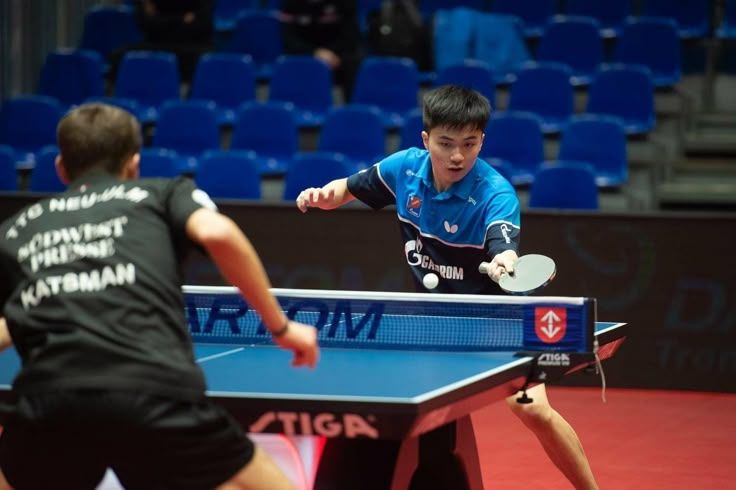
The Physics of Spin: Aerodynamics and Kinetic Mastery
At the professional level, table tennis is fundamentally a high-speed physics battle dictated by the Magnus effect—the physical phenomenon where a spinning object curves away from its principal flight path due to differences in air pressure created around its surface. Because a standard table tennis ball is exceptionally light (weighing exactly 2.7 grams with a diameter of 40 millimeters), it is hyper-sensitive to aerodynamic forces. Top-tier athletes use highly sophisticated rubber sheets—often augmented with custom chemical sponges—to impart rotational speeds exceeding 150 revolutions per second (9,000 RPM) onto the ball.
This extreme rotation creates several distinct ball trajectories that players must instantly decipher and counteract:
Topspin: Generated by brushing the paddle upward against the back of the ball during impact. The forward rotation causes air pressure to build on top of the ball, forcing it to dive sharply downwards mid-flight and bound forward aggressively and low upon hitting the table. This allows players to strike the ball with immense velocity while ensuring it dips safely within the opponent's boundary lines.
Backspin (Underspin): Executed by brushing the paddle downward underneath the ball, a technique common among defensive "choppers." The reverse rotation creates upward aerodynamic lift, causing the ball to float through the air and brake significantly upon striking the table. If an opponent miscalculates the volume of backspin and strikes the ball with an open racket angle, the ball will immediately plunge straight down into the net.
Sidespin: Imparted by brushing the ball laterally from left to right or vice versa. This forces the ball to curve dramatically sideways through the air and kick sideways upon hitting the table, severely disrupting the opponent's spatial positioning and timing. Professionals frequently combine sidespin with topspin or backspin to create highly complex, multi-axis rotational equations that opponents must read within fractions of a second based solely on the acoustic sound of impact and the visual angle of the blade's contact point.
Statistical Overview of Table Tennis's Global Footprint
An analytical review of structural data surrounding table tennis highlights its massive scale, financial health, and deep regional concentration. The following matrix illustrates the performance indicators and demographic distributions that define the contemporary ecosystem of the sport in 2026:
| Performance & Market Indicators | The Chinese Sector | The Japanese Sector | The European Sector |
|---|---|---|---|
| Estimated Fan Engagement | Over 350 Million Fans | Over 85 Million Fans | Over 120 Million Fans |
| Registered Professional Athletes | Estimated 50,000+ Elite Tier | Estimated 15,000+ Ranked Tier | Estimated 25,000+ Club Tier |
| Primary Competitive Framework | Chinese Super League (CTTSL) | T.League Japan | European Champions League / Bundesliga |
| Dominant Tactical Grip Style | Traditional Penhold / Shakehand | Modern Shakehand (Attack) | Classic Shakehand (Loop/Defense) |
| Media Distribution Channels | CCTV, Massive Streaming Apps | TV Tokyo, Digital Web-Portals | Eurosport, Dedicated OTT Networks |
| Equipment Optimization Focus | Tacky Rubbers, Hard Custom Sponges | High-Elasticity Tension Rubbers | Control-Oriented Composite Blades |
"The unique structural reality of table tennis is its dual identity. It requires negligible economic investment for recreational entry, yet requires the absolute peak of neuro-muscular processing speed, kinetic acceleration, and visual calculation at its professional summit."
The Mechanical Battle: Shakehand vs. Penhold Grips
The tactical landscape of competitive table tennis is fundamentally divided by how an athlete chooses to physically hold their racket. The two primary grip archetypes dictate a player's biomechanical reach, defensive coverage, and stroke geometry:
The Shakehand Grip: This is the globally dominant grip paradigm, named because the player holds the paddle handle in a manner virtually identical to shaking a human hand. This positioning allows for symmetrical flexibility across both the forehand and backhand wings. It provides superior defensive reach, structural stability during long-distance rallies, and maximum leverage for executing powerful backhand loops. It is the default teaching standard across Europe and has increasingly become the primary grip utilized by modern East Asian champions.
The Penhold Grip: A classic and highly artistic Asian grip style where the player holds the racket blade handle upwards between the thumb and forefinger, mimicking the holding posture of a writing pen or calligraphy brush. This grip eliminates the traditional physical "crossover point"—the awkward mid-body zone where a shakehand player must rapidly decide whether to strike with a forehand or backhand orientation. Penhold players possess unparalleled wrist flexibility, allowing them to execute highly deceptive, spin-heavy short serves and devastatingly quick, explosive forehand attacks close to the table. However, it requires extraordinary footwork and cardiovascular endurance to protect the backhand flank. Modern variations, such as the Reverse Penhold Backhand (RPB), have revitalized this grip style by utilizing the underside of the paddle to execute backhand topspin drives, neutralizing historical structural limitations.
The Grand Slam of Table Tennis: The Pinnacle of Individual Achievement
In professional table tennis, individual immortality is structurally codified by the pursuit of the elusive "Grand Slam." To achieve Grand Slam status, a singles player must win three distinct major international titles over the course of their career. This achievement is exceedingly rare, requiring a level of sustained technical excellence and mental bulletproofing that only a select handful of players have ever maintained.
The three pillars of the Grand Slam comprise:
The Olympic Games: Held quadrennially, the Olympics represent the absolute pinnacle of global prestige and psychological pressure. With strict player quotas limiting the number of entrants from any single nation, the field is concentrated with elite international threats. Winning an Olympic singles gold medal is viewed as the ultimate sporting achievement, transforming athletes into instantly recognizable global heroes.
The World Table Tennis Championships: Organized by the ITTF, this historic tournament tests absolute endurance and technical versatility across a massive draw. Unlike the Olympics, nations can enter multiple top-tier players, creating an incredibly dense gauntlet of elite competitors. Surviving the multi-round knockout format requires unmatched physical durability and deep strategic adaptability over a week of continuous competition.
The Men's and Women's World Cup: This premier event brings together continental champions and top-tier world-ranked individuals in a highly explosive tournament format. It features intense group stages that rapidly transition into cutthroat single-elimination brackets, forcing players to establish peak tactical performance from the very opening rally of the event.
Technological Evolution: The Poly-Ball and World Table Tennis (WTT) Era
As table tennis moves deeper into the 2026 sporting calendar, it is experiencing a major structural and commercial modernization driven by regulatory changes and innovative marketing frameworks. The sport underwent a seismic technical shift with the mandatory transition from traditional flammable celluloid balls to modern non-flammable plastic composite balls ("poly-balls"). The poly-ball possesses a slightly larger diameter and a altered surface friction coefficient, which naturally reduced the maximum volume of spin and speed achievable during rallies. This change was intentionally engineered by governing bodies to extend the duration of rallies, making the sport significantly more visually scannable and compelling for television broadcasts and general fans.
Simultaneously, the commercial presentation of elite table tennis has been completely revolutionized by the World Table Tennis (WTT) entity. Moving away from traditional, sterile sports hall settings, WTT events are structured as premium, high-production spectacles. Tournaments utilize ultra-modern, dark-themed arenas featuring vibrant LED lighting arrays, specialized black and purple specialized rubber flooring, and close-quarters camera placements that capture the extreme velocity of the ball in high definition. This lifestyle-forward branding strategy, combined with real-time advanced analytic readouts tracking ball trajectory speeds and placement heatmaps, has successfully attracted a highly lucrative demographic of younger, digitally native fans across East Asia and the Western world alike.
Frequently Asked Questions
What exact physical and neurological traits define an elite professional table tennis player?
Elite table tennis players possess exceptional neuro-muscular processing speed, near-instantaneous visual reaction time, and flawless dynamic visual acuity to track a ball traveling at 70 miles per hour over a short distance. Biomechanically, they require extraordinary core rotational power, explosive lateral agility, and micro-muscular control in the fingers and wrist to precisely alter the racket angle by microscopic fractions of a degree within milliseconds during high-intensity exchanges.
How do tacky Chinese rubbers differ functionally from tensor European rubbers?
Tacky Chinese rubbers (like the iconic Hurricane series) utilize a highly sticky, dense top sheet combined with a hard, un-activated sponge. This design relies on the player's physical power to brush the ball violently, generating extreme, heavy spin close to the table. Conversely, European and Japanese tensor rubbers feature a smooth, highly elastic top sheet paired with a porous, chemically pre-tensioned sponge. This configuration creates a pronounced "catapult effect," optimizing raw ball speed, structural rebound energy, and mid-distance loop consistency.
What is the strategic purpose of using different types of rubber on a single paddle?
Many advanced players utilize contrasting rubber types on either side of their blade to execute deceptive tactical disruptions. For instance, combining a standard high-speed inverted rubber with a "long-pimpled" or "anti-spin" rubber completely alters the ball's behavior. Long pimples bend upon impact, reversing the opponent's incoming spin and returning an erratic, floating ball path. By rapidly twirling (twiddling) the racket handle mid-rally, players can completely mask which rubber is striking the ball, forcing opponents into catastrophic reading errors.
Conclusion
In conclusion, table tennis’s colossal global footprint of 850 million fans is a powerful testament to its unique blend of ultimate accessibility and elite complexity. It stands as a profound cultural staple across East Asia while continuing to expand its competitive influence into European and Pan-American markets. Through its rigorous physical requirements, complex kinetic spin mechanics, and rich history, the sport challenges the mind and body in ways few other disciplines can replicate. As the sport embraces its modern WTT presentation era, integrates cutting-edge material sciences, and inspires generations of grassroots players, its foundational legacy remains unbreakable. Table tennis continues to solidify its role as an enduring global phenomenon—an arena where human reflexes, absolute precision, and strategic wizardry collide on a simple sheet of wood.