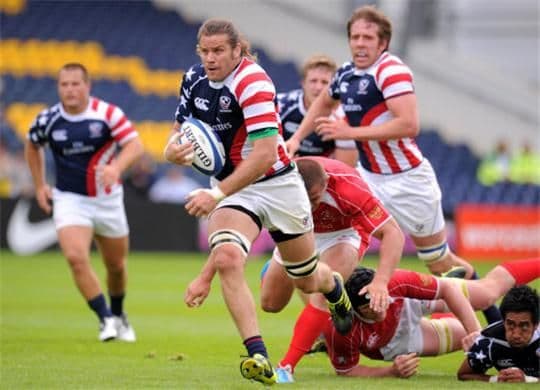
Rugby & American Football: The Global Dynamics of High-Impact Gridirons and Pitch Battles
In the global landscape of modern sports entertainment, few phenomena capture the raw intensity, collective tribalism, and physical brilliance of athletic competition quite like rugby and American football. Collectively commanding an ecosystem of over 400 million fiercely loyal fans, these two dominant contact sports represent a fascinating study in evolutionary divergence. Emerging from shared historical roots in the 19th-century British school system, they have grown into vastly different spectacles. One has become an open, continuous battle of attrition played across global hemispheres; the other, an ultra-specialized, highly commercialized chess match of yardage and inches that paralyzes North America every autumn.
While sports like association football (soccer) boast a wider, more homogenous global spread, rugby and American football thrive on intense, localized regions of massive, passionate viewership. The National Football League (NFL) stands as an unrivaled economic titan within the United States, commanding television ratings and commercial valuations that outstrip entire multi-national sports federations. Conversely, rugby union and rugby league have established deep, unbreakable cultural foundations across Western Europe, Oceania, and Southern Africa. This comprehensive exploration delves deep into the tactical complexities, historical transformations, physical profiles, commercial engines, and socio-cultural impacts that define these high-impact domains.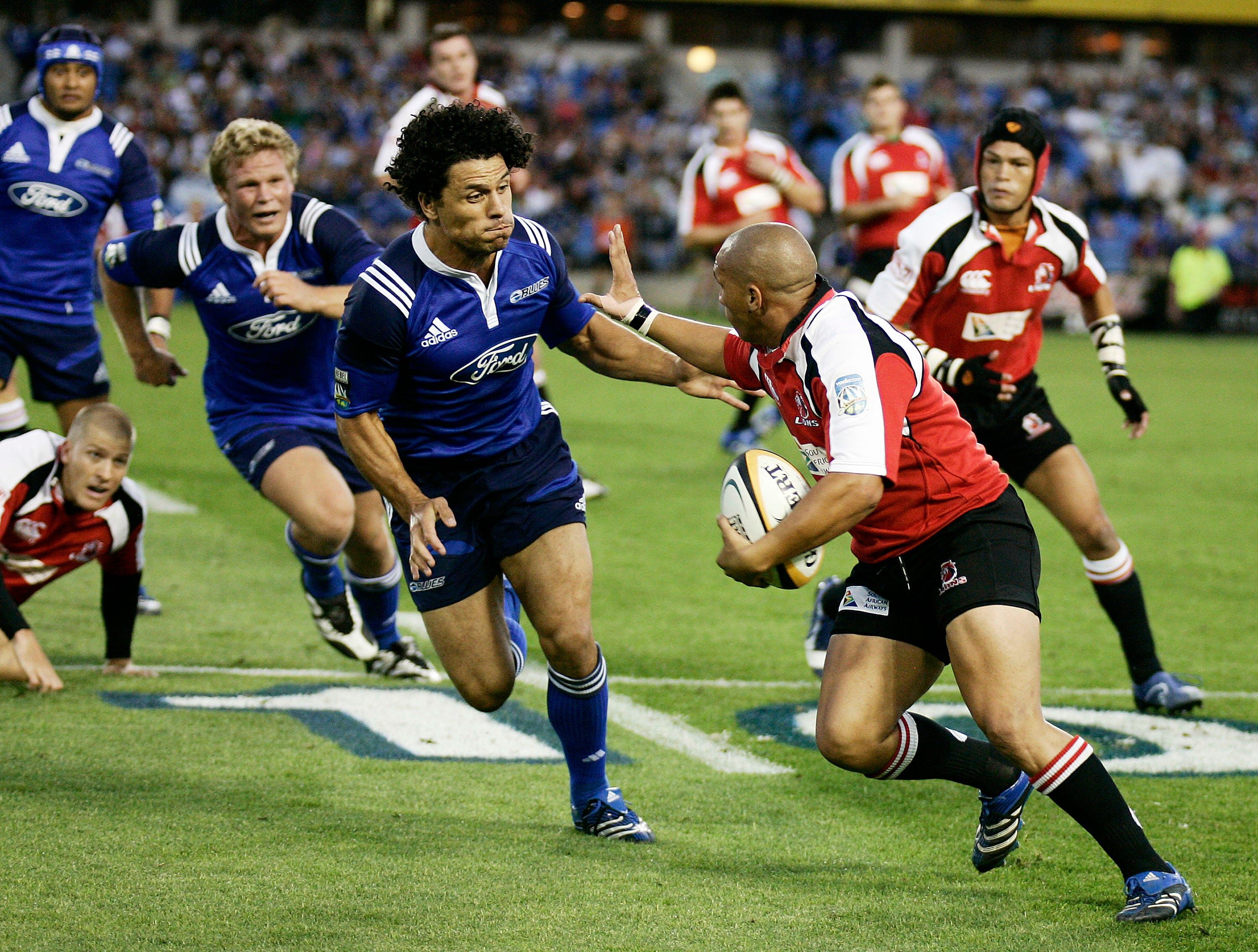
Historical Genesis: The Fracturing of the Oval-Ball Family
The lineage of both sports traces back to a legendary, albeit partially mythologized, moment in 1823 at Rugby School in Warwickshire, England, where a young student named William Webb Ellis allegedly picked up a soccer ball and ran with it. This act of defiance laid the groundwork for Rugby Football. As the game formalized under the Rugby Football Union (RFU) in 1871, it spread rapidly across the British Empire, carried by soldiers, merchants, and academics to the shores of Australia, New Zealand, South Africa, and North America.
When the game crossed the Atlantic to American universities like Harvard, Yale, and Princeton in the late 19th century, it underwent a series of radical structural mutations. The foundational architect of American football, Walter Camp, introduced a series of rule changes that forever severed the sport from its English cousin. Camp replaced the chaotic, contested rugby "scrummage" with a sterile, uncontested "snap" from a line of scrimmage, creating the concept of downs and possession blocks.
The most transformative divergence came in 1906. Driven by a safety crisis that saw multiple player fatalities due to brutal "mass-momentum" plays, President Theodore Roosevelt intervened, demanding the sport reform or face a federal ban. The resulting committee legalized the forward pass—a concept entirely alien to rugby's strict backward-passing ethos. This single innovation transformed American football from a dense scrum of bodies into a wide-open game of spatial orchestration, speed, and verticality, setting it on a trajectory toward the multi-billion-dollar modern spectacle we witness today.
Tactical Frameworks: Spatial Chess vs. Continuous Phase Play
The core operational philosophies of both sports govern how space is weaponized, how territory is conquered, and how strategic intent is executed. American football is fundamentally a game of discrete, highly choreographed episodes. Every single play is a distinct corporate enterprise requiring 11 players to execute highly specific assignments with microscopic precision. The offensive unit relies on a complex playbook that can contain hundreds of unique formations and route trees.
The quarterback serves as the ultimate on-field general, deciphering defensive coverages (such as Cover 2, Cover 3, or man-to-man press) in a matter of seconds before launching a forward pass or handing off to a running back. The defense counters with intricate blitz packages and line-stunts designed to disrupt this timing. Because play stops completely after every tackle, incomplete pass, or boundary exit, coaches are able to orchestrate the game from the sidelines or press boxes, treating every down as a standalone tactical puzzle.
Rugby, by contrast, is a sport governed by fluid, continuous phase play. Aside from set pieces like the scrum (where forwards bind together to contest possession) and the lineout (where players are hoisted into the air to catch a ball thrown from the sideline), the game relies on the organic reactivity of its players. When a player is tackled in rugby, the ball must be released immediately, triggering a "ruck" or a "maul" where both teams battle for possession over the breakdown.
This continuous flow demands that rugby players possess elite aerobic conditioning and versatile skill sets. A rugby forward cannot simply be a blocker; they must be capable of catching, passing, running lines, and executing tackles in open space. The tactical genius of rugby lies not in pre-packaged play calls, but in a team’s ability to manipulate defensive lines over 10, 15, or 20 consecutive phases, slowly drawing defenders out of position until an overlap emerges for the backline to exploit.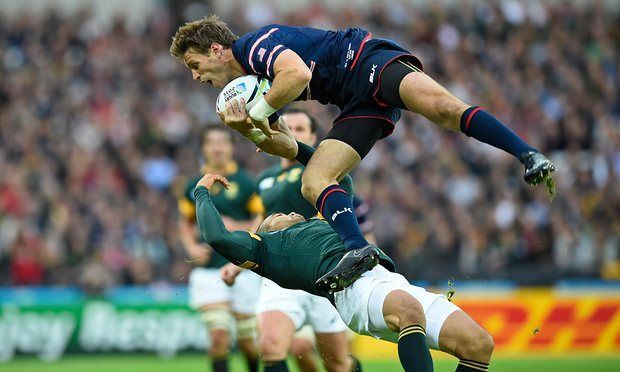
Statistical Breakdown of Structural Variations
To understand how these contrasting operational philosophies manifest on the field, it is useful to analyze the structural, dimensional, and operational metrics that define the boundaries of both sports.
| Structural Metric | American Football (NFL) | Rugby Union |
|---|---|---|
| Match Duration | 60 Minutes (Divided into four 15-minute quarters) | 80 Minutes (Divided into two 40-minute halves) |
| Players on Field | 11 players per team (Unlimited substitutions allowed) | 15 players per team (8 strategic substitutions allowed) |
| Roster Specialization | Extreme (Separate Offensive, Defensive, and Special units) | Hybrid (All players must execute offense and defense) |
| Ball Progression Laws | Forward passing, lateral passing, hand-offs, rushing | Backward passing only; forward progression via running or kicking |
| Scoring Mechanics | Touchdown (6 pts), Extra Pt (1 pt), Field Goal (3 pts), Safety (2 pts) | Try (5 pts), Conversion (2 pts), Penalty Goal (3 pts), Drop Goal (3 pts) |
| Pitch Dimensions | 120 yards long (including end zones) x 53.3 yards wide | Max 144 meters long x 70 meters wide |
"The fundamental difference is structural: American football is a war of specialized positions and territorial acquisitions executed in bursts, whereas rugby is a game of multi-disciplinary endurance and continuous asset retention under fluid pressure."
The Anatomy of Impact: Protective Armor vs. Form-Tackle Laws
The physical collisions in both sports are legendary, yet they are executed under entirely different safety, bio-mechanical, and legal paradigms. American football players wear extensive protective armor, including polycarbonate helmets, heavy shoulder pads, thigh guards, and knee pads. While this armor shields athletes from lacerations and bone fractures, it creates a unique psychological phenomenon known as the "weaponization of protection."
Because players feel safely encased in armor, they frequently launch themselves at opponents with extreme velocities, leading to devastating high-impact kinetic transfers. The sport has battled significant issues regarding head trauma and chronic traumatic encephalopathy (CTE), forcing rules committees to implement strict targeting bans, blindside block penalties, and evolving protocols to protect defenseless players.
Rugby players, conversely, take the field with almost zero protective padding. Aside from optional light foam headgear (designed primarily to prevent cauliflower ear) and mouthguards, their bodies are exposed directly to the elements of impact. Paradoxically, this lack of armor acts as an organic safety valve. A rugby defender cannot safely use their head or body as a battering ram without inflicting immediate injury upon themselves.
Furthermore, rugby laws govern tackling with extreme rigor. A legal rugby tackle requires the defender to explicitly wrap their arms around the ball-carrier; "shoulder charges" or launching oneself without arm engagement are strictly prohibited and met with immediate red cards. Tackling an opponent above the line of the armpits is severely penalized, and taking a player out in the air during a kick interception is treated as a major safety breach. Consequently, rugby technique emphasizes tracking angles, dropping low, hitting with the shoulder mantle, and driving through the thighs—a methodology so effective that many NFL teams have brought in rugby consultants to teach safer, more efficient tackling mechanics.
Socio-Economic Profiles: The American Juggernaut vs. Global Commonwealth Passions
When examining fan demographics and financial realities, the divergence between these sports reflects deep socio-economic and cultural histories. American football is an economic super-entity tightly woven into the cultural fabric of the United States. It operates as an inverted pyramid, stretching from the hyper-local obsession of high school "Friday Night Lights" in states like Texas, through the massive, stadium-packing commercial engine of NCAA college football, up to the corporate zenith of the NFL.
The NFL's media rights deals generate billions of dollars annually, transforming the Super Bowl into an international media, advertising, and musical phenomenon that eclipses traditional sporting boundaries. The league operates under a highly sophisticated salary cap and revenue-sharing model that guarantees competitive parity, turning every franchise into an insulated, highly profitable corporate empire.
Rugby's footprint is completely different, organized around international test matches and club tournaments spanning the globe. Rugby Union was fiercely amateur for over a century, only legalizing professionalism in 1995. This legacy of amateurism deeply shaped its fanbase, creating a distinct, class-aligned culture in countries like England, where it historically flourished in elite private schools.
However, in places like New Zealand, Wales, and South Africa, rugby is a foundational national religion that transcends class entirely, serving as a powerful vehicle for national identity and post-apartheid social reconciliation. The sport's pinnacle event, the Rugby World Cup, held every four years, ranks as one of the world's most-watched sporting events, drawing massive global audiences and generating extensive multi-national tourism revenues.
Frequently Asked Questions
Why do American football players wear armor while rugby players do not?
American football introduced hard helmets and pads following the legalization of the forward pass and mass-momentum plays, which created high-velocity, blindside impacts. In rugby, the laws require mandatory arm-wrapping during tackles and strictly ban high or blindside hits, making soft-tissue tracking and safe body-mechanics the primary methods of protection rather than hard armor.
Which sport requires higher cardiovascular and aerobic endurance?
Rugby demands significantly higher continuous aerobic endurance. A rugby match consists of two 40-minute halves with an active clock and continuous phase play, forcing athletes to run up to 7–9 kilometers per match while contesting breakdowns. American football relies on short, explosive bursts of maximum anaerobic power (typically lasting 4–6 seconds per play) separated by regular periods of rest and tactical resets.
What are the main regional strongholds for both sports globally?
American football is overwhelmingly concentrated in the United States and Canada, though international expansion games have built growing fanbases in Germany, the UK, and Mexico. Rugby boasts a deeply distributed international ecosystem, with Rugby Union dominating New Zealand, South Africa, Australia, England, France, Ireland, Wales, Scotland, Argentina, Japan, and Fiji, alongside a robust Rugby League presence in Australia and Northern England.
Conclusion: Distinct Masterpieces of Modern Athleticism
Ultimately, declaring one sport superior to the other ignores the distinct tactical and physical achievements represented by both systems. American football remains an absolute marvel of specialized execution, strategic complexity, and explosive power—a modern gladiatorial spectacle that maximizes the limits of human velocity and corporate presentation. Rugby stands as a testament to fluid grace, collective resilience, and multi-disciplinary durability, preserving an old-school ethos of universal athletic capability and international sportsmanship across global boundaries.
As both sports navigate the complex challenges of the 2020s—including player welfare, media fragmentation, and global expansion—their dedicated, localized fanbases continue to anchor them as essential pillars of modern sports culture. Whether watched under the neon lights of an American stadium or amid the singing crowds of a European pitch, both oval-ball traditions continue to showcase the incredible heights of human competitive passion.