The Undisputed King of Sports: Inside the Global Phenomenon of Football and Soccer
In every corner of the planet, from the sun-drenched beaches of Rio de Janeiro to the rainy urban pitches of Manchester, a single shared passion unites humanity. Football—commonly referred to as soccer in North America—is not merely a game; it is a global dialect, a cultural anchor, and an economic juggernaut. With an estimated fan base exceeding 4 billion people, football commands a level of structural devotion, emotional investment, and cross-continental engagement that no other sport can replicate. It stands alone at the apex of human entertainment, weaving together billions of lives through the simple movement of a spherical ball across a patch of grass.
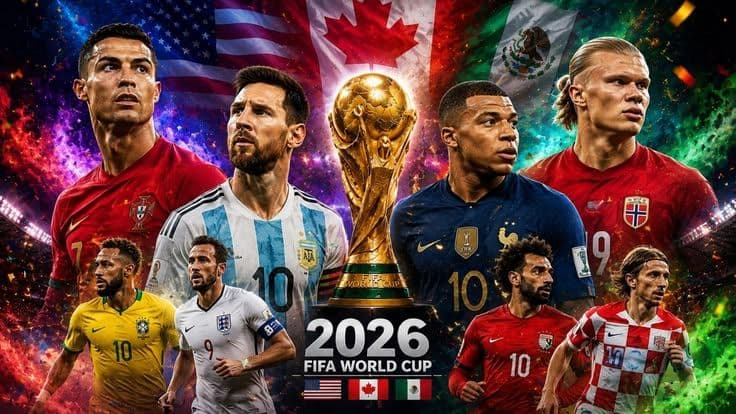
The sheer scale of the sport is mirrored by its structural diversity. At the grassroots level, it requires nothing more than an improvised ball and two markers for goalposts, making it the most egalitarian and accessible game on Earth. At the elite level, it is a multi-billion-dollar matrix driven by historic domestic leagues, high-stakes continental club championships, and the ultimate international spectacle: the FIFA World Cup. As the 2026 edition of the World Cup unfolds across Canada, Mexico, and the United States, the sport is breaking narrative boundaries yet again, demonstrating why its global empire remains completely unassailable.
The Anatomy of 4 Billion Fans: Why Football Rules the World
To comprehend the vastness of football’s empire, one must analyze the unique characteristics that allow it to capture the minds of half the human population. Unlike sports bounded by complex technical setups or expensive equipment barriers, football thrives on pure simplicity. The barrier to entry is virtually zero. This fundamental accessibility creates a natural pipeline of lifetime fans and elite talents from every socio-economic stratum across Europe, South America, Africa, Asia, and increasingly, North America.
Furthermore, football serves as an instrument of national identity. When a domestic club or a national team takes the pitch, they carry the historical narratives, cultural pride, and collective hopes of their communities. The tribal loyalty passed down through generations transforms football clubs into sacred institutions. From the passionate, song-filled terraces of Argentina's La Bombonera to the pristine, ultra-modern arenas of the German Bundesliga, the stadium acts as a modern-day colosseum where collective destiny is forged over 90 minutes.
The Elite Domestic Ecosystem: Major Leagues of the World
While international tournaments capture global headlines, the day-to-day heartbeat of the sport belongs to the elite domestic club leagues. These leagues operate as self-sustaining entertainment empires, pulling in trillions of broadcast views and collecting the finest athletic talent from around the world.
- The English Premier League (EPL): Widely regarded as the most competitive and lucrative domestic competition on earth. Driven by immense television rights deals, iconic clubs like Manchester United, Liverpool, Manchester City, and Arsenal fight in a high-octane environment where any team can defeat any opponent on a given weekend.
- La Liga (Spain): The cradle of technical mastery and tactical elegance. Historically dominated by the fierce El Clásico rivalry between Real Madrid and FC Barcelona, La Liga combines rich footballing philosophy with global star power.
- Serie A (Italy): Renowned globally for its defensive masterclasses, tactical sophistication, and deep-rooted footballing heritage. Historic giants like Juventus, AC Milan, and Inter Milan form the core of this intensely physical and intellectual league.
- The Bundesliga (Germany): Celebrated for having the highest average stadium attendances in the world, pristine fan ownership models, and an explosive, heavy-pressing style of play pioneered by clubs like Bayern Munich and Borussia Dortmund.
- Ligue 1 (France): A premier breeding ground for world-class youth talent. Dominated in the modern era by Paris Saint-Germain (PSG), the league blends raw athletic power with Parisian flair.
Bridging these domestic battlegrounds is the crown jewel of club football: the UEFA Champions League (UCL). This annual tournament pits the top-tier clubs from across Europe against each other in mid-week encounters that frequently rival international fixtures in viewership and prestige. Winning the iconic "Big Ears" trophy is considered the absolute pinnacle of achievement for any professional football club.
The Peak of International Glory: The FIFA World Cup Era
If club football is the sport's weekly engine, the FIFA World Cup is its ultimate coronation. Held once every four years, the World Cup transcends conventional sporting boundaries to become a temporary focal point for all human civilization. For one month, regular life slows down across continents as billions tune in simultaneously to witness their nations compete on the grandest stage.
The 2026 FIFA World Cup represents a monumental evolution in the tournament's storied history. For the first time, the competition features an expanded field of 48 teams, moving away from the traditional 32-team format that stood for nearly three decades. This expansion opens the doors for emerging footballing nations across Africa, Asia, and the Americas, bringing a multi-cultural festival of 104 matches across 16 iconic host cities in Canada, Mexico, and the United States.
As the tournament progresses through its highly competitive knockout phase, established heavyweights like Brazil, Germany, France, Spain, and reigning champions Argentina face fierce, unpredictable challenges from rising powers. The implementation of the 48-team framework has intensified the dramatic stakes, proving that the gap between traditional powerhouses and the rest of the world is rapidly closing.
Statistical Architecture of Global Football
The global governance, financial influence, and competitive metrics of professional football can be mapped through clear structural data. The tables below outline the key performance indicators, revenue streams, and demographic metrics that validate football's absolute dominance.
| League / Entity | Estimated Global Fan Base | Primary Tactical Style | Key Financial Driver |
|---|---|---|---|
| English Premier League | 1.2 Billion | High-tempo, Direct, Physical | Global TV Broadcast Rights |
| La Liga (Spain) | 800 Million | Technical, Possession-based (Tiki-Taka) | Commercial Sponsorships & Merchandising |
| Bundesliga (Germany) | 500 Million | Gegenpressing, Transition-heavy | Domestic Matchday Revenue & Fan Ownership |
| Serie A (Italy) | 400 Million | Rigid Defensive Formations, Counter-attack | Corporate Investment & TV Contracts |
| FIFA World Cup (Tournament) | 4.0+ Billion | Diverse Global/Continental Philosophies | Global Licensing, Hospitality & Media Rights |
To understand the historical supremacy within international football, we can examine the distribution of the prestigious FIFA World Cup trophy since the tournament's inception in 1930. The following table highlights the elite nations that have successfully conquered the world.
| National Team | World Cup Titles | Winning Years | Historical Footballing Identity |
|---|---|---|---|
| Brazil | 5 | 1958, 1962, 1970, 1994, 2002 | Joga Bonito (The Beautiful Game), Creative Flair |
| Germany | 4 | 1954, 1974, 1990, 2014 | Tactical Discipline, Efficient Structure, Team Cohesion |
| Italy | 4 | 1934, 1938, 1982, 2006 | Catenaccio, Intellectual Defense, Clinical Execution |
| Argentina | 3 | 1978, 1986, 2022 | Individual Genius, Intense Passion, Fluid Attacks |
| France | 2 | 1998, 2018 | Athletic Power, Dynamic Transitions, Balanced Philosophy |
| Uruguay | 2 | 1930, 1950 | Garra Charrúa (Fierce Grit), Defensive Defiance |
| England | 1 | 1966 | Traditional Formations, Set-Piece Excellence, Direct Play |
| Spain | 1 | 2010 | Midfield Orchestration, Continuous Passing, Positional Dominance |
Tactical Evolutions: How the Game is Managed
The rulebook of football has remained largely unchanged for over a century, yet the internal tactical canvas of the sport evolves continuously. Managers operate as corporate strategists, utilizing big data, positional heatmaps, and advanced sports science to gain minute competitive advantages over their rivals.
In the mid-20th century, tactical landscapes were defined by rigid structures like the classic English 4-4-2 or the Italian Catenaccio (door-bolt) system, which prioritized airtight defensive numbers above all else. This was revolutionized by the Dutch philosophy of Total Football in the 1970s, pioneered by visionary manager Rinus Michels and legendary player Johan Cruyff. Under Total Football, any outfield player could seamlessly take over the role of any teammate, creating a highly fluid, dynamic, and unpredictable attacking matrix.
In the modern era, this philosophy expanded into two dominant systems: Pep Guardiola's possession-oriented Tiki-Taka, which uses rapid, short passes to exhaust opponent defensive blocks, and Jurgen Klopp's high-intensity Gegenpressing (counter-pressing), which demands that players immediately win back the ball within seconds of losing it in the attacking third. These sophisticated modern strategies demand unprecedented levels of physical fitness, cardiovascular endurance, and cognitive spatial awareness from contemporary professional athletes.
The Economics of the Pitch: Financial Force and Transfer Dynamics
Beneath the emotional highs of football lies a sprawling global financial economy. Elite football clubs operate as premium multinational brands, generating income through three main channels: matchday ticket sales, massive commercial sponsorships, and lucrative television broadcasting rights. The financial muscle of the sport is most visibly illustrated during the bi-annual transfer windows, where clubs trade player contracts for astronomical figures.
The modern transfer market completely redefined sports economics when Paris Saint-Germain triggered Neymar Jr.’s release clause for a record-shattering €222 million. Today, elite youth talents routinely command market values surpassing €100 million. This immense concentration of capital has led to the rise of multi-club ownership models and sparked intense debates regarding financial fair play regulations, sustainability, and competitive balance across global sports leagues.
Comprehensive Global Football FAQ
To further synthesize the structural dynamics of the world's most popular sport, here are authoritative answers to the most frequently asked questions regarding its systems and rules.
Q: What is the exact size of a standard professional football pitch?
A: According to official FIFA regulations for international matches, the length of a football pitch must be between 100 and 110 meters (110–120 yards), and the width must be between 64 and 75 meters (70–80 yards). The field must be perfectly rectangular and covered completely in natural grass or approved hybrid surfaces.
Q: How does the offside rule function in professional play?
A: A player is caught in an offside position if they are nearer to the opponent's goal line than both the ball and the second-last opponent (including the goalkeeper) at the exact millisecond the ball is passed forward to them by a teammate. Being in an offside position is only penalized if the player becomes actively involved in the live play.
Q: What is the purpose of the Video Assistant Referee (VAR) system?
A: Introduced into the formal laws of the game to minimize human refereeing errors, VAR allows a remote team of officials to review television footage of major incidents. The system can only intervene in four specific, game-changing scenarios: clear goals or non-goals, direct red card incidents, mistaken identity penalties, and direct penalty kick decisions.
Q: Why has the 2026 FIFA World Cup expanded to 48 teams?
A: FIFA strategically expanded the tournament from 32 to 48 teams to increase global inclusivity, providing greater structural access to nations across Africa, Asia, and North America. This expansion ensures that more emerging football regions can participate in the revenue and developmental benefits generated by competing on the absolute grandest stage of human sports.
As the beautiful game continues to evolve through technological integrations like VAR, financial expansions, and historic tournament updates, its core essence remains untouched. Football remains a beautifully simple sport that captures the human spirit like no other entity on earth. Its 4-billion-strong global empire is built on the shared joy of a perfect goal, the tactical brilliance of an elite coach, and the universal truth that for 90 minutes on a pitch, anything is possible.